

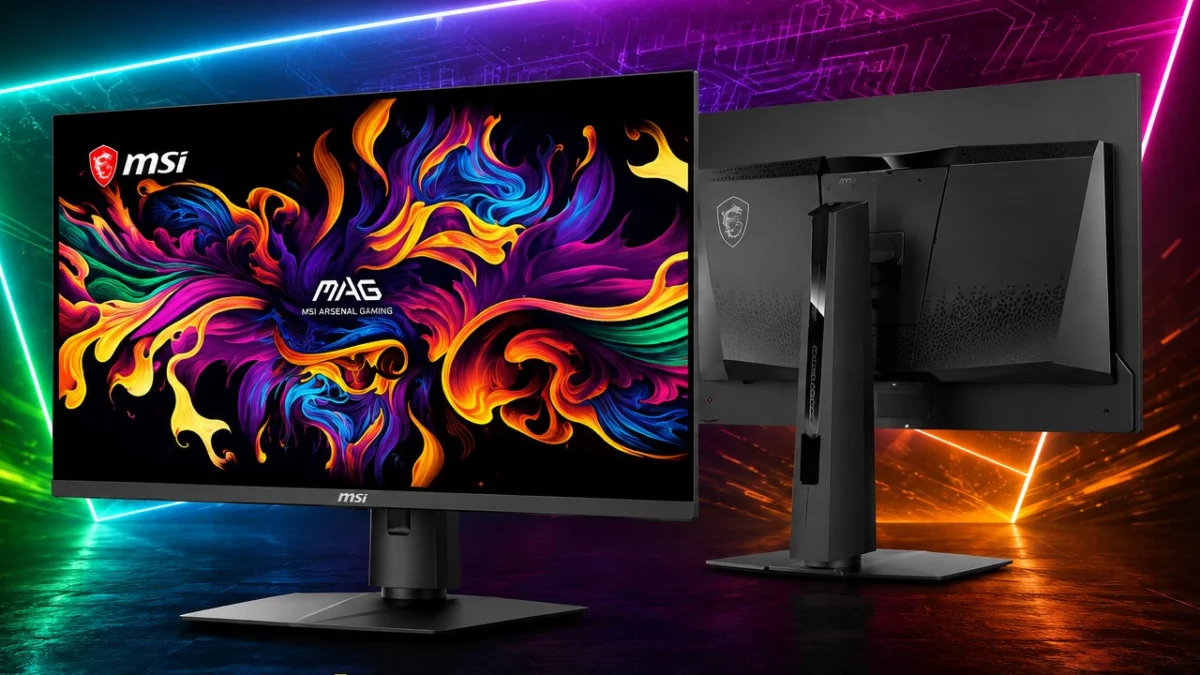
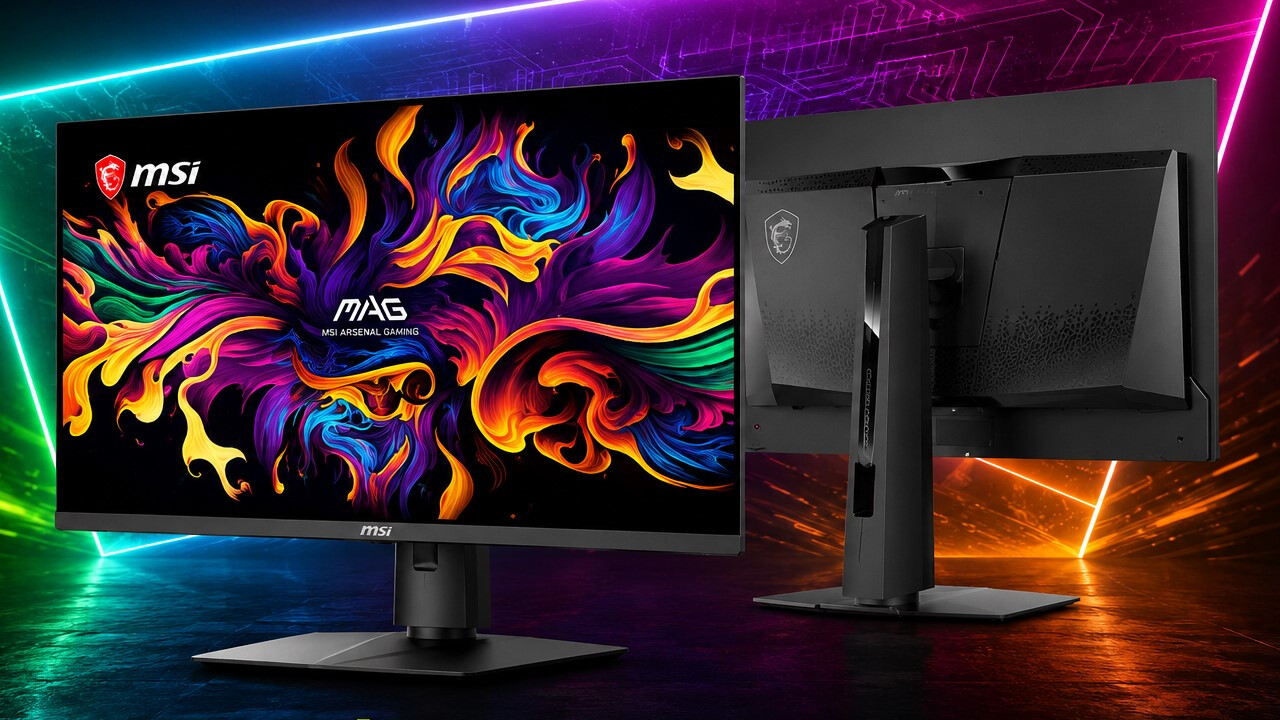
MSI has officially teased its latest entry into the high-performance gaming monitor market: the MAG OLED 271QPX32. Set to make its public debut at Computex 2026, the monitor aims to bridge the gap between enthusiast-grade specs and mid-range accessibility. However, the announcement has sparked a significant industry debate, centered on MSI’s choice of display panel generation and the debut of the sophisticated "Penta-Tandem" architecture.
The Core Innovation: Penta-Tandem Technology
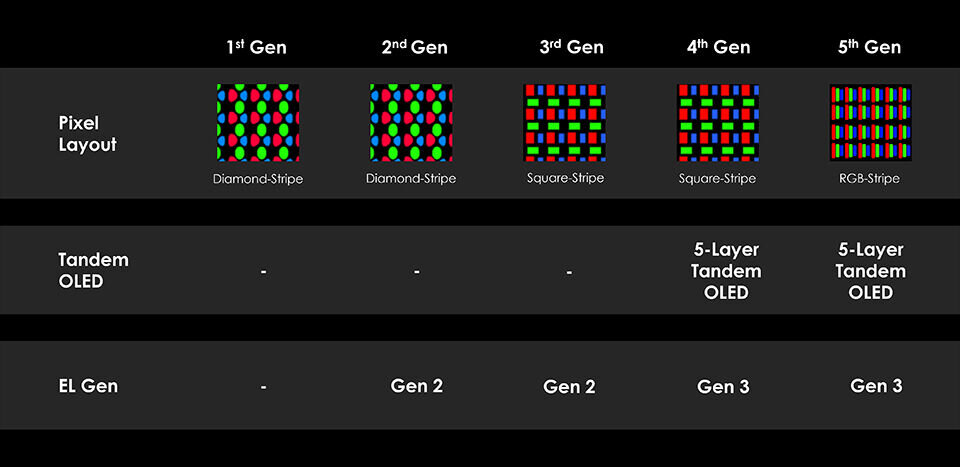
The standout feature of the MAG OLED 271QPX32 is its unique display structure. MSI describes this as "Penta-Tandem" technology. In traditional OLED panels, light is emitted through a standard layer arrangement. MSI, in collaboration with Samsung Display, has implemented a five-layer (penta) OLED stack.
According to the manufacturer, this architecture is designed to address the three perennial weaknesses of OLED displays: peak brightness limitations, energy efficiency, and long-term lifespan. By stacking five layers, the panel can achieve higher luminosity without forcing the individual organic diodes to work at intensities that would accelerate pixel aging. MSI claims this makes the 271QPX32 the world’s first 27-inch WQHD gaming monitor to utilize this specific 5-layer QD-OLED configuration.
The Generation Gap: Gen4 vs. Gen5
A point of contention—and perhaps a source of consumer confusion—is the generation of the panel used. While MSI has been heavily marketing its new "Generation 5" QD-OLED technology, which features a brand-new, optimized pixel layout designed to improve text clarity and color accuracy, the official press documentation for the MAG OLED 271QPX32 consistently refers to "Generation 4" technology.
Industry analysts suggest this is a deliberate strategic choice rather than an administrative oversight. By pairing the innovative Penta-Tandem structure with the proven, slightly older Gen4 foundation, MSI may be aiming to balance manufacturing costs while still offering a "next-gen" performance boost. This effectively creates a unique middle-ground product that deviates from the standard progression of annual display cycles.
Chronology of the Display Evolution
To understand the significance of the 271QPX32, one must look at the rapid maturation of OLED gaming monitors over the past 24 months.
- Early 2025: The market was dominated by Gen3 QD-OLED panels, which standardized 240Hz refresh rates and saw the first major wave of "anti-burn-in" protective software from manufacturers like MSI and Alienware.
- Early 2026: Samsung Display introduced its Gen5 QD-OLED technology, shifting focus toward improved pixel sub-structures and enhanced brightness stability.
- Mid-2026 (The Current Context): MSI’s announcement of the MAG OLED 271QPX32 represents an attempt to diversify the product stack. By introducing a Penta-Tandem model, MSI is testing whether consumers prioritize "layer count" and peak brightness over the latest pixel-geometry updates found in Gen5.
- Computex 2026: The official public unveiling will serve as the litmus test, where enthusiasts will get their first look at whether the 5-layer approach lives up to the marketing hype regarding contrast and lifespan.
Technical Specifications: A Gamer’s Perspective
The MAG OLED 271QPX32 is built for a specific segment of the PC gaming population: the competitive enthusiast who prioritizes fluidity and latency over the sheer pixel density of 4K.
Display Performance
- Panel Size: 26.5 inches (the "sweet spot" for desktop gaming).
- Resolution: 2560 x 1440 (WQHD), ensuring high image sharpness without the extreme GPU overhead required for 4K.
- Refresh Rate: 320 Hz, placing this monitor firmly in the territory of elite esports hardware.
- Response Time: 0.03ms (GtG), virtually eliminating ghosting and motion blur in fast-paced shooters or racing titles.
The "DarkArmor" Advantage
One of the primary drawbacks of early QD-OLED panels was their susceptibility to ambient light. Because the panel surface had a tendency to reflect light, the deep blacks that define OLED performance often appeared grey or washed out in bright rooms. MSI’s "DarkArmor" coating is designed to mitigate these reflections. By treating the screen surface, MSI aims to maintain the infinite contrast ratio of the OLED technology even in environments that are not fully light-controlled.
Official Responses and Strategic Positioning
MSI has been tight-lipped regarding the specific retail price, but the product’s placement within the "MAG" series—rather than the higher-end "MPG" or "MEG" lines—is telling.
The MAG (MSI Arsenal Gaming) series is traditionally positioned as the brand’s value-oriented tier. This suggests that while the monitor features cutting-edge Penta-Tandem tech, MSI intends to keep the price competitive to penetrate the market segment currently dominated by standard 240Hz 1440p OLEDs.
In internal discussions, MSI representatives have emphasized that this monitor is not meant to replace their premium 4K lineups. Instead, it serves as a specialized tool for competitive players who demand the highest possible refresh rates and the fastest pixel response times, trading off the extra resolution for sheer competitive advantage.
Market Implications: Who is this for?
The introduction of the MAG OLED 271QPX32 creates a complex choice for consumers. The market is currently saturated with three distinct categories of 27-inch monitors:
- The 4K Enthusiast: Users who want high resolution for AAA titles and productivity. These users are currently served by the MPG 272URX series.
- The Competitive Pro: Users who want the highest refresh rates possible (360Hz+).
- The "Balanced" Gamer: This is the target audience for the 271QPX32. By offering 320Hz at 1440p with the added durability of the Penta-Tandem structure, MSI is betting that users will find value in the longevity and brightness of the 5-layer design.
Potential Drawbacks
The primary risk for MSI is consumer confusion. If buyers see "Generation 4" on the spec sheet, they may perceive the monitor as "obsolete" compared to the newer Gen5 panels, regardless of the advantages offered by the Penta-Tandem structure. The burden will fall on MSI’s marketing team to demonstrate that the physical construction of the panel—the five layers—is as impactful as a generation leap in pixel layout.
Final Verdict: A Strategic Pivot
The MAG OLED 271QPX32 is a bold experiment. It ignores the industry’s obsession with "latest generation" labels and instead focuses on physical engineering (Penta-Tandem) to solve the fundamental issues of OLED brightness and longevity.
If the monitor delivers on its promise of superior brightness and durability at a "MAG" price point, it could become the default recommendation for competitive gamers for the remainder of 2026. However, if the price creeps too close to the premium MPG line, MSI may find that customers would rather pay a premium for the newest Gen5 pixel geometry.
As the industry looks toward Computex 2026, all eyes will be on the demonstration units. The battle for the 27-inch monitor crown is no longer just about resolution and refresh rates—it is now a battle of architectural efficiency. Whether the "Penta-Tandem" can stand up to the high expectations of the modern gamer remains to be seen, but one thing is certain: MSI is not afraid to challenge the status quo of panel development.










No comments yet. Be the first to join the conversation!