Jia Lissa
In the landscape of Japanese education, the concept of kousoku—school rules—has long been a cornerstone of institutional identity. From the length of a skirt to the precise shade of a student’s hair, these regulations are designed to foster discipline, collective harmony, and a focused learning environment. However, as the values of the younger generation shift toward self-expression and individual autonomy, a widening chasm has emerged between the traditionalist approach of school administrators and the lived reality of the students they serve.
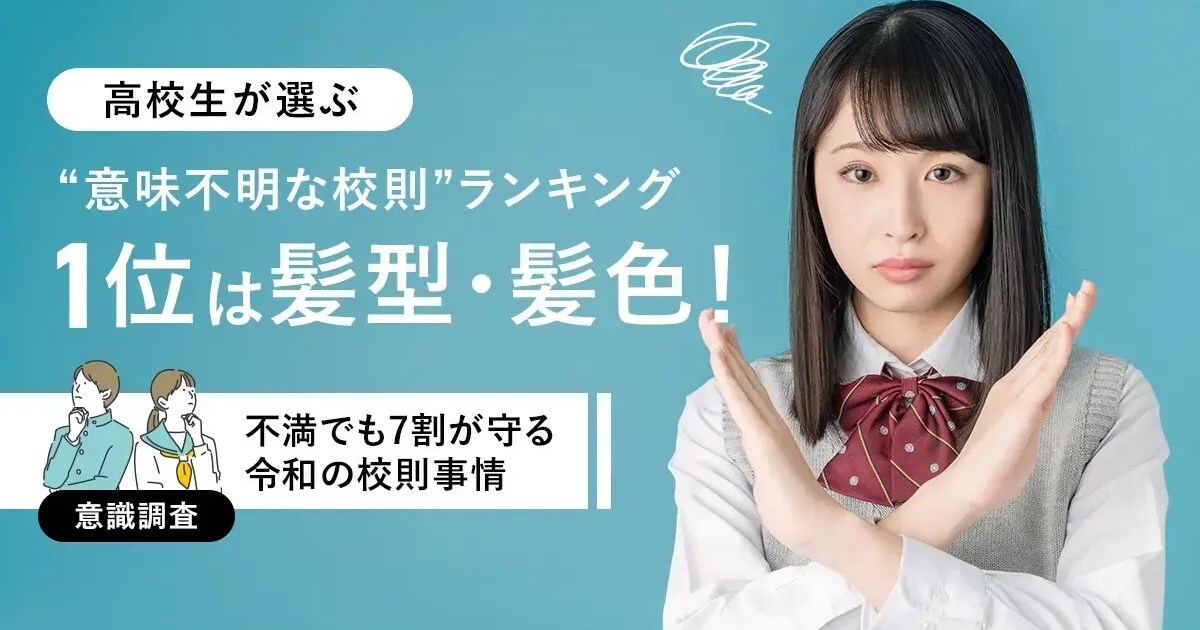
A recent survey conducted by Jukusen, a prominent online directory for Japanese cram schools, has illuminated this growing discontent. By polling 104 high school students across the country, the study provides a rare, candid look into the rules that students find not just inconvenient, but fundamentally irrational. The results suggest that the "culture of conformity" in Japanese schools is facing an unprecedented challenge, as students increasingly question the necessity of regulations that seem disconnected from their academic goals.
The Data: What Students Find Irrational
The survey revealed a striking level of frustration: 56.7 percent of respondents explicitly stated they disagreed with at least one rule enforced by their institution. More tellingly, 70 percent of these students reported that their schools had never provided a clear, logical explanation for why these rules were deemed necessary. This lack of transparency has fueled a sense of alienation among the student body.
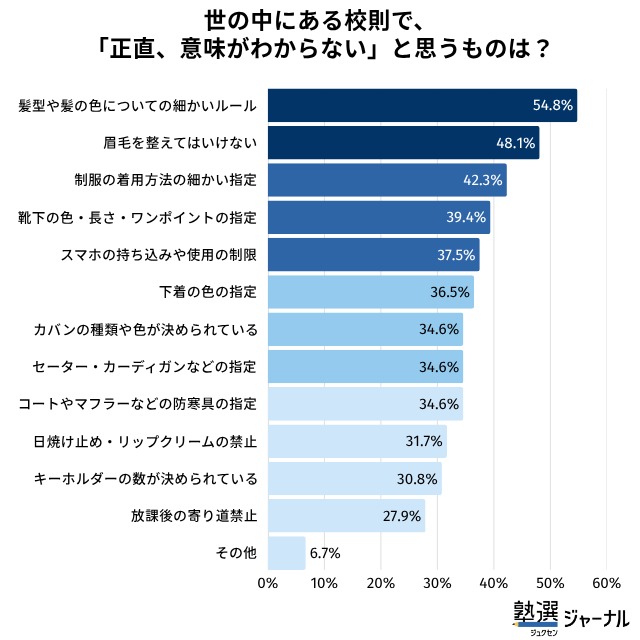
When asked to identify the rules that made the least sense, students provided a laundry list of grievances that ranged from the mundane to the bizarre. The following represent the top-tier "nonsensical" regulations:
The Top 12 Grievances
- Hairstyles and Hair Color (54.8%): Students argue that these restrictions, which often demand that hair remain a natural, uniform black, prioritize aesthetic conformity over individual expression.
- Eyebrow Grooming (48.1%): Often banned under the guise of preventing "vanity," students note that these rules actually hinder personal hygiene and self-confidence.
- Uniform Wearing Styles (42.3%): Detailed, often petty regulations regarding the fit and modification of uniforms lead to frequent conflicts with staff.
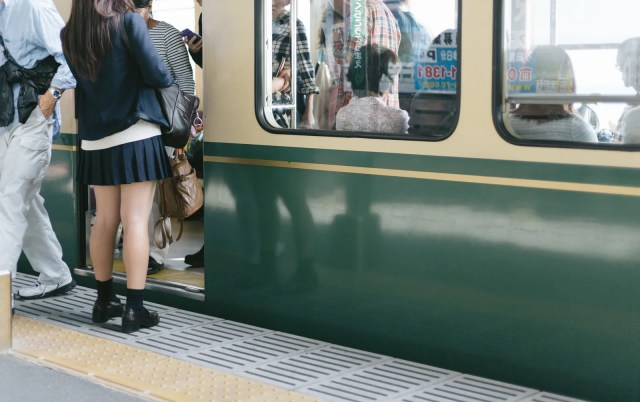
- Socks (39.4%): Restrictions on the color, length, and design of socks are viewed by students as an unnecessary fixation on minute, invisible details.
- Smartphones (36.5%): While many accept bans during class, the total prohibition of phones during breaks and school events is widely considered archaic in a digital-first world.
- Underwear Color (36.5%): An invasive and controversial practice that has drawn national condemnation in recent years.
- School Bags (34.6%): Specific mandates on the brand, color, and design of student bags.
- Sweaters and Cardigans (34.6%): Restrictions on non-uniform layering items.
- Winter Outerwear (34.6%): Limitations on the types of coats and scarves allowed during the colder months.
- Sunscreen and Lip Balm (31.7%): Viewed as a health and skin-care necessity rather than a fashion choice.
- Keychains (30.8%): Arbitrary limits on personalizing school bags.
- Stopping on the Way Home (27.9%): A rule that mandates students return directly to their residences immediately after school, limiting social interaction.
Chronology: The Evolution of Institutional Control
Historically, kousoku were implemented in the post-war era to maintain order in crowded, rapidly expanding urban schools. During the 1970s and 80s, these rules became increasingly draconian, often used as a tool to combat rising rates of juvenile delinquency.
In the late 20th century, the "Black School Rules" (burakku kousoku)—a term coined to describe the most oppressive and illogical mandates—began to receive public scrutiny. By the 2010s, stories of schools forcing students with naturally brown hair to dye it black, or teachers conducting mandatory "underwear checks," reached a breaking point.
In 2021, the Board of Education in Saga Prefecture took a monumental step by officially abolishing the regulation of underwear color in public schools. This was followed in 2022 by the Tokyo Metropolitan Board of Education, which declared that all public high schools in the city would stop enforcing "natural black hair" requirements. These shifts represent a slow, grinding shift in the bureaucracy, acknowledging that these rules may do more harm to student mental health than they do to preserve academic order.
The Psychological Implications
The implications of these rules extend far beyond the classroom. When a student is reprimanded for an unapproved hair clip or a slightly different shade of sock, the message being sent is that "compliance" is more valuable than "critical thinking."
Educational psychologists have noted that when students are forced to adhere to rules they perceive as irrational, it can lead to a sense of "learned helplessness." If a student cannot understand the logic behind a rule, they lose faith in the system that enforces it. The survey highlights this: 70 percent of students admit they follow the rules despite their deep-seated dissatisfaction. They aren’t following the rules because they agree with them; they are following them to avoid the social and academic consequences of defiance.
This environment suppresses the very creativity that modern educational systems aim to foster. Furthermore, the focus on "presentation" over "performance" creates a culture where students are judged on their ability to mirror a standard rather than their ability to innovate or contribute original ideas.
The Role of Educators and Administration
The administrators who defend these rules often cite "educational environment" and "uniformity" as their primary justifications. For instance, the survey mentioned that some schools restrict "light music clubs" (bands) because they fear it will attract "delinquent behavior." This reflects a dated societal stigma that associates artistic expression with social deviance.
However, the lack of communication is perhaps the most critical failure. When a teacher enforces a rule without explaining its benefit to the student’s development, the act becomes purely authoritarian. Experts argue that if schools want to maintain discipline, they must transition from a "command and control" model to a "participatory" model, where students are involved in the process of drafting and reviewing school conduct codes.
The Path Forward: Reform on the Horizon
Despite the prevalence of these restrictive codes, the tide is undeniably turning. The recent, albeit slow, movement toward abolishing the most egregious "black school rules" shows that the Ministry of Education is listening to public outcry.
The future of Japanese education may lie in a compromise. Several progressive high schools have begun experimenting with "Student-Led Rule Reform," where committees of students and teachers meet annually to vote on which rules are obsolete and which should be kept. This not only empowers the student body but also teaches them the value of civic engagement and negotiation.
As Japan faces a shrinking population and an increasingly competitive global economy, the need for graduates who are independent thinkers is becoming more apparent than ever. The rigid, uniform-obsessed, and hyper-regulated schools of the 20th century may soon find themselves obsolete. The survey by Jukusen serves as a clarion call: the youth of Japan are no longer content to just be seen and not heard. They are asking for a system that respects their humanity, acknowledges their agency, and focuses on what truly matters—their education, not the color of their underwear.
Conclusion
The struggle against nonsensical school rules is not just about fashion or hair color; it is a fundamental clash over the definition of what a school should be. Is it a factory for producing uniform, compliant workers, or a laboratory for nurturing the next generation of creative leaders?
As long as students are required to count the number of "thank yous" they say per day, or are barred from using lip balm, the school system will remain at odds with the very people it is meant to serve. The path forward requires a dialogue, a removal of the most irrational barriers to self-expression, and a fundamental shift toward trust. Only by dismantling the unnecessary "black school rules" can Japan ensure that its classrooms remain spaces of inspiration rather than sites of unnecessary conflict.


 Neng Nana
 Asro
Asro