Nila Kartika Wati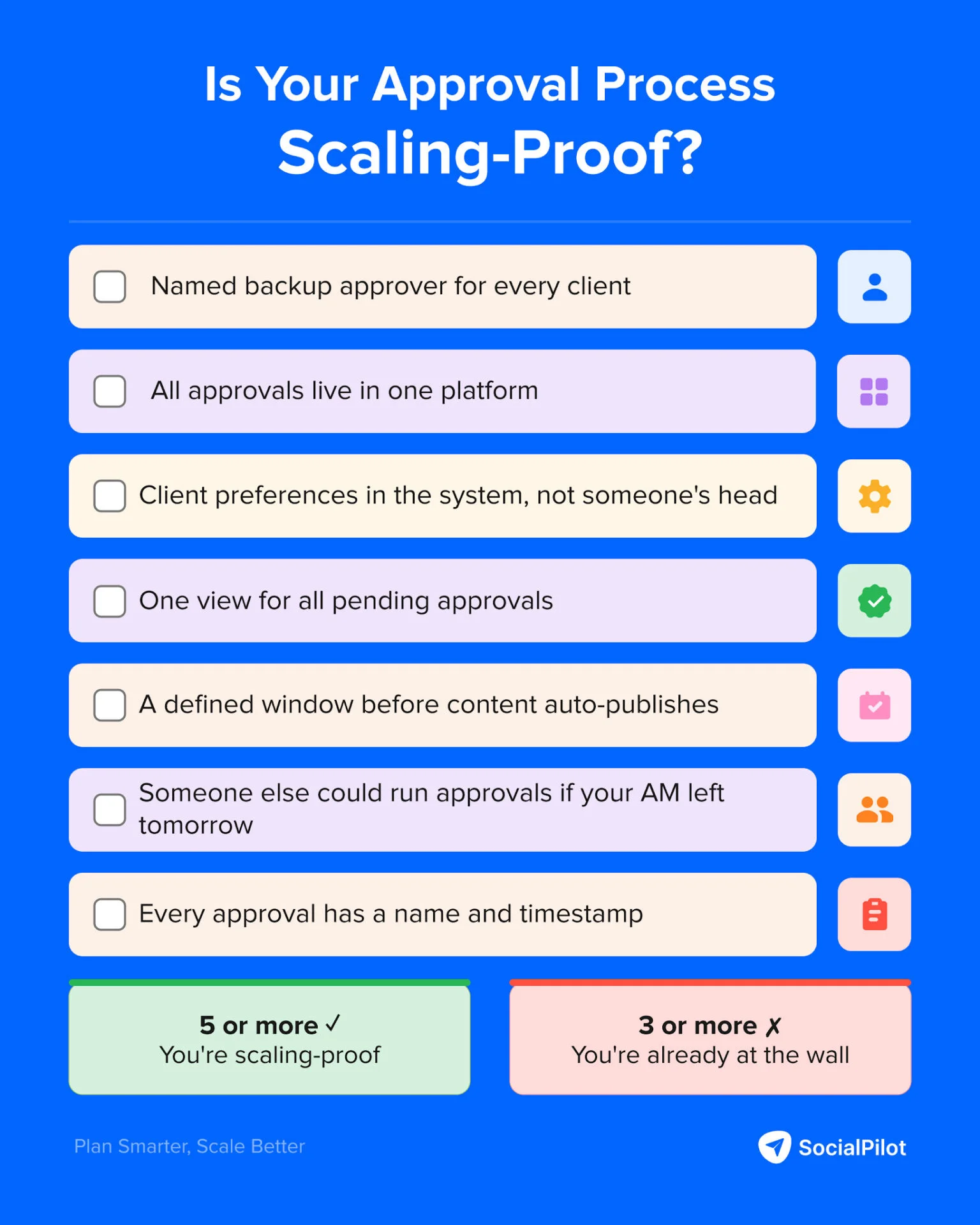
In the lifecycle of a growing marketing agency, there is a deceptive period of grace. At five clients, your team is agile, responsive, and remarkably efficient. You communicate through a mix of Slack pings, email threads, and the occasional WhatsApp message. You know exactly who needs to see what, and when. You are, by all accounts, successful.
But then, the growth begins. You move to 20 clients. Then, you push toward 50. Suddenly, the same team that performed miracles at five clients finds itself drowning. Deadlines are missed. The wrong versions of creative assets are published. Clients become frustrated, not because your team’s talent has diminished, but because the "process" you relied on was never a process at all. It was a collection of habits—and habits, by their very nature, do not scale.
The Anatomy of the Failure: A Chronology of Chaos
To understand why agencies hit a ceiling, one must look at how the workload compounds. The erosion of efficiency does not happen linearly; it is a breakdown that accelerates as complexity increases.
The 5-Client Phase: The "Memory" Era
At this stage, your workflow is held together by individual intuition. The Account Manager (AM) knows that Client A prefers feedback on Tuesday, and Client B requires a legal sign-off via PDF. Because the volume is low—roughly 15 to 30 active approval threads—this manual overhead consumes only two to four hours per week. The risk of error is low because the human brain can comfortably track 30 moving parts.
The 20-Client Phase: The "Email" Bottleneck
As you scale to 20 clients, the number of active threads balloons to 60–120. Email, which felt like a flexible tool at the start, now becomes a black hole. Information is fragmented across platforms. The AM is no longer managing projects; they are managing inboxes. At this stage, the process overhead jumps to 10–20 hours per week. The "occasional" error—a miscommunication about a draft, a missed deadline—starts to look like a systemic flaw.
The 50-Client Phase: The Structural Collapse
By the time you reach 50 clients, the workload is unsustainable. With 150 to 300 active approval threads, no single human can maintain a mental map of the status of every asset. The overhead demands 30 to 50 hours of work per week, effectively turning your Account Managers into glorified administrative clerks. Here, the consequences are no longer "occasional." They are regular, causing a systemic backlog that can threaten the agency’s reputation.
Supporting Data: The High Cost of Fragmented Workflows
The empirical evidence suggests that this struggle is universal among creative service providers. According to the 2023 State of Creative Workflow Report by Ziflow, 48% of creative professionals spend at least five hours every month simply chasing feedback. When processes are fragmented across multiple communication channels, that number effectively doubles.
The bottleneck is rarely the creative output itself; it is the dependency on a single point of failure. Gleanster and Kapost research highlights that 92% of marketers cite approval delays as the primary reason for missing campaign deadlines. This is the "Single Approver Problem." When an agency relies on one person to provide the "go-ahead," the entire production line grinds to a halt the moment that person goes on vacation or misses a notification.
Furthermore, the lack of centralized version control leads to costly rework. Ziflow’s data indicates that 43% of creative teams regularly face the issue of stakeholders providing feedback on outdated versions of an asset. This is the hallmark of a system that has failed to scale.
The Three Pillars of Structural Failure
If we strip away the symptoms, we find three fundamental failures that underpin every agency’s collapse at scale:

1. The Channel Fragmentation
When an agency defaults to email for approvals, they lose accountability. There is no timestamp, no immutable record of approval, and no clarity on whether the client is reviewing the final version or a draft. The cognitive load required to cross-reference a Slack message with a file sent via email is a hidden tax on your team’s productivity.
2. The Single-Approver Dependency
Agencies often fall into the trap of assigning one person as the sole arbiter of "truth" for a client account. While this works at a boutique level, it is a structural hazard. When that approver is unreachable for 48 hours, the campaign stalls. At 50 clients, you don’t just have one stalled post; you have a cascading failure across the entire roster.
3. The "Institutional Memory" Trap
When every client has a unique, bespoke workflow—Client A wants a PDF, Client B uses a specific portal, Client C requires three internal stakeholders—that process must be documented, not remembered. When this information lives only in the head of an AM, the agency becomes fragile. If that employee leaves, the client experience effectively resets, leading to churn.
The Solution: Moving from Habit to System
To survive the jump to 50+ clients, agencies must shift their operational philosophy. The fix follows the failure in three distinct ways:
- Standardize the Channel: Move all approvals into a single, dedicated management platform. This creates a digital audit trail. When a client approves a post, it is timestamped, named, and locked. The question, "Which version did we send?" vanishes because the platform acts as the "source of truth."
- Decentralize the Approver Model: Build redundancy into the contract. Every client should have a designated primary and backup approver from day one. By framing this as a measure to "protect the posting schedule," you gain client buy-in. If the primary hasn’t responded in 48 hours, the system should allow the backup to step in.
- Systemize Customization: Do not rely on the human memory to recall client preferences. Use technology to enforce the process. By configuring each client’s specific workflow (review cycles, auto-publish windows, stakeholder lists) into the platform during onboarding, the system enforces the process for you. The Account Manager no longer needs to remember; they only need to follow the prompts.
Implications: Building for the 30+ Client Future
For agencies aiming for scale, the operational model must change. Tools like SocialPilot were engineered specifically to solve the "scaling wall."
At 30+ clients, the goal is to eliminate "inbox archaeology." By providing a single, grouped view of every post, client, and status, the platform allows the team to focus on strategy rather than logistics. Features like "Approval on the Go" allow clients to approve assets without the friction of logins, while auto-approve settings ensure that a minor delay from a client doesn’t result in a missed marketing window.
When you remove the manual overhead, you gain something more valuable than efficiency: you gain the capacity to grow. As data shows, once an Account Manager crosses the threshold of eight clients, the approval layer is the first place where capacity evaporates. If you do not address this, your growth will be capped by the physical limitations of your staff.
Conclusion: Fix It Before the Client Does
The trajectory of an agency’s growth is predictable. At five clients, your broken process is a quirk. At 20, it is a persistent irritation. At 50, it is a business-threatening vulnerability.
The most successful agencies are those that treat their internal workflow as a product in itself. They realize that they are not just in the business of social media marketing—they are in the business of workflow management.
The question is no longer whether your agency will hit a wall; it is whether you will re-engineer your processes to climb over it before the structural cracks become visible to your clients. The transition from "habit" to "system" is not just an administrative upgrade—it is the difference between an agency that manages clients and an agency that masters scale.


 Raul Delapena Setiawan
 Laily UPN