Layla Zulfa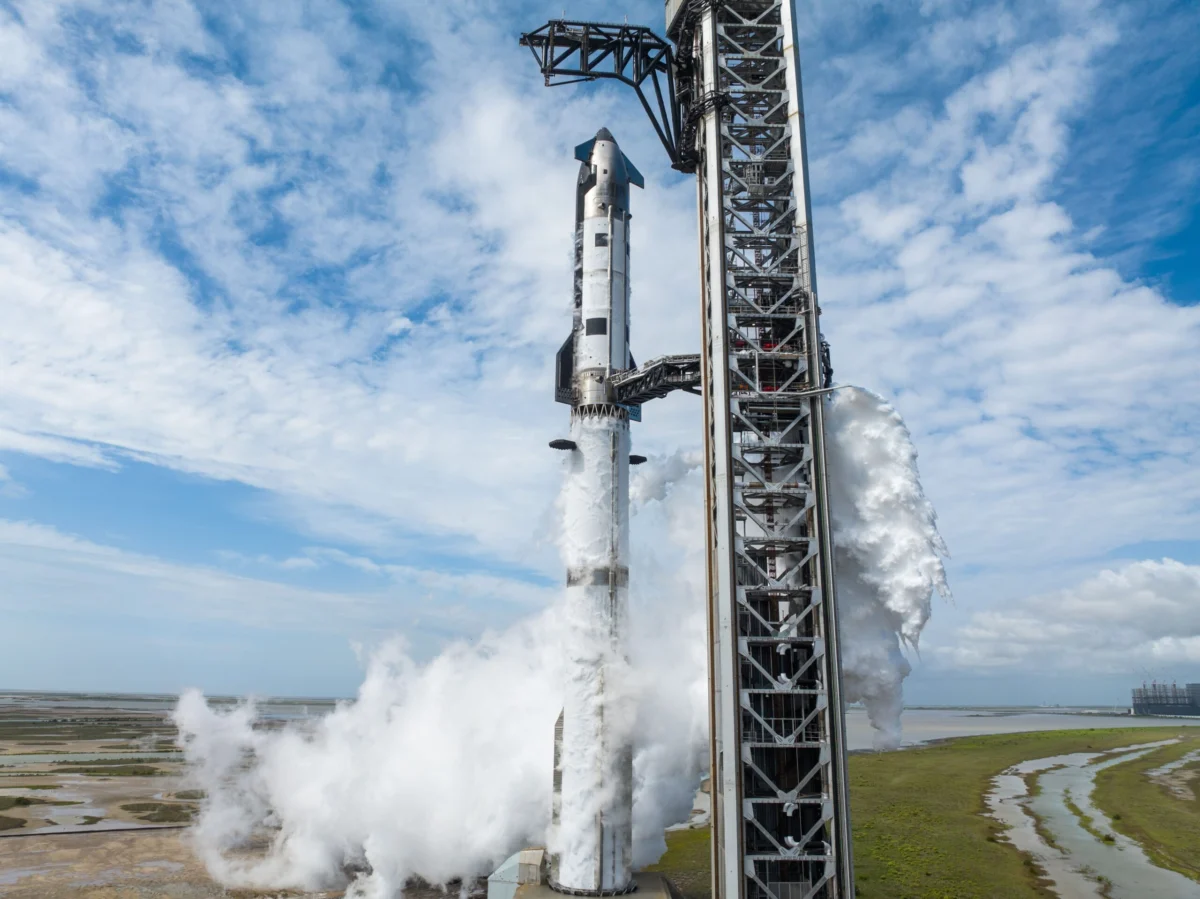
By Sean O’Kane
SpaceX’s ambitions to redefine space transportation hit a temporary, albeit highly visible, hurdle this week. The aerospace giant was forced to scrub the inaugural launch of its third-generation (V3) Starship rocket system from its Starbase facility in Boca Chica, Texas. What was intended to be a watershed moment for the company—demonstrating the maturity of its next-generation hardware—has been pushed to Friday, pending a successful resolution of mechanical issues identified during the terminal count.
The stakes could not be higher. As SpaceX prepares for its highly anticipated initial public offering (IPO) in the coming weeks, the company is under intense scrutiny from investors and industry analysts alike. With $11 billion in annual revenue from its Starlink division, SpaceX is no longer just a speculative venture; it is a critical pillar of the global telecommunications and logistics infrastructure. Proving that the V3 Starship is not merely a prototype, but a reliable, repeatable launch vehicle, is the final hurdle in validating the company’s massive valuation.
The Scrub: A Technical Anatomy of the Delay
The Thursday launch window was characterized by a series of tense, recycled countdowns. As the massive Super Heavy booster and the Starship upper stage were fueled with liquid methane and oxygen, the launch team encountered a persistent mechanical anomaly.
Despite multiple attempts to proceed, the countdown was ultimately halted before liftoff. SpaceX CEO Elon Musk, taking to his platform X, clarified the nature of the failure: a hydraulic pin responsible for securing the launch tower’s "chopstick" arm had failed to retract.
"The hydraulic pin holding the tower arm in place did not retract," Musk stated, noting that the team is working through the night to rectify the issue. The company has set a new target for Friday at 5:30 p.m. local time, contingent upon the successful repair and inspection of the ground support equipment.
This delay serves as a stark reminder of the complexity inherent in the Starship program. The launch infrastructure at Starbase, which includes the massive "Mechazilla" tower designed to catch boosters out of the air, is as much an engineering marvel as the rocket itself. When the launch system is this integrated, a single sensor failure or mechanical bind—like a stubborn hydraulic pin—can ground the most powerful rocket ever built.
Evolution of the Hardware: What’s New in Starship V3?
The transition to the third-generation Starship represents more than a cosmetic update; it is a fundamental redesign aimed at operational reliability. Following the last flight in October 2025, which provided crucial telemetry data, engineers have spent the subsequent months refining the vehicle’s architecture.
Raptor 3 Engines: Thrust and Efficiency
At the heart of the V3 system are the third-generation Raptor engines. These engines have been significantly streamlined, reducing the number of external components and plumbing lines that previously complicated the assembly and maintenance processes. By increasing thrust-to-weight ratios, SpaceX aims to improve the rocket’s performance margins, providing a higher payload capacity to Low Earth Orbit (LEO) and beyond.
Structural Refinements
The V3 booster features a modified design for its grid fins—the aerodynamic surfaces used for steering the rocket during its descent. By reducing the fin count and refining the structural mounting points, SpaceX has simplified the booster’s interface with the launch tower. These changes are intended to make the "catch" process more robust, reducing the risk of damage to both the tower and the booster during recovery maneuvers.
Addressing the Propellant Leak
A recurring challenge in previous flights involved the accumulation of leaked propellant within the upper stage’s insulation and internal cavities. This "boil-off" and subsequent leakage caused erratic sensor readings and posed potential fire hazards. The V3 iteration includes a redesigned internal architecture aimed at sealing these critical areas, ensuring that the vehicle maintains thermal integrity during the high-stress environment of ascent and orbital maneuvering.
Chronology: The Road to the 12th Flight
The path to this 12th mission has been characterized by rapid iteration and occasional setbacks. The program has faced significant hurdles, most notably in November 2025, when a prototype V3 booster suffered a catastrophic failure during a static fire test, resulting in an explosion at the pad.
That incident forced the engineering team to revisit their testing protocols and structural reinforcements. The intervening months have been a frantic race to rebuild and improve, emphasizing the "fail fast, learn faster" philosophy that defines SpaceX’s corporate culture. The fact that the vehicle is standing on the pad today is a testament to the agility of the Starbase workforce, which has managed to turn around the hardware following the November loss.
The Financial Nexus: Starlink and the IPO
For the broader market, this launch is a litmus test for the upcoming SpaceX IPO. According to recent SEC filings, Starlink—the company’s satellite internet constellation—has become a financial juggernaut, generating $11 billion in revenue last year. However, the scalability of Starlink is entirely dependent on the flight frequency and capacity of Starship.
While the Falcon 9 has been the workhorse of the industry, it lacks the volume required to launch the next generation of significantly heavier and more capable Starlink satellites. SpaceX needs Starship to reach operational maturity to sustain the growth rates projected in its IPO prospectus. Investors are watching to see if the company can transition from the "research and development" phase to the "commercial delivery" phase.
Mission Objectives: Managing Expectations
It is important to note that this specific flight is not the culmination of the Starship program. SpaceX has been transparent about its goals for this mission:
- Validation of V3 Systems: The primary objective is to test the integration of the new Raptor 3 engines and the modified fuel management systems in a real-world flight environment.
- Telemetry Gathering: Engineers are looking for data on how the vehicle handles aerodynamic stresses, particularly during the transition through Max-Q (maximum dynamic pressure).
- Soft Landings: The mission profile does not include the high-stakes "tower catch" for the booster or a controlled recovery of the upper stage. Instead, both are slated for "soft landings" in the Atlantic and Indian Oceans, respectively.
- No Full Orbit: The vehicle will not be placed into a stable Earth orbit. Instead, it will perform a suborbital trajectory. This is a deliberate choice, allowing the team to focus on the ascent and entry phases without the added complexity of orbital insertion and de-orbit burns.
By limiting the scope of the mission, SpaceX is prioritizing the collection of data on the most critical failure points—ascent and structural integrity—before attempting to deliver commercial payloads.
Implications for the Aerospace Industry
If SpaceX succeeds in demonstrating a stable, repeatable flight with the V3 hardware, the implications for the aerospace industry will be seismic.
Currently, the cost per kilogram to orbit is a major barrier to the commercialization of space. If Starship achieves full reusability—a goal the company compares to the operational model of a commercial airliner—it could reduce launch costs by orders of magnitude. This would not only benefit Starlink, but also open the door for large-scale orbital manufacturing, deep-space exploration, and the rapid deployment of national security assets.
However, the industry is also waiting to see how the company handles the inevitable risks. Space flight remains an inherently dangerous endeavor, and as the vehicle grows in complexity, the potential for high-profile failures remains a reality.
The View from Starbase
As the team at Boca Chica prepares for the Friday attempt, the atmosphere is one of cautious optimism. The "hydraulic pin" issue, while frustrating, is considered a "nuisance failure"—a mechanical snag that does not reflect a fundamental flaw in the rocket’s physics.
The eyes of Wall Street, the international scientific community, and the global aerospace sector will be fixed on the Texas coast on Friday. For Elon Musk and his team, this is more than just a test flight. It is the proof of concept for a new era of human activity in space, and the final audition for one of the most anticipated public offerings in history.
Whether the V3 Starship clears the tower on Friday or requires further adjustments, the commitment to rapid, iterative development remains unchanged. SpaceX has effectively shifted the goalposts for what is possible in the aerospace industry, and in doing so, has ensured that the entire world is watching every countdown, every scrub, and every flight of its mega-rocket.
As we move toward the weekend, the narrative remains clear: the technology is being refined, the money is on the table, and the rocket is ready to fly. The only variable remaining is the perfect synchronization of a thousand moving parts, all working in concert to defy gravity.

 Muslim
 Siti Muinah