

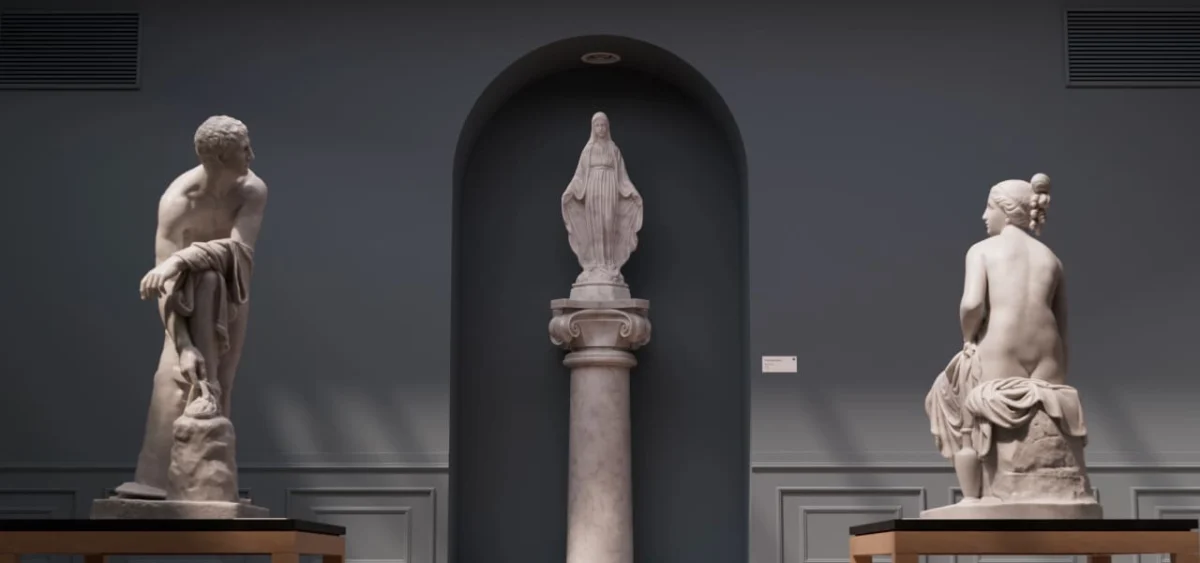
In the landscape of modern computer-generated (CG) animation, creators often strive for hyper-realism—the mimicry of human expression, the fluidity of muscles, and the nuance of facial performance. However, director Ben Smith has taken a radically different approach with his acclaimed short film, Yearn. By stripping away dialogue and traditional character animation, Smith has crafted a narrative that finds profound eroticism and emotional resonance in the most unlikely of subjects: two museum statues separated by a gallery floor and anchored by the tectonic shifts of an earthquake.
Following a highly successful festival run that saw the film selected for over a dozen official competitions, Yearn has finally been released to the public, offering audiences a masterclass in visual storytelling and non-verbal communication.
The Core Concept: Static Subjects, Kinetic Narrative
At its heart, Yearn is a four-minute meditation on longing. The premise is deceptively simple: two marble statues, frozen in their respective pedestals, spend years staring at one another. They are observers of the human experience, trapped in the silence of a museum, until a seismic event—an earthquake—disrupts their rigid existence.
Unlike traditional films where the animator dictates the movement of limbs, Yearn relies on physics-based simulation. Smith spent two years meticulously choreographing the interaction of stone, gravity, and environment. The movement of the statues is not a result of "acting" in the traditional sense, but a series of reactions to the shifting earth, the tremors that bring them closer together, and the kinetic energy of the gallery itself.
The result is a fascinating subversion of the "inanimate object" trope. By treating the marble as a malleable, reactive material, Smith transforms the museum setting into a stage for a dance that spans centuries, or perhaps just a few terrifying seconds of geological upheaval.
A Chronology of Creation: Two Years in the Making
The production history of Yearn reflects the meticulous nature of independent animation. Development began with a singular question: How can one convey human intimacy using objects that lack biological agency?
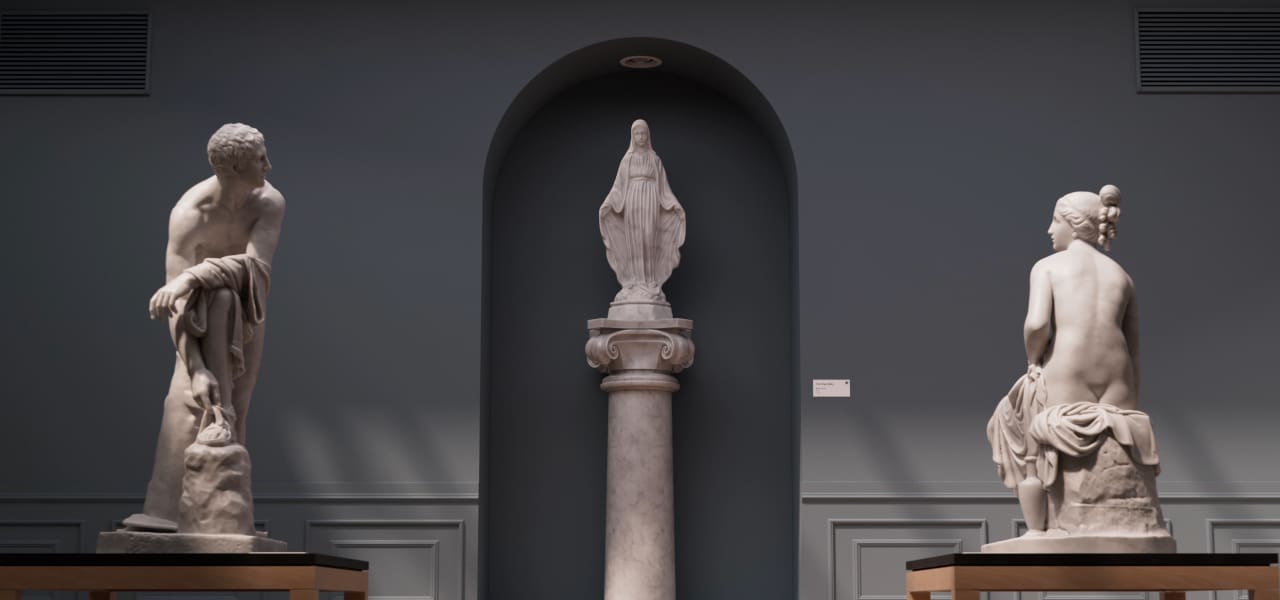
- Phase 1: Conceptualization (Early 2024): Smith began mapping out the geometry of the museum space. The challenge was to ensure that the statues’ "fixed eyelines" remained locked throughout the chaos. This required precise spatial planning to ensure that when the floor shifted, the camera language could still sell the narrative of a growing attraction.
- Phase 2: Technical Simulation (Mid-2024–Late 2025): The core of the project involved developing the "choreography" of the marble figures. Smith focused on how stone might realistically—or poetically—behave under extreme duress. This involved complex physics simulations for sliding pedestals, crumbling architecture, and the reactive swaying of nearby paintings, which serve as silent witnesses to the statues’ burgeoning relationship.
- Phase 3: Polishing and Post-Production (Early 2026): With the animation locked, the final phase involved the marriage of sound design and an original score. Given the absence of dialogue, the audio landscape had to carry the emotional weight of the story. The sound of shifting debris, the resonance of stone on stone, and a hauntingly expressive score guide the audience through the film’s tonal shifts—from the cold, sterile environment of the museum to the heated, chaotic intensity of the quake.
Technical Data and Artistic Methodology
The technical achievement of Yearn lies in its restraint. In an era where CG often pushes for sensory overload, Smith’s work is a testament to the "less is more" philosophy.
The Language of the Lens
The camera in Yearn functions as a character itself. It moves with a deliberate, voyeuristic quality, mirroring the intensity of the statues’ locked gaze. When the earthquake hits, the camera work transitions from steady, observant wide shots to frenetic, handheld-style cinematography that mimics the panic of the event, grounding the audience in the physical reality of the disaster.
Simulated Choreography
Smith’s reliance on "simulated movement" creates a unique aesthetic. Because the figures do not "act" in a humanoid way, the audience is forced to project their own emotions onto the stone. This phenomenon, known as the "Rorschach effect" in cinema, allows the viewer to interpret the statues’ proximity as an act of rebellion. The tremor is not merely a disaster; it is a catalyst for liberation, allowing the statues to break their static bonds.
Thematic Depth: An Evangelical Subversion
Perhaps the most compelling aspect of Yearn is the personal philosophy that fueled its creation. Director Ben Smith has been vocal about the inspiration behind the project: his own evangelical Christian upbringing.
For many, religious upbringings provide a rigid moral framework regarding the body and desire. Smith describes Yearn as a direct response to these "regressive messages." By choosing statues—figures that represent idealized, often untouchable human forms—he explores the tension between purity and passion. The earthquake acts as a metaphor for the breaking of these moral structures. The statues, which represent the "ideal" body, are finally allowed to experience the "forbidden"—love, lust, and the vulnerability of movement.
In this context, the statues are not just marble; they are symbols of the human spirit attempting to navigate its own desires in the face of restrictive, long-standing social or religious architecture. The act of "letting go" is the film’s emotional climax, suggesting that true connection can only occur when one stops trying to remain perfect, static, or "correct."
.png)
Implications for the Future of Independent Animation
Yearn serves as a signpost for the future of independent CG short-form storytelling. As software becomes more accessible and simulation tools more powerful, creators are increasingly looking for ways to bypass traditional character rigs in favor of experimental storytelling.
- The Rise of Physics-Driven Narrative: Yearn demonstrates that emotional arcs can be effectively communicated through environmental interaction rather than facial expressions. This opens up new avenues for abstract storytelling in animation.
- The Shift Toward Personal Autonomy in Indie Film: The project reinforces the trend of auteur-driven, deeply personal films gaining traction through digital distribution and festival circuits.
- Redefining "Character" Animation: The film challenges the industry standard that a character must have a face to be relatable. By stripping away the ability to speak, Smith forces the audience to engage with the film on a more primal, intuitive level.
Conclusion: A Monument to Vulnerability
In just four minutes, Ben Smith’s Yearn accomplishes what many feature-length films fail to do: it invites the audience into a private, transformative experience. By turning an earthquake—a force of destruction—into a bridge for connection, the film asks us to reconsider our relationship with our own bodies and the rigid structures we are told to inhabit.
As the film continues to find its audience online, it will likely be studied not just for its technical ingenuity, but for its courageous thematic exploration. Yearn is a rare piece of animation that feels like a whisper, yet leaves a permanent mark on the viewer, proving that even in a world of cold marble, there is always room for heat.
Yearn is currently available for viewing online. It remains a poignant reminder that even when we are fixed in place, our desires are always in motion.











No comments yet. Be the first to join the conversation!