Sagoh
Sagoh
In the relentless churn of the 24-hour news cycle, groundbreaking scientific research often fails to receive the public attention it deserves. While major headlines dominate the front pages, a quieter revolution is occurring in physics labs, archaeological sites, and sports arenas. This month, we pull back the curtain on six of the most fascinating studies that nearly slipped through the cracks—ranging from the high-velocity mechanics of predator-prey dynamics in the Australian outback to the molecular mysteries of the first-ever boron "buckyball."
The Physics of the Pitch: Decoding the Scissors Feint and the Drag Crisis
As the FIFA World Cup captures global attention, the intersection of elite athletics and fluid dynamics has moved from the locker room to the wind tunnel.
The Mechanics of Deception
In a recent study published in the Japan Journal of Physical Education, Health and Sport Sciences, researchers utilized high-speed motion capture to dissect the "scissors feint"—a classic dribbling maneuver. Contrary to the popular belief that raw speed is the primary driver of a successful feint, the study reveals that elite performance is defined by precise spatial regulation.
The most successful players maintain a specific distance from their defenders while utilizing coordinated knee flexion and extension to generate explosive, sudden shifts in momentum. By minimizing foot lift and emphasizing a pronounced trunk inclination, these athletes create a deceptive visual signal that leaves defenders unbalanced. The research underscores that top-tier soccer is as much a study in biomechanics and cognitive timing as it is in physical prowess.
The "Drag Crisis" and the Trionda Ball
While players refine their movements, the ball itself is causing a stir. The Adidas Trionda, the official ball of this year’s tournament, has been the subject of intense scrutiny following complaints from goalkeepers who claim the ball’s trajectory is becoming increasingly unpredictable.
A study in the journal Fluids suggests this is not merely anecdotal. By subjecting the ball to wind tunnel testing, researchers identified a phenomenon known as the "drag crisis." As the ball reaches a critical velocity, the airflow around it shifts from laminar (smooth) to turbulent. This transition significantly reduces drag, causing the ball to accelerate unexpectedly and maintain its speed longer than players are conditioned to expect. This "crisis" is further influenced by how the ball is struck—specifically whether the contact is made on the seam—and is notably less prevalent at higher altitudes.

Deciphering the Past: The Vesuvius Challenge Breakthrough
The Vesuvius Challenge has evolved from a daring experiment into one of the most successful archaeological initiatives in history. The goal: to read the charred, fragile scrolls found in the Villa of the Papyri at Herculaneum, buried by the eruption of Mount Vesuvius in 79 CE.
Digital Unwrapping and AI
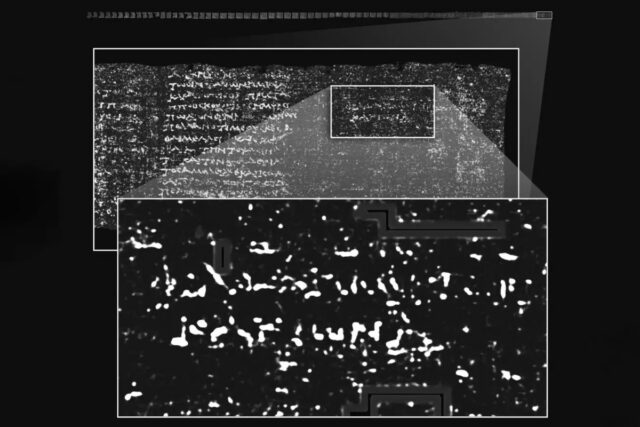
For centuries, these scrolls were deemed "unreadable," as the slightest touch caused the carbonized papyrus to crumble. The current breakthrough involves "digital unwrapping," a process using high-resolution X-ray CT scans and machine learning algorithms to map the internal layers of the scrolls.
Last year, the project successfully identified the first ink-based characters using X-ray analysis, and in a massive leap forward, the scroll known as PHerc. 1667 has now been fully "unrolled" and transcribed. The text, a philosophical treatise on ethics, provides a profound look into the Epicurean intellectual tradition. Most notably, the discovery of the name "Aristocreon" in the final column allows historians to date the scroll to the 2nd century BCE, linking it to the lineage of the Stoic philosopher Chrysippus.
Molecular Architecture: The First Boron Buckyball
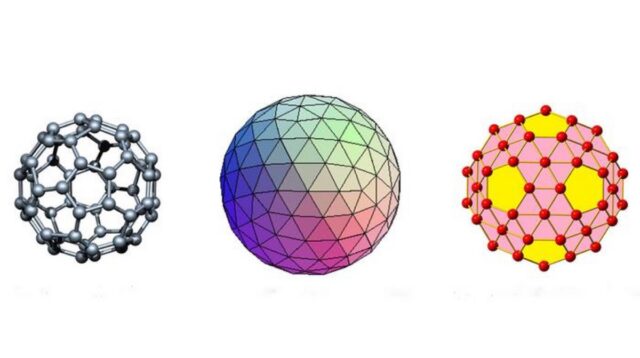
In the world of nanotechnology, the "buckyball"—a soccer-ball-shaped molecule composed of 60 carbon atoms—is legendary. Discovered in 1985, it revolutionized our understanding of materials. Now, researchers at Brown University have achieved what was once considered theoretically impossible: the synthesis of a stable, highly symmetrical "buckyball" made entirely of 80 boron atoms.
Challenging Theoretical Limits
Led by chemist Lai-Sheng Wang, the team utilized high-powered lasers to vaporize boron, creating nanoclusters that were subsequently analyzed via photoelectron spectroscopy. While standard chemical theory long predicted that an 80-atom boron structure would lack the stability required to form a perfect cage, the experimental data suggests otherwise. This discovery opens new pathways for developing nanomaterials with unique electronic and chemical properties, potentially rivaling or even surpassing the capabilities of carbon-based graphene and fullerenes.
Nature’s Ballistic Traps: The Ingenuity of the Propostira Spider
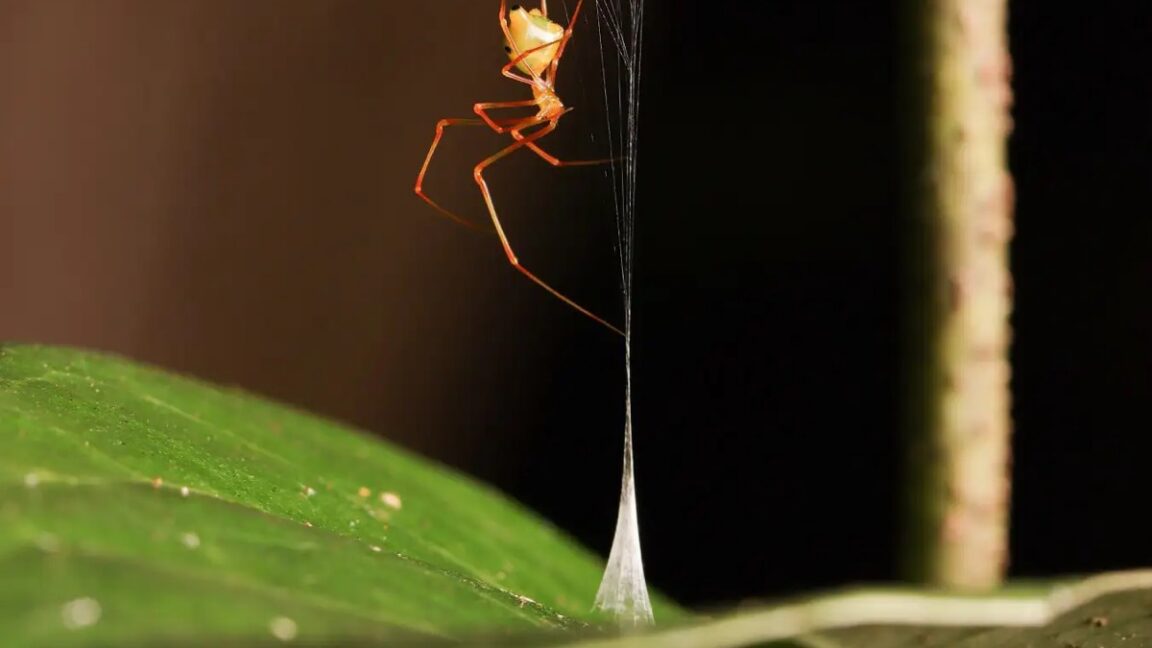
In the Australian wilderness, a newly identified genus of spider has introduced a hunting strategy that defies conventional biological expectations. Dubbed the "ballista spider" (Propostira), this arachnid has mastered the art of long-range, high-velocity hunting.
The Mechanics of the Snare
The spider constructs a standard web, but its true genius lies in the conical snare trap it weaves on the forest floor. By secreting chemicals that attract green tree ants, the spider lures its prey into the trap. Once the ant locks onto the silk with its mandibles, the tension is released, catapulting the insect upward into the main web at accelerations reaching 1,367 meters per second squared. This strategy allows the spider to bypass the dangers of ground-level combat, effectively using the ant’s own momentum against it.
The Elastic Physics of Fecal Geometry
Perhaps the most unconventional scientific inquiry of the month comes from Nature Communications, which has finally explained the physics behind the shape of feces—a study that bridges the gap between biological function and the "elastic rope-coiling theory."
Why the Shape Matters
The classic "swirl" of the standard poop emoji is not a random biological quirk; it is a direct result of gravity acting on a viscous material as it is extruded. The tapering effect occurs because the fecal matter is released while the animal is moving or standing, with the base of the coil supporting the weight of the rest.

Conversely, the lugworm, which lives in U-shaped burrows, releases its waste upward. The study confirms that the uniform, non-tapering spirals of lugworm waste are governed by the same mathematical principles of elasticity as the downward-tapering coils of terrestrial mammals. These findings serve as a reminder that even the most mundane biological processes are bound by the rigorous, universal laws of physics.
Botticelli’s Model: A New Medical Hypothesis
Finally, art history and modern endocrinology have converged to re-examine the life of Simonetta Vespucci, the alleged muse for Sandro Botticelli’s The Birth of Venus.
A Fatal Diagnosis
While historical consensus long attributed her early death to tuberculosis, researchers from Queen Mary University of London have proposed a more nuanced, endocrine-based explanation. Analyzing letters from the 15th century, the team suggests that Vespucci suffered from a rapidly expanding pituitary adenoma.

Symptoms recorded during her final days—including severe headaches, hallucinations, and high fever—align with the sudden, fatal apoplexy associated with such tumors. Furthermore, the researchers suggest that the physical manifestations of this tumor, such as eye misalignment (a common side effect of pituitary compression on cranial nerves), may have been captured in Botticelli’s portraits. This interdisciplinary approach not only provides a new understanding of a Renaissance icon but also demonstrates how medical science can shed light on historical mysteries.
Implications for Future Research
These six studies—ranging from the fluid dynamics of sports to the digital preservation of ancient thought—highlight the sheer breadth of modern inquiry. Whether it is the pursuit of more efficient nanomaterials or the reconstruction of a 2,000-year-old philosophical argument, the common thread is a persistent, rigorous curiosity. As these projects move from preprints to peer-reviewed journals, they remind us that the most significant scientific stories are often those that require us to look a little closer at the world around us.


 Neng Nana