In the contemporary art landscape, few themes are as pervasive yet elusive as the concept of "belonging." For Taiwanese-Canadian painter Liang Wang, this abstract struggle is not merely a philosophical inquiry but the very foundation of his aesthetic practice. Currently based in Vancouver, Wang—an alumnus of OCAD University—has spent his career deconstructing the psychological landscape of modern isolation. His latest body of work, Into the Inhabited Silence, currently on display at the Visual Space Gallery, marks a significant evolution in his exploration of how human beings anchor themselves within the vast, indifferent expanse of the natural world.
The Intersection of Memory and Geography
Wang’s artistic identity is deeply rooted in a nomadic upbringing. Having navigated multiple continents and cultural spheres during his youth, his work serves as an ongoing meditation on the vulnerabilities of displacement. For Wang, the canvas is a site of negotiation—a place where the rigid structures of human architecture collide with the fluidity of cultural memory.
His move to the Canadian West Coast served as the primary catalyst for his current series. Transitioning from the frenetic energy of dense urban environments to the imposing, quiet vastness of the Pacific Northwest, Wang experienced a shift in consciousness. This transition did not result in a retreat into pastoral romanticism; rather, it birthed a series of paintings that confront the "quiet friction" of daily co-existence between man and the wild.
Chronology of an Artistic Evolution
To understand the weight of Into the Inhabited Silence, one must look at the trajectory of Wang’s career:
- Formative Years: Raised across diverse cultural contexts, Wang developed an early fascination with the concept of "home" as a psychological construct rather than a physical location.
- Academic Training at OCAD: During his tenure at OCAD University, Wang began refining his technical approach, moving away from representational realism toward a more atmospheric, emotive style.
- The Vancouver Transition: The relocation to British Columbia introduced Wang to the scale of the Canadian landscape. This period marked a pivot in his work, as he began to focus on the interplay between small, man-made structures and the infinite, surrounding forest.
- Development of "Into the Inhabited Silence": Over the past two years, Wang has synthesized his interests in urban density and wilderness, leading to the high-key, cinematic palette that defines his current exhibition.
The Anatomy of the Work: Supporting Data and Aesthetics
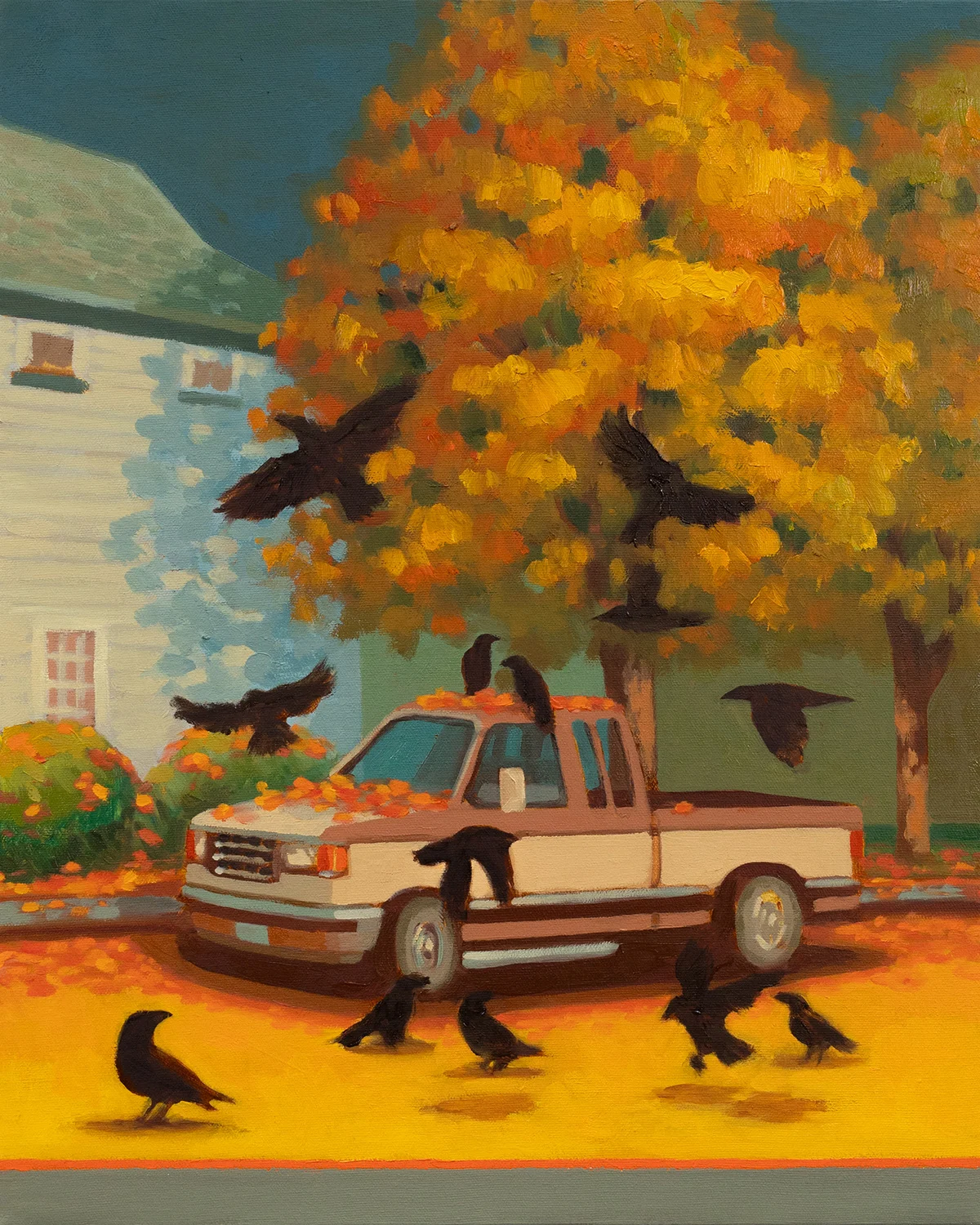
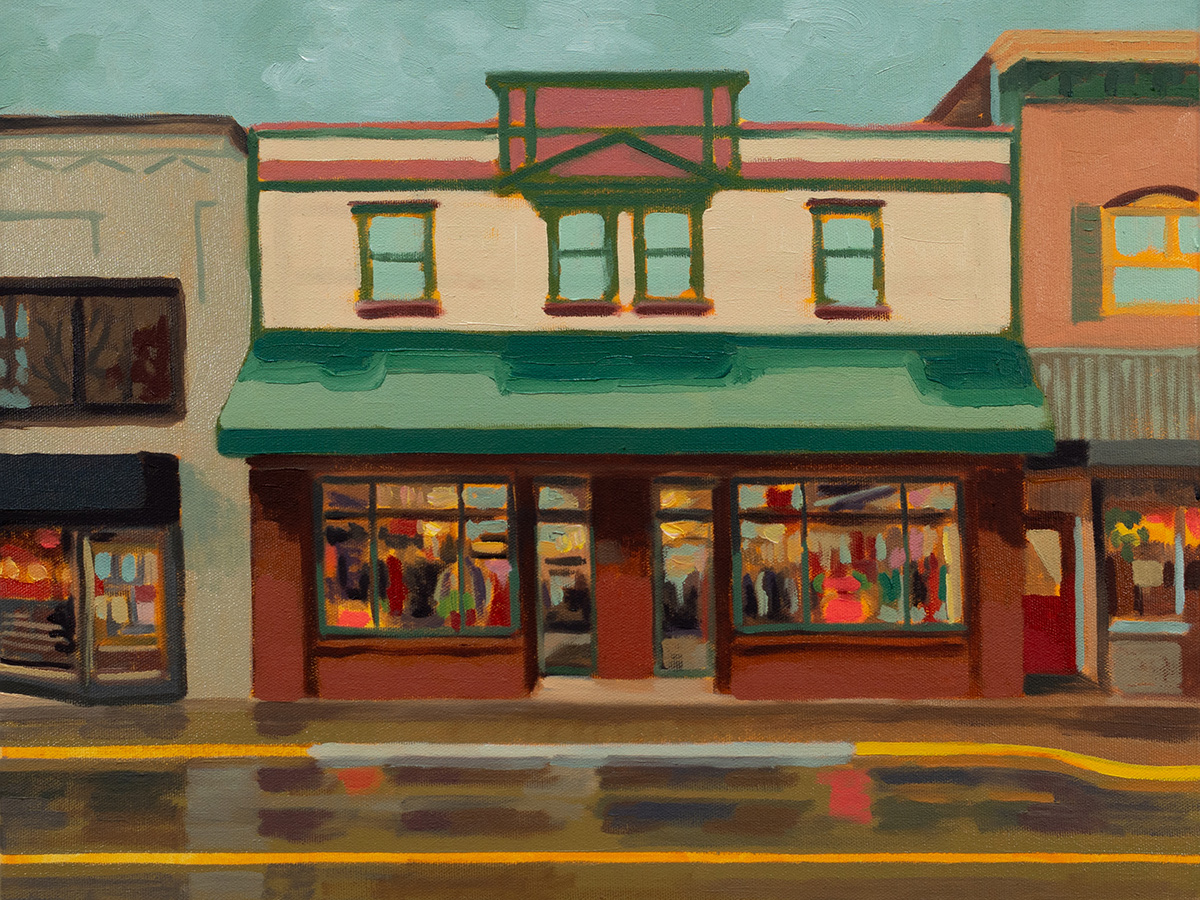
Into the Inhabited Silence is characterized by a deliberate manipulation of light and scale. Wang employs a "high-key" color palette—a technique that uses intense, luminous tones to create an artificial, almost hyper-real atmosphere. In his paintings, the internal light emanating from a house or a structure serves as a visual heartbeat, acting as a beacon of human tenacity against the dark, encroaching weight of the wilderness.
Technical Specifications and Themes
- Cinematic Palette: Wang utilizes light as a narrative device, suggesting the presence of life without explicitly detailing it.
- The Scale of Smallness: By framing everyday utility—a lamp, a window, a porch—against an overwhelming natural backdrop, the work forces the viewer to confront the "fundamental smallness" of the human experience.
- Psychological Landscapes: The paintings are not landscapes in the traditional sense; they are portraits of co-existence. They capture the exact moment where human infrastructure attempts to harmonize with, or resist, the environment.
Official Artist Statement: The Philosophy of the Inhabited
In a candid reflection on his work, Liang Wang explains the impetus behind his latest collection:
"Having spent much of my life in dense, humming urban environments, encountering the quiet vastness of the Canadian West Coast brought a profound shift in perspective. It introduced an unfamiliar, heavy solitude that forced a deeper way of looking. In these paintings, that isolation is translated through a high-key, cinematic palette. The vibrant, internal light of these structures acts as a visual heartbeat, pushing back against the dark weight of the surrounding forest."
Wang’s words underscore the intent of the exhibition: to honor the quiet, often overlooked ways in which individuals carve out a place to belong. The "inhabited silence" is not empty; it is pregnant with the tension of survival and the necessity of human connection.
Implications for the Modern Human Condition
The implications of Wang’s work extend beyond the gallery walls. As global urbanization continues to accelerate, the boundary between "the wild" and "the inhabited" becomes increasingly permeable. Wang’s paintings invite us to reconsider our relationship with the spaces we occupy.
Are we mere tenants in the wilderness, or have we successfully integrated our presence into the natural order? Through his art, Wang suggests that our modern isolation is not a symptom of being alone, but rather a byproduct of the friction between our need for infrastructure and our innate desire for wild, untamed connection.

The exhibition also highlights a growing movement among contemporary painters to reclaim the "landscape" genre by imbuing it with psychological depth. Rather than documenting the beauty of the outdoors, artists like Wang are using the outdoors as a mirror for the interior life.
Exhibition Details and Continued Engagement
Into the Inhabited Silence is currently open to the public at the Visual Space Gallery. For those looking to explore more of Wang’s process, his digital portfolio provides a comprehensive look at his past works and ongoing projects.
The exhibition stands as a testament to the power of artistic introspection. By documenting the small, illuminated corners of our world, Liang Wang provides a map for those navigating their own sense of displacement. As we look toward the future of contemporary Canadian art, Wang’s ability to translate the abstract feeling of "solitude" into a visual language marks him as a vital voice in the current discourse on environment, identity, and the quiet dignity of simply being.
Exploring the Broader Creative Ecosystem
The discourse surrounding artists like Liang Wang often intersects with a wider creative community dedicated to fostering emerging talent. For readers interested in the broader landscape of modern art and design, several resources and initiatives provide a deeper dive into the trends shaping our cultural future.
The Rise of Curatorial Platforms
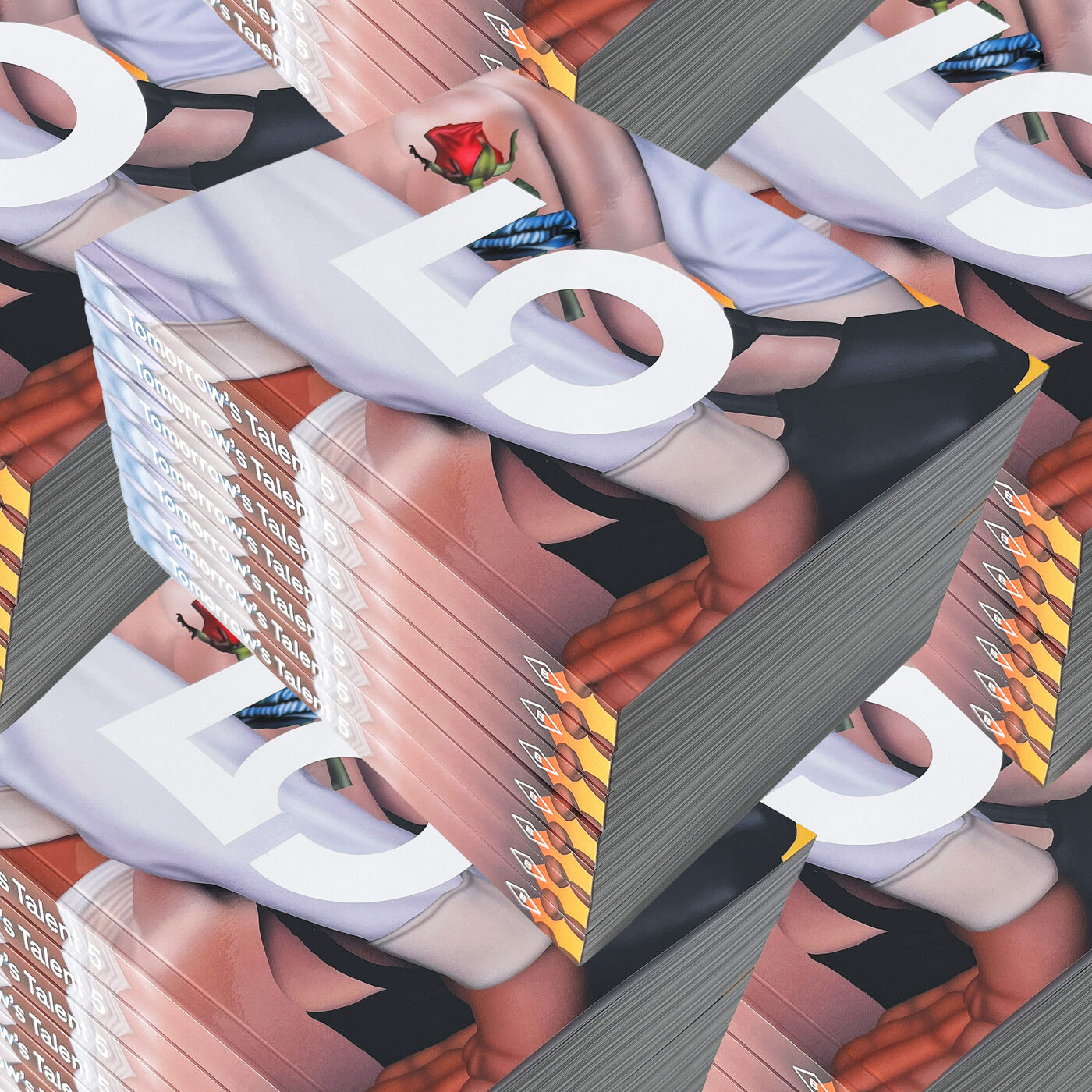
The evolution of galleries and digital platforms, such as Booooooom, has transformed how artists connect with global audiences. By moving beyond traditional gatekeeping, these platforms have allowed artists like Wang to build a cohesive narrative around their work. Whether through curated books like Tomorrow’s Talent 5—which spotlights 60+ emerging artists in a newly expanded format—or through dedicated studio initiatives, the infrastructure of the art world is evolving to better support the "quiet, internal light" of the individual creator.
The Importance of Community Engagement
Engagement with art is no longer a passive act of viewing. Modern exhibition spaces now prioritize dialogue, offering newsletters, open calls, and digital forums that invite the audience to participate in the artist’s journey. By signing up for artist-led mailing lists or exploring curated collections, the public can move from being observers to being active members of an ongoing creative conversation.
Future Outlook: The Role of the Artist in Society
As we move toward a future defined by technological advancement and rapid environmental change, the role of the painter becomes more essential than ever. Artists serve as the record-keepers of our collective psychological state. Liang Wang’s work, specifically, serves as a reminder that even as we build larger, more complex structures to house our lives, our fundamental need remains the same: to find a place where we feel anchored, seen, and finally, at home.
Whether you find yourself in the heart of a bustling city or on the edge of a vast, silent forest, Into the Inhabited Silence serves as a poignant reminder that the friction of our existence is what gives our lives, and our art, its profound, flickering heartbeat.