

In an era defined by the cyclical nature of intellectual property and the safety net of nostalgia-driven blockbusters, Christopher Nolan stands as a singular anomaly. He is perhaps the only filmmaker in contemporary Hollywood capable of commanding massive budgets and global theatrical distribution for projects that are unapologetically cerebral, structurally complex, and intellectually demanding.
While his peers often rely on established brand equity to lure audiences into theaters, Nolan has turned his own name into a brand—one synonymous with high-stakes, high-concept storytelling. His recent discourse on the fundamental nature of his craft has provided a rare, candid glimpse into how he manages to bridge the gap between niche intellectual curiosity and mass-market success.
The Core Philosophy: "The Director as Audience"
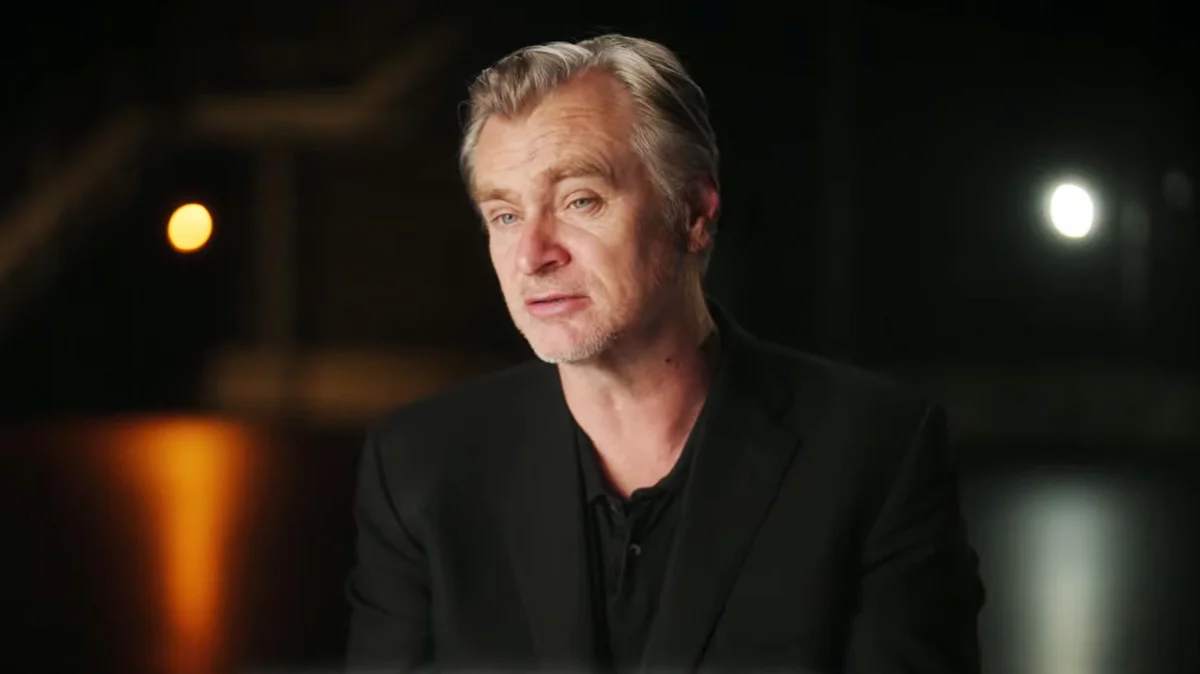
During a 2026 interview with veteran critic Richard Roeper, published via WBEZ Chicago, Nolan offered a deceptively simple definition of his role. When asked to characterize the nebulous, often misunderstood nature of directing, Nolan stripped away the pretense of the "visionary auteur" and replaced it with a more relatable, sensory-driven framework.
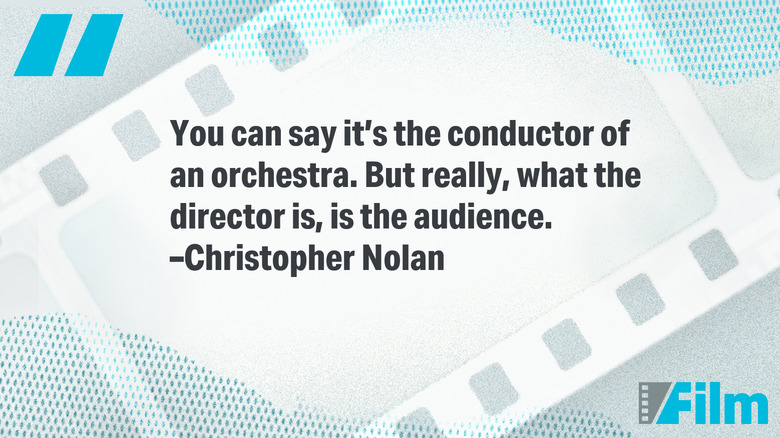
"You can say it’s the conductor of an orchestra," Nolan remarked. "But really, what the director is, is the audience. I’m there on set going, ‘Does this move me? What is this shot? OK, now what’s the next thing I need to see?’"
This statement, while seemingly understated, serves as the Rosetta Stone for understanding Nolan’s filmography. It suggests that his success is not derived from an attempt to manipulate or predict the audience, but rather from a rigorous, almost ruthless commitment to his own internal emotional barometer. By prioritizing his own engagement as a viewer, he creates a feedback loop that resonates with the global public.
A Chronology of Ambition: From London Streets to Epic Scales
To understand how Nolan arrived at this philosophy, one must trace the trajectory of his career—a journey from the constraints of low-budget necessity to the limitless possibilities of the modern studio epic.
The Guerilla Years (1998–2000)
Nolan’s origins are firmly rooted in the "do-it-yourself" aesthetic. His 1998 debut, Following, was a neo-noir crime thriller filmed on the streets of London with a shoestring budget of just $6,000. Operating without the luxuries of a traditional crew or studio backing, Nolan learned early that the only metric for success was whether the story worked for him in the moment. This project established the "guerilla" style that would later inform his handling of complex logistics in much larger films.
The buzz generated by Following caught the eye of Newmarket Films, leading to the 2000 breakthrough Memento. With a budget of $4.5 million, Nolan proved he could handle a non-linear narrative structure that forced audiences to experience the protagonist’s memory loss in real-time. Even at this early stage, he was acting as his own first audience, ensuring the puzzle was both difficult and rewarding.
The Rise of the Blockbuster Intellectual (2005–2020)
The mid-2000s saw Nolan transition to large-scale intellectual property with The Dark Knight trilogy. Rather than approaching these films as mere adaptations of comic book source material, he treated them as foundational myths. As he noted in an interview with Film Comment, he was driven by a simple question: "What would the origin story of Batman look like?" His motivation wasn’t commercial demand, but his own curiosity.
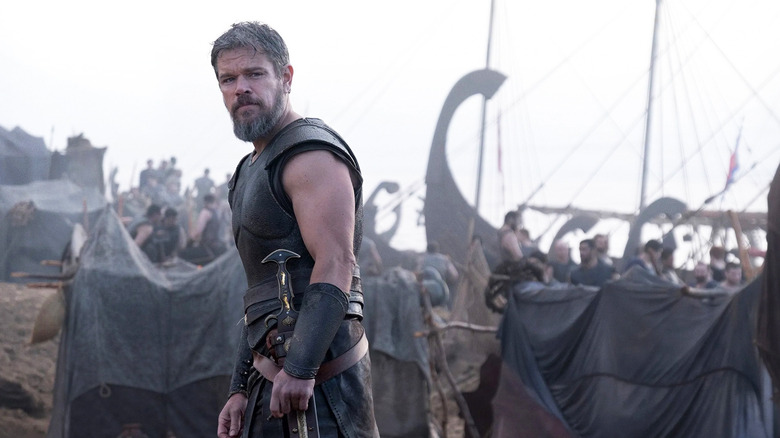
This trend continued through the 2010s with Inception, which explored the architecture of dreams, and Interstellar, a sprawling emotional epic tethered to the rigors of theoretical physics. By the time he reached Oppenheimer and his 2026 reimagining of The Odyssey, Nolan had mastered the ability to translate personal fascination into the kind of blockbuster scale that dominates the global box office.
Data and Disruption: The Economics of High-Concept Cinema
Nolan’s career provides a fascinating case study for industry analysts. According to current box office metrics, he remains one of the highest-grossing directors of all time. His ability to turn "difficult" films into cultural phenomena has defied the traditional Hollywood logic that suggests audiences prefer passive, low-stakes entertainment.
| Film | Primary Challenge | Box Office Impact |
|---|---|---|
| Memento | Non-linear structure | Proved niche appeal |
| Inception | Abstract dream logic | Global blockbuster |
| Interstellar | Quantum physics/Emotion | Cultural touchstone |
| The Odyssey | Ancient Greek adaptation | Modern epic standard |
His financial success is a direct consequence of his "audience-first" philosophy. By focusing on what he wants to see—whether that be the mechanics of time dilation in space or the psychological burden of an ancient hero—he ensures that his films possess a structural integrity that viewers can feel. When a director is genuinely excited by their own material, the audience senses that authenticity, which often translates into repeat viewings and word-of-mouth success.
Deconstructing the Director’s Role
In his conversation with Roeper, Nolan went on to demystify the technical aspects of the job. "It’s very difficult to pin down the job of the director, because I don’t photograph the film. I don’t act in the film. I don’t record the sound," he explained.
This admission highlights the paradox of the profession. A director is the person responsible for the final output, yet they are dependent on a massive, highly skilled team to execute the mechanics. By positioning himself as the "audience" on set, Nolan simplifies his role to its essence: the curator of experience. He is the filter through which all creative input must pass to ensure the final product remains coherent and emotionally resonant.
The Importance of Instinct
The deeper meaning of Nolan’s quote is a call to trust one’s intuition. Many filmmakers, particularly those operating within the high-pressure environment of major studios, often succumb to "committee-think"—adjusting scripts and pacing to satisfy focus groups or perceived market trends.
Nolan’s approach acts as an antidote to this. By writing a list of things he personally wants to see in a film, he creates a roadmap for his vision. If he finds a scene boring, he cuts it. If he is confused by a narrative beat, he clarifies it. This isn’t just self-indulgence; it is a recognition that if a director is bored, the audience will inevitably be bored as well.
Implications for the Future of Cinema
Christopher Nolan’s stance arrives at a pivotal moment for the film industry. As streaming platforms and the "monoculture" of reboot-heavy franchises continue to shift the landscape, the idea of the director as an individual voice is under threat.
The Rejection of the Monoculture
Recent discourse surrounding the industry has criticized the trend of "craven" IP mining, such as the cycle of Harry Potter reboots or similar nostalgia-driven projects. These projects often lack the singular perspective that defines a true "author" film. Nolan’s success serves as a powerful counter-narrative, proving that audiences are not just looking for familiar brands; they are looking for unique, human-led experiences.
The Path Forward
For aspiring filmmakers, the takeaway is clear: the most important viewer you will ever have is yourself. Nolan’s success is built on the foundation of his own taste. He does not treat the audience as a demographic to be targeted, but as a collective entity that shares his fundamental human desire to be moved, challenged, and intellectually stimulated.
As Nolan continues to push the boundaries of what a summer blockbuster can be, his words serve as a reminder that the best way to connect with the world is to stop trying to guess what the world wants, and instead focus on what truly moves you. In a landscape often cluttered by focus groups and algorithms, this simple, visceral, and authentic approach remains the most potent tool in a director’s arsenal.
Christopher Nolan has not just mastered the art of filmmaking; he has mastered the art of being the first audience member of his own imagination. In doing so, he has invited millions of others to join him on the journey.










