

For a generation of readers, the mention of R.L. Stine, Christopher Pike, or Diane Hoh evokes memories of neon-spandex bookmarks, glow-in-the-dark covers, and the thrill of a late-night page-turner. While these books were marketed primarily as vehicles for supernatural suspense and adolescent slasher tropes, a retrospective analysis reveals a more grounded, often bleak, preoccupation: the pervasive influence of class and capital on the American teenager’s psyche.
While the plots were frequently dominated by murder, vengeful spirits, and high-stakes mayhem, the authors of the 1990s teen horror boom often wove a subtle, biting commentary on economic stratification into their narratives. These stories served as a dark mirror to the socio-economic anxieties of the decade, illustrating that for the youth of the ’90s, the "right" zip code or a lack of disposable income could be just as lethal as any masked killer.
The Geography of Inequality: From North Hills to the Old Village
The social hierarchy in these novels was rarely subtle. In the Fear Street universe, the geographical divide between the affluent North Hills and the dilapidated Old Village functioned as a structural antagonist.
In Christopher Pike’s Weekend (1986), characters like Robin and Lena Carlton exist in a stratosphere where mortality is buffered by wealth; when Robin is poisoned, her recovery is facilitated by private medical care and the luxury of international travel. Similarly, in Diane Hoh’s Deadly Attraction (1993), the destruction of a sports car is treated as a minor inconvenience, immediately rectified by parental intervention. These characters inhabit a reality where money is an atmospheric constant—a shield against the consequences of life’s accidents.
Conversely, the "Shadyside" protagonists represent the other end of the spectrum. For characters like Delia in Killer’s Kiss (1997), a college education is not a foregone conclusion but a desperate, life-altering gamble—a "ticket out" of a cycle of poverty. The 2021 Netflix adaptation of the Fear Street trilogy, while modernized, hit on a truth present in the source material: the deep-seated tension between the "haves" and "have-nots" is the bedrock upon which the horror is built.
Case Study: The Deception of "The Rich Girl"
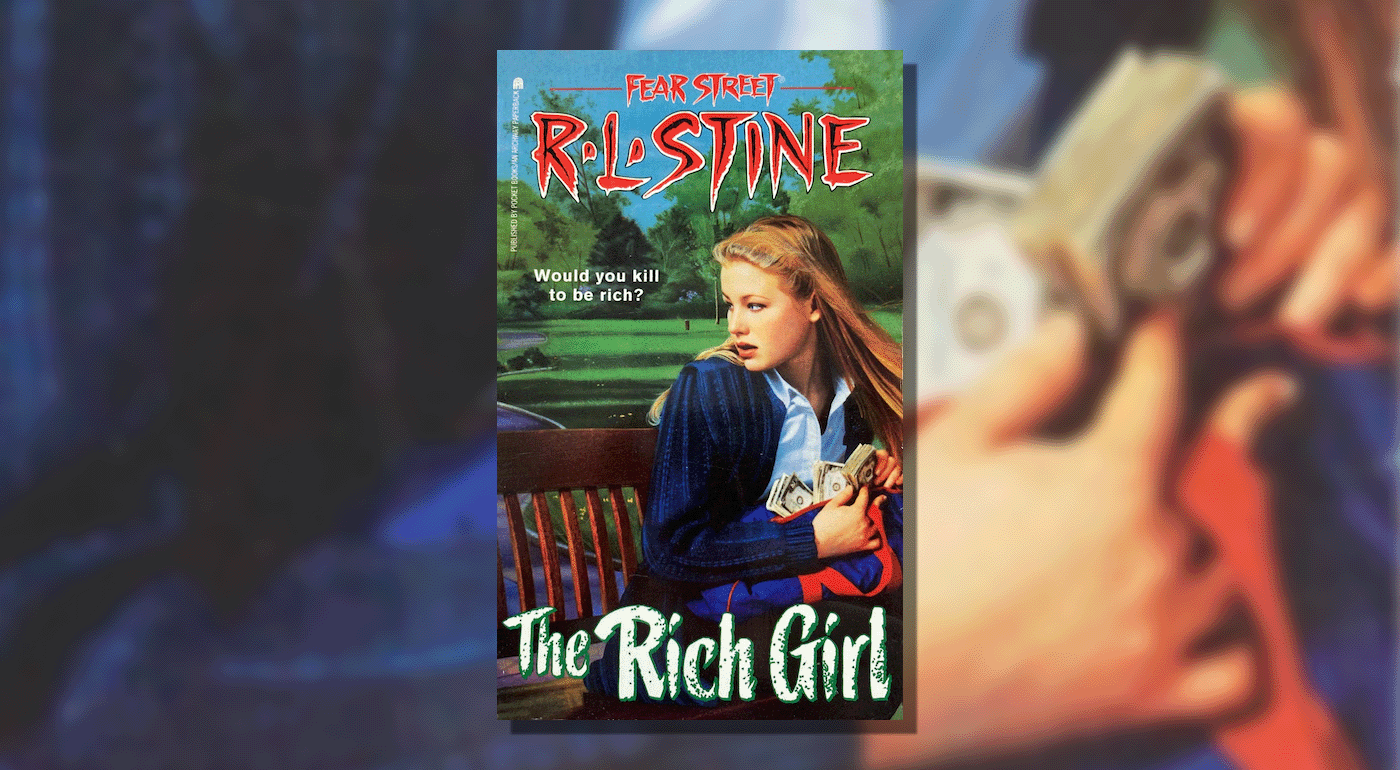
Nowhere is this class tension more meticulously dissected than in R.L. Stine’s 1997 Fear Street novel, The Rich Girl. The narrative follows two best friends, Emma Naylor and Sydney Shue, whose friendship is defined by a yawning chasm of economic disparity.
The Chronology of a Moral Collapse
- The Discovery: After a grueling shift at a local movie theater—a job Emma holds to fund her mother’s essential knee surgery—the girls discover a duffle bag containing $100,000 in a dumpster.
- The Conflict: The immediate divergence in their worldviews is stark. Sydney, cushioned by her parents’ affluence, instinctively seeks to involve the authorities. Emma, desperate to save her mother and secure her own future, views the money as a lifeline.
- The Escalation: The secret binds them to Sydney’s volatile boyfriend, Jason. What begins as a quest for financial salvation devolves into a series of psychological games, staged murders, and gaslighting.
- The Climax: Emma and Jason’s betrayal of Sydney—faking a death and a haunting to institutionalize her—exposes the absolute corruption that financial desperation, coupled with moral apathy, can engender.
- The Resolution: The irony of their undoing is total: the money they sacrificed their humanity to secure is revealed to be laughably poor counterfeit.
The Illusion of Upward Mobility
The central tragedy of The Rich Girl lies in its portrayal of the "American Dream" as a hollow promise. Emma’s motivation—securing healthcare for her mother—is deeply sympathetic. However, Stine uses her character to demonstrate how economic pressure can mutate necessity into monstrosity. Emma is not born a villain; she is a product of a system that provides no safety net for the working class.
The counterfeit money at the end of the novel is a potent metaphor. It represents the "fake" promise of wealth that keeps the working class compliant and the middle class aspirational. By the time Emma and Jason realize the money is worthless, they have already burned their bridges, ruined their friend, and committed themselves to a path of violence. They are left with nothing but the realization that they were never the beneficiaries of the system—only its victims.
Implications: The Lasting Legacy of Class-Conscious Horror
Looking back at these novels through a modern lens, the "horror" is not just in the jump scares or the plot twists; it is in the systemic reality of the characters’ lives.
Economic Pressures and Mental Health
These books often highlight the extreme psychological toll of financial instability. Emma’s anxiety regarding her mother’s surgery is a real-world horror that resonates far more deeply than the supernatural elements in other Stine novels. The fear of being unable to afford basic medical care is a recurring theme that reflects the specific anxieties of the 1990s and, arguably, remains just as relevant today.
The Myth of Meritocracy
Many of these novels present a world where, despite the "trust fund" characters, there is a pervasive myth that hard work will lead to success. Yet, the plots consistently undermine this. Whether it is scholarship students working multiple jobs at Salem University or characters in Fear Street struggling to keep their homes, the authors suggest that for many, the system is rigged. The "Rich Girl" is not just a character; it is a symbol of an unattainable status that drives the protagonists to irrational, and often fatal, lengths.
Ethical Blind Spots
The dynamic between Sydney and Emma also provides a masterclass in the "blind spots" of privilege. Sydney’s attempt to be a supportive friend is constantly undercut by her inability to truly comprehend the stakes of Emma’s existence. Her self-awareness is limited, and she is unable to recognize that her presence in Emma’s life acts as a constant, if unintentional, reminder of what Emma will likely never have.
Conclusion: All That Glitters is Not Gold
The teen horror boom of the 1990s was more than just a passing fad of pulpy paperbacks. It was a cultural document that captured the anxieties of a generation witnessing the widening gap between the wealthy and the working class. By anchoring their stories in the harsh realities of rent, tuition, and medical bills, authors like Stine and Pike ensured that their horror would have a shelf life far beyond the decade in which it was written.
In the final analysis, The Rich Girl and its contemporaries serve as cautionary tales. They remind us that when society treats survival as a privilege rather than a right, the desperation that follows will inevitably lead to destruction. Whether the "Rich Girl" is the one who has the money or the one who is destroyed by the pursuit of it, the lesson remains the same: in a world defined by inequality, the most dangerous thing you can be is desperate—and the most dangerous thing you can have is a false hope in the currency of the status quo.
As the dust settles on the pages of these classic horror novels, we are left with a lingering, uncomfortable truth: the most frightening thing in the woods of Fear Street was never a ghost or a slasher—it was the crushing, indifferent weight of a bank account.










