

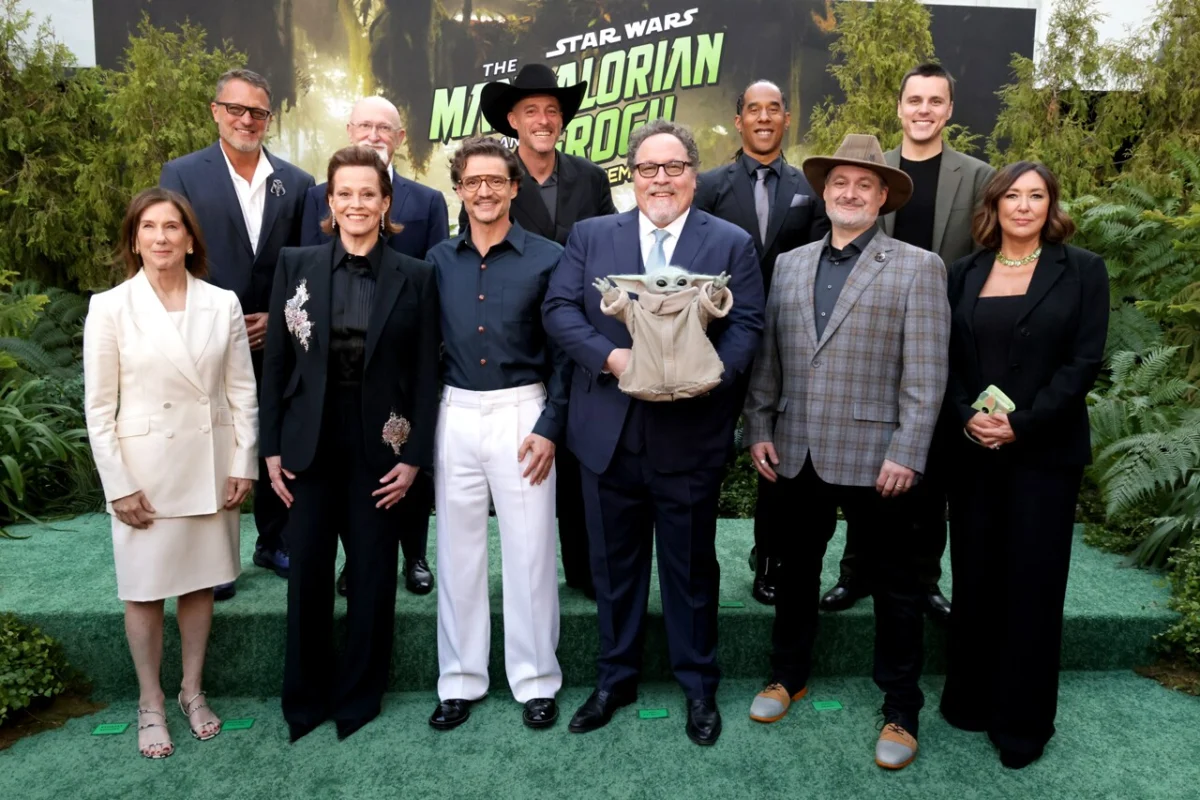
The Star Wars universe is preparing for its most significant leap in recent years. As Lucasfilm looks toward the future of the franchise, the upcoming theatrical feature, Star Wars: The Mandalorian and Grogu, stands as the centerpiece of a new era of storytelling. Set to hit theaters on May 22, 2026, the film marks the transition of the beloved Disney+ series to the grand scale of IMAX, promising a cinematic experience that blends the intimate bond of a father and son with the sweeping, high-stakes political turmoil of a galaxy in transition.
Main Facts: A New Mission for the Clan of Two
Directed by Jon Favreau, The Mandalorian and Grogu serves as the culmination of years of narrative building. The film picks up following the events of the television series, which saw Din Djarin (Pedro Pascal) and his young ward, Grogu, establish a newfound sense of peace on the world of Nevarro. However, the respite is short-lived.
The galaxy remains a volatile place. While the Empire has technically fallen, the reality is far more fractured; Imperial warlords remain embedded in the outer rim, acting as a corrosive force against the fledgling New Republic. To combat this lingering threat, the Republic turns to the galaxy’s most reliable bounty hunter. The mission is clear, but the stakes have never been higher, as Din Djarin must navigate a landscape of political intrigue and military resurgence while ensuring the safety of his apprentice.
Filmed specifically for IMAX, the production aims to emphasize the vastness of the Star Wars galaxy, featuring sprawling new worlds and environments that have never been captured in live-action before.
Chronology: From Disney+ Origins to the Silver Screen
The journey of The Mandalorian and Grogu began in 2019 with the debut of The Mandalorian on Disney+. At the time, the series was a modest experiment in episodic Star Wars storytelling. Pedro Pascal, the face behind the beskar mask, recalls his first visit to the Manhattan Beach Studios production offices.
"The walls were completely covered with story illustrations, including a silhouette of a lone hero discovering this tiny, beautiful little creature," Pascal recalls. "It was immediately clear to me that this was the next step for Star Wars."
From the start, Pascal harbored a secret ambition for the character. "The show always felt big screen to me. I’d be lying if I said I hadn’t been secretly hoping we would make a movie one day. It just made sense."
Following the initial seasons, where Din Djarin evolved from a detached bounty hunter into a devoted father figure, the story shifted toward the restoration of Mandalore and the reclamation of the Mandalorian heritage. The film now serves as the next logical chapter, moving from the serialized format of television to a singular, focused narrative that emphasizes the apprenticeship between the seasoned warrior and the force-sensitive child.
Supporting Data: The Craft Behind the Magic
A project of this magnitude relies on a unique synergy between high-end digital technology and traditional filmmaking techniques. The production team, including Lucasfilm President and co-writer Dave Filoni, has emphasized that this film is, at its core, a story about the passage of knowledge.
"It’s a story about apprenticeship," Filoni notes. "It’s about one generation teaching the next."
The technical execution of the film is a testament to this philosophy. The character of Grogu, while a star in his own right, remains a technical marvel. The team at Legacy Effects has evolved their animatronics to provide a performance that carries the emotional weight of the film without a single line of dialogue.
"Grogu is number two on the call sheet," says Legacy Effects performer Jason Matthews. "He doesn’t have dialogue, just sounds. He has to tell a great deal through body language, expressions, and emotions."
This commitment to the "handcrafted" feel of Star Wars is echoed by Favreau, who insists on balancing cutting-edge technology with practical, tangible effects. "We got to work with puppeteers, stop-motion animation, all the things I loved about Star Wars," Favreau says. "It’s about combining new technology with the old, handcrafted stuff that’s so much of what makes Star Wars, Star Wars."
Official Responses: A Star-Studded Collaboration
The production has attracted top-tier talent, most notably the legendary Sigourney Weaver, who joins the cast as Colonel Ward. Her addition has brought a new dynamic to the set, with the cast and crew expressing immense admiration for her contributions to the Alien franchise and beyond.
Pedro Pascal, who admits to being a "number-one Sigourney Weaver fan," was visibly moved by the collaboration. "Better than being in Star Wars for me is being in a movie with Sigourney Weaver. She’s just the biggest badass. She’s transcendent."
Weaver herself describes the experience as a personal milestone. "I never expected to be in a Star Wars movie, but I’m delighted," she says. Her character, Colonel Ward, is an X-wing pilot and a steadfast defender of the New Republic, tasked with the efficient removal of Imperial remnants.
The chemistry between Weaver and Grogu was so palpable that Favreau expanded her screen time to accommodate their interaction. "Sigourney got such a kick out of Grogu," Favreau reveals. "She said, ‘I want to work with this guy.’ So, we created some moments that I think work very well."
Implications: The Future of the Franchise
The implications of The Mandalorian and Grogu for the wider Star Wars timeline are profound. By focusing on the "Clan of Two," the film bridges the gap between the fall of the Empire and the rise of the First Order, filling in the gaps of the New Republic’s struggle to maintain order.
Furthermore, the film highlights the evolution of Din Djarin as a character. No longer merely a "reluctant protector," Djarin is now a mentor, actively training Grogu in the ways of the Mandalorian. As Favreau explains, "Mando has now placed his focus on protecting his son and preparing him for the future, and in the film, that dynamic has a lot of surprising and emotional shifts."
This shift carries a deeper, more universal message about the role of a parent. "As a dad, it taps into the sense of the hero as a protector," Favreau says. "You’re trying to create a safe world that you’re leaving behind for the next generation."
Conclusion: A Cinematic Event
As the May 22, 2026, release date approaches, anticipation is reaching a fever pitch. With a script penned by Jon Favreau, Dave Filoni, and Noah Kloor, and a production team that includes veterans like Kathleen Kennedy and Ian Bryce, the film is poised to be a milestone in modern blockbuster cinema.
The inclusion of stars like Jeremy Allen White as Rotta the Hutt further expands the lore, grounding the film in the familiar, gritty aesthetic of the Star Wars underworld. Whether through the lens of IMAX-enhanced cinematography or the nuanced, emotional performances of the cast, The Mandalorian and Grogu promises to redefine what fans expect from a Star Wars feature film.
In an era where franchise fatigue is a common concern, Lucasfilm is betting on the enduring, human-centric appeal of the Mandalorian and his child. It is a story not just about galaxy-spanning conflict, but about the bonds we forge and the responsibility we bear for the future. As the trailer suggests, the journey is only just beginning, and for those who have followed the pair since their first appearance in 2019, the theater on May 22 will be the only place to witness the next great step in their journey.










No comments yet. Be the first to join the conversation!