

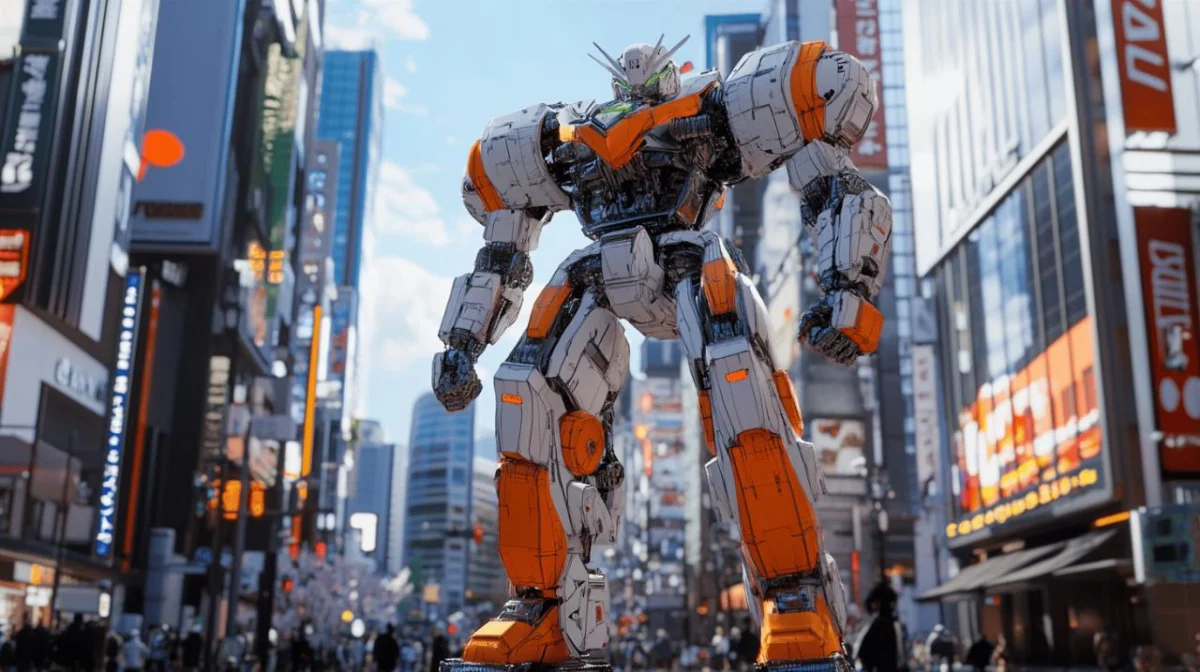
The global construction industry, a cornerstone of economic development, stands at a critical technological crossroads. In Japan, a nation grappling with a demographic crisis characterized by an aging population and a shrinking workforce, the necessity for innovation has never been more acute. Emerging as a beacon of this transformation is the HRP-5P, an autonomous humanoid robot developed by the National Institute of Advanced Industrial Science and Technology (AIST). This sophisticated machine is not merely a prototype; it represents a fundamental shift in how human labor and robotic intelligence can converge to solve the most pressing challenges of the 21st-century building sector.
Main Facts: The Rise of the Humanoid Mason
The HRP-5P is an autonomous humanoid robot designed specifically for the heavy lifting and high-precision tasks required on modern construction sites. Standing as a testament to Japanese engineering, the robot is equipped with advanced object-detection systems, high-torque actuators, and artificial intelligence (AI) capable of real-time environmental navigation.
Unlike traditional factory automation—where robots operate in caged, static environments—the HRP-5P is designed to function in the dynamic, unpredictable landscape of a construction site. Its primary functions include the transportation of heavy materials, such as gypsum boards, and the intricate task of assembling interior walls. By mimicking human biomechanics, the robot can operate tools and handle building materials in spaces originally designed for human workers, eliminating the need for costly redesigns of architectural workflows.
Chronology: From Concept to Construction Reality
The development of the HRP-5P is the result of years of research at AIST, a Japanese government-funded research institution dedicated to the advancement of industrial technology.
- Early 2010s: AIST begins identifying the growing labor gap in the construction sector, fueled by a demographic decline in Japan. Research begins on humanoid robots capable of performing physical labor in human-centric environments.
- September 2018: The formal unveiling of the HRP-5P prototype. The robot is demonstrated performing a task that typically requires two human workers: lifting a heavy drywall panel, moving it into position, and securing it to a wall frame.
- 2019-2021: Subsequent testing phases focus on fine-tuning the robot’s environmental sensors and artificial intelligence, moving from laboratory settings to controlled "simulated" construction environments.
- 2022-Present: The focus shifts toward scalability and integration. AIST begins exploring the application of the HRP-5P’s underlying AI and motion-planning algorithms for industries beyond construction, such as shipbuilding and large-scale aeronautical assembly.
Supporting Data: The Efficiency Imperative
The impetus for creating the HRP-5P is supported by staggering industry data. In Japan, the construction industry faces a "2024 problem"—a legislative cap on overtime hours for construction workers, coupled with a record-low number of young people entering the trade.
Robotic integration provides a solution where human fatigue is no longer a factor. For instance, while a human worker may require frequent breaks and is subject to physical exhaustion during the installation of heavy ceiling panels or wall partitions, the HRP-5P can work continuously.
Technological benchmarks in the field are equally impressive:
- Precision and Speed: Current robotic innovations in the sector show that specialized robots can achieve a tolerance of 0.5mm over a 250-meter span during finishing tasks.
- Throughput: Companies like Fastbrick Robotics (Hadrian X) have demonstrated the ability to lay 1,000 bricks per hour, a rate far exceeding human capabilities.
- Time Efficiency: Through a combination of 3D printing and robotic assembly, firms like China’s Winsun have successfully printed houses in under 24 hours, signaling a future where the HRP-5P could act as the "finish" team in a fully automated construction ecosystem.
Official Responses and Strategic Vision
The leadership at AIST has been clear regarding the role of the HRP-5P. Rather than aiming to replace humans entirely, the institution views the robot as an "augmentation tool." In official statements, AIST researchers emphasize that the robot is designed to take over "the 3Ds"—tasks that are Dangerous, Dirty, or Dull.
The Japanese government has supported this vision through subsidies for robotics R&D, framing it as a national security issue. If the construction sector fails to build the necessary infrastructure due to a lack of workers, the economy will stagnate. Consequently, the HRP-5P is viewed as a strategic asset. By offloading physically taxing tasks to robots, companies can retain their older, experienced human workers in supervisory and programming roles, effectively extending the careers of skilled laborers who can no longer perform the heavy lifting required on-site.
Implications for the Global Construction Industry
The introduction of the HRP-5P signals a shift from "manual labor" to "managed labor." The implications are wide-reaching, affecting everything from economic policy to the future of vocational education.
Economic Transformation
The cost of construction has historically been a significant driver of inflation in urban centers. By automating the most labor-intensive aspects of building, developers can reduce overheads and shorten project timelines. If a house can be built in three days instead of three weeks, the capital efficiency for contractors increases exponentially, potentially lowering housing costs for the consumer.
Occupational Safety
Construction remains one of the most dangerous industries in the world, with high rates of workplace injury. The HRP-5P acts as a safety barrier. When the robot performs the "heavy lifting" or works at dangerous heights, it minimizes the exposure of human workers to risks such as falling debris, back injuries, or structural collapses. The robot’s sensor array, which includes sophisticated LiDAR and computer vision, ensures it can detect obstacles or people in its path, creating a safer environment through constant, watchful "eyes."
The Evolution of the Construction Workforce
The rise of the HRP-5P necessitates a change in how we train the next generation of builders. The future construction worker will likely be a hybrid technician—someone who is as comfortable with a tablet, a programming interface, and maintenance diagnostics as they are with a hammer and level. Vocational schools are beginning to pivot, introducing courses on "Robotic Site Management" and "Human-Robot Collaboration."
Cross-Industry Synergy: Shipbuilding and Aerospace
One of the most promising aspects of the HRP-5P is its versatility. AIST has noted that the same motion-planning algorithms used to secure a drywall panel can be repurposed to fasten hull plates in a shipyard or secure components in an aircraft fuselage. This cross-industry utility suggests that the HRP-5P could become a platform technology, with a software ecosystem that developers can adapt for any industry that requires high-precision manipulation of heavy objects in large, open spaces.
Conclusion: A New Era of Building
The HRP-5P is more than a piece of machinery; it is a response to the inevitability of change. While it is easy to fear the "robotization" of labor, the Japanese experience suggests that it is a necessary evolution. As the population ages, the reliance on human muscle alone becomes an unsustainable model for modern progress.
By embracing the HRP-5P and similar technologies, the construction industry is not eliminating the human element; it is elevating it. We are moving toward a future where machines handle the brute force and the repetitive precision, leaving humans to handle the creative, strategic, and oversight roles that define complex engineering.
As we look toward the next decade, the integration of robots like the HRP-5P will likely be the deciding factor between stagnation and growth for national infrastructure projects. Japan’s commitment to this path serves as a blueprint for the rest of the world, proving that when technology is deployed with intent and precision, it can build more than just walls—it can build a sustainable, efficient, and safer future for all.












No comments yet. Be the first to join the conversation!