

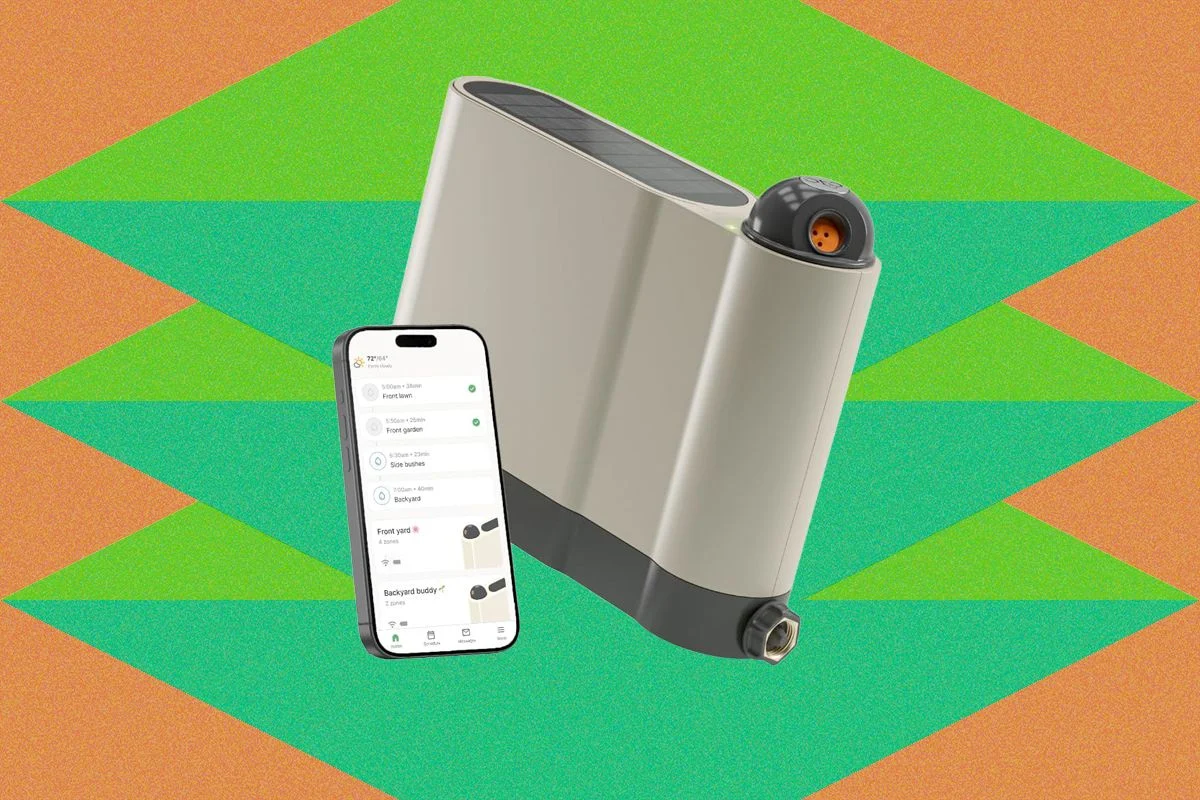
The landscape of residential lawn care is undergoing a silent, high-tech revolution. As water scarcity becomes a primary concern for homeowners and municipal governments alike, the era of the "dumb" oscillating sprinkler—which drenches sidewalks and driveways with abandon—is rapidly drawing to a close. Enter the Oto smart sprinkler system, a device that promises to bring the surgical precision of automated manufacturing to the humble backyard.
In this analysis, we explore how Oto stacks up against established market players like Aiper and Irrigreen, examining the mechanics of its precision watering, its digital interface, and the implications of its "smart" features for the modern homeowner.
The Mechanics of Precision: How Oto Redefines Coverage
At its core, the Oto sprinkler is designed to solve the age-old problem of irrigation inefficiency. Traditional sprinklers operate on a "one size fits all" basis, spraying water in wide, indiscriminate arcs. Oto, by contrast, utilizes a focused, single-direction beam.
Unlike Irrigreen’s "water printing" technology, which creates a two-dimensional curtain of liquid to map out a space, Oto’s approach is more akin to a high-pressure, directed nozzle. It fires a concentrated stream of water that rotates and extends to cover specific geometries. While this produces a narrower spray pattern than its competitors, the trade-off is a mechanical simplicity that allows for extremely granular control.
During setup, users define their boundaries via a companion app, essentially drawing a digital map around the physical device. As the sprinkler initiates its cycle, it moves in deliberate, calculated circular arcs. It begins at the base of the unit and incrementally increases its range with each successive swipe. To ensure total coverage, the system performs a final "clean-up" phase, targeting any peripheral spots that may have been bypassed during the initial, wider sweeps. The result is a surprisingly uniform saturation, leaving few, if any, dry patches in the target zone.
Chronology of Configuration: From Box to Boundary
For the average consumer, the barrier to entry for "smart" home devices is often the setup process. Oto attempts to streamline this through a familiar, point-and-click interface.
Phase 1: Zone Definition
Upon installing the unit, the user initiates the "Boundary Mapping" mode. Using the app, you navigate the sprinkler’s range, dropping digital pins that correspond to the edges of your lawn, flowerbeds, or specific trees. This process is virtually identical to the workflows found in Aiper or Irrigreen systems. While I observed a slight latency in the Oto’s response time compared to its higher-priced counterparts, the interface remains intuitive. A full 360-degree circuit around the yard completes the zone, effectively telling the device exactly where it is allowed—and encouraged—to spray.
Phase 2: Scheduling and Logic
Once the geography is established, the scheduling phase begins. Oto offers a robust set of parameters: users can choose to water on even/odd days, select specific days of the week, or opt for a daily regimen. A standout feature here is the "weekly watering limit" measured in inches of depth. By setting a total volume for the week, the system automatically parses out the watering runs, ensuring the lawn receives consistent hydration rather than an erratic deluge.
Phase 3: Intelligence Integration
The final layer of the setup involves weather integration. By tethering the app to your zip code, Oto pulls real-time data from internet reports. If the system detects high wind speeds or measurable rainfall, it can automatically trigger a "skip" command. Crucially, the app allows the user to define the threshold for these triggers, providing a level of customization that prevents the sprinkler from being overly sensitive or dangerously lax.
Supporting Data: Efficiency vs. Erosion
In testing the Oto system, the performance data reveals both the strengths and the inherent limitations of high-pressure, beam-based irrigation.
The coverage consistency is the device’s strongest selling point. By moving slowly and deliberately, the sprinkler ensures that soil absorption is maximized. Because the water is not misted into the air—where evaporation rates are significantly higher—a larger percentage of the water actually reaches the root zone.
However, physics remains a factor. When the sprinkler operates at the maximum edge of its range, the nozzle must exert significant force to maintain the beam’s integrity. This results in a "splashdown" effect. In areas with loose soil or delicate seedlings, this high-velocity impact can cause minor soil erosion or physical damage to sensitive flora. While this is a common challenge for many precision sprinklers, it is a point of consideration for users with newly laid seed or fragile perennial beds.
Furthermore, water pressure fluctuations in the municipal supply can lead to slight variances in the beam’s reach. While the Oto handles these fluctuations better than most, users should be prepared for minor over- or under-watering if their local water pressure is notoriously unstable.
Official Responses and User Experience
While the technical specifications are impressive, the user experience (UX) is where Oto truly differentiates itself. The manufacturer has opted to include a "Play Mode," a lighthearted feature that transforms the utilitarian tool into a backyard toy.
The "Splash Tag" mode, which utilizes the same precision-targeting tech used for lawns, effectively turns the sprinkler into a randomized water-chaser. While this adds a layer of fun, it also serves as a testament to the device’s mechanical speed and responsiveness. During internal testing, it became clear that the system’s ability to track and pivot is more than adequate for high-speed engagement—a "pro tip" for users: avoiding the stream is virtually impossible.
Implications for the Future of Residential Irrigation
The emergence of devices like the Oto represents a broader shift in how we manage domestic resources. We are moving away from "set it and forget it" systems toward dynamic, data-informed environmental management.
The Environmental Impact
The implications of widespread adoption of precision watering are significant. Municipal water districts often struggle with peak-demand spikes, frequently caused by thousands of homes running traditional sprinklers at the same time. By allowing for granular control and weather-based skipping, Oto and its peers help reduce the strain on local water tables.
The Technological Evolution
The slight delay in command response time observed during testing suggests that there is still room for optimization in the firmware. However, as these systems integrate further with smart home ecosystems (such as Alexa, Google Home, or HomeKit), we can expect to see deeper automation—perhaps linking the sprinkler to soil moisture sensors buried in the yard rather than relying solely on zip-code-level weather reports.
Cost-Benefit Considerations
For the average homeowner, the decision to invest in a system like Oto hinges on the cost of water and the value of their landscaping. In regions where water rates are tiered or expensive, the precision of the Oto system can pay for itself within a few seasons by eliminating the waste associated with watering pavement or non-target areas. For those who simply want a healthier lawn, the ease of mapping and the logic of the scheduling system provide a level of convenience that traditional controllers simply cannot match.
Final Verdict
The Oto smart sprinkler is a formidable entry into the precision irrigation market. While it may lack the complex "water printing" of more expensive units like Irrigreen, it makes up for it with a straightforward, reliable, and highly customizable user experience. It turns the chore of lawn maintenance into a managed, efficient, and—occasionally—entertaining task.
As technology continues to merge with the outdoors, the Oto system serves as a bridge between the traditional, analog past of gardening and a future defined by efficiency and intelligence. For the homeowner looking to optimize their water usage without sacrificing the health of their lawn, it is a compelling, highly capable solution.












No comments yet. Be the first to join the conversation!