

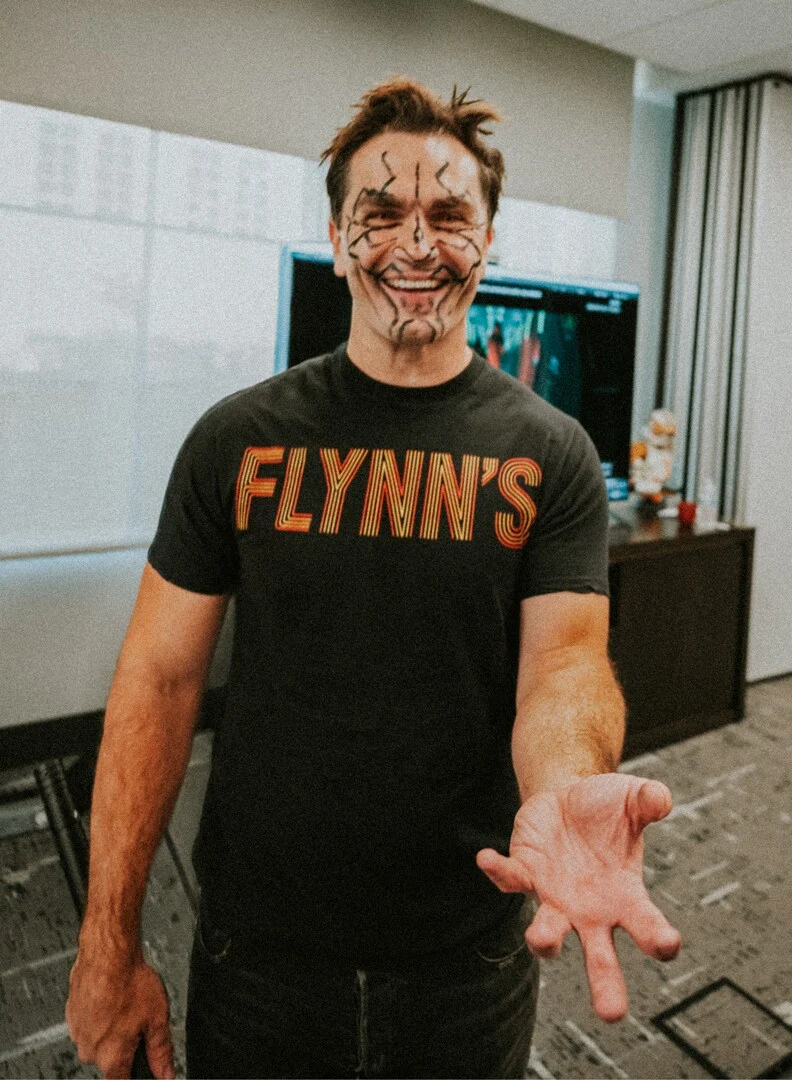
For over a decade, the voice of Maul has been synonymous with the intensity, rage, and complex tragedy of the Star Wars galaxy. While many actors have stepped into the roles of legendary Jedi and Sith, few have maintained a tenure as consistent or as emotionally demanding as Sam Witwer. With the debut of the new animated series Star Wars: Maul – Shadow Lord on Disney+, the character is finally stepping out of the peripheral shadows to claim the center stage.
In this deep dive, we explore how Witwer’s evolution as a performer has mirrored the psychological maturation of one of the franchise’s most enigmatic villains.
The Main Facts: A New Chapter for a Dark Icon
Star Wars: Maul – Shadow Lord arrives on Disney+ with a narrative promise: to provide an unprecedented, intimate look at the former Sith Lord as he navigates the dangerous, shifting landscape of the nascent Galactic Empire. The first two episodes are currently available, signaling a shift in tone for Star Wars animation—moving away from the broad strokes of galactic conflict and into the claustrophobic, fractured psyche of a man who has lost everything.
At the heart of this production is Sam Witwer, a veteran of the franchise whose connection to the character has transcended mere voice acting. For Witwer, this series is the culmination of years of "obsessing over Maul’s interior life." The series promises to peel back the layers of the Zabrak warrior, moving beyond the lightsaber duels to examine the loneliness, the ambition, and the profound psychological damage inflicted by his former master, Darth Sidious.
A Chronological Journey: From Starkiller to Shadow Lord
To understand the nuance of Witwer’s current performance, one must look at the trajectory of his career within the Star Wars universe—a path defined by happy accidents and deep creative collaboration.
The Force Unleashed and the Birth of a Voice
Witwer’s journey began in 2008 with Star Wars: The Force Unleashed. Cast as Starkiller, the secret apprentice to Darth Vader, Witwer was a newcomer to the galaxy. He openly credits his friend and Maul – Shadow Lord co-star, David W. Collins, for "slipping his headshot into the audition pile." This role established Witwer’s ability to portray characters caught between the crushing weight of the dark side and a glimmer of lost humanity.
The Mortis Arc: Learning the "Sith Language"
A few years later, Witwer joined the cast of Star Wars: The Clone Wars as the Son of Mortis. It was here, under the tutelage of Dave Filoni, that Witwer learned to truly inhabit the "Sith" archetype.
During the production of the Mortis arc, Witwer recalls feeling insecure, fearing his performance sounded like a "generic version of Starkiller." Filoni’s response, however, unlocked a new methodology for the actor. Filoni explained that because the Son is the embodiment of the dark side, and Starkiller had a deep connection to it, their similarities were not flaws, but essential connections.
"I went home with my head spinning," Witwer recalls. "That’s how you play the character. I came back for the next episode and started peppering in these moments of Vader, the Emperor, and Maul." This revelation—that the dark side is a cohesive, shared language of trauma and power—became the foundation for everything Witwer would do with Maul moving forward.
Supporting Data: The Psychological Architecture of Maul
The character of Maul, originally brought to life by Ray Park’s physical performance and Peter Serafinowicz’s voice in The Phantom Menace, was a "singular vision of evil," according to Witwer. He was a mystery—a man of few words and terrifying capability.
The Burden of Emotional Intelligence
The most significant challenge for Witwer has been the character’s inherent lack of emotional tools. "He has all of the emotions," Witwer explains. "The same type of feelings that you and I have, but he doesn’t have the tools to express those. How do you express the full range of human emotion through a very limited vocabulary?"
This is where the genius of Maul – Shadow Lord lies. The series is not merely a chronicle of violence; it is a clinical study of emotional stuntedness. Maul was raised in a system where his only purpose was to be a tool for Sidious. He was never taught how to grieve, how to love, or how to process defeat. Every action Maul takes—every alliance he breaks, every planet he subjugates—is an attempt to fill a void that he lacks the emotional vocabulary to even identify.
Official Responses: What Witwer Says About the Series
In an exclusive interview with StarWars.com, Witwer expressed a level of pride in this project that surpasses his previous work.
"This version of Maul is the most psychologically satisfying version of the character that we’ve ever done," says Witwer. "I feel like I know this guy pretty well at this point."
Witwer notes that the series treats the audience with respect, assuming they are interested in the "why" rather than just the "how." He describes the writing process as a collaborative effort to ensure that even when Maul is at his most vicious, the audience can see the fractured human being beneath the tattoos and the horns. For the actor, the goal is to make the viewer ask: What would I have become if I were raised by a monster like Sidious?
Implications: The Legacy of a Dark Side Protagonist
The release of Star Wars: Maul – Shadow Lord carries significant implications for the future of the Star Wars franchise. By focusing on a character traditionally relegated to the role of an antagonist, Lucasfilm is signaling a willingness to explore the "gray" areas of the galaxy.
Redefining the Villain Archetype
For years, Star Wars villains were defined by their resolve and their absolute dedication to their cause. Maul, however, has always been defined by his failure. By centering a series on him, the franchise is shifting toward a more modern, character-driven narrative. We are no longer watching a threat to the galaxy; we are watching a tragic figure trapped in a cycle of his own making.
The Role of Animation in Deep Canon
Maul – Shadow Lord reinforces the role of animation as the "engine room" of Star Wars storytelling. It is in this medium that characters are allowed the time and space to breathe, to monologue, and to exist in moments of quiet contemplation. The series suggests that the most compelling stories in the Star Wars galaxy are not always the ones involving grand space battles, but those involving the internal wars of the heart and mind.
A Masterclass in Voice Acting
Finally, the series serves as a testament to the artistry of voice acting. Witwer’s career proves that a performance is not diminished by the lack of a physical face on screen; rather, it is heightened. By layering the vocal signatures of Vader and the Emperor into the Son of Mortis, and now by carrying the accumulated weight of years of Maul’s history into Shadow Lord, Witwer has created a legacy that stands alongside the greatest performances in the history of the saga.
As Maul – Shadow Lord continues to roll out on Disney+, fans are being treated to a character study that is as dark as it is deeply human. Sam Witwer has spent years in the shadows of the galaxy, and as this series demonstrates, he has finally learned how to make those shadows speak. For those looking for a Star Wars story that challenges, disturbs, and ultimately resonates with the complexities of the human condition, the return of Maul is not just a welcome addition—it is a necessary one.











No comments yet. Be the first to join the conversation!