Sagoh
Sagoh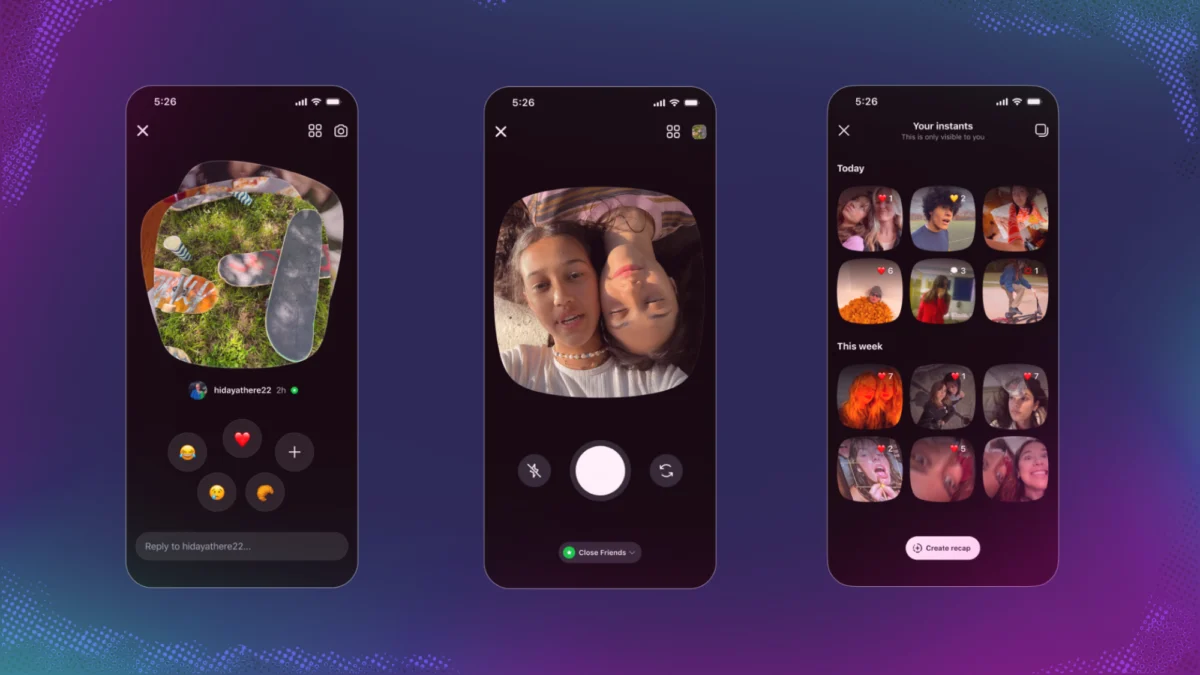
In an era defined by the curated aesthetic—where every frame is filtered, edited, and meticulously positioned—Instagram has introduced a paradoxical new feature: "Instants." Announced this Wednesday, this tool represents a pivot back toward the platform’s roots of spontaneous, low-stakes sharing. Designed to allow users to send batches of raw, unedited photos to "Close Friends" or mutual followers, Instants are built to vanish after they are viewed or within 24 hours. While the feature aims to foster authenticity, it has ignited a broader conversation regarding digital privacy, platform oversight, and the true meaning of "ephemeral" in a hyper-connected age.
The Mechanics of Instants: A Departure from the Grid
At its core, Instants functions as a specialized inbox experience. When a user captures a "glut" of photos, they are bundled together and delivered to the recipient’s Direct Messages (DMs) as a collective stack. The primary design constraint is the lack of editing tools; users cannot apply filters, adjust contrast, or crop these images within the flow. The only permissible addition is a text caption.
This move is a direct challenge to the "Instagram aesthetic." For years, the platform has been criticized for fostering a culture of perfectionism. By stripping away the ability to polish images, Meta—the parent company of Instagram—is essentially encouraging users to capture the "messy" reality of their lives. Once sent, these photos disappear upon being viewed, mimicking the functionality found in Snapchat, Signal, Telegram, and WhatsApp. Furthermore, the inclusion of an "undo" button allows users a brief window of grace, providing an escape hatch for those who may have sent a snap in the heat of the moment.
A Chronology of Ephemerality
To understand why Instagram is leaning into Instants, one must look at the evolution of disappearing content.
- 2011–2013: The Rise of the Snap: Snapchat popularized the "disappearing act," proving that digital users craved content that didn’t live forever on a profile.
- 2016: The Story Revolution: Instagram launched "Stories," a direct response to Snapchat, which eventually became the platform’s most utilized feature.
- 2017–2020: The Expansion of Privacy: As public social media fatigue grew, users began moving into smaller, more intimate "DMs" and "Close Friends" circles. Platforms like Signal and WhatsApp doubled down on end-to-end encryption for these private exchanges.
- 2024: The Instants Era: Instagram is now attempting to bridge the gap between private messaging and the social feed by creating a "middle-ground" space for semi-public, high-frequency, unedited interaction.
Supporting Data and the Psychology of "Raw" Content
The shift toward ephemeral, unedited content is supported by shifting demographics. Gen Z users, in particular, have shown a distinct preference for "photo dumps" and "casual Instagram" over the high-production values that dominated the platform between 2015 and 2020.
Market research suggests that users are experiencing "feed fatigue." The pressure to maintain a perfectly curated profile has led to a significant drop in engagement on the main grid. By contrast, engagement in DMs and Stories—where the stakes feel lower—has continued to rise. Instants serves as an algorithmic play to keep users within the DM inbox, a "sticky" part of the app where meaningful social interaction is perceived to occur. By removing the burden of editing, Meta is lowering the barrier to entry for content creation, theoretically increasing the sheer volume of media shared daily.
Important Caveats: Privacy, Security, and Oversight
Despite the marketing narrative of "authentic, disappearing moments," security experts and privacy advocates have raised immediate red flags regarding the implementation of Instants.
The Illusion of Security
The most significant caveat is the persistence of the "analog hole." Even though Instagram prevents users from taking native screenshots of Instants, there is no technological barrier to prevent a recipient from using a second device to record or photograph the screen. In the landscape of digital communication, disappearing messages are rarely "gone" in the absolute sense; they are merely removed from the interface. Users are advised to treat Instants with the same caution they would apply to any digital file.
The Myth of Incognito
There is a common misconception that private, ephemeral messaging on a platform like Instagram is equivalent to a private, encrypted environment. This is not the case. Instagram retains the ability to monitor content sent through "Close Friends" and DMs for violations of its Community Guidelines. Because these messages are not protected by end-to-end encryption—a feature Instagram recently rolled back for standard DMs—Meta retains the technical capacity to scan and audit the content of these messages if triggered by automated moderation tools.

The Nudity Guidelines and Content Moderation
Instagram’s nudity guidelines remain a point of contention. As the platform transitions toward more "raw" photo sharing, the friction between its automated censorship algorithms and user behavior will likely intensify. The company faces a fine line between protecting users from non-consensual imagery and censoring private, consensual, but "non-compliant" artistic expression. Given Meta’s track record, the implementation of Instants is likely to lead to an increase in account warnings and automated bans for users who misjudge what the algorithm considers "acceptable" versus "violating."
Official Responses and Corporate Strategy
Mashable has reached out to Instagram for comment regarding the specific moderation protocols governing Instants. While the company has not provided a granular breakdown of its moderation architecture, a spokesperson noted that the platform’s existing safety protocols apply to all user interactions.
Strategically, the launch of Instants serves three functions for Meta:
- Retention: Keeping users within the app for longer periods by gamifying the DM experience.
- Data Harvesting: Even if a photo is not "posted" to a feed, the metadata and engagement patterns around it provide valuable insights into user behavior and social circles.
- Competitive Defense: By mimicking the functionality of apps like Snapchat, Instagram aims to consolidate the market, ensuring that users do not feel the need to leave the Instagram ecosystem to find these features elsewhere.
Implications for the Future of Social Media
The launch of Instants marks a definitive transition toward "disposable social media." As the digital footprint becomes an increasing source of anxiety for the average user, the ability to "take back" content or ensure that it doesn’t linger permanently is highly attractive.
However, this transition comes at a cost. The erosion of end-to-end encryption in favor of standard, platform-monitored encryption means that users are trading privacy for convenience. The "Instants" feature is, in effect, a controlled environment where users are encouraged to share more of their lives, while the platform maintains full visibility into that data.
For the casual user, the advice remains the same: If you wouldn’t want it appearing in a screenshot or being reviewed by an automated moderation system, do not send it through a social media platform—no matter how ephemeral the interface claims to be.
Final Thoughts: A Trend or a Gimmick?
Whether Instants becomes a staple of the Instagram experience or joins the graveyard of discarded features like "IGTV" or "Direct" (the standalone app), depends entirely on user adoption. If the "pile of photos" format feels like a genuine, fun way to connect, it could redefine how we use DMs. If, however, the lack of editing tools feels like an unnecessary limitation, or if the privacy risks outweigh the convenience, it may quickly become a background feature that users ignore.
For now, Instagram is betting that we are all tired of the polish, and that we are ready to embrace the mess. The question is whether we are willing to embrace that mess while standing in the middle of a platform that is watching every move we make.


 Siti Muinah
 Ammar Sabilarrohman