

In the landscape of 2026 television, the cycle of content is relentless. We exist in an era defined by the "reboot economy," where intellectual property is treated as a perennial harvest. From the revival of Scrubs and Malcolm in the Middle to nostalgic excavations like Little House on the Prairie and The Forsytes, no franchise appears safe from the modern mandate of reimagining. Yet, even in a cultural climate desensitized to constant reinvention, the announcement that the BBC is moving forward with a new "major television series" based on Agatha Christie’s Hercule Poirot has triggered a palpable sense of skepticism.
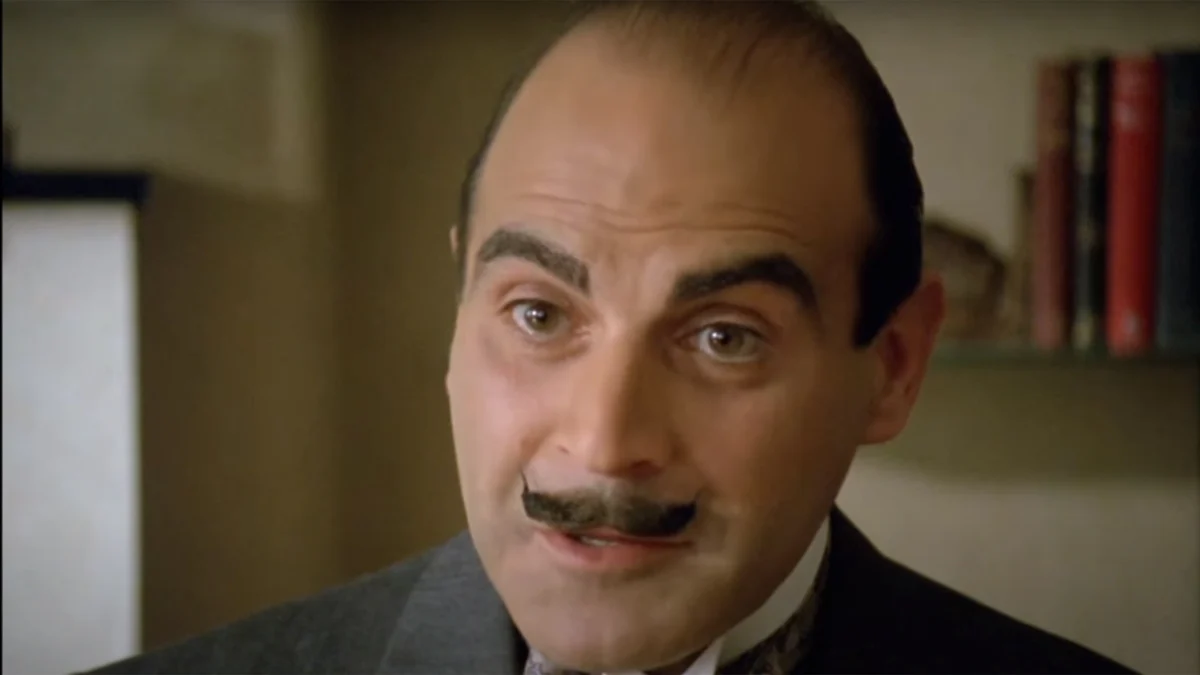
The challenge is not merely about production quality or script fidelity; it is about the insurmountable shadow cast by David Suchet. For twenty-four years, Suchet did not merely play the Belgian detective; he inhabited him, curating a definitive portrayal that spanned every novel and short story penned by Christie. As the industry turns its gaze toward a new iteration, we must ask: Is it possible to reboot a legend, or are we witnessing a creative endeavor doomed by its own pedigree?
The Chronicle of a Definitive Performance
To understand the magnitude of the BBC’s task, one must look at the historical trajectory of the character on screen. Hercule Poirot has been portrayed by a cavalcade of heavyweights—Albert Finney, Peter Ustinov, Ian Holm, Alfred Molina, John Malkovich, and Kenneth Branagh. Each brought a specific sensibility to the role: Finney provided the theatricality, Ustinov the wit, and Branagh the cinematic spectacle.
However, the definitive benchmark remains the ITV series Agatha Christie’s Poirot, which ran from 1989 to 2013. Suchet’s journey with the character was a masterclass in dedication. It was not a casual casting choice but a lifelong commitment. Suchet famously studied the original texts with religious fervor, obsessing over the nuances of Poirot’s gait, the precision of his speech, and the psychological interiority of a man who viewed the world as a chaotic puzzle requiring the order of "the little grey cells."
The 2013 finale, Curtain: Poirot’s Last Case, served as a poignant bookend to the series. For fans, it was more than the end of a show; it was the retirement of a companion. By completing the entire canon, Suchet achieved something rare in television history: a comprehensive, exhaustive, and transformative translation of a literary titan.
Production Pedigree: The Mammoth Screen Factor
According to reports from Deadline, the new project is set to be spearheaded by Mammoth Screen. This production house is no stranger to the works of Agatha Christie. They have been instrumental in the modern resurgence of Christie’s bibliography, having produced high-profile adaptations such as And Then There Were None and Murder Is Easy.
The involvement of Mammoth Screen’s founder, Damien Timmer, provides a curious layer of irony to the proceedings. Timmer served as an executive producer on several installments of the original Suchet-led Poirot. His intimate knowledge of the source material and the mechanics of the previous success suggests a high level of professional competence.
However, professional competence is not the issue. The issue is the "why." In an industry driven by metrics, the BBC is likely looking at the enduring popularity of Christie’s universe—evidenced by the success of recent projects like the Seven Dials adaptation on Netflix and the upcoming Tommy and Tuppence series on BritBox. The business case for a new Poirot is ironclad; the creative case, however, remains obscured by the success of the past.
Supporting Data: The Landscape of Christie Adaptations
The appetite for mystery remains insatiable, and Agatha Christie remains the undisputed Queen of Crime. Statistics from streaming platforms consistently show that her work performs exceptionally well across diverse demographics, bridging the gap between older audiences who remember the original broadcast runs and younger viewers discovering the "whodunnit" genre through modern, slicker iterations.

Yet, there is a distinct difference between adapting Christie’s ensemble pieces—like And Then There Were None or Murder Is Easy—and taking on Poirot himself. Poirot is not just a character; he is an institution.
Consider the recent critical reception of Kenneth Branagh’s big-budget films. While they brought visual flair and high-concept cinematography, they often faced criticism from purists who felt the internal logic of the character was being sacrificed for blockbuster pacing. The BBC’s new series, presumably aiming for a more serialized, character-driven television format, will likely seek to find a middle ground. But by doing so, they invite direct comparison to the "Suchet Standard."
Official Responses and Industry Implications
As of May 2026, no casting has been announced, and official comments from the BBC remain focused on the "fresh, contemporary vision" of the project. Behind the scenes, casting directors are reportedly tasked with finding an actor who can balance the character’s inherent eccentricity with the gravitas required to ground the series.
The implications of this move are significant for the British television industry. By reviving a character so inextricably linked to a rival network’s golden era, the BBC is effectively engaging in a "battle of the brands." They are signaling that their version will be the definitive one for the next generation of viewers.
However, the risk of alienation is high. The fanbase of the Suchet series is multigenerational. They are not merely fans of the genre; they are fans of a specific interpretation. To deviate too far from the source material is to risk the ire of the Christie estate’s traditionalist fan base, while staying too close to the source material risks looking like a pale imitation of what has already been perfected.
The Philosophical Dilemma: Should We?
In the final analysis, the conversation around the new Poirot series transcends casting choices or production values. It touches upon a fundamental question in modern media: At what point does the pursuit of content exhaust the legacy of the art?
David Suchet’s memoir, Poirot and Me, details the exhaustive, often grueling preparation he undertook to portray the detective. It was a performance fueled by humility, respect for the text, and a desire to serve the character rather than consume him. Any actor stepping into the role now must reconcile the vanity of the reboot with the integrity of the character.
If the BBC succeeds, they will have accomplished a feat of immense difficulty, essentially rewriting the visual memory of a nation. If they fail, they will provide a stark reminder that some television achievements are not meant to be replicated, but rather, celebrated as singular moments in time.
As we await further news on the casting and the specific creative direction of this new series, one thing is certain: the world is watching. The detective may have his "little grey cells," but the television industry is currently testing the limits of its own. Whether this new Hercule Poirot can solve the mystery of his own necessity remains the greatest question of the 2026 television season.











No comments yet. Be the first to join the conversation!