

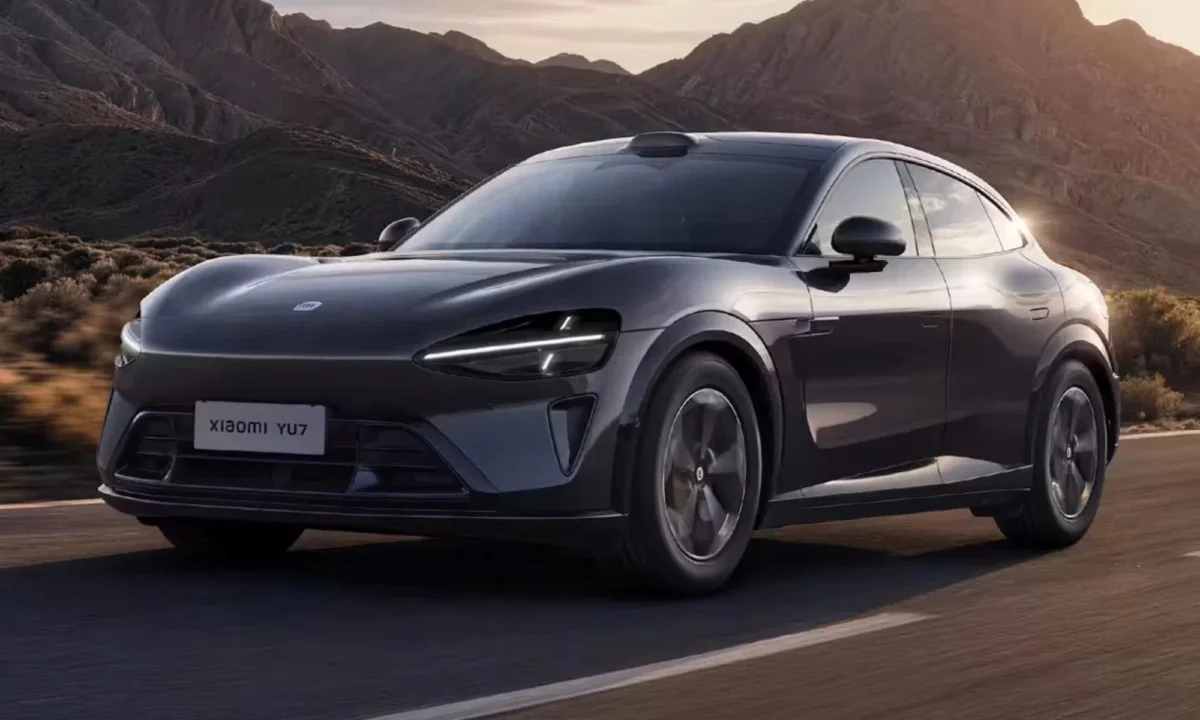
In the cutthroat landscape of the Chinese electric vehicle (EV) market, the margin for error is razor-thin. Xiaomi, the technology giant turned automotive powerhouse, has learned this lesson the hard way. Following a meteoric rise that saw its inaugural vehicle, the YU7, secure over 200,000 orders within minutes of its mid-2025 launch, the company faced a sobering reality: once the initial reservation backlog cleared, demand cooled significantly.
Recognizing that the primary obstacle to mass adoption was price parity with the industry benchmark—the Tesla Model Y—Xiaomi CEO Lei Jun recently took decisive action. During the company’s "Human x Car x Home" launch event on May 21, 2026, Xiaomi unveiled the YU7 "True Standard Edition," a strategic play designed to undercut Tesla where it hurts most: the entry-level segment.
The Core Proposition: Pricing and Performance
The YU7 True Standard Edition is a direct challenge to the status quo. Priced at 233,500 yuan (approximately $34,300), the vehicle sits 30,000 yuan—roughly $4,350—below the standard rear-wheel-drive Tesla Model Y. For a consumer segment that is increasingly price-sensitive, this differential is substantial.

However, Xiaomi is not relying solely on a lower price tag to lure buyers away from Elon Musk’s dominant SUV. The company has equipped the True Standard Edition with a battery architecture that boasts an impressive 399 miles of range per charge, effectively outperforming the 368-mile range offered by the comparable Model Y. By delivering greater utility for a lower cost, Xiaomi is attempting to redefine the value proposition of the mid-to-large SUV category in China.
A Chronology of Xiaomi’s Automotive Ambitions
To understand the weight of this announcement, one must look at the timeline of Xiaomi’s rapid entry into the automotive sector:
- June 18, 2025: The original Xiaomi YU7 debuts with a price tag under $48,500. The response is historic, with 200,000 orders placed in just three minutes.
- Late 2025 – Early 2026: Xiaomi works through its massive production backlog. During this period, the excitement of the initial launch begins to wane, and the company experiences a tightening of the sales funnel.
- April 2026: Monthly sales figures dip below the 10,000-unit threshold. Internal analytics reveal that the price gap between the YU7 and the Tesla Model Y is insufficient to sway "fence-sitters."
- May 21, 2026: At the "Human x Car x Home" event, Lei Jun officially announces the "True Standard Edition," specifically designed to address the sales plateau and reclaim momentum.
Technical Specifications: What Lies Under the Hood?
The YU7 True Standard Edition is not merely a "budget" version of its predecessor; it is an optimized machine built for efficiency. The vehicle features a single-motor, rear-wheel-drive configuration capable of outputting 235kW.

Perhaps most notably, Xiaomi has managed to shed weight while maintaining the vehicle’s imposing silhouette. At five meters long, the SUV maintains its status as a large-format vehicle, yet the engineers have managed to trim 253 pounds from the previous iteration, bringing the total curb weight to 4,850 pounds. This reduction is largely attributed to the adoption of a CATL-supplied lithium iron phosphate (LFP) battery, which offers superior safety and longevity characteristics while optimizing energy density for range.
Official Responses and Strategic Intent
During the launch event, CEO Lei Jun was transparent about the competitive landscape. He addressed the "Destroy Tesla" sentiment that permeates online forums, offering a more nuanced take on the company’s progress. Referencing internal sales data from the launch through April 2026, Lei characterized Xiaomi’s performance against the Model Y as a "two wins, eight losses" scenario.
While that might sound like a defeat to the casual observer, Lei framed it as a significant achievement for a brand-new entrant to the automotive industry. By acknowledging the difficulty of challenging an established juggernaut like Tesla, Xiaomi is signaling that it is playing the long game. The launch of the True Standard Edition is the first major step in the next phase of that strategy—moving from a niche high-end product to a mass-market contender.

Market Implications: The Future of the "Price War"
The introduction of the YU7 Standard Edition is emblematic of a broader trend within the Chinese EV market. As domestic manufacturers like Xiaomi, BYD, and others continue to refine their manufacturing processes, the barrier to entry for high-performance EVs is lowering.
The Pressure on Global Competitors
For international manufacturers, Xiaomi’s move is a warning. If a consumer can access a higher-range vehicle for nearly $5,000 less than a Tesla, the brand loyalty that has historically buoyed premium automakers begins to erode. This creates a "race to the bottom" in terms of pricing, which benefits the consumer but puts immense pressure on profit margins for companies like Tesla, which have historically enjoyed higher-than-average margins in the sector.
Technological Convergence
The YU7 is part of a larger ecosystem—Xiaomi’s "Human x Car x Home" vision. By integrating the car into a broader network of smartphones, smart home devices, and IoT infrastructure, Xiaomi is betting that the car of the future will be defined more by its software integration and ecosystem interoperability than by its chassis alone.

Broader Industry Trends
Xiaomi’s move occurs against a backdrop of rapid technological advancement in the global automotive sector. As noted in recent industry reports, the competitive landscape is shifting toward extreme fast-charging and solid-state battery technology.
While Xiaomi focuses on refining the range-to-price ratio of its current fleet, researchers at institutions like the Chinese Academy of Sciences are making breakthroughs that could render current battery standards obsolete within the decade. For instance, recent developments in solid-state lithium-metal batteries—capable of 451.5 Wh/kg energy density—suggest that the industry is nearing a point where charging an EV will take as little as three minutes.
Furthermore, the industry is witnessing strategic realignments to combat rising trade barriers. The recent memorandum of understanding between Stellantis and Jaguar Land Rover (JLR) to explore manufacturing opportunities in the U.S. is evidence that traditional luxury brands are also feeling the heat. By localizing production, these companies hope to circumvent tariffs and stabilize costs, much in the same way that Xiaomi is localizing its supply chain to keep the YU7’s price point competitive.

Conclusion: A New Benchmark for Mass-Market EVs
The arrival of the Xiaomi YU7 True Standard Edition is a watershed moment for the electric vehicle market. It represents the point where technology, manufacturing scale, and pricing strategy intersect to create a product that is objectively more competitive than the world’s most popular EV.
Whether this move will be enough to permanently shift market share away from Tesla remains to be seen. However, by lowering the cost of entry and increasing the range, Xiaomi has effectively set a new floor for what consumers should expect from an electric SUV. In the coming months, the industry will be watching closely to see how competitors respond—whether through price cuts, software updates, or accelerated R&D efforts.
For now, one thing is clear: Xiaomi is no longer a technology company "testing the waters" of the automotive industry. It is a full-fledged competitor, and it is ready to challenge the status quo on its own terms. As the price war in China continues to escalate, the true winner will likely be the consumer, who now has more options, more range, and more value than ever before.












No comments yet. Be the first to join the conversation!