Laily UPN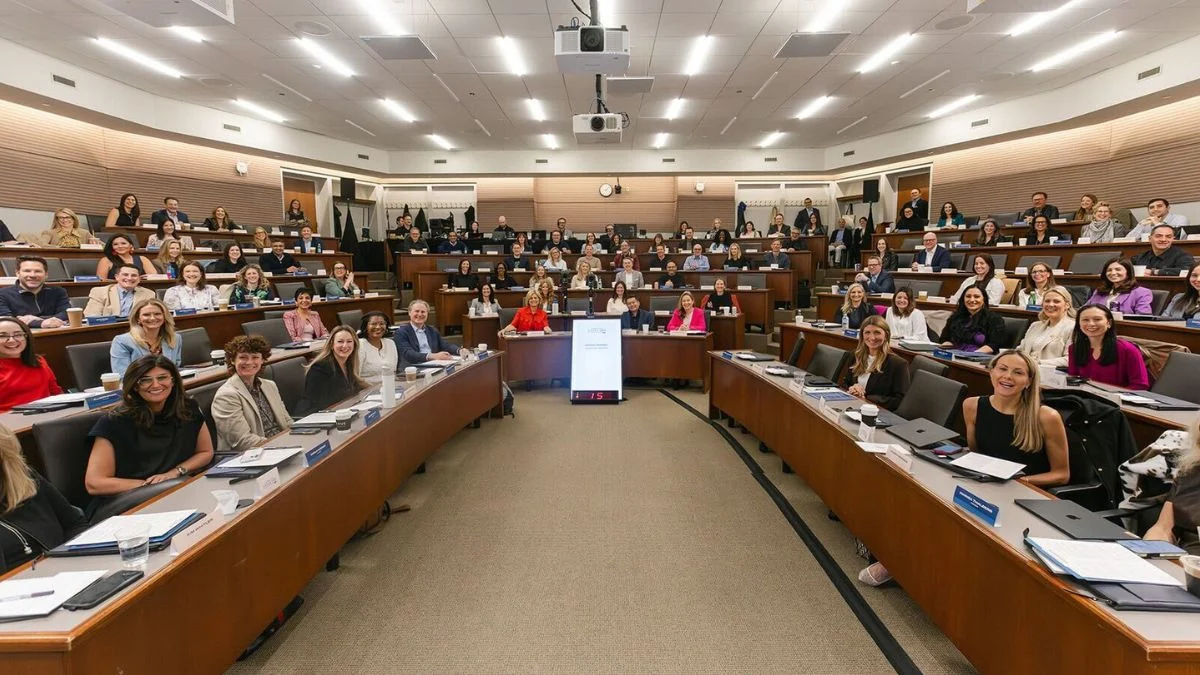
On May 7, over 100 of the world’s most influential Chief Marketing Officers, CEOs, and industry visionaries descended upon Chicago for the third annual Marketing Vanguard Summit. Operating under the Chatham House Rule—which encourages candid, off-the-record discourse—these leaders gathered to confront an existential question: In an era defined by artificial intelligence, data saturation, and shifting consumer loyalties, what does it truly mean to lead a brand?
The consensus that emerged from the summit was striking. The industry has reached a breaking point, and the theme of the gathering, Essential Bravery, served as both a rallying cry and a diagnostic tool for the modern CMO. As the traditional playbooks of the 2010s crumble, a new, more human-centric, and growth-oriented mandate is taking shape.
The Turning Tide: A Chronology of the Marketing Pivot
To understand where the industry is headed, one must first recognize the cycle that brought it to this moment. The last decade was defined by the "Performance Era," where marketing became synonymous with granular data, real-time attribution, and the pursuit of incremental gains. CMOs were pressured to justify every dollar spent, transforming the role into that of a "Chief Measurement Officer."
During the morning sessions at the Summit, participants traced this trajectory:
- 2014–2019: The Performance Peak. Marketing became a math problem. The focus shifted entirely to efficiency, conversion rates, and the "bottom of the funnel."
- 2020–2023: The Digital Acceleration. The pandemic forced a wholesale migration to digital channels, cementing the reliance on automated ad platforms and algorithm-driven spend.
- 2024–Present: The "Slop" Crisis. With the explosion of generative AI, the internet has become flooded with commoditized, generic content—what summit attendees referred to as "slop." This saturation has rendered standard performance tactics less effective, as consumers grow increasingly immune to the repetitive, algorithmic noise.
The conclusion reached by the assembly is that the pendulum has swung too far. The obsession with proving value through metrics has paradoxically eroded the actual value of marketing, turning it into a cost center rather than a growth engine.
The Great Re-Prioritization: Brand Over Metrics
A central theme of the summit was the return of the brand as the primary vessel of corporate value. As one participant noted, "Performance can optimize demand, but brand has to create it."
In an AI-mediated world, where AI can generate infinite variations of a digital ad, the differentiator is no longer the ability to target—it is the ability to resonate. The CMOs in attendance argued that performance marketing is a tactic, not a strategy. If a company relies solely on performance, it is merely harvesting existing demand rather than cultivating new, sustainable loyalty.
This shift suggests that the future of marketing lies in "Brand-Led Growth." In this model, the brand is not a soft, abstract concept; it is the fundamental moat that protects the business from the commoditization of AI-generated content.
Marketing as Enterprise Growth: Breaking the Silos
Perhaps the most significant takeaway from the summit was the redefinition of the CMO’s scope. The participants collectively rejected the idea that marketing should be confined to a specific department or "swim lane."
"Our work isn’t marketing work anymore; it’s enterprise growth work," one attendee stated. This signifies a move away from the traditional CMO role—often siloed and focused strictly on communication—toward a role that exerts influence over the entire product life cycle, customer experience, and business strategy.
To succeed in this new environment, CMOs must prove their necessity by taking accountability for outcomes that go far beyond "brand awareness" or "click-through rates." This includes owning revenue targets, customer retention, and the overall trajectory of the company. The implication is clear: the CMO who only manages the marketing department is in danger; the CMO who manages the growth of the enterprise is indispensable.
The Humanity Mandate: The Ultimate Differentiator
As artificial intelligence becomes a staple of the creative process, the summit attendees identified a paradox: the more machines create, the more valuable authentic human connection becomes.
"In a world where competence becomes a commodity, humanity is not your fallback; it is your only real differentiator left," was the sentiment echoed throughout the breakout sessions. The group emphasized that "humanity" is not a soft skill or a nice-to-have; it is a strategic asset.
The summit participants warned against the temptation to let AI handle the entirety of the brand voice. While AI can draft copy and design visuals with terrifying speed, it lacks the lived experience and cultural nuance that form the basis of true emotional resonance. The future of brand-building involves using AI for the "execution layer," while reserving the "judgment layer"—strategy, ethics, and emotional storytelling—strictly for human talent.
The Structural Revolution: Adopting the Agentic Enterprise
If the role of the CMO is changing, so too must the organizational structure of the marketing department. During the summit, the essay "From Hierarchy to Intelligence" was cited as the new blueprint for modern organizations.
The proposed three-layer structure represents a radical departure from traditional corporate hierarchies:
- The Execution Layer: Powered by AI agents, this layer works 24/7 to handle routine tasks, data processing, and rapid content generation.
- The Orchestration Layer: A hybrid zone where humans and agents collaborate. Humans provide the guardrails and the context, while agents handle the heavy lifting of scale.
- The Judgment Layer: Entirely human. This is where high-level strategy, creative direction, and ethical governance reside.
One CMO shared a striking example of this transition: by moving to a "mission-team" structure—comprising two creatives, a researcher, a product marketing manager, and a generalist—they were able to compress weeks of work into hours, replacing the need for bloated, siloed departments.
The End of the "Pitch" and the Rise of "Fellow Pirates"
The summit also turned a critical eye toward the agency-client relationship. The consensus was that the industry is trapped in a destructive cycle of "pitching" that wastes time, suppresses creativity, and favors performative showmanship over actual substance.
"Kill the pitch," one leader urged. Instead, the focus should be on finding "fellow pirates"—agencies and partners who share the same core values and believe in the brand’s mission. The new criteria for selecting partners are clear: culture, chemistry, and credentials. The "dog-and-pony show" is dead; the future belongs to deep, trust-based partnerships that allow for faster, more authentic work.
Implications: The Courage to Say No
The ultimate conclusion of the Vanguard Summit was that the most important attribute for the modern CMO is bravery—specifically, the bravery to say "no."
In a culture of "more," true leadership is found in what a brand chooses not to do. Turning down campaigns that feel inauthentic, rejecting trends that don’t align with the brand’s mission, and walking away from opportunities that don’t pass the "whiff test" are acts of strategic defiance.
As the summit closed, the participants were left with a singular, challenging mandate: Boldness is not a personality trait; it is a belief system. In an AI-driven, data-obsessed world, the brands that survive and thrive will be the ones that have the courage to remain human, the intelligence to leverage the agentic enterprise, and the discipline to prioritize brand equity over the fleeting metrics of the performance era.
The future of marketing is not about doing more with less—it is about doing more with purpose. And that, according to the Vanguards, is the only way forward.


 Siti Muinah
 Raul Delapena Setiawan