

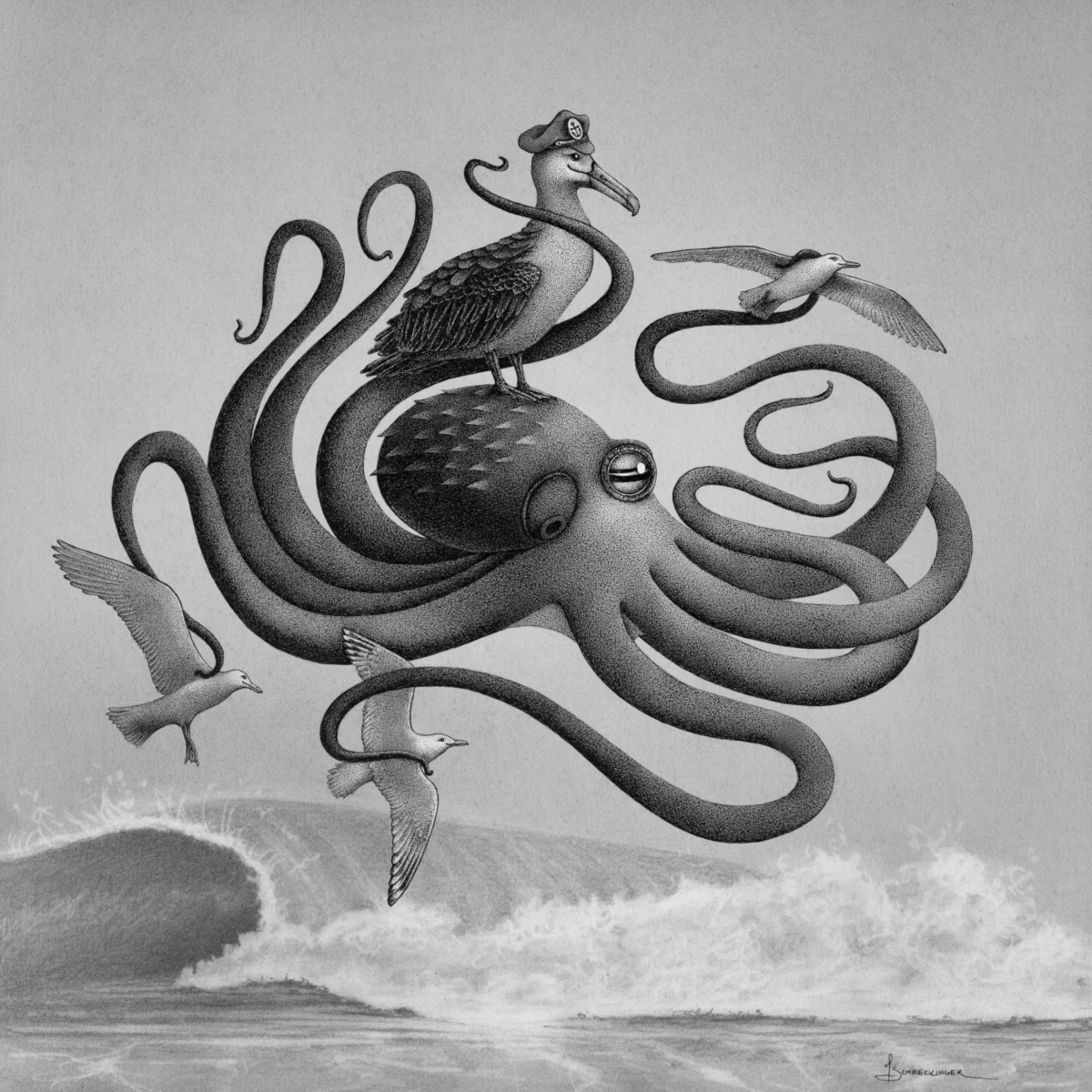
The Earth is often misnamed. Viewed from the vast, cold vacuum of space, our planet appears as a shimmering blue marble, a testament to the life-giving liquid that blankets nearly 71 percent of its surface. This immense, interconnected hydrosphere holds a staggering 96.5 percent of the world’s water, acting as the primary regulator of our climate and the silent anchor of global biodiversity. Yet, despite the sophistication of modern sonar, satellite mapping, and deep-sea exploration technologies, humanity has charted less than 10 percent of the seafloor.
As we continue to exploit the abyss for resources and treat its vastness as a limitless dumping ground for our industrial waste, the health of our marine ecosystems is faltering. This silent crisis—the collision between human convenience and the fragility of the deep—is the focal point of Common Waters, an ambitious new exhibition hosted by Philadelphia’s Arch Enemy Arts. By bridging the gap between artistic expression and environmental advocacy, the show seeks to force a reckoning with our role as stewards of the deep.

The Intersection of Art and Advocacy: Main Facts
Common Waters is not merely an aesthetic endeavor; it is a collaborative intervention. Curated to spotlight the precarious state of global marine habitats, the exhibition features 60 international artists, each contributing a work in a uniform square format. This stylistic constraint serves a thematic purpose: it frames the ocean as a shared, finite commodity—a "common" resource that demands collective responsibility.
The exhibition is held in partnership with PangeaSeed, a globally recognized nonprofit organization that utilizes "Artivism"—the fusion of art and environmental activism—to educate the public. By translating complex scientific data into visceral visual narratives, the show invites viewers to contemplate the ethereal beauty of jellyfish, the architectural complexity of coral reefs, and the majestic isolation of deep-sea megafauna. While the works are often playful, marked by a surreal or whimsical quality, there is a pervasive, somber undercurrent of anxiety regarding the ecological trajectory of our oceans.

A Chronological Journey: From Awareness to Exhibition
The genesis of Common Waters can be traced to the increasing public urgency surrounding marine conservation.
- Pre-2024: PangeaSeed and its network of global artists begin documenting the accelerating rate of ocean acidification and coral bleaching.
- Early 2025: Arch Enemy Arts conceptualizes a group show that moves away from traditional landscapes toward more interpretive, character-driven narratives of the sea.
- May 2026: Final preparations for the exhibition are completed, with artists from six continents submitting works.
- June 5, 2026: Common Waters officially opens its doors in Philadelphia, serving as a hub for both the local art community and visiting environmental stakeholders.
- July 5, 2026: The exhibition is scheduled to conclude, with a portion of all sales proceeds funneled directly into PangeaSeed’s conservation initiatives.
This timeline reflects a growing trend in the contemporary art world: the transition from "art for art’s sake" to "art for impact," where the physical gallery space serves as an extension of a laboratory or a field station.

Supporting Data: The Cost of Our Consumption
The urgency behind the exhibition is rooted in undeniable environmental statistics. Our dependence on fossil fuels and the ubiquity of single-use plastics have created an "indelible impact" on marine wildlife.
- Plastic Pollution: According to recent environmental assessments, an estimated 11 million metric tons of plastic enter the ocean every year. This translates to a garbage truck’s worth of plastic being dumped into the sea every minute.
- The Unmapped Frontier: With 90 percent of the ocean floor still unmapped, we are essentially destroying habitats before we have even identified the species that reside within them.
- Thermal Stress: Rising sea temperatures, driven by carbon emissions, are leading to unprecedented coral bleaching events. As seen in works like Gerlanda di Francia’s " (Blue) I Am You," where a figure’s hair is woven with coral, the artist highlights the symbiotic, and often fragile, link between human identity and marine health.
These data points provide the skeleton upon which the artists hang their creative flesh. Whether it is the delicate, embossed paper relief of a sea turtle by Marisa Aragón Ware—evoking the grace of a creature threatened by ghost nets—or the haunting, bioluminescent glow of a jellyfish captured by Alex Sugar, the artwork acts as a surrogate for the data, making the abstract concept of "environmental degradation" deeply personal.

Official Perspectives: The Role of the Artist as Scientist
The collaboration between Arch Enemy Arts and PangeaSeed represents a shift in how NGOs engage with the public.
"The ocean is not a distant, separate entity; it is the life support system for everything we do," says a representative from the curatorial team. "By inviting artists to interpret the ocean through a lens of ‘Common Waters,’ we are asking the public to acknowledge that these ecosystems are not just resources to be mined, but heritage to be protected."

The inclusion of pieces like Cassandra Kim’s "Saint Nassau Grouper"—which depicts a fish in religious vestments, complete with a halo—serves as a satirical but pointed commentary on how we have "sanctified" our consumption while neglecting the source. By elevating the marine subject to the status of a religious icon, Kim asks the viewer to consider: if we treat these creatures with such disregard, what does that say about our own morality?
Implications: The Future of Our Oceans
The exhibition is more than a display of talent; it is a call to action. The implications of Common Waters reach far beyond the gallery walls in Philadelphia.

The Psychological Shift
One of the primary goals of the exhibition is to replace apathy with empathy. The "anxiety" and "sadness" noted by critics in the work are intentional. By presenting the ocean as a sentient, beautiful, and occasionally bizarre realm, the artists force the viewer to confront the "dire consequences" of human activity. This psychological shift is the necessary precursor to behavioral change—whether that manifests as a reduction in plastic consumption, support for sustainable fishing policies, or simply a newfound interest in marine literacy.
The Economic Connection
The financial model of the exhibition—donating a portion of proceeds to PangeaSeed—creates a circular economy. The art itself becomes a source of funding for the very research and advocacy required to protect the subjects of the paintings. It turns the collector into a patron of the environment, proving that art has tangible utility in the fight against climate change.

The Unfinished Map
Finally, the exhibition highlights the "unmapped" nature of our world. By featuring works that are fantastical and surreal—such as Veks Van Villik’s matryoshka-like fish—the show acknowledges that there is much about the ocean we simply do not know. This mystery is not an invitation to exploit, but a reason for humility. If we are still discovering the fundamental components of our planet, perhaps we should tread more carefully.
Conclusion: A Call for Shared Stewardship
As Common Waters runs its course through early July, it stands as a poignant reminder of the interconnectedness of all life. From the miniature paintings of Shannon Taylor, hidden within the confines of a vintage compact, to the large-scale, intricate collages of Jessica Dalva, the exhibition suggests that the health of the ocean is the health of the individual.

We are, as the title suggests, bound by common waters. Every piece of plastic discarded, every carbon molecule released, and every hectare of reef destroyed ripples through that system, eventually returning to us. Common Waters is a mirror held up to the sea, reflecting not just the beauty we have inherited, but the responsibility we have failed to shoulder. For those who visit the gallery in Philadelphia, the message is clear: the ocean is waiting for us to wake up, look beneath the surface, and finally act.











No comments yet. Be the first to join the conversation!