

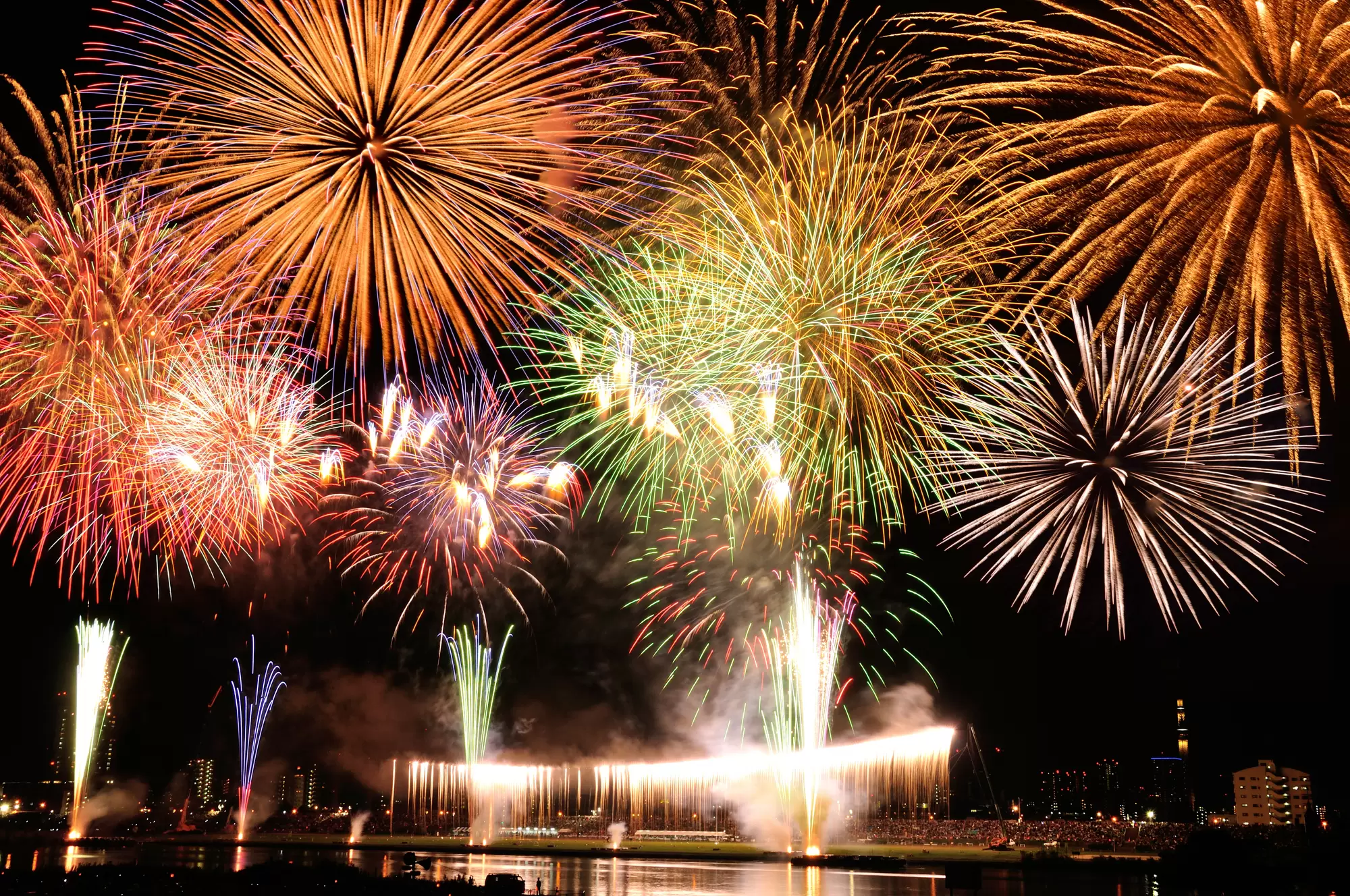
As the cherry blossoms fade and the verdant hues of spring settle over Tokyo, the city’s residents turn their eyes toward the horizon, marking the arrival of a quintessential Japanese tradition: the fireworks festival. While the nation’s firework displays are synonymous with the humid height of July and August, the Adachi Fireworks Festival has boldly redefined the season. By moving its festivities to late May, the Adachi Fireworks Festival now serves as the unofficial curtain-raiser for Tokyo’s summer celebrations, offering a refreshing, cooler alternative to the traditional mid-summer heat.
Main Facts: The 2026 Edition
For those planning to witness the spectacle this year, the Adachi Fireworks Festival is scheduled for Saturday, May 30, 2026. The show will run for exactly one hour, from 19:20 to 20:20, during which time 13,000 pyrotechnic shells will be launched over the Arakawa River.
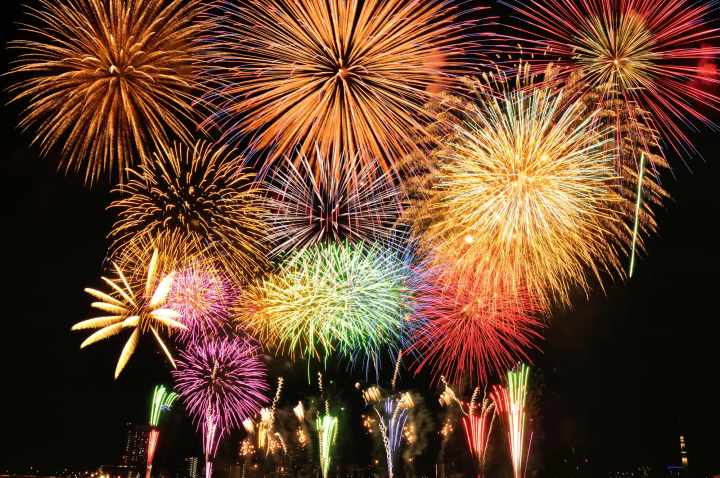
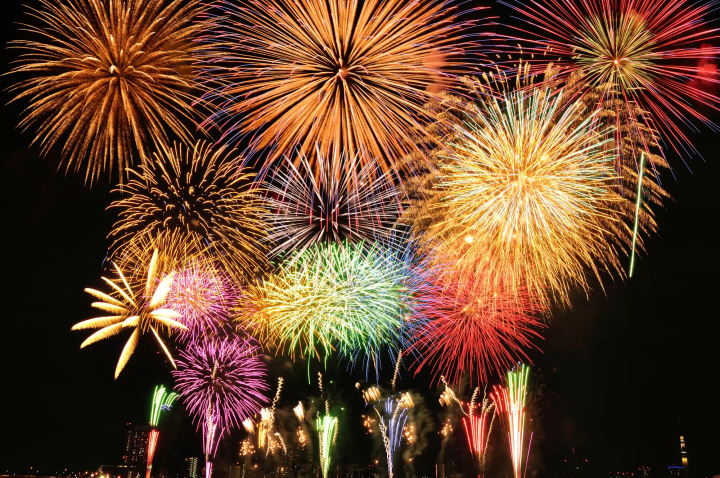
The event, which takes place at the Arakawa Nishiarai Bridge Green Space, remains a marvel of logistical planning. Unlike many smaller local displays, the Adachi event is a high-density production, characterized by its rapid-fire intensity. Spectators can expect a continuous, rhythmic bombardment of color and sound, setting a standard for pyrotechnic performance in the Kanto region.
A Historical Chronology: From Victory to Modern Tradition
The legacy of the Adachi Fireworks Festival is as storied as the river it illuminates. The event’s origins date back to the early 20th century, with the first official records documenting a celebration in 1905 to mark Japan’s victory in the Russo-Japanese War. This initial spark ignited a local tradition that would grow alongside the industrialization of the Senju district.
By 1924, the event was formally christened the "Senju Fireworks Festival," coinciding with the completion of the iconic Senju Shinbashi Bridge. During this era, it solidified its place as a summer staple, often mentioned in the same breath as the legendary Sumida River display.
However, the festival’s path has not been without turbulence. The onset of World War II forced a complete cessation of the festivities. While it successfully resumed in the post-war recovery years, the rapid urban development of the 1960s—specifically extensive river improvement projects along the Arakawa—necessitated a second hiatus starting in 1960.
The modern era of the festival began in 1979, when, following intense lobbying by local residents who missed the cultural significance of the display, the event was officially revived as "Adachi no Hanabi." Since then, it has evolved into a premier metropolitan event. Most notably, the 2025 decision to shift the event from July to May marked a turning point in how Japanese festivals address the increasing dangers of heatstroke and climate-related exhaustion, setting a precedent for other large-scale outdoor events in Japan.
Supporting Data: Why Density Matters
What distinguishes the Adachi Fireworks Festival from its peers is its focus on "high-density launching." While many fireworks festivals incorporate long, lingering pauses between sequences to allow for crowd movement or music transitions, the Adachi organizers prioritize a relentless, high-octane pace.
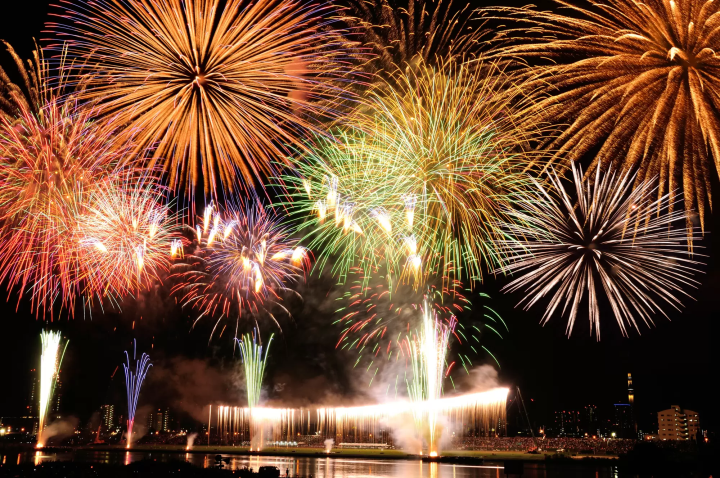
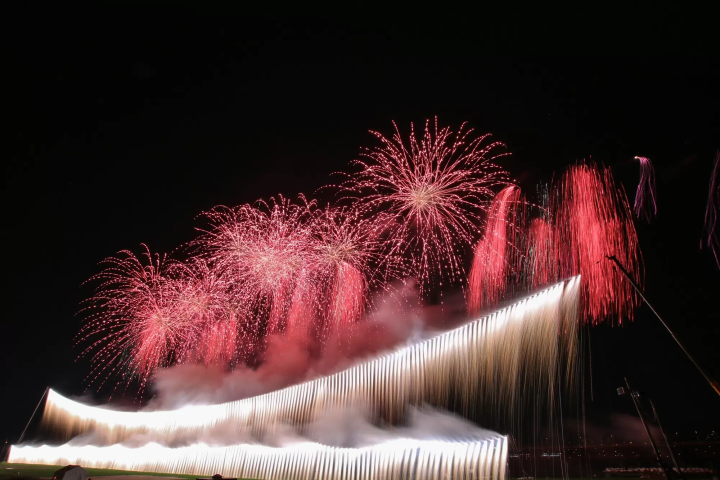
Launching 13,000 fireworks within a 60-minute window creates an average density of over 200 shells per minute. This creates an immersive, "wall-of-light" effect that is difficult to replicate elsewhere. Furthermore, the event features the rare "W Niagara Falls"—a double-layered cascade of pyrotechnic sparks that mimics a waterfall of fire spanning the river width. This specific feature is a favorite among professional photographers, who flock to the riverbanks hours in advance to secure the perfect angle for the reflection of the light against the Arakawa’s surface.
Official Responses and Safety Protocols
The organizers of the Adachi Fireworks Festival—the Adachi City Tourism Association—maintain a rigorous stance regarding safety, particularly given the unpredictability of the late-spring transition period.
Cancellation Criteria:
The event is strictly governed by meteorological thresholds. The decision to proceed is contingent upon three specific safety factors:
- Wind Velocity: If wind speeds reach or exceed 7 meters per second for a sustained period of 10 minutes or more, the event is cancelled.
- Precipitation and Warnings: The issuance of any heavy rain or flood warnings automatically triggers a cancellation.
- Atmospheric Electricity: Due to the risk posed by lightning to the pyrotechnicians and the audience alike, any nearby lightning strikes or the high probability of such occurrences will result in an immediate shutdown.
It is vital for attendees to note that, in line with modern safety protocols, the festival does not offer a rain date. If the weather fails to cooperate, the show is cancelled outright. The necessity of this policy was underscored by recent history: the 2024 event was cancelled due to lightning, and the 2025 event was called off due to high winds, highlighting the volatile nature of the season.
Navigating the Logistics: Access and Crowds
The venue, situated between the Senju Shinbashi and Nishiarai Bridges, creates a natural bottleneck for the hundreds of thousands of attendees who visit annually.
Transportation Strategy:
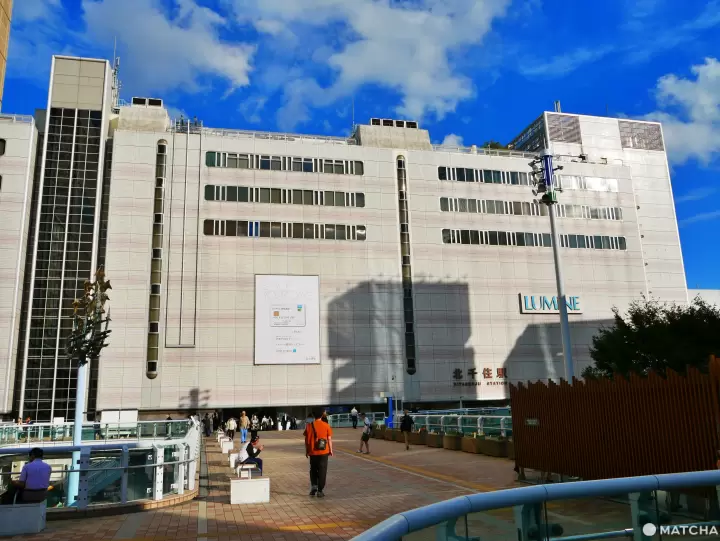
The primary hubs—Kitasenju, Kosuge, and Gotanno stations—bear the brunt of the foot traffic. Experienced locals advise against relying solely on Kitasenju Station, which often faces complete platform congestion. For those on the Kitasenju side of the river, utilizing peripheral stations such as Machiya, Senju-Ohashi, Ushida, or Keisei-Sekiya is strongly recommended to facilitate a smoother departure. Those on the Nishiarai side should aim to navigate toward the Nishiarai Station with ample time, avoiding the rush that occurs the moment the final shell fades.
Viewing Options:
While paid, reserved seating is available, these tickets are typically claimed by mid-May. For the vast majority, the riverbanks remain the primary viewing area. These spaces are free, but they operate on a first-come, first-served basis. It is common for groups to send representatives early in the day to reserve small patches of grass, though the tourism association emphasizes the importance of sharing space respectfully and maintaining safety in the tight confines of the riverbanks.
Implications: The Future of Urban Festivals
The shift of the Adachi Fireworks Festival to May is more than just a calendar adjustment; it represents a broader shift in how major Japanese cities interact with their environment. As the Tokyo summer continues to see rising average temperatures, the traditional model of holding large-scale outdoor events in July and August is becoming increasingly untenable.
By moving to May, Adachi has effectively extended the "festival season" while ensuring that the physical health of attendees is prioritized. This move also has economic implications, as it encourages tourism during a shoulder season, spreading the economic impact of the event across a wider timeframe.
For the international visitor, the Adachi Fireworks Festival offers an authentic look at Tokyo’s community spirit. It is an event driven by the residents, for the residents, and its persistence—through war, river development, and shifting climates—is a testament to the resilience of the local culture.
Summary Checklist for Attendees:
- Check the Weather: Monitor official channels on the morning of May 30th.
- Hydration and Protection: Even in May, the sun can be intense. Bring water and sun protection.
- Plan Your Exit: Choose your exit station before the event begins to avoid the post-show bottleneck.
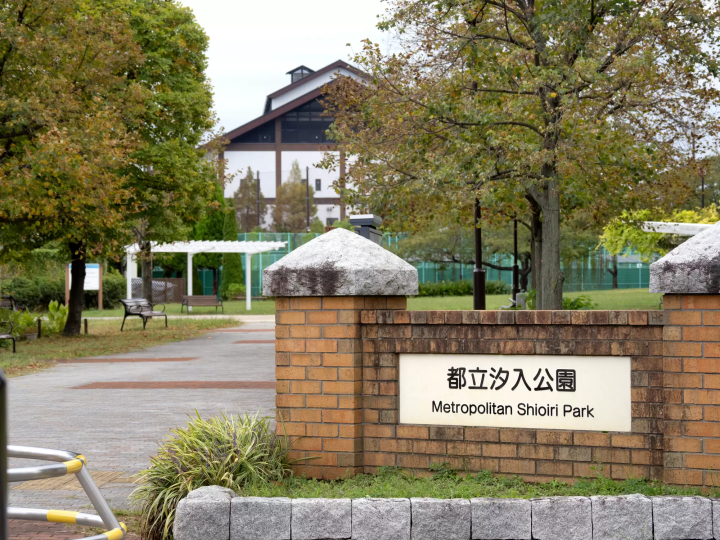
- Explore Alternatives: If the main venue feels too crowded, parks such as Shioiri Park or the banks near Ogi-Ohashi Bridge offer a more tranquil experience, albeit with a slightly distant view of the performance.
The Adachi Fireworks Festival stands as a beacon of both tradition and modern adaptation. Whether you are a photography enthusiast hoping to capture the W Niagara, or a traveler looking to soak in the atmosphere of a Tokyo summer before the heat sets in, the banks of the Arakawa River promise a night of unmatched pyrotechnic beauty.












No comments yet. Be the first to join the conversation!