Siti Muinah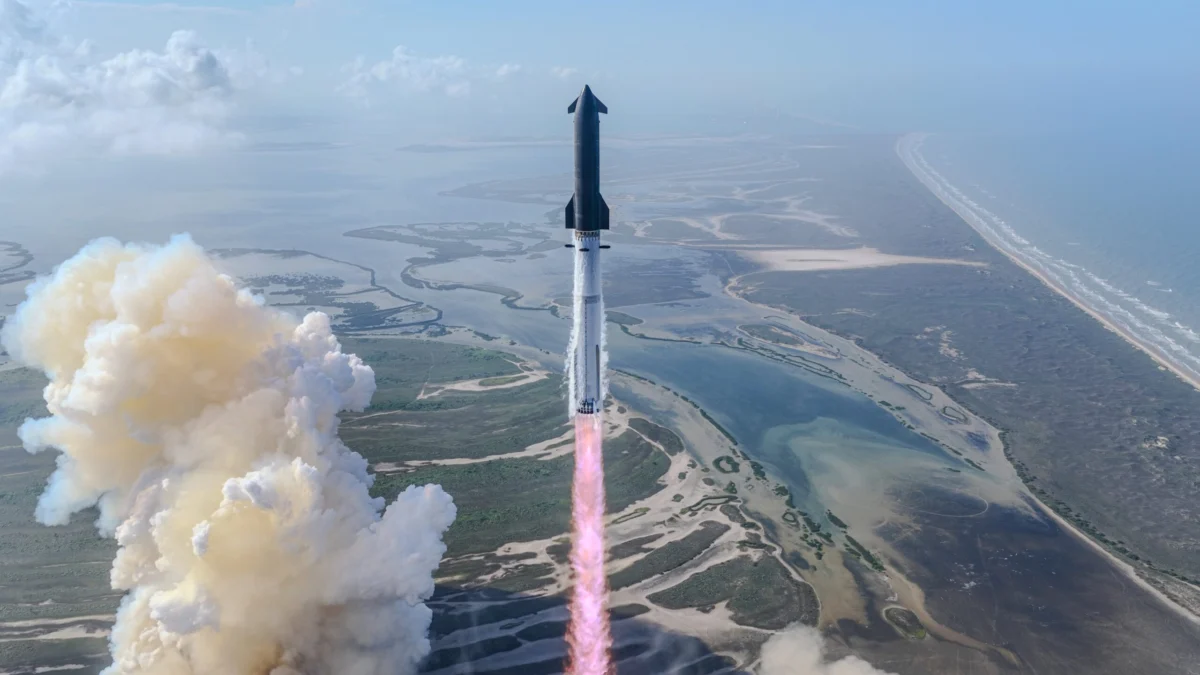
In a display of engineering prowess that underscored the rapid evolution of private spaceflight, SpaceX successfully launched the 12th test flight of its Starship system on Friday. The mission, which featured the debut of the upgraded "V3" iteration of the world’s largest rocket, marked a critical step toward realizing Elon Musk’s vision of a fully reusable, multi-planetary launch vehicle.
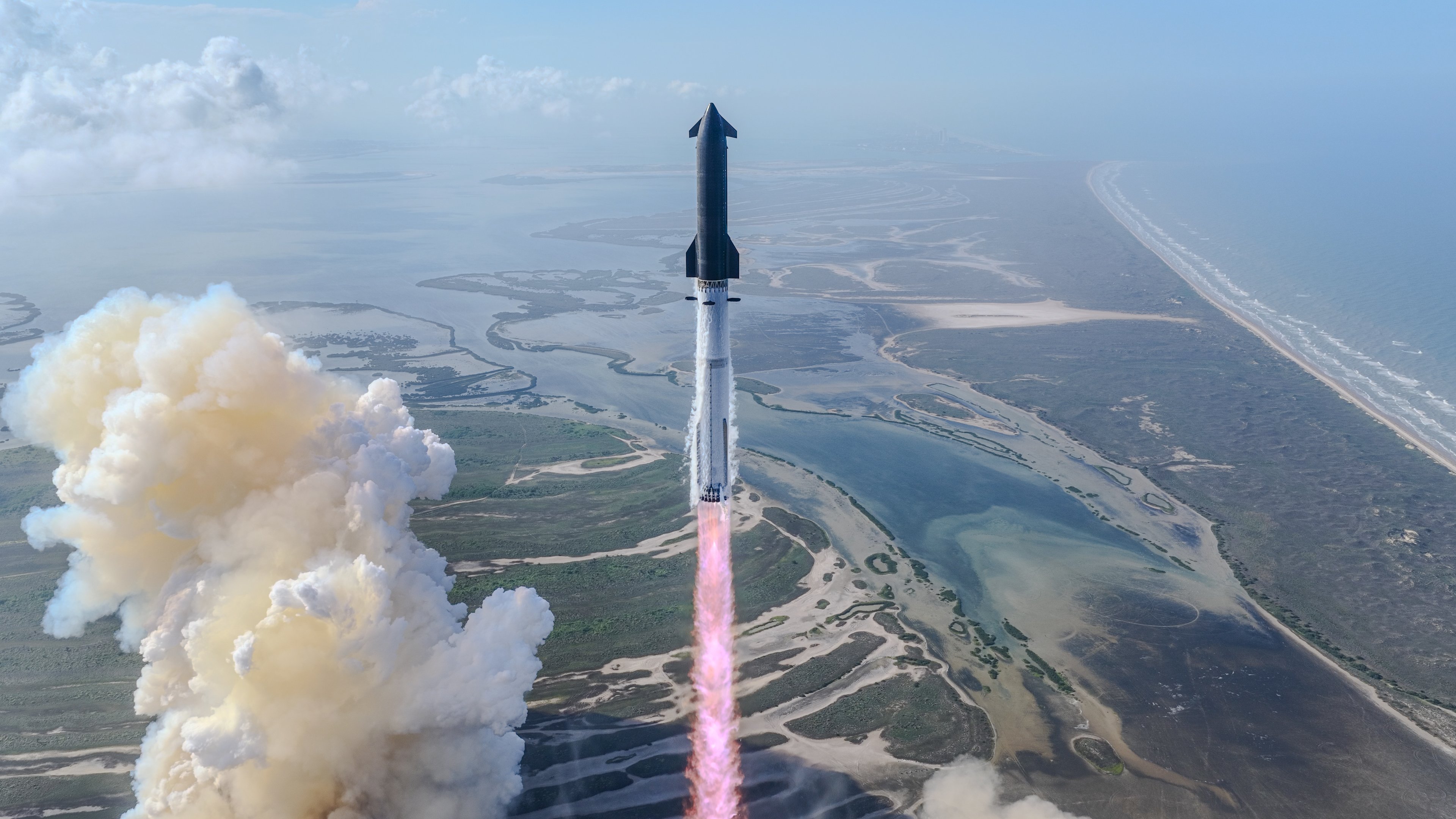
Propelled by 33 methane-fueled Raptor 3 engines, the 408-foot-tall behemoth roared off the pad at SpaceX’s Starbase facility in South Texas at 5:30 pm CDT. While the mission experienced minor technical hurdles, the successful splashdown of the upper stage in the Indian Ocean—and the survival of its critical heat shield—served as a resounding validation of the design philosophy that has defined the program since its inception in 2023.
A Chronology of the Flight
The mission commenced under clear skies, with the Super Heavy booster generating 18 million pounds of thrust—a force roughly double that of NASA’s Space Launch System (SLS) used for the Artemis lunar program. As the vehicle cleared the launch tower, it performed a flawless pitch-over maneuver, tracking eastward over the Gulf of Mexico.
The flight progressed through several key milestones:
- Max-Q and Separation: The vehicle navigated the region of maximum dynamic pressure with stability. Following the successful separation of the Super Heavy booster and the Starship upper stage, both vehicles continued their respective mission profiles.
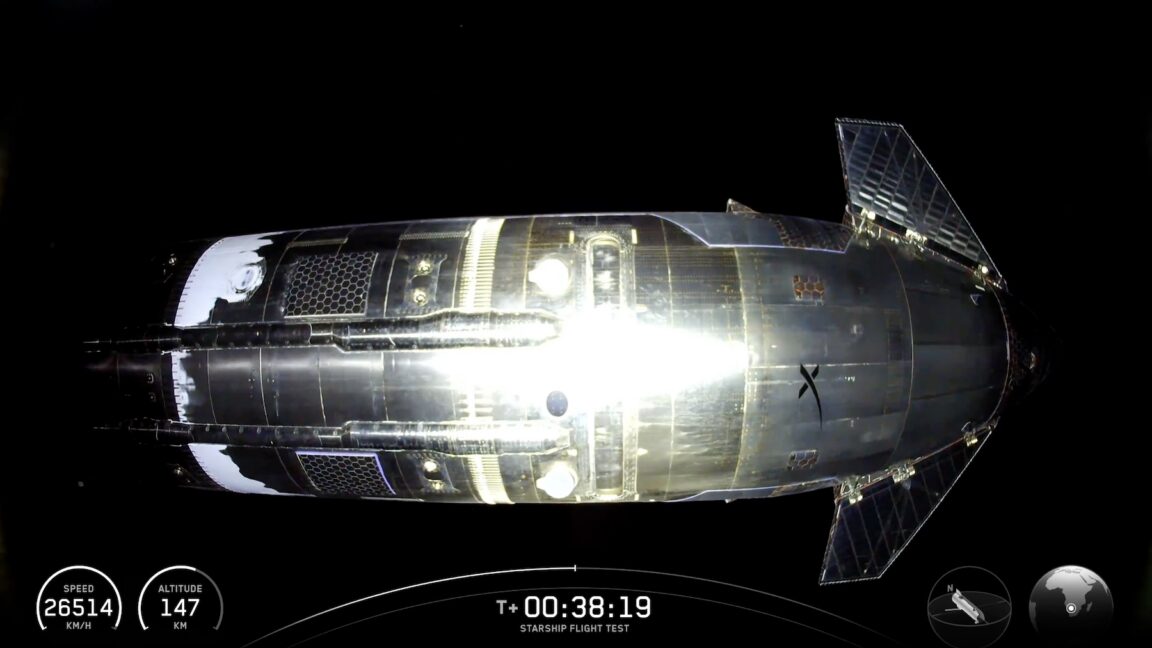
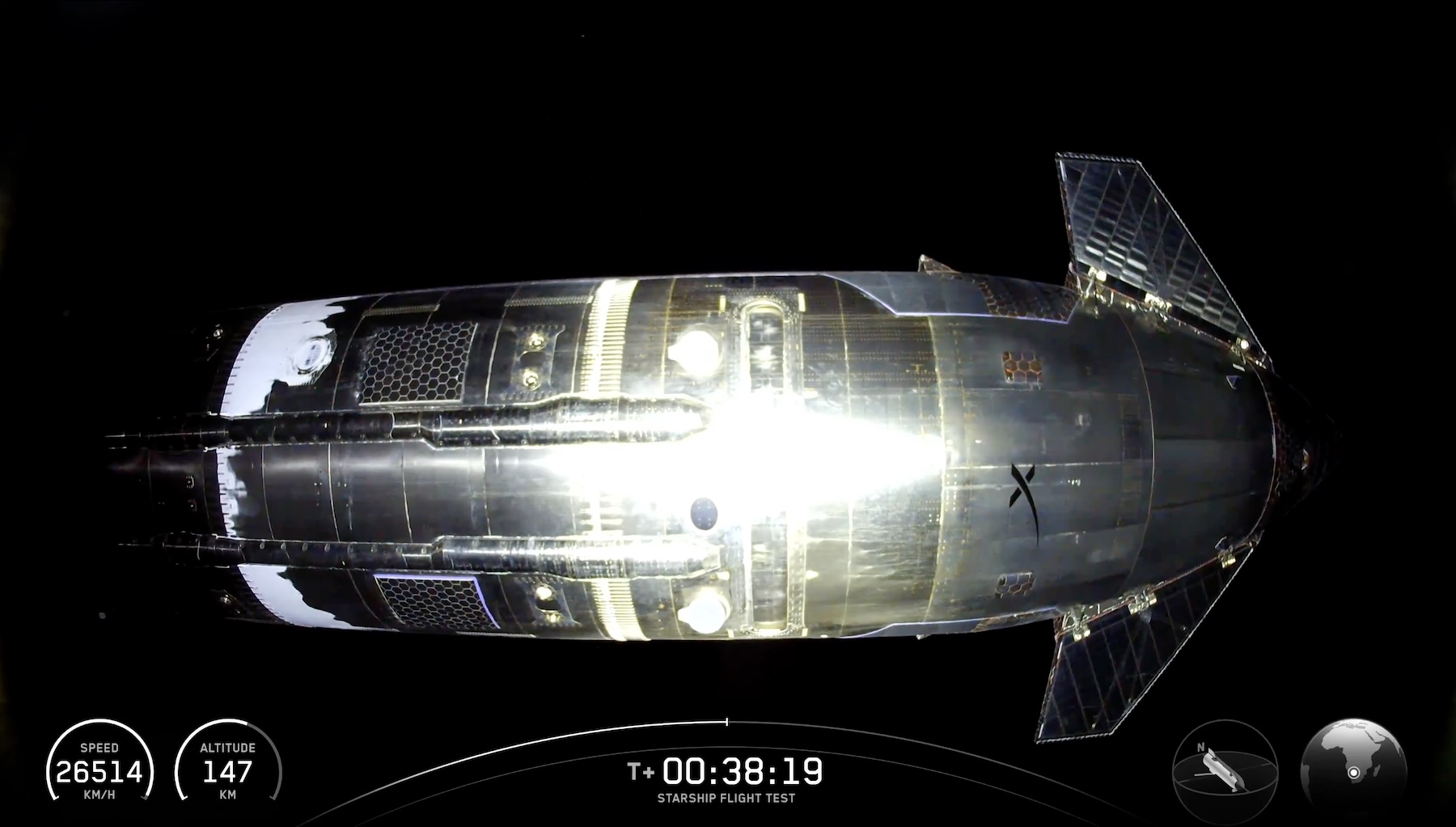
- Payload Deployment: In a significant demonstration of operational capability, the Starship upper stage deployed 20 mock-up Starlink satellites using its new high-speed "Pez-style" dispenser, alongside two specialized inspection spacecraft equipped with imaging hardware.
- Atmospheric Reentry: As the vehicle descended toward the Indian Ocean, all eyes were on the stainless-steel heat shield. Unlike its predecessors, which suffered structural failures during reentry, the V3 ship maintained its integrity, executing complex banking maneuvers to shed velocity.
- The Landing Sequence: The mission concluded with a high-stakes flip-and-burn maneuver. The Raptor engines successfully throttled down from three to one, bringing the massive vehicle to a controlled splashdown. As anticipated, the ship tipped over upon contact with the water, concluding its test flight with a spectacular, albeit expected, fireball.
Technical Analysis: The V3 Advantage
The transition to the V3 architecture represents a substantial leap in capability for SpaceX. The most notable upgrade is the integration of the Raptor 3 engines, which offer higher thrust-to-weight ratios and improved thermal efficiency.
The successful testing of the updated heat shield is perhaps the most significant victory for the engineering team. In previous iterations, the loss of individual ceramic tiles led to catastrophic structural compromise during the plasma-heavy descent. The V3 design utilized improved bonding and structural reinforcement, which allowed the ship to survive the intense thermal load of reentry without significant degradation to its control surfaces.
Furthermore, the new payload deployment system suggests that SpaceX is nearing the threshold of commercial viability. By increasing the speed and volume of satellite release, the company is preparing to integrate Starship into the regular rhythm of the Starlink constellation deployment, eventually allowing for the launch of massive, next-generation satellites that would be impossible to fit into the fairings of the smaller Falcon 9 rockets.
Engine Anomalies and System Resilience
Despite the overall success, the mission highlighted the inherent challenges of managing a 33-engine propulsion array. Early in the ascent, one Raptor 3 engine on the Super Heavy booster shut down, followed shortly by a secondary engine failure on the Starship upper stage during its orbital cruise.
SpaceX’s design philosophy explicitly accounts for such "engine-out" scenarios. The flight computer successfully re-balanced the thrust vectors, allowing the vehicle to achieve its target trajectory despite the power deficit. However, the booster’s inability to complete its return-to-launch-site maneuver resulted in a high-speed impact in the Gulf. Engineers are currently analyzing telemetry to determine if the failure was a result of a propulsion system defect or a cascading issue caused by the violent separation event.
Additionally, SpaceX opted to scrub a planned "in-space engine restart" of the Raptor 3. This maneuver is essential for future missions that require orbital maneuvering and precise de-orbit burns. By erring on the side of caution, the mission control team prioritized the collection of flight-path data over the risk of an unguided reentry.
Official Responses and Industry Outlook
The atmosphere at Starbase was one of calculated optimism. SpaceX CEO Elon Musk took to social media shortly after the splashdown, stating, "Congratulations SpaceX team on an epic first Starship V3 launch & landing! You scored a goal for humanity."
Gwynne Shotwell, SpaceX’s President and COO, echoed this sentiment, highlighting the collaborative nature of the mission. "This was an incredible first flight of a brand new vehicle. Our collective future flying amongst the stars has become so much closer," she noted.
NASA officials, who view Starship as the backbone of the Artemis human landing program, expressed satisfaction with the results. NASA Administrator Jared Isaacman, who observed the launch from the Texas site, characterized the event as a "hell of a launch," signaling that the progress of Starship remains a primary priority for federal space exploration goals.
Implications for the Future of Spaceflight
The success of Flight 12 carries profound implications for the broader aerospace industry:
1. The Path to Orbital Refueling
With the heat shield performance validated, the path is now clearer for "orbital refueling" tests. Because Starship is designed to act as a propellant tanker, the ability to rendezvous and transfer cryogenic methane and oxygen in orbit is the next major hurdle. The data gathered from the payload deployment on Friday will serve as a template for these complex docking maneuvers.
2. Infrastructure Expansion
The successful use of the new, more robust launch pad at Starbase provides a design blueprint for the upcoming Starship launch facilities at Cape Canaveral, Florida. By demonstrating that the pad could withstand the massive acoustic and thermal energy of a V3 launch, SpaceX has cleared the way for a more rapid launch cadence in the coming year.

3. Transitioning to Orbital Missions
While all 12 flights to date have been suborbital, the maturity shown by the V3 hardware suggests that a full orbital flight is within reach. However, the company remains cautious. The primary concern is public safety; as the largest object ever placed in space, an unguided reentry of a Starship would pose a significant hazard to the public. SpaceX is therefore requiring absolute certainty in its engine relight and guidance systems before attempting to put the vehicle into a stable low-Earth orbit.
Conclusion: Chasing Perfection
As the embers of the V3 splashdown fade, the engineering team at SpaceX is already looking toward the summer. With multiple ships and boosters currently in the production line, the focus has shifted from "can it fly?" to "how often can it fly?"
The performance of the V3 system has moved the needle from experimental prototype to operational precursor. While the engine anomalies remind us that spaceflight remains an inherently unforgiving endeavor, the steady, incremental progress of the Starship program suggests that the era of routine, heavy-lift access to space is no longer a distant ambition—it is a rapidly approaching reality. As the company prepares for its next flight, the industry watches with the understanding that every launch is not just a test of a rocket, but a test of humanity’s capacity to inhabit the stars.


 Muslim