

In an era defined by constant connectivity, the humble power bank has evolved from a niche accessory into an essential utility. Whether you are a digital nomad working from a remote cafe, a traveler navigating foreign transit systems, or a professional relying on your smartphone for mission-critical tasks, running out of battery is no longer just an inconvenience—it is a disruption to your livelihood.
The market is currently flooded with thousands of options, ranging from credit-card-sized emergency boosters to high-capacity power stations capable of running laptops for days. However, navigating this sea of lithium-ion technology requires more than just checking a price tag. Safety, efficiency, and real-world performance are the metrics that truly matter. This guide distills years of testing to help you identify the best portable chargers for your specific needs.
The Landscape of Portable Charging: A Chronology of Innovation
The portable charger market has undergone a radical transformation over the last two decades. In the early 2010s, power banks were bulky, inefficient, and slow. Most devices relied on micro-USB, and "fast charging" was a marketing buzzword rather than a technical reality.
By 2018, the introduction of USB-C Power Delivery (PD) standardized how we charge devices, allowing for higher wattages that could finally sustain laptops. The arrival of MagSafe technology in 2020 changed the form factor again, shifting the focus toward convenience and magnetic mounting. As we move through 2025, we are seeing the rise of GaN (Gallium Nitride) technology, which allows chargers to be smaller and cooler, alongside modular designs that prioritize sustainability and repairability.
Small Power Banks (Up to 5,000 mAh): Convenience First
For those who prioritize portability above all else, 5,000 mAh units serve as the perfect "bridge" chargers. They are designed to provide a single, reliable top-up to get you through an evening.
Clutch Pro
The Clutch Pro is a masterclass in minimalism. Approximately the size of a stack of credit cards, this charger is designed to vanish into a pocket or a small purse. While it offers only a modest boost, its "super svelte" profile makes it an ideal companion for a night out or a short commute where lugging a heavy battery is not an option.
Anker Nano Power Bank
Anker’s Nano series continues to dominate the entry-level space. By utilizing a rotating, built-in USB-C or Lightning connector, it eliminates the need for carrying extra cables. It is a "plug-and-play" solution that is as much about ease of use as it is about energy transfer. Available in a variety of colors, it appeals to a younger demographic that values both style and function.
BMX SolidSafe Air Power Bank
The SolidSafe Air stands out by focusing on the modern Qi2 magnetic standard. By clinging to the back of your device, it provides a seamless wireless charging experience. Beyond the convenience, the brand emphasizes enhanced safety protocols to reduce fire risk—a growing concern in the budget power bank market.
Medium Power Banks (10,000–20,000 mAh): The Performance Sweet Spot
For most users, this category represents the optimal balance between weight and capacity. These units can typically charge a modern flagship smartphone two to three times.
Anker Nano Power Bank with Instacord
Innovation in cable management has arrived. This model features a 2.3-foot retractable cable, solving the "cable tangle" problem that plagues many commuters. With a 45-watt output, it is powerful enough to handle tablets and even some ultralight laptops, making it a highly versatile tool for the modern professional.
Gomi Power Bank
In a market defined by disposable electronics, Gomi offers a refreshing alternative. Based in Brighton, UK, the company uses recycled plastics to hand-make their power banks. They claim a 50 percent reduction in CO2 emissions compared to mass-produced counterparts. It is proof that sustainability does not have to come at the expense of high-end performance.
Ugreen Nexode Power Bank
Ugreen has quickly gained a reputation for aggressive pricing and high performance. The Nexode is not just a "robot-faced" gimmick; it delivers up to 100 watts of output. Finding 100W of power in such a compact frame is rare, making this an excellent choice for users who carry high-performance laptops and demand rapid, desk-top level charging speeds on the go.

Big Power Banks (20,000 mAh and Up): Maximum Output
When your workspace is anywhere with a power outlet, these high-capacity beasts are your best friends.
Ecoflow Rapid Pro
The Rapid Pro is pushing the limits of what is permitted on commercial aircraft. With a 300-watt total output, it can charge multiple laptops and phones simultaneously. It features a retractable 2-foot USB-C cable and enough capacity to keep a workstation running through a cross-country flight.
Aohi Starship Power Bank
With an aesthetic that seems plucked from the set of a sci-fi film, the Aohi Starship is a powerhouse. Capable of 240W delivery, it is arguably the best choice for users who need to charge two high-drain laptops at the same time. The LED display provides granular real-time feedback, a feature professionals will find invaluable.
Anker Prime Power Bank
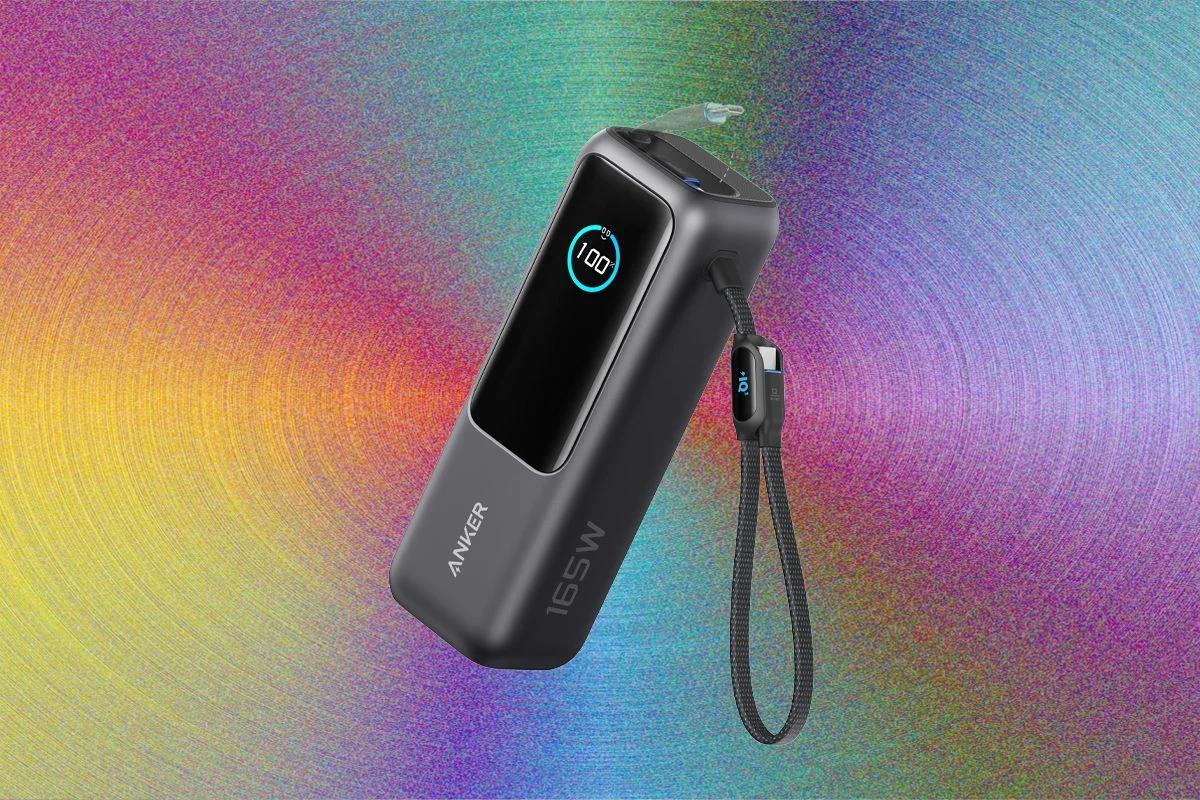
The Anker Prime is, simply put, a beast. With 26,250 mAh of capacity and 300W total output, it is designed for the power user who refuses to compromise. With app control and a smart display, it offers the most advanced power management system on this list.
Supporting Data: Understanding Capacity and Efficiency
When shopping, it is vital to understand that "Rated Capacity" is not the same as "Output Capacity."
- The 60-80% Rule: Due to energy loss through heat and voltage conversion, you will never receive 100% of the listed mAh. Most high-quality chargers operate at roughly 75% efficiency.
- Wattage vs. Speed: A 100W power bank is only as fast as the device it is charging. Always check your device’s maximum intake wattage (e.g., most iPhones cap around 27W, while many laptops require 65W+).
- Pass-Through Charging: This allows you to charge the power bank and your device at the same time. While convenient, it generates significant heat. If your power bank does not explicitly list support for this, avoid it to extend the battery’s lifespan.
Official Responses and Safety Implications
The most important takeaway from our testing is the absolute necessity of avoiding "no-name" chargers found on discount marketplaces. The difference between a $20 charger and a $50 charger is often found in the internal circuitry—specifically, the insulation and the power-management chips that prevent over-voltage and thermal runaway.
As noted in the case of the Samsung Galaxy Note 7, lithium-ion batteries are complex chemical systems. When they are manufactured with inferior materials or lack proper thermal monitoring, they can become hazardous. Always prioritize brands that offer clear documentation on their safety certifications.
Can You Fly with These?
The standard restriction is 100 watt-hours (WH). Generally, anything under 27,000 mAh is safe to carry in your carry-on luggage. You must never check these batteries in your hold luggage, as the pressurized, unmanned cargo hold poses a significant fire risk if a thermal event occurs.
What We Learned: Testing Methodology
After two decades of testing, our approach remains consistent:
- Real-World Load Testing: We don’t just rely on lab specs. We charge iPhones, Pixels, iPads, and MacBooks until the bank is depleted.
- Cycle Aging: We track how the unit performs after 50+ charge cycles to monitor degradation.
- Thermal Imaging: We monitor heat dissipation during high-wattage output. A charger that runs cool is a charger that will last longer.
- User Experience: We invite non-technical users to try these devices. If a product requires a manual to figure out, it has already failed in its primary purpose: convenience.
The Bottom Line
Avoid products like the OnePlus Slim or the Iniu 10,000 mAh charger if your primary goal is reliable, consistent power. While they may look sleek or offer impressive specs on paper, our testing consistently showed that they fall short of capacity claims or suffer from charging reliability issues.
When in doubt, stick to reputable manufacturers who provide clear warranty support. A power bank is an investment in your productivity; ensure you choose one that is as reliable as the devices it is meant to keep alive.












No comments yet. Be the first to join the conversation!