

In the high-stakes world of military aviation, a "safety stand-down" is a rare and significant event. It is a procedural alarm bell—a signal that the United States Air Force (USAF) has identified a systemic risk that transcends the routine mechanical hiccups inherent in daily operations. Typically, an aircraft mishap results in the grounding of a specific squadron or a temporary suspension of flight operations for a localized inspection. It is exceedingly rare for the Air Force to issue a fleetwide operational pause, a move reserved for when officials fear that a failure in one airframe could be a harbinger of a catastrophic flaw across an entire class of aircraft.
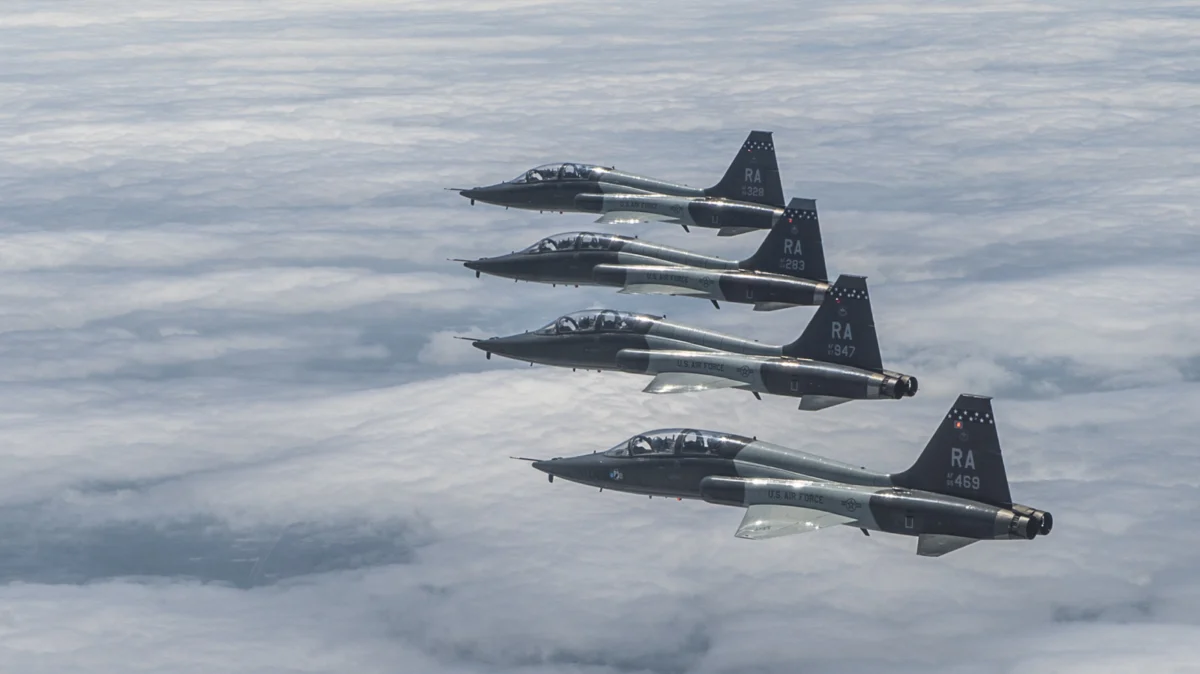
This is the current reality for the Northrop T-38 Talon, the backbone of American supersonic pilot training. Following a series of troubling incidents, the Air Force has placed its entire T-38 fleet under an indefinite operational pause, effectively freezing the pipeline that produces the next generation of fighter and bomber pilots.
The Catalyst: A Mid-May Emergency
The crisis began on May 12, when a T-38C assigned to the 14th Flying Training Wing at Columbus Air Force Base in Mississippi crashed during a routine training mission in rural Alabama. The incident, while harrowing, ended without fatalities. Both the instructor and the student—a pilot from the Japan Air Self-Defense Force—successfully ejected from the aircraft. While the survival of the aircrew was a relief to command, the student pilot sustained a broken leg, marking the event as a significant injury incident.
The gravity of the situation was compounded by a second, eerie coincidence occurring on the same day. Reports surfaced that a second T-38C had squawked "7700" on its transponder—the universal aviation code for an in-flight emergency—forcing an immediate landing. While the Air Force has not publicly confirmed whether the two aircraft were flying in formation or were involved in the same training sortie, the proximity of the two events triggered immediate concerns regarding the structural or mechanical integrity of the wider fleet.
On May 19, one week after the Alabama crash, the Air Force officially initiated a fleetwide operational pause. In a brief statement, the Air Force noted that the pause was a proactive measure, allowing an "ongoing Safety Board to locate and assess evidence" recovered from the Alabama wreckage. For now, the training skies remain silent for the Talon, with no clear timeline for when the fleet will return to the flight line.
A Legacy of Excellence: Why the T-38 Remains Irreplaceable
To understand the magnitude of this grounding, one must appreciate the T-38’s unique position in the military hierarchy. First entering service in 1961, the Talon is a veteran of the Cold War, yet it remains the primary advanced jet trainer for the Air Force. Its longevity is a testament to the brilliance of the original Northrop design, but it also underscores a modern-day vulnerability.
The T-38 is the "bridge" aircraft. Every aviator destined to strap into an F-22 Raptor, an F-35 Lightning II, or the stealthy B-2 Spirit must first master the T-38. It provides the crucial transition from propeller-driven primary trainers to the high-G, supersonic reality of modern combat aviation. Despite being designed in an era of slide rules and analog flight computers, the T-38C variant—introduced in 2001—features a modern glass cockpit and upgraded engine components designed to optimize thrust.
However, the airframe itself is a relic. Northrop produced over 1,100 Talons, and approximately 450 remain in active service today. These jets are routinely pushed to their aerodynamic limits, climbing to altitudes exceeding 55,000 feet and piercing the sound barrier on a daily basis. They are, quite literally, aging machines performing a young person’s job.
The Mechanics of Failure: The J85 Headache
Central to the T-38’s maintenance woes is the General Electric J85 turbojet. The J85 is a robust engine, but it is also a complex one, characterized by a dense architecture of moving parts that require meticulous, labor-intensive upkeep. By 2020, the Air Force’s internal depot system was reaching a breaking point. Overhaul backlogs had become so severe that the training pipeline for new pilots was under direct threat of stagnation.
Lt. Gen. Brian Robinson, then the head of Air Education and Training Command (AETC), laid the reality bare during interviews with the Air Force Times. "It’s an old engine… there’s a lot of moving parts," Robinson noted, highlighting the systemic difficulty of maintaining a propulsion system that has been in operation for over six decades.
In an attempt to mitigate these pressures, the Air Force awarded a $237 million contract to the firm StandardAero, tasking them with streamlining repairs and stabilizing the supply chain for the J85. While these efforts provided temporary relief, the reliance on such an aging platform in a modern military environment remains a high-risk gamble. The recent groundings suggest that despite these investments, the physical fatigue of the airframes and the complexity of the engines may have finally reached a cumulative threshold.
Implications for Pilot Training
The operational pause has immediate and far-reaching consequences for the Air Force’s training throughput. With the T-38 fleet grounded, AETC has been forced to rely heavily on simulators and ground-based academic training to keep student pilots current. While modern simulation technology is world-class, it cannot replicate the physiological stresses—the G-forces, the spatial disorientation, and the psychological weight of solo flight—that are essential for producing a combat-ready aviator.
If the grounding persists for weeks or months, the delay will ripple through the entire service. A bottleneck in advanced training means fewer pilots graduating to operational squadrons, which in turn impacts the combat readiness of front-line wings. For the Air Force, the T-38 is not merely a training tool; it is a critical infrastructure component.
The Horizon: The T-7A Red Hawk
The Air Force is acutely aware of the T-38’s limitations and has been planning for its retirement for years. The solution is the Boeing and Saab T-7A Red Hawk, a clean-sheet design meant to bring advanced digital engineering, superior safety features, and simplified maintenance to the training environment.
The transition, however, is a slow process. While the T-7A was greenlit for production in early 2026, the timeline for full fleet replacement is not slated to conclude until the 2030s, with initial retirements of the oldest T-38s beginning in 2027. This leaves the Air Force in a "valley of death"—a period where the legacy platform is too old to be reliable, but the replacement is not yet present in sufficient numbers to carry the burden.
The recent incident in Alabama and the subsequent grounding are a stark reminder of the risks inherent in operating legacy hardware. The T-38 has served the nation for over sixty years, a duration unprecedented in the history of jet-powered aviation. But every aircraft has a service life, and every metal fatigue limit is eventually reached.
Looking Forward
As the Air Force Safety Board continues its investigation, the focus remains on forensic analysis of the crashed airframe and a comprehensive fleet-wide inspection. The return to service will likely be a phased, conservative process, with aircraft returning to the sky only after undergoing rigorous structural assessments.
For the pilots and the maintenance crews of the 14th Flying Training Wing, the wait is a test of patience and professionalism. They understand better than anyone that the safety of the aviator is paramount. While the T-38 has been the workhorse of the sky for generations, the events of this past May may signal that the era of the Talon is finally drawing to a close. The Air Force is currently navigating the difficult transition from a proud, aging legacy to a digital future, but until the T-7A Red Hawk takes its place in the hangar, the service must find a way to manage the risks of the past while looking toward the future.
The silence currently enveloping the T-38 fleet is not just a pause in training; it is a reflection of the challenges of maintaining air superiority in a world where the equipment is often as old as the history it helped write. The path forward remains uncertain, but the priority for the Air Force is clear: ensure the safety of its students while maintaining the integrity of the most important training pipeline in the world.












No comments yet. Be the first to join the conversation!