Nana Muazin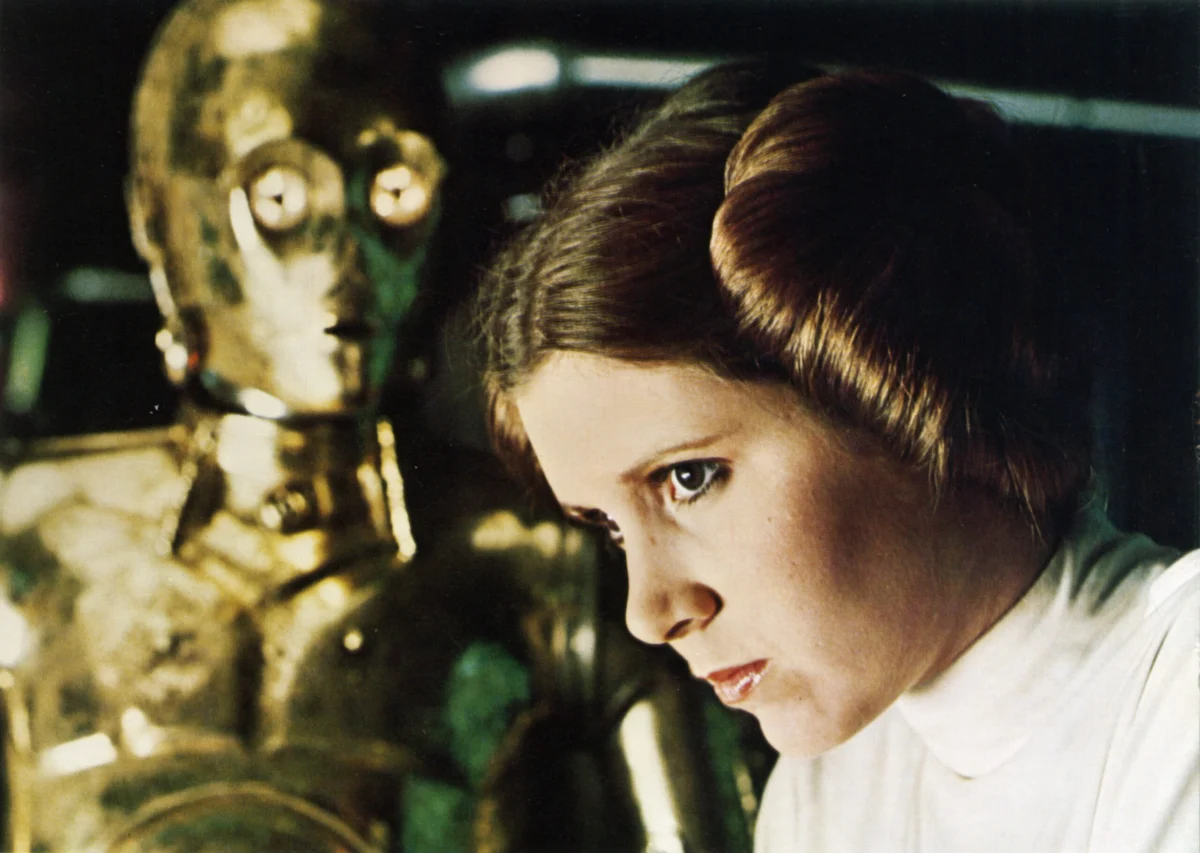
"I don’t even want to get into it."
For the modern film critic or the casual fan, there are few social experiences as psychologically taxing as the inevitable pivot to Star Wars. It is a conversation that has migrated from the realm of lighthearted geekdom into a minefield of political resentment and identity-based toxicity. This isn’t merely because some fans hold valid, critical opinions about the creative trajectory of the franchise under Disney—a period of stewardship that recently concluded with the January departure of Lucasfilm president Kathleen Kennedy. Rather, it is because the discourse surrounding a galaxy far, far away has devolved into an exhausting game of "misogynist roulette."

The franchise, once a universal touchstone for moral clarity and shared cultural myth-making, has become a mirror for the fractured, high-stakes nature of 2026’s political climate. To mention Star Wars in a public setting today is to brace for impact: you never know if you are about to discuss the narrative dissonance between J.J. Abrams and Rian Johnson, or if you are about to be lectured on how "women ruined everything" for the fanbase.
The Chronology of a Fractured Galaxy
To understand how we arrived at this impasse, one must look at the timeline of the Lucasfilm acquisition. When Disney purchased the studio in 2012 for over $4 billion, the transition was framed as the dawn of a new era. Kathleen Kennedy, a titan of industry whose resume included collaborations with Steven Spielberg on Raiders of the Lost Ark and E.T., was tasked with guiding the legacy of George Lucas.

The early returns were staggering. 2015’s The Force Awakens remains the highest-grossing domestic release in North American history, a triumph that signaled the franchise was in safe hands. However, the cracks in the foundation began to show shortly thereafter. When creative control of the sequel trilogy shifted from the nostalgia-heavy, mystery-box approach of Abrams to the deconstructive, divisive vision of Rian Johnson for 2017’s The Last Jedi, the fandom split.
While critics lauded The Last Jedi for its bold subversion of established tropes, a vocal segment of the fanbase erupted. The grievances were wide-ranging: inconsistent mythology, the radical alteration of Luke Skywalker’s character arc, and a perceived lack of long-term narrative planning. The 2018 spin-off Solo: A Star Wars Story served as a grim barometer for the situation, becoming the first true box-office disappointment in the brand’s history. Even as The Rise of Skywalker (2019) clawed back over $1 billion globally, the era of Star Wars being perceived as "invincible" had effectively ended.

The Weaponization of Fandom
The aftermath of these creative missteps coincided with a broader shift in digital culture. As Lucasfilm attempted to pivot toward a more inclusive and diverse storytelling model, the brand became a flashpoint for the "manosphere" and the broader, rage-driven algorithmic economy of the internet.
Women associated with the franchise—from Daisy Ridley, who shouldered the immense pressure of the sequel trilogy’s protagonist, to Kelly Marie Tran, Moses Ingram, and showrunners like Leslye Headland and Deborah Chow—became lightning rods for a specific brand of vitriol. This wasn’t merely film criticism; it was identity-based harassment. Trolls targeted these women with a ferocity that turned their professional existence into a political battleground.

For many fans, the shift to a streaming-heavy model on Disney+ only accelerated this decay. The transition from a grand, communal theatrical event to a fragmented digital ecosystem meant that Star Wars was no longer just a movie; it was "content." In the dark corners of social media, anonymity provided cover for a toxicity that turned legitimate critiques of narrative pacing into a crusade against "wokeness."
Implications: The Death of the Moral Allegory
The tragedy of the current state of Star Wars is that it has lost its status as a shared moral philosophy. In 1977, the original film offered a respite from the cynical, post-Watergate landscape of the American 70s. It was a film that dared to suggest that good was still clearly, undeniably good.

George Lucas built a world that felt "lived-in" and dirty, yet remained spiritually optimistic. It provided a common language for generations of viewers. Whether you were a Gen Xer dealing with suburban isolation or a Millennial debating the merits of the Prequel Trilogy, there was, at the very least, a baseline of mutual appreciation.
Today, that common ground has vanished. The franchise has become a conduit for fighting about late-stage capitalism, gender, and the state of democracy itself. One fan sees an allegory for resistance against authoritarianism; another sees a corporate institution attacking their fundamental worldview.

The Sigourney Weaver Factor: A Symbolic Shift
The current theatrical release of The Mandalorian and Grogu—featuring the iconic Sigourney Weaver—is an exercise in poignant irony. For decades, Weaver’s performance as Ellen Ripley in Alien was the gold standard for female authority in science fiction. It was a performance that fans across the spectrum respected.
Yet, in 2026, even the addition of a living legend like Weaver feels fraught. Because Kennedy’s tenure foregrounded the presence of women as an "ideological event" rather than an artistic evolution, it is difficult for many to view these casting decisions without the lens of the preceding culture wars. It raises a difficult question: if the best a franchise can offer its female audience is another film helmed by a male director (Jon Favreau), which requires extensive homework through streaming platforms to fully grasp, is that really the progress that was promised?

Official Perspectives and the Road Ahead
While Disney has navigated these turbulent waters with the release of The Mandalorian and Grogu, the studio remains tight-lipped regarding the long-term strategic damage caused by the polarization of their fanbase. Industry analysts note that while the franchise remains a financial engine, the "cultural cost" is mounting.
The decline of the brand is not the fault of the women who stood at its center; it is a systemic failure of leadership and vision that occurred the moment the keys to the kingdom were handed over. The women of Star Wars continue to bear the brunt of the frustration for a collapse that began long before they signed their contracts.

Ultimately, the exhaustion felt by many viewers is not just about the quality of the films; it is about the degradation of the conversation. When we go to the theater, we are looking for a shared experience. Instead, we are met with a "cantina" where the lights have come on, the patrons are argumentative, and the magic of the original discovery has been replaced by the cynicism of "IP maintenance."
Perhaps the most honest response to a fan asking for a breakdown of why the franchise "fell" is the one that has become the unofficial motto of the era: "I don’t even want to get into it." Because in a world where Star Wars discourse has become a proxy for every societal grievance, the only way to win the game is to stop playing.

As The Mandalorian and Grogu continues its run in theaters, the franchise stands at a crossroads. It can continue to feed the flames of a polarized audience, or it can attempt to find its way back to the simple, universal heroism that made us fall in love with a galaxy far, far away in the first place. But for now, the cantina is closed, and the fans are left to wander home, wondering if the dream was ever as bright as we remembered it.


 Laily UPN
 Nana
Nana