Layla Zulfa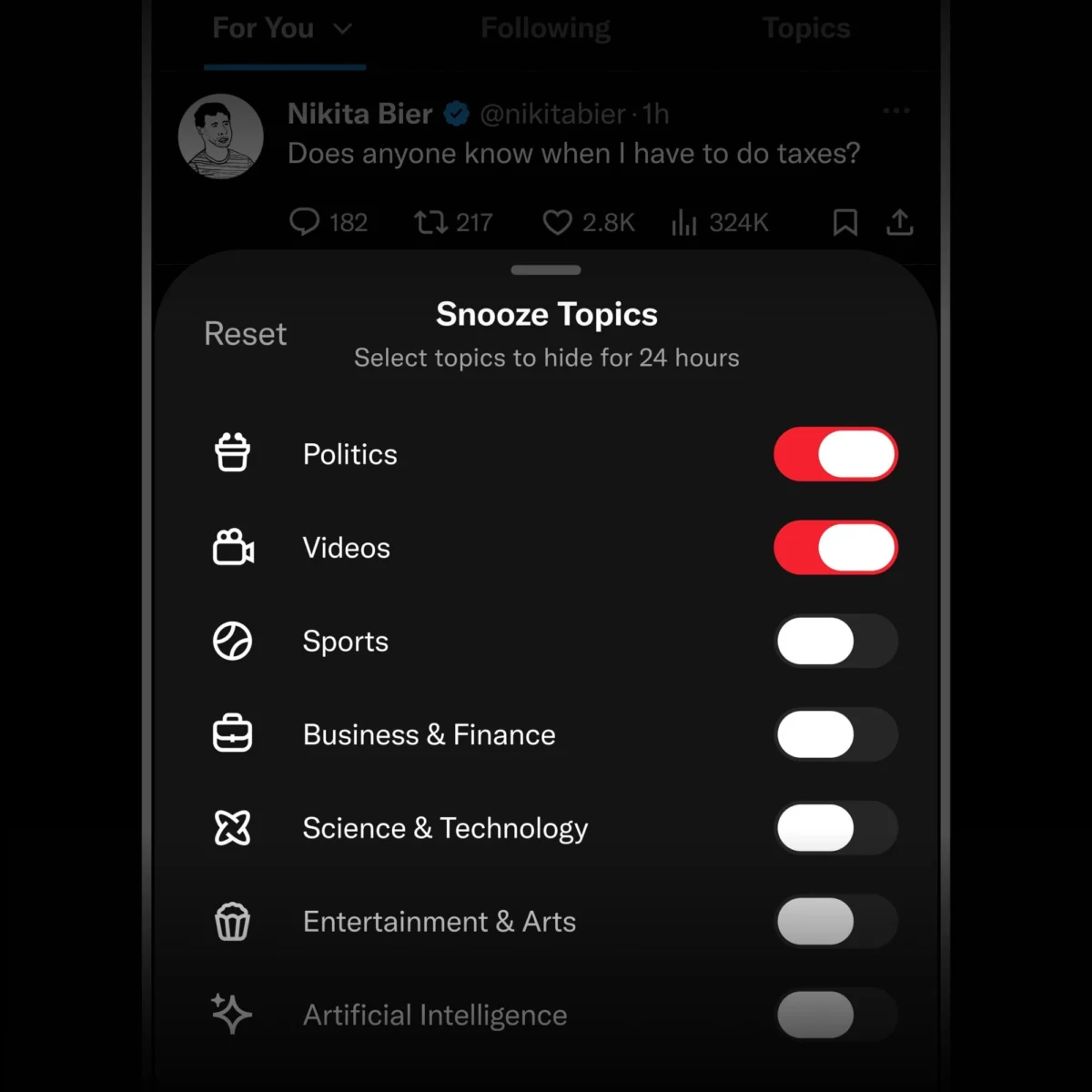
In a significant update to its platform architecture, social media giant X has introduced a new "Custom Timelines" feature, marking a bold shift in how users consume information. Powered by xAI’s Grok, the feature allows Premium subscribers to curate hyper-specific feeds based on granular topics, effectively moving the platform toward a more modular, interest-driven experience. While the update has been met with early enthusiasm, it also highlights the growing integration between Elon Musk’s social platform and his artificial intelligence venture, xAI.
The Core Innovation: Personalization via Grok
The new Custom Timelines feature functions as a sophisticated filter for the vast, often chaotic, stream of data that defines the X experience. By leveraging Grok’s Large Language Model (LLM) capabilities, the platform can analyze the semantic content of posts rather than relying solely on traditional keyword tagging.
Nikita Bier, Head of Product at X, described the launch as a “huge undertaking across many months.” According to Bier, the feature utilizes Grok’s deep understanding of post context, combined with existing personalization algorithms, to ensure that each feed is tailored to the user’s specific interests. "It’s powered by Grok’s understanding of every post… meaning every timeline is made just for you," Bier noted in a promotional announcement.
For users accustomed to the "For You" page—which often feels like a monolithic, catch-all feed—this represents a granular return to the curated discovery that initially made social media platforms appealing. Users can now create up to 75 individual custom timelines, a capacity that suggests X intends for this to be a primary navigation tool rather than a secondary novelty.
Chronology of the Rollout
The announcement, which arrived earlier this week, followed a period of intense internal development. The rollout began with a staggered release schedule, prioritizing the iOS ecosystem.
- Initial Announcement: Nikita Bier confirmed the rollout via his official X account, emphasizing the technical complexity of the integration.
- iOS Availability: The feature immediately became available to Premium subscribers using the X application on iOS.
- The "Snooze" Companion: Simultaneously, X launched a "Snooze Topics" feature, allowing users to actively suppress certain content types—a necessary counterbalance to the influx of new, specific feeds.
- Future Roadmaps: While Android support is currently in development, X has promised a swift expansion to other platforms. Furthermore, the development team has signaled an iterative approach, with specific content categories—such as religious discourse—undergoing refinement before a wider, more stable release.
Technical Implications: AI Training and Data Loops
While the user-facing benefit is clear—a cleaner, more relevant feed—industry analysts are looking at the backend implications. Podcaster Aakash Gupta, among others, has pointed out the symbiotic relationship between these custom feeds and xAI’s training requirements.
By allowing users to define their own specific "topical buckets," X is effectively crowd-sourcing a massive, labeled dataset. Every time a user creates a timeline for "Quantum Computing," "Local Politics," or "Niche Hobbyist Trends," they are providing the xAI model with explicit data on how users categorize information. This feedback loop is invaluable for improving the accuracy of Grok’s classification algorithms, creating a virtuous cycle where the AI becomes more helpful the more it is used.
Official Responses and Addressing User Friction
As with any major UX overhaul, the transition has not been without its hurdles. During the initial rollout, confusion regarding how to access the feature led to frustration among some users.
In a notable exchange, a user expressed disappointment over the perceived lack of support for religious content—specifically, a requested "Catholicism" feed. Nikita Bier’s response was instructive: he clarified that the feature requires the latest app version and acknowledged that certain content categories were intentionally held back to ensure high-quality, relevant curation.
"We’re working on supporting religions in the next two weeks," Bier explained. "We had it earlier, but the quality/content didn’t meet our bar yet." This admission highlights the difficulty of applying AI moderation to sensitive or complex cultural topics, where the line between legitimate community discourse and misinformation can be thin.
User Sentiment: A Mixed Bag of Utility and Skepticism
Early adopters have provided a spectrum of feedback, ranging from high praise to cautious observation.

The Proponents
Many users have expressed relief at the ability to bifurcate their interests. One user noted the long-awaited ability to "separate tech from sports without building a whole new account." This solves a perennial problem for "power users" who previously had to maintain multiple, single-interest accounts to avoid the "bleeding" of unwanted content into their primary feeds.
The Skeptics
Conversely, early testers have reported technical growing pains. Some users noted "overlapping" between related categories, such as AI, software, and tech, which suggests that the semantic boundaries defined by Grok may still be a bit "fuzzy."
Furthermore, @syssignals, an early user, noted that they were seeing the same content repeated across their custom timelines. "I am still on my ‘For You’ timeline," they noted. "But hope this custom timeline will be mature as time goes by."
The success of this feature will likely hinge on whether X can solve the "boundary problem." As one user, @Hoxygo, succinctly put it: "The real test is whether the algorithm respects the timeline boundaries instead of bleeding the main feed into it."
Comparative Context: The Shadow of X Pro
The new custom timelines feel like a spiritual successor to TweetDeck, which was rebranded as X Pro. TweetDeck was the gold standard for "power users" who wanted to monitor columns of information simultaneously. However, whereas TweetDeck required manual list creation and column management, the new X custom timelines are automated by AI.
This shift reflects the broader corporate strategy at X: moving from a manual, list-based architecture to an AI-curated one. While this provides a lower barrier to entry for the average user, it remains to be seen if it will satisfy the power users who prefer the total control offered by traditional, non-algorithmic tools.
The Road Ahead
As X moves forward with the global rollout of Custom Timelines, the platform faces several key challenges:
- Algorithmic Maturity: The AI must prove it can distinguish between overlapping topics effectively. If the feeds remain too similar to the general "For You" page, the feature will lose its utility.
- Stability and Performance: With 75 potential timelines per user, the system must remain performant. High-latency loading would quickly alienate the professional user base.
- Content Moderation: As noted by the delay in religious-themed feeds, X must balance the speed of AI curation with the need for high-quality, safe, and accurate content.
- Platform Parity: The lack of Android support at launch is a significant point of contention. Bringing the feature to parity across iOS, Android, and Web will be the next major hurdle for the product team.
Conclusion
The introduction of AI-powered Custom Timelines is perhaps the most significant functional change to the platform since the acquisition by Elon Musk. It represents a clear commitment to the "Everything App" philosophy, utilizing Grok not just as a chatbot, but as the underlying intelligence that manages the user’s entire information diet.
For now, the feature is a "work in progress." It is undeniably powerful for those who enjoy curated feeds, yet it leaves room for improvement in terms of boundary control and algorithmic nuance. As the AI learns from the massive amount of new data being generated by these custom feeds, it is likely that the experience will become more sophisticated. For the average X Premium subscriber, the question remains: will these new timelines finally provide the focus they crave, or will they simply create more noise in an already loud digital environment?
Only time, and continued user interaction, will tell. For the moment, the community remains in a "wait-and-see" phase, watching as the AI slowly refines the way the world communicates.


 Asro
Asro
 Basiran