

After the seismic success of Mad Men, Matthew Weiner occupied a rare tier of television royalty. Having cut his teeth on the writing staff of The Sopranos—a show that single-handedly redefined the narrative potential of cable television—Weiner moved on to create a magnum opus that would define the 2007–2015 era. Mad Men, with its meticulous period detail and exploration of the American dream’s rot, was a critical darling and a cultural juggernaut.
When it concluded in 2015, the industry waited with bated breath to see what the visionary showrunner would tackle next. In 2018, that answer arrived on Prime Video in the form of The Romanoffs, a lavish, star-studded anthology series. Despite a staggering $50 million budget, the show was met with a tepid reception and quickly drifted into the periphery of pop culture. However, in an era where prestige television—epitomized by shows like The Crown—continues to dominate the zeitgeist, The Romanoffs stands as a misunderstood, ambitious, and visually arresting project that is ripe for a long-overdue reappraisal.
The Architecture of Ambition: What is The Romanoffs?
Across eight standalone episodes, The Romanoffs serves as a sprawling, episodic examination of identity and delusion. Each installment chronicles a separate story centered on characters who believe they are the living descendants of the Romanov dynasty, the Russian imperial family whose reign ended in the 1917 Bolshevik Revolution.
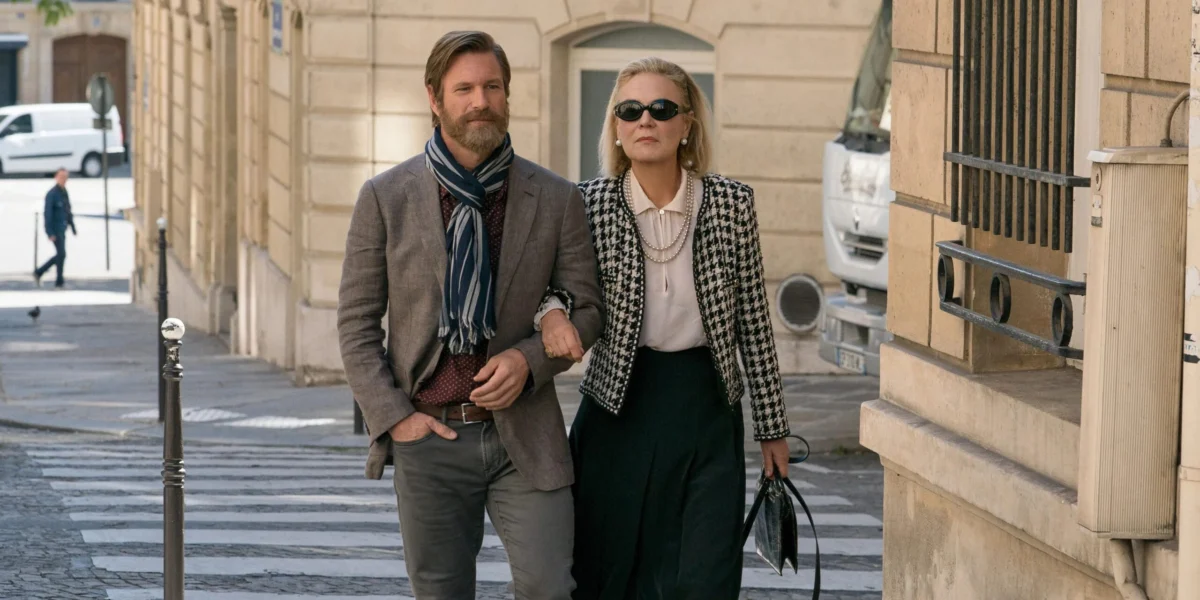
The scale of the production was, and remains, breathtaking. The series boasts an ensemble cast that reads like a “who’s who” of Hollywood prestige, including Aaron Eckhart, Corey Stoll, Isabelle Huppert, Amanda Peet, Diane Lane, Kathryn Hahn, and Noah Wyle. Each episode functions as a self-contained feature film, ranging in tone from dark satire to melancholic character study. The connective tissue is not a linear plot, but rather a thematic obsession: the desperate need for human beings to anchor their mundane, often miserable lives to a sense of historical grandeur. Whether they are hotel owners in Paris or middle-class families in the American suburbs, the characters are united by the belief that their lineage offers them an escape from the triviality of the modern world.
A Chronology of the Production
The inception of The Romanoffs began shortly after the final curtain call of Mad Men. As Amazon Studios began its aggressive expansion into original content, they offered creators like Weiner the kind of “carte blanche” freedom that traditional network television rarely allowed.
- 2017: Initial reports surface regarding Weiner’s new project, highlighting a massive $50 million budget for an eight-episode anthology. The industry buzz centers on the reunion of Weiner with Mad Men alumni, including Christina Hendricks and John Slattery.
- October 2018: The Romanoffs premieres on Prime Video. Critics are initially intrigued by the visual splendor but quickly turn toward themes of “self-indulgence” and disjointed storytelling.
- 2019–2025: The show fades from the conversation, often cited as a cautionary tale of “peak TV” excess.
- 2026: As of the current landscape, the series remains Weiner’s final major screenwriting credit, casting a long, complex shadow over his legacy.
Supporting Data and Production Values
The most striking aspect of The Romanoffs is its aesthetic commitment. If the narrative was perceived as sprawling, the craft was unimpeachable. Every set, costume, and location—from the bustling streets of Mexico City to the cold, aristocratic interiors of Austrian villas—was rendered with obsessive detail.

The budget, reported at $50 million, was utilized to ensure a cinematic quality that most television series of the time could not touch. Where other shows relied on CGI or green screens, The Romanoffs insisted on location shoots and practical sets. It was an exercise in pure aesthetic maximalism. While this contributed to the narrative feeling of being "heavy-handed," it also elevated the viewing experience to an operatic level, creating a visual language that felt distinctly removed from the fast-paced, low-budget trends of the streaming era.
Critical Reception and the "Self-Indulgence" Critique
When The Romanoffs arrived, the critical consensus was largely defined by the term "self-indulgent." Reviewers, perhaps expecting the tight, singular focus of Mad Men, found themselves frustrated by the anthology’s sprawling, disparate nature. Critics noted that while the individual performances were stellar—particularly Isabelle Huppert’s turn in an episode dealing with the meta-realities of producing a Romanov miniseries—the overall thesis of the show felt thin.
The primary critique was that Weiner, unmoored by the constraints of a traditional series arc, became trapped in his own ambition. The episodes, which often clocked in at over 80 minutes, felt to many like long-form vanity projects. Yet, in retrospect, this critique misses the point. The Romanoffs was never intended to be a conventional drama. It was designed as a treatise on the nature of privilege and the psychological fallout of living in a "gilded cage." The frustration expressed by critics mirrors the very frustration experienced by the characters: the realization that the "royal" legacy they crave is ultimately a hollow pursuit.
Thematic Implications: A Companion to Mad Men
It is impossible to analyze The Romanoffs without viewing it through the lens of Mad Men. In his seminal work, Weiner explored the lives of advertising executives who manufactured desires for a living. In The Romanoffs, he explores people who are consumers of their own myth-making.
The two shows are linked by a profound sense of existential dread. In Mad Men, the characters were trapped by the social mores of the 1960s and their own internal demons. In The Romanoffs, the characters are trapped by their own history—or, more accurately, their fabricated relationship to history. The show posits that modern life is an empty void, and in that void, individuals cling to anything that promises to make them "special."
This makes The Romanoffs a vital, if difficult, companion piece. It strips away the mid-century glamour of Don Draper’s world and replaces it with the cold, modern reality of people who feel entitled to greatness but are relegated to the mundane. It is a cynical, often brutal look at the human condition, yet it is framed with such exquisite care that it is difficult to look away.
Why the Reappraisal is Necessary
Why look back at a show that was largely considered a misfire? Because the television landscape has shifted. We are currently in an era of "prestige anthology," where audiences have grown more comfortable with fragmented narratives and slow-burn, thematic storytelling.
Shows like The White Lotus or The Crown have primed the public for stories about the wealthy, the entitled, and the delusionally self-important. The Romanoffs did this years ago, but it did so with a level of uncompromising intellectual rigor that was perhaps too early for its time. It dared to ask why we crave royalty, why we hate the wealthy, and why we define ourselves by ghosts of the past.
Moreover, the production quality of The Romanoffs stands as a testament to a specific moment in streaming history—a moment when tech giants were willing to bet on the vision of a singular artist, regardless of the commercial viability. Whether the show succeeded or failed is almost secondary to the fact that it exists at all. It is a rare piece of "big-budget" art that refuses to cater to the audience’s expectations of a traditional plot.
Conclusion: A Legacy Re-evaluated
The Romanoffs is not a perfect show. It is flawed, it is dense, and it is frequently exhausting. But perfection is rarely the goal of the greatest artists. Matthew Weiner’s ambition in this project was to hold a mirror up to the modern American psyche and show us the cracks in our collective ego.
By dismissing the series as merely a "self-indulgent" experiment, we do a disservice to the craft, the performances, and the profound questions it raises about the nature of identity. As we look back at the trajectory of television in the 21st century, The Romanoffs deserves to be pulled from the digital archives. It remains a fascinating, visually stunning, and deeply melancholic work—a reminder that sometimes the most important stories aren’t the ones that win the most awards, but the ones that dare to be different, even when they fail to capture the world’s attention.











No comments yet. Be the first to join the conversation!