Asep Darmawan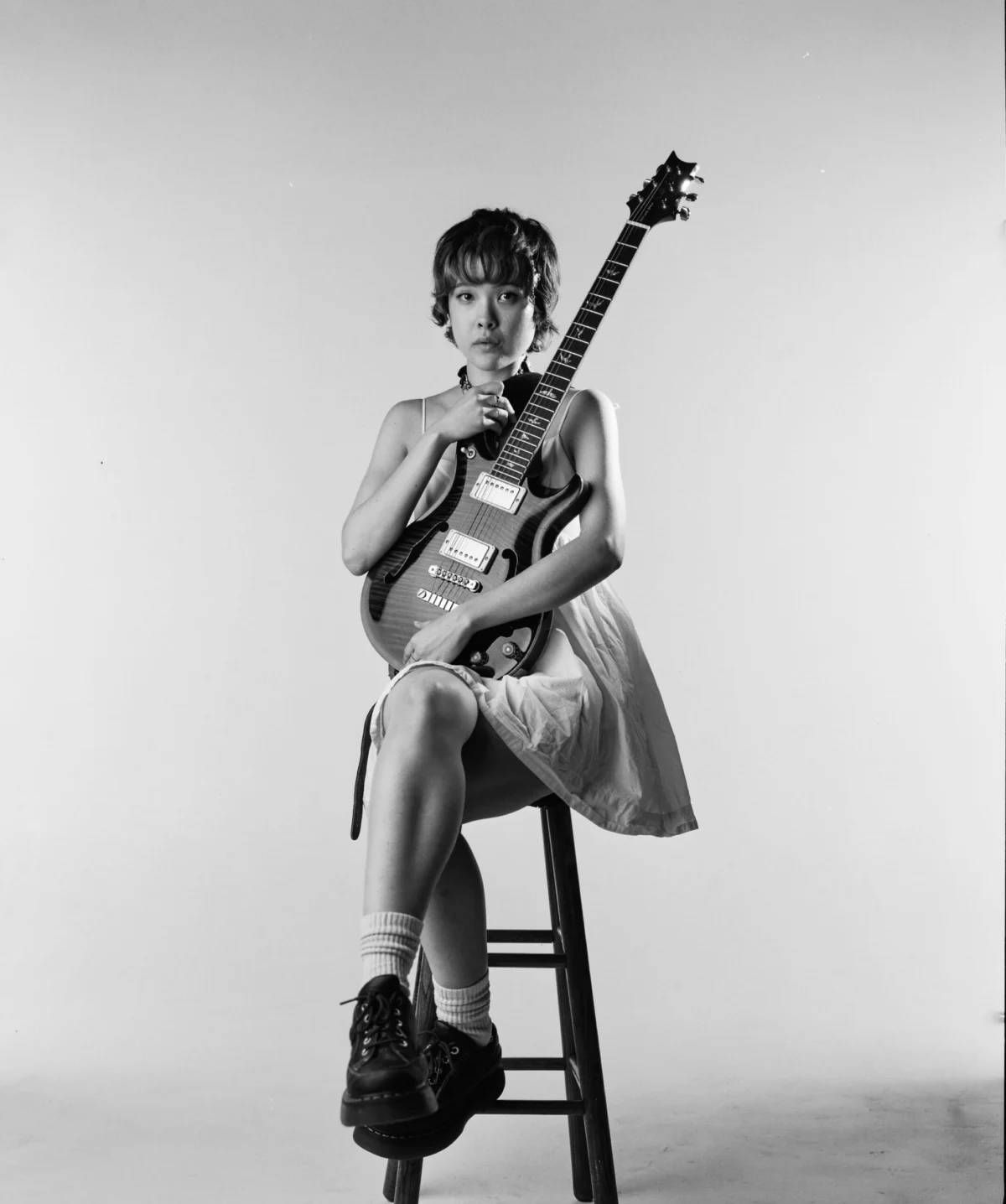
There is a particular, ephemeral quality to the music that finds us by accident—a sound that catches you mid-stride, as startling and sweet as a stray kitten appearing on a street corner. This was the precise sensation of discovering Mei Semones. It began with "Hfoas," her debut single. The track, defined by its unhurried guitar melodies and lush, sliding strings, presented a soundscape where her vocals sat with an effortless, gravity-defying grace. Her ability to pivot between English and Japanese mid-phrase felt less like a stylistic choice and more like the natural cadence of a life lived between two cultures.
For those familiar with the canon of bossa nova, Semones’ work acts as an evocative bridge. Her compositions mirror the intimacy of Lisa Ono’s sun-dappled vocals or the classic bossa standards that have served as the background music to countless sun-drenched afternoons. Yet, while the warmth is familiar, the architecture is entirely her own. Semones constructs a sonic environment that is as technically rigorous as it is emotionally accessible, blending jazz-trained, intricate guitar work with orchestral arrangements that bend to her whim.
The Formative Years: From Ann Arbor to Brooklyn
To understand the multifaceted nature of Semones’ artistry, one must look to her upbringing. Born in Ann Arbor, Michigan, to an American musician father and a Japanese mother, her childhood was defined by a trans-Pacific duality. Summers were spent in Yokosuka, Japan, visiting her grandmother—a woman who would prove instrumental in her musical journey.
At age four, Semones was gifted a piano, shared with her twin sister. It was the first spark in a fire that would consume her creative life. However, the true pivot toward her current sound occurred at eleven, after she watched Marty McFly perform Chuck Berry’s "Johnny B. Goode" in Back to the Future. The electric guitar became her primary voice. By her teens, she had enrolled in a local jazz program, where she was introduced to the foundational works of João Gilberto. The syncopated, whispering rhythms of "Corcovado" and "Wave" became the bedrock upon which she would eventually build her own idiosyncratic pop profile.
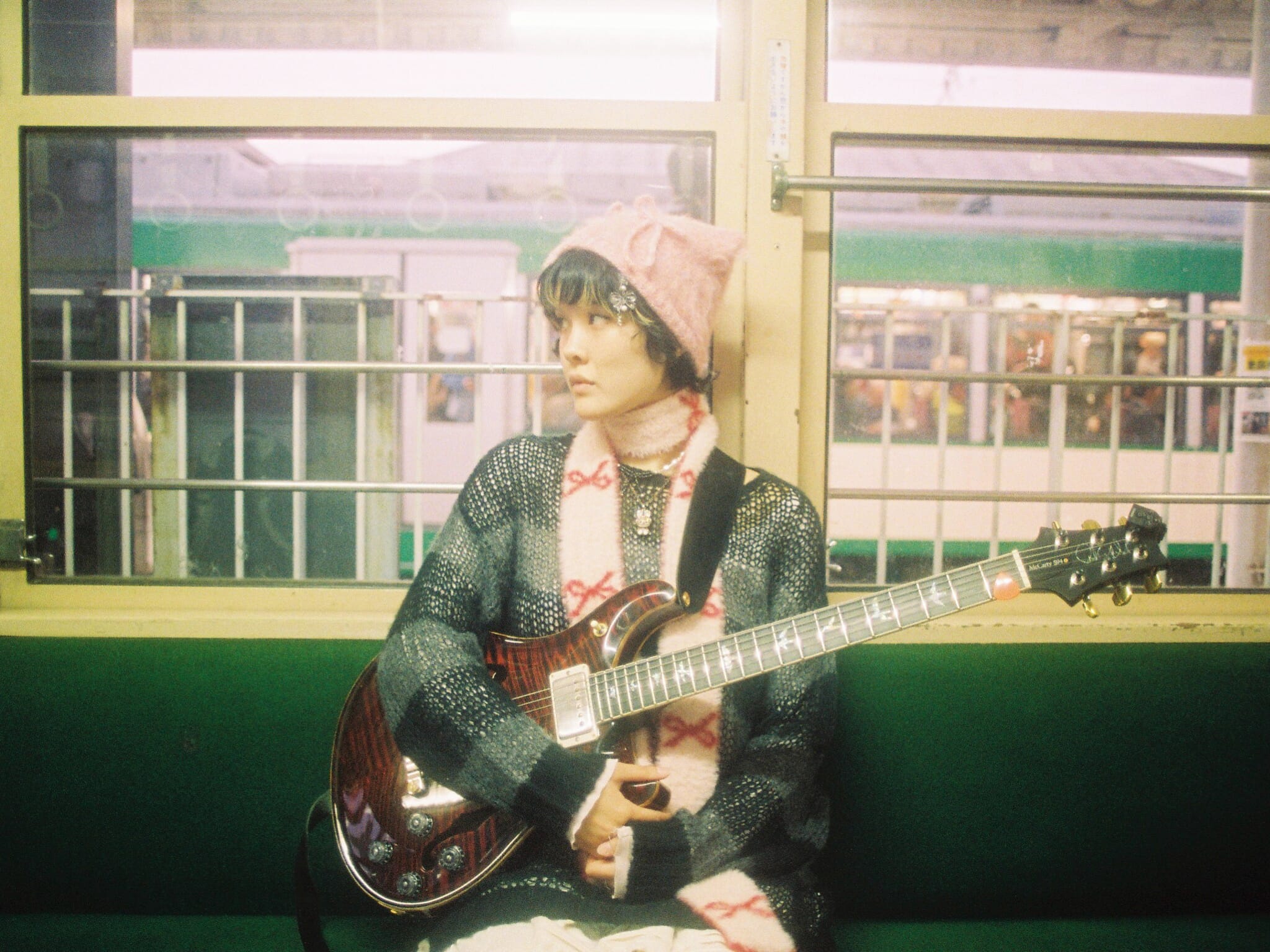
This jazz education did not exist in a vacuum. Her father’s radio played a steady rotation of classical, rock, and jazz, while her middle school years were spent falling in love with the distorted grit of Nirvana and The Smashing Pumpkins. These influences, disparate as they might seem, did not cancel one another out; they compounded, creating a fertile ground for the "math-rock" structures and indie-grunge aesthetics that would define her later work.
Chronology of a Rising Star: From Berklee to Global Stages
Semones’ professional trajectory is one of rapid, calculated growth. After the 2020 arrival of "Hfoas," she followed up with "Muchuu" in 2022, a period marked by the completion of her studies at the prestigious Berklee College of Music. Her debut EP, Tsukino, served as a thesis statement of sorts—a refined exploration of the boundaries between jazz-pop and singer-songwriter vulnerability.
By the end of 2022, she released her second EP, Sukikirai, through Northeastern University’s Green Line Records. The title, which translates to "likes and dislikes," captured the push-and-pull of the human condition. However, it was her 2024 Bayonet Records debut, Kabutomushi (named after the Japanese rhinoceros beetle), that catapulted her into the indie-music zeitgeist. Paste Magazine rightfully designated her as one of its "Best of What’s Next" artists, citing her ability to weave complex romantic themes—devotion, distance, and goodbye—into sweeping, string-laden arrangements.
The true leap arrived in 2025 with her full-length debut, Animaru. If Kabutomushi was an internal monologue, Animaru is a conversation with the world. Written during a period of professional transition—as she left her job at a Japanese kindergarten in New York to pursue music full-time—the album radiates a profound sense of gratitude. This release heralded a breakout year for Semones, defined by sold-out tours across North America, Europe, and Asia, including a monumental performance at Fuji Rock and a high-profile opening slot for dreampop icons Men I Trust.

Supporting Data: The Architecture of Bilingualism
What distinguishes Semones in the current indie landscape is her relationship with language. Her discography is peppered with Japanese terminology—"Kurage" (jellyfish), "Koneko" (kitten), "Tora Moyo" (tiger stripes)—acting as gateways for listeners into a culture they may not fully inhabit.
The linguistic blending is, in her words, "not a choice, but a state of being." Her title Animaru is the perfect synecdoche for her career: it is the Japanese transliteration of the English word "animal." It does not fully belong to either language, choosing instead to inhabit the liminal space between them.
This duality has created a fascinating demographic split in her audience. She notes that the reception in Japan is distinct from that in the West. "The audience often understands a different part of the song than when I am playing for primarily English-speaking audiences," she explains. "It feels vulnerable in a different way." In Japan, the cultural subtext of her lyrics is immediate; for Western audiences, the language acts as an aesthetic, percussive element, a layer of the composition that adds texture even when the meaning remains opaque.
Official Perspectives: The Philosophy of the Animal
Semones’ commitment to the "animalistic" is more than a thematic trend; it is a philosophy of existence. In interviews, she has frequently lamented the human tendency toward over-intellectualization and self-consciousness. "I often try to remind myself that I am an animal, too," she told the Japanese publication Me and You. "Humans think too much. Animals aren’t like that. I think we could learn something from them."
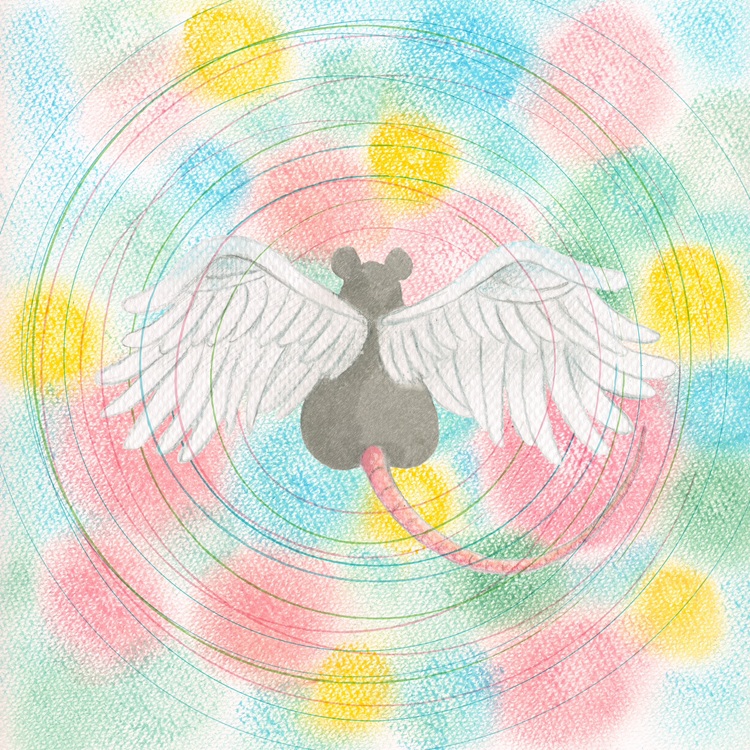
This philosophy informs her songwriting process, which is deeply rooted in physical locations and sensory memories. Tracks like "Donguri" (Acorn) and "Zarigani" (Crayfish) are not mere abstractions; they are sonic recreations of the forest behind her family’s home in Michigan, where she spent her formative years catching crayfish with her twin sister. By leaning into this nostalgia, she creates music that feels both deeply personal and universally resonant. She is stripping away the artifice of modern songwriting to find a core of "unthinking certainty."
Implications for the Future of Indie-Pop
The rise of Mei Semones signals a shift in how audiences consume global, multilingual music. We are moving past the era where artists feel forced to "translate" their identity for mass appeal. Semones’ success proves that there is an eager, global appetite for authenticity that defies genre boundaries and linguistic borders.
Her transition from a part-time songwriter balancing teaching with her craft to a full-time touring artist serves as a blueprint for the modern independent musician. By refusing to be "limited by genre," she has successfully synthesized the math-rock complexity of her youth with the soft, sun-drenched melodies of her bossa nova influences.
When asked for advice for the next generation of artists, Semones remains strikingly consistent with the themes of her music: "Do what you love and what’s important to you, and don’t worry too much about what other people think." It is a simple mandate, yet in an industry built on the pressures of trends and algorithms, it is a radical act of defiance.
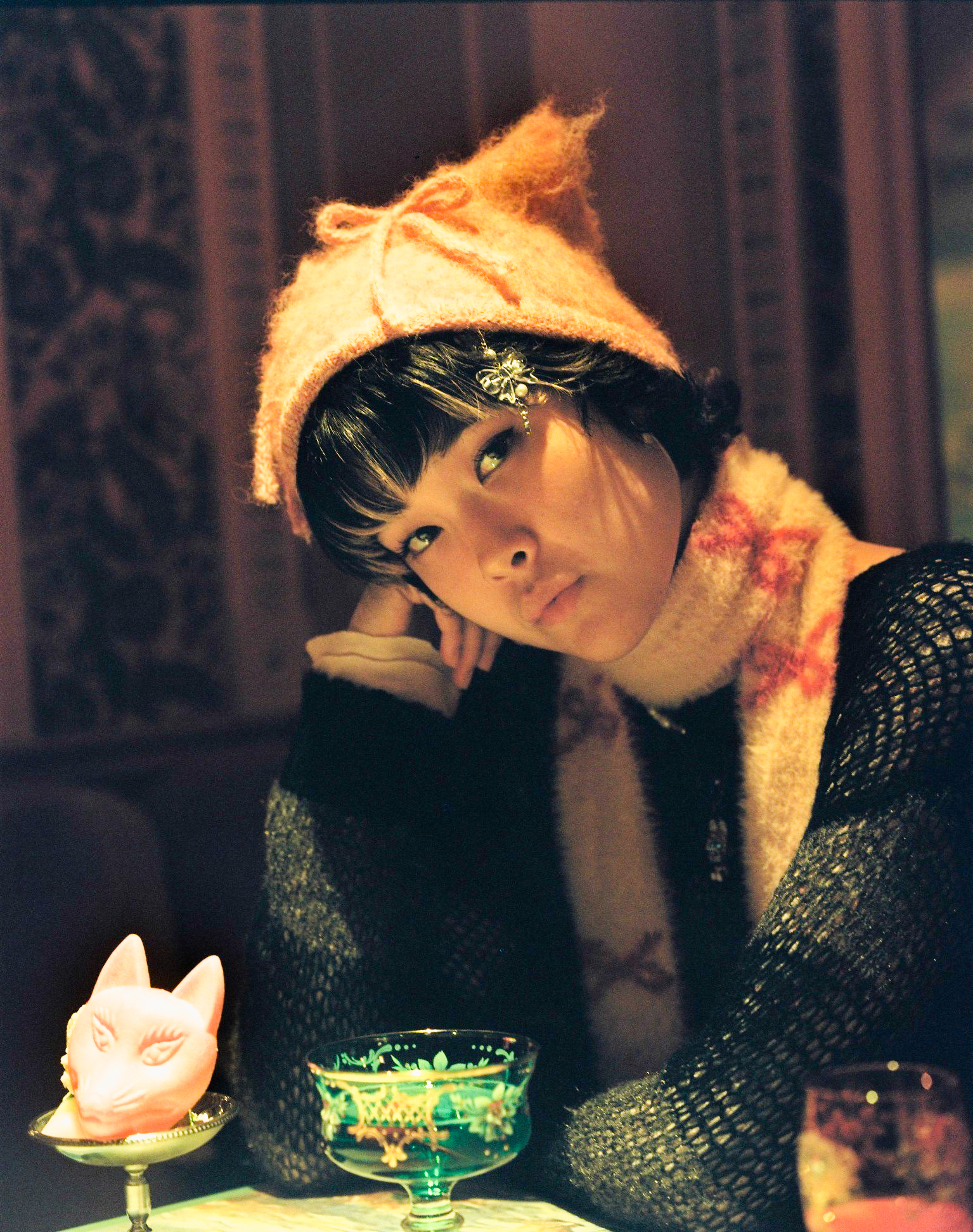
As she looks toward her next chapter, Semones stands as a testament to the power of the "serendipitous." She is an artist who has mastered the art of being exactly where she needs to be, both in the music and in her life, proving that the most resonant art is that which is made with the unburdened joy of an animal, moving through the world with grace, curiosity, and a complete disregard for the walls we build between us.


 Neng Nana
 Asro
Asro