Layla Zulfa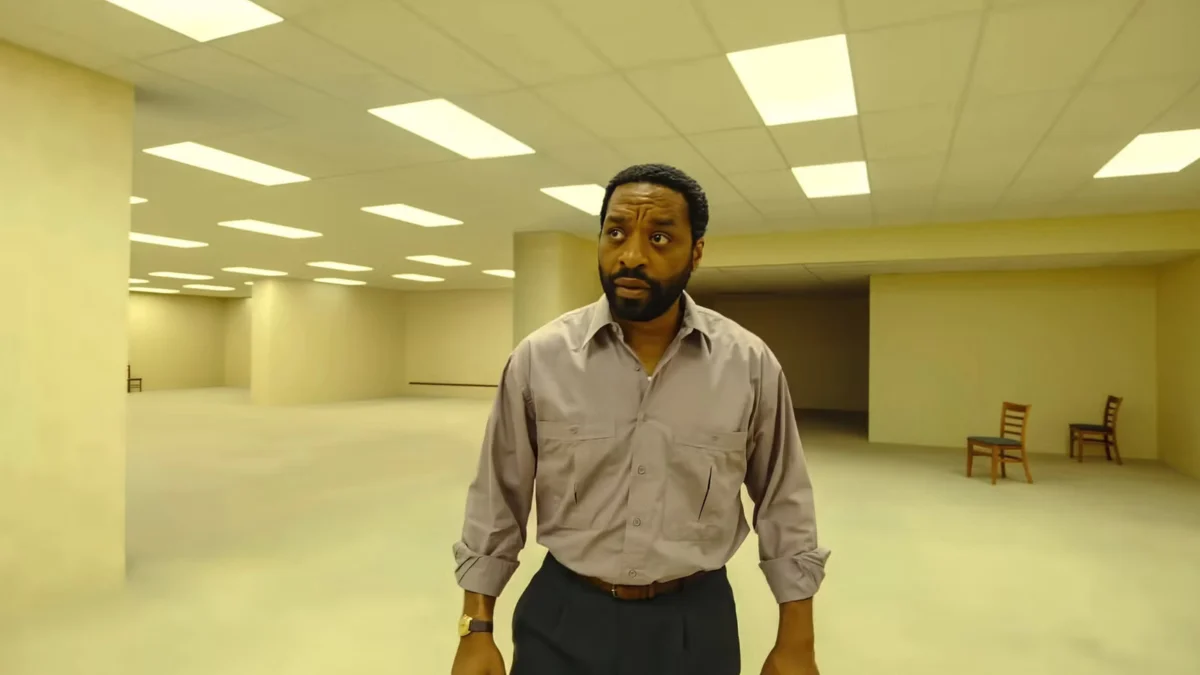
In the landscape of modern horror, few phenomena have transitioned from internet subculture to cinematic prestige with the velocity of Kane Parsons’ Backrooms. Originally a viral sensation birthed from the deep recesses of YouTube, the concept of "liminal horror"—the unsettling feeling of being trapped in mundane, empty, and non-Euclidean spaces—has found its definitive form in the 2026 A24 feature film. While the film masterfully captures the existential dread of infinite, yellow-wallpapered hallways, it anchors its abstract terror in a singular, grotesque antagonist: the "Pirate Clark" monster.
For audiences leaving theaters, the question is not just what the creature is, but what it represents. As the film peels back its layers, it reveals a narrative that is less about supernatural monsters and more about the rotting core of a human soul.
The Anatomy of the Liminal: Understanding the Backrooms
To understand the terror of the movie, one must first understand the environment. Parsons, whose directorial debut has been hailed as a masterclass in atmosphere, treats the Backrooms not merely as a setting, but as a character. Drawing heavily from the aesthetic of early 2000s office buildings and abandoned commercial spaces, the film evokes a specific brand of nostalgia that feels inherently "wrong."
The horror is rooted in the absence of humanity. In a place where time and distance lose all objective meaning, the isolation becomes a catalyst for psychological collapse. However, as the film progresses, it shifts from the quiet, ambient terror of empty rooms to a more visceral, predatory threat. Parsons utilizes the "less is more" philosophy popularized by Steven Spielberg’s Jaws and Ridley Scott’s Alien, keeping the monster shrouded in shadows, flickering light, and distorted sound design until the final act.
Chronology of a Descent: From Furniture Store to Infinite Void
The transformation of the protagonist, Clark (portrayed with brittle intensity by Chiwetel Ejiofor), is the engine that drives the film’s narrative.
- The Status Quo: We are introduced to Clark as a man teetering on the edge of resentment. A failed architect forced to play the mascot in his own furniture store, "The Ottoman Empire," Clark is a man trapped by his own mediocrity.
- The Discovery: Upon discovering the threshold into the Backrooms, Clark does not seek escape. Instead, he finds a place where he can discard the shackles of his failing marriage and his unfulfilling career.
- The Ethical Erosion: Clark’s descent is marked by his treatment of his young employees, Bobby and Kat. His obsession with the realm leads to their abandonment and eventual death, marking his transition from a victim of circumstance to a villain of his own making.
- The Confrontation: The film’s climax occurs when Dr. Mary Kline (Renate Reinsve) locates Clark in the depths of the complex. It is here that the nature of the "Pirate" entity is revealed, leading to the film’s brutal, poetic conclusion.
Supporting Data: The Symbolism of Pirate Clark
The monster itself is a grotesque, uncanny facsimile of Clark in his "Pirate" mascot costume. The creature is not merely a random horror trope; it is a manifestation of the protagonist’s psyche.

The costume serves as a metaphor for the masks we wear. In the real world, Clark despises the outfit, viewing it as a symbol of his professional humiliation. Within the Backrooms—a realm that acts as a surreal, distorted mirror—that humiliation is transmuted into a lethal, predatory force. The creature’s features are exaggerated, caught in an expression that oscillates between agony and unbridled rage.
Psychologically, the monster represents the "shadow self." According to Jungian theory, the shadow consists of the parts of ourselves we deny or suppress. For Clark, his bitterness, his abusive history, and his suppressed aggression are given form in the monster. The Backrooms do not create the monster; they simply give his darkest traits a physical vessel.
Official Perspectives: The Director’s Vision
In recent promotional interviews, Kane Parsons has emphasized that the goal of the film was to bridge the gap between "internet creepypasta" and psychological drama.
"I wanted the audience to realize that the most terrifying thing about the Backrooms isn’t the yellow wallpaper or the hum of the fluorescent lights," Parsons noted in a recent press junket. "It’s the idea that if you are trapped in a place that reflects your inner state, you might eventually be confronted by the worst version of yourself. Pirate Clark is the physical manifestation of a man who stopped caring about his humanity."
A24’s marketing team has also leaned into the film’s subtext, releasing behind-the-scenes featurettes that highlight the practical effects used to create the monster. The decision to use a blend of practical prosthetics and subtle CGI allowed for a tactile, "weighty" feel that distinguishes the creature from the digital entities found in standard horror fair.
Implications: The Mirror of the Soul
The most unsettling implication of the film’s ending is the universal nature of its horror. When the entity finally consumes the real Clark, it serves as a final, ironic judgment: the man is devoured by his own bitterness.
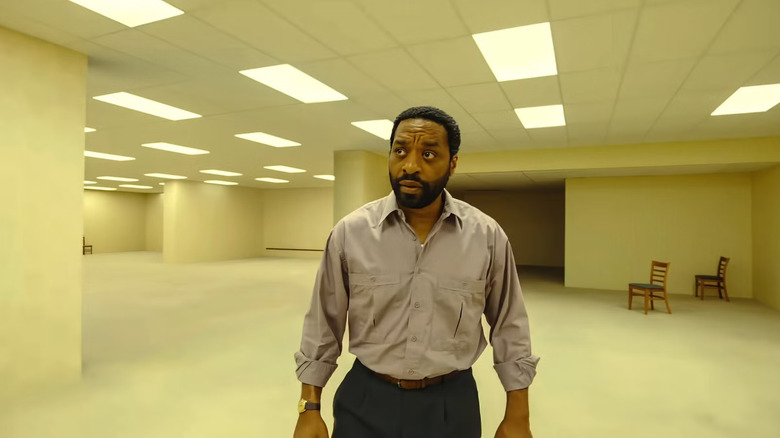
This raises a chilling question for the audience: If the Backrooms manifest the repressed aspects of whoever enters, what would your monster look like?
The film suggests that the "Complex" is a feedback loop. It takes the mundane detritus of our lives—the furniture, the logos, the mascots, the petty grievances—and twists them into something nightmarish. The fact that the monster is made of "amorphous substance" rather than human organs suggests that the realm is not biological, but informational. It copies the form, but leaves out the soul.
Conclusion: A New Standard for Liminal Horror
Backrooms stands as a landmark in the evolution of the horror genre. By grounding its supernatural elements in the very real, very human failings of its protagonist, it achieves a level of existential dread that few films manage to capture.
The image of Pirate Clark, frozen in a rictus of permanent, mocking fury, will likely become an iconic piece of horror iconography. It serves as a stark reminder that while we may try to hide our true colors behind costumes and professional personas, our darkest impulses have a way of finding us, even in the deepest, most isolated corners of existence.
Backrooms is currently playing in theaters. Whether you are a fan of the original YouTube series or a newcomer to the liminal subgenre, the film demands to be seen on the big screen—if only to remind yourself that the most dangerous monsters are often the ones we carry within us.


 Raul Delapena Setiawan