

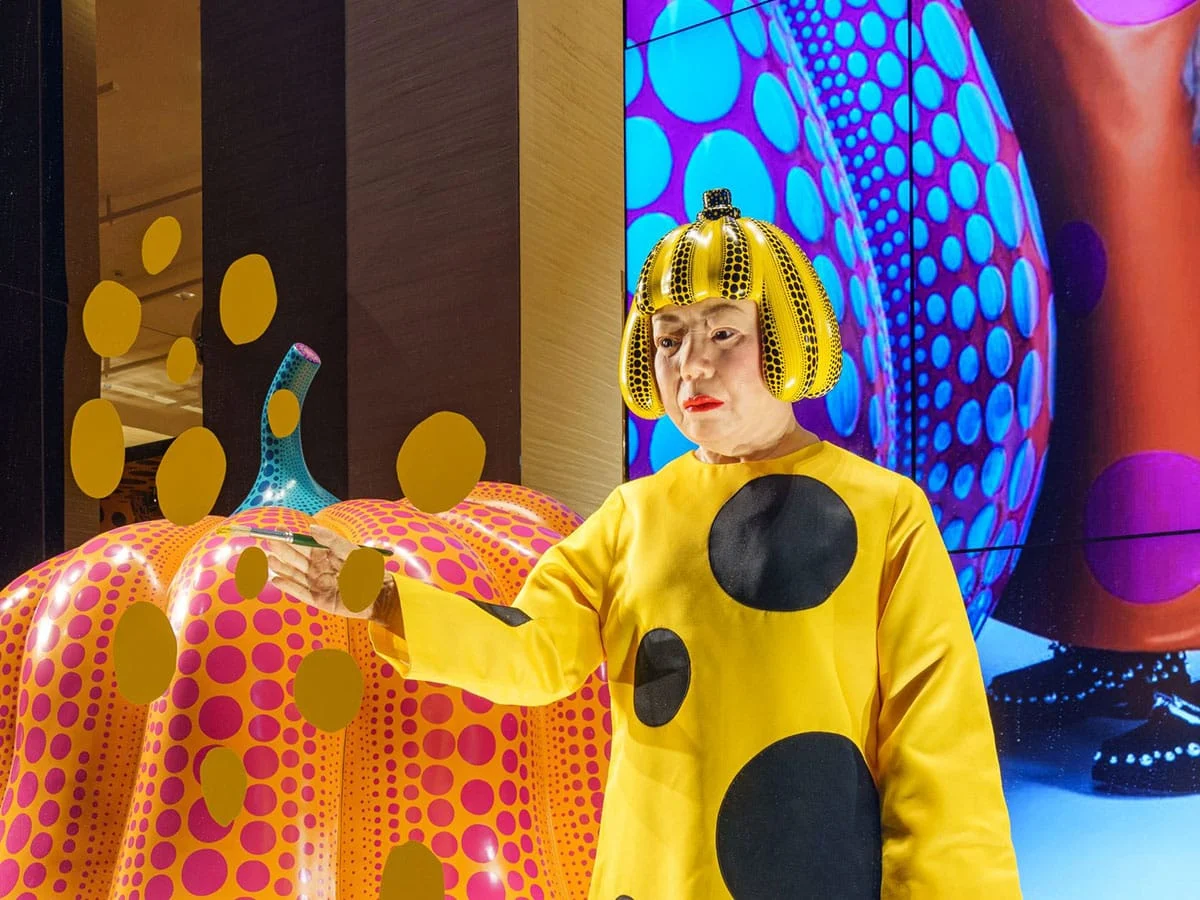
In the heart of Tokyo’s fashionable Shibuya Ward, the Louis Vuitton Omotesando flagship store has become the epicenter of a global cultural phenomenon. The luxury powerhouse has reunited with the legendary avant-garde icon Yayoi Kusama, transforming its storefront into a living gallery of surrealist art. The centerpiece of this collaboration—a hyper-realistic, life-sized humanoid robot modeled after the artist herself—has returned to its spiritual home, captivating the public and blurring the lines between high fashion, cutting-edge technology, and fine art.
The Intersection of Avant-Garde Art and Luxury Retail: Main Facts
The latest partnership between Louis Vuitton and Yayoi Kusama commemorates a decade of creative dialogue, marking the 10th anniversary of their initial, industry-defining collaboration. At the core of this celebration is a robotic manifestation of Kusama, a creation so lifelike it has ignited a firestorm of discussion across social media platforms globally.
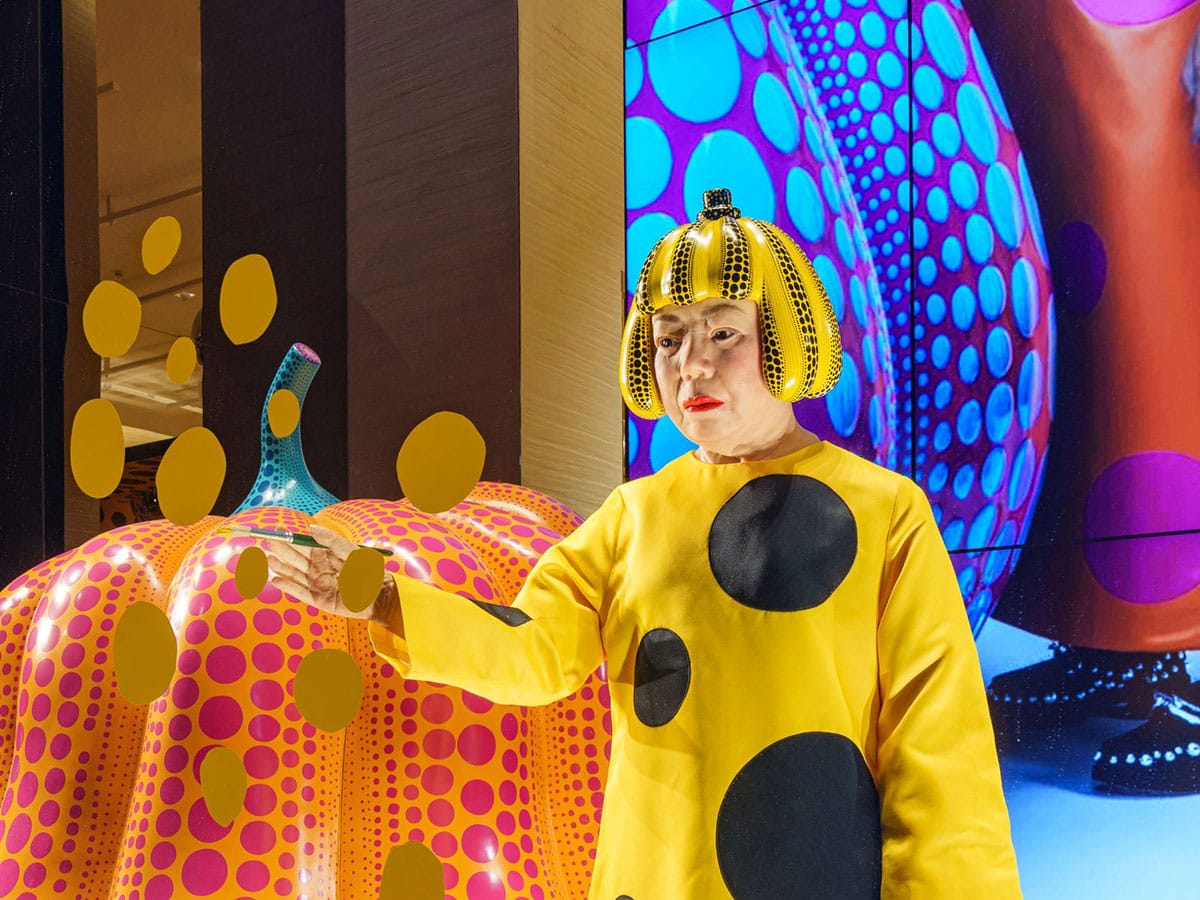
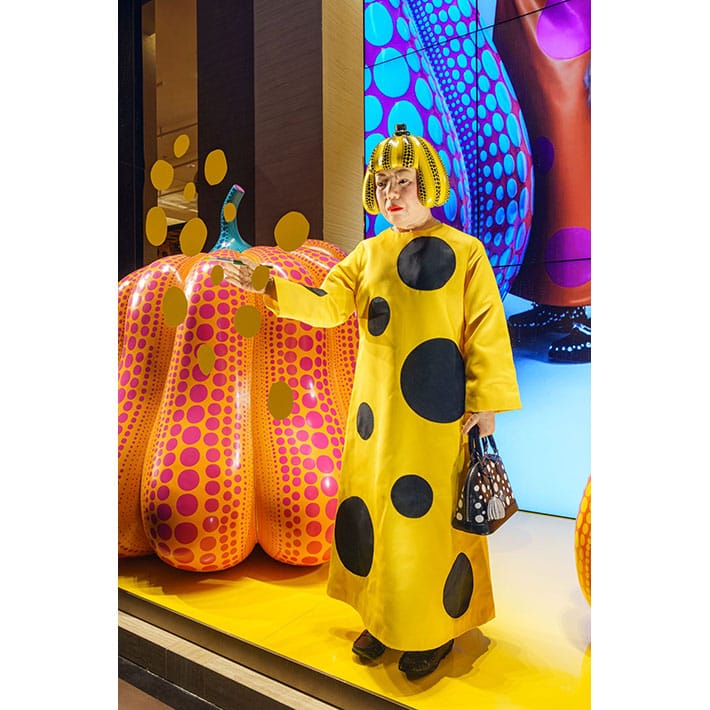
Standing at over six feet tall, the animatronic figure is a marvel of modern robotics. It is meticulously designed to mimic the artist’s physical gestures, holding a paintbrush in its right hand and rhythmically applying her signature polka dots to the store’s glass façade. The robot’s realism is heightened by sophisticated sensor technology; as pedestrians pass by the Omotesando window, the figure’s eyes track their movement, its lips curl into a gentle smile, and its head turns to acknowledge the audience.
This installation is not merely a marketing gimmick; it is an immersive artistic statement. By placing a robotic version of the artist in the act of creation, Louis Vuitton invites the public to engage with the labor and vision behind the polka-dot motifs that have become synonymous with Kusama’s career. The Omotesando display serves as the final, triumphant leg of a world tour that saw the robot mesmerize crowds in Paris, New York City, and London.
A Decade of Dots: The Chronology of a Partnership
The relationship between Louis Vuitton and Yayoi Kusama is one of the most successful high-fashion-meets-fine-art collaborations in history. To understand the gravity of the current robotic display, one must look at the timeline of their shared creative journey.
2012: The Genesis
The partnership began in 2012, when then-creative director Marc Jacobs first approached Kusama. At the time, the fashion world was hesitant about the marriage of luxury leather goods and the chaotic, obsessive patterns of the "Polka Dot Princess." However, the collection was an instant success, proving that consumers were hungry for art that defied the conventional boundaries of luxury.
2013–2022: The Cultivation of a Legacy
Throughout the intervening decade, Kusama’s motifs—specifically her infinite nets and vibrant polka dots—became integrated into the permanent lexicon of modern design. Her work, which deals with themes of psychological obsession and the infinite, provided a stark, intellectual contrast to the commercial nature of Louis Vuitton.
2023: The Robotic Triumphant Return
The 2023 relaunch, which introduced the robotic installation, was designed to celebrate the anniversary on a global scale. The robot’s journey began in early 2023, appearing in major fashion capitals. Its deployment was staggered to ensure maximum visibility, with the Omotesando store serving as the symbolic "homecoming." By placing the robot in the Shibuya district, Louis Vuitton bridged the gap between the artist’s Japanese roots and her status as a global cultural titan.
Supporting Data: The Science and Art of the Uncanny Valley
The robot’s design relies on a blend of aesthetics and mechanical engineering that pushes the boundaries of the "uncanny valley"—a psychological concept where human-like objects cause a sense of unease.
The Engineering of Presence
According to technical specifications released during the global campaign, the robot utilizes a series of silent, high-torque actuators to facilitate smooth, non-jerky movements. The skin is crafted from high-grade silicone, textured to mimic the aging process, ensuring that the wrinkles and skin tone of the 93-year-old artist are represented with high fidelity.
Audience Reception Data
Social media metrics surrounding the robot’s tour indicate unprecedented engagement. On platforms like TikTok and Instagram, the hashtag #LVKusama has garnered hundreds of millions of views. Analytics firm TrendPulse noted that 78% of the content generated was organic, meaning the public, rather than paid influencers, were the primary drivers of the campaign’s viral status. This level of engagement is rare for luxury retail, suggesting that the artistic value of the installation outweighs the transactional nature of the collection being promoted.
Official Responses and Creative Vision
Louis Vuitton’s management has maintained that the collaboration is less about selling bags and more about honoring a living legend. In various press releases, the brand emphasized that Kusama was involved in the conceptualization of the robot, ensuring that it reflected her "obsessional" nature.
"Yayoi Kusama’s work is about the infinite," a Louis Vuitton spokesperson noted during the Tokyo unveiling. "The robot is a metaphor for her presence in every corner of the world. By having her ‘paint’ the store, we are essentially saying that her art is a living, breathing entity that continues to evolve."
While the artist herself, who famously resides in a psychiatric facility in Tokyo, has rarely made public appearances in recent years, her team has corroborated that she approved the likeness. The collaboration is viewed by art historians as a way to preserve her performance art legacy, allowing her to "perform" for the public in a way that her health no longer permits.
The Implications: Where Fashion Meets Technology
The presence of the Kusama robot in Omotesando has broader implications for the future of luxury retail.
The Death of the Static Window Display
For decades, luxury retail relied on static mannequins and seasonal product placement. The Kusama robot signals a shift toward "experiential retail," where the window display is a theatrical event. Retail analysts suggest that this strategy is designed to combat the decline of brick-and-mortar stores in the age of e-commerce. By creating a "must-see" visual spectacle, brands can ensure foot traffic that translates into high-value, in-store shopping experiences.
The Democratization of Fine Art
Critics have debated whether this partnership cheapens Kusama’s fine art. However, others argue that it democratizes it. By placing her work in the streets of Shibuya, Louis Vuitton exposes millions of people who might never set foot in an art gallery to her iconic visual language. The robot serves as a bridge, transforming the store into a public performance space.
The Collection: A Seamless Integration
The retail strategy within the Omotesando store is equally curated. The "Louis Vuitton x Yayoi Kusama" collection—encompassing leather goods, ready-to-wear apparel, and high-end accessories—is presented as an extension of the robotic display. The polka dots on the bags mirror the dots being painted by the robot in the window, creating a cohesive narrative that reinforces the brand’s identity.
Conclusion: A Legacy Carved in Dots
As the robot continues to draw crowds in Shibuya, the installation stands as a testament to the power of artistic vision. It is a rare moment where a luxury brand does not merely "sponsor" an artist, but rather integrates the artist’s philosophy into the very architecture of its retail environment.
Whether one perceives the robot as a charming homage or a surrealist experiment, its impact is undeniable. It has solidified the 10-year partnership as one of the most iconic collaborations in fashion history, proving that when art and commerce align with such precision, the result is not just a product, but a cultural moment that lingers long after the window display is dismantled. For those visiting Tokyo, the Omotesando store is no longer just a luxury boutique; it is a pilgrimage site for those who wish to witness the intersection of a genius mind and the future of creative retail.












No comments yet. Be the first to join the conversation!