Pevita Pearce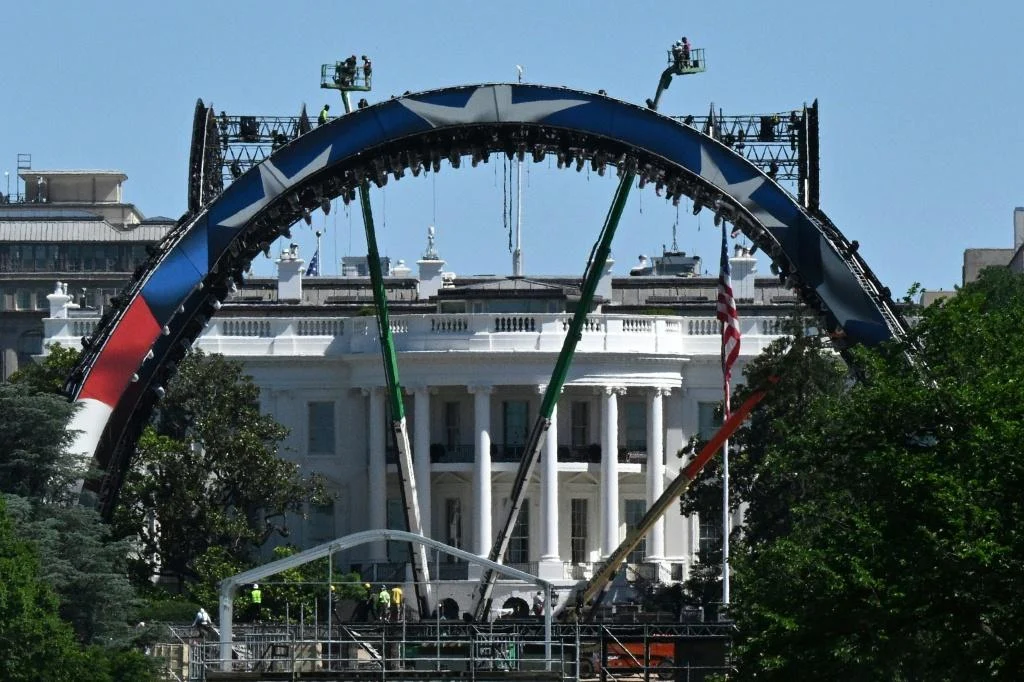
WASHINGTON, D.C. — In a dramatic escalation of the culture wars surrounding the nation’s upcoming semiquincentennial celebrations, former President Donald Trump issued a sharp directive on Saturday, calling for the immediate cancellation of a high-profile concert series on the National Mall. The demand comes in the wake of a cascading series of withdrawals by musical acts, who have cited the increasing politicization of what was intended to be a non-partisan celebration of America’s 250th anniversary.
Trump, utilizing his Truth Social platform, characterized the departing artists as "overpriced" and "boring," suggesting that the government-backed festivities should pivot entirely toward a political spectacle featuring himself.
The Conflict: A Celebration Stalled
The concerts were designed as the centerpiece of "Freedom 250," a public-private partnership established to commemorate the signing of the Declaration of Independence. The series was slated to begin on June 25, drawing upon the historical gravity of the National Mall. However, the mission of the organization—which has faced scrutiny for its close ties to the Trump political apparatus—has become a flashpoint for debate regarding the intersection of patriotism and political messaging.
As of Saturday, five of the nine originally announced performers have officially withdrawn from the lineup. The departures have left the Freedom 250 organizers scrambling to maintain the event’s credibility, while Trump has used the vacancy to aggressively push for a shift in the event’s format.
"We should have a giant MAKE AMERICA GREAT AGAIN RALLY, for 250, instead of having overpriced singers, who nobody wants to hear, whose music is boring, and yet who do nothing but complain," Trump wrote. "Cancel it."
Chronology of the Withdrawal
The breakdown of the event began earlier this week as artists started to publicly distance themselves from the Freedom 250 banner.
- June 23: Initial concerns were raised in industry circles regarding the branding of the event.
- June 24: The first two musical acts quietly withdrew, citing scheduling conflicts.
- June 25: Public scrutiny intensified as observers noted the explicitly political nature of the promotional materials for the event.
- June 26: The exodus accelerated. Country singer Martina McBride and rock icon Bret Michaels of the band Poison announced their departures simultaneously, marking the fourth and fifth acts to vacate the stage.
- June 27: Trump addressed the situation on social media, claiming the artists were suffering from "the yips." He subsequently proposed a rally featuring himself as the "Number One Attraction."
The rapid collapse of the lineup has turned the event into a logistical and public relations crisis for the event’s coordinators, who had hoped to present a unified, patriotic front ahead of the July 4 holiday.
Supporting Data: The Artist Exodus
The decision by performers such as Bret Michaels and Martina McBride to exit the event marks a significant rejection of the "Freedom 250" platform. Michaels, in a statement released via Facebook, provided perhaps the most poignant rationale for the withdrawal:
"Unfortunately, what was presented to us as a celebration of our country has evolved into something much more divisive than what I agreed to be a part of."
This sentiment reflects a broader trend in the entertainment industry, where performers are increasingly wary of being tethered to specific political brands. The remaining lineup—which includes acts like Vanilla Ice and C+C Music Factory—has become the subject of intense social media mockery, with critics questioning the cultural relevance of the remaining performers and the overall tone of the programming.
Trump’s response to these exits has been to frame the artists as "Third Rate" and to pivot the conversation back to his own mass-market appeal. In his Saturday post, he claimed to draw "much larger audiences than Elvis in his prime," labeling himself "THE GOAT" (Greatest of All Time) in the context of presidential history.
Official Responses and Internal Friction
The Freedom 250 organization has yet to release a formal statement regarding the possibility of total cancellation. However, sources close to the planning committee suggest a state of internal paralysis. The organization, which operates as a hybrid entity between private donors and public influence, is now caught between the former president’s demand for a political rally and the original charter of the event, which was to serve as a neutral, national milestone.
The White House has remained largely silent on the specific demand to cancel the concerts, though administrative officials have noted that the event was always intended to be a private-sector-led endeavor. This distance, however, is increasingly difficult to maintain given the visibility of the "Freedom 250" initiative.
Critics of the former president’s proposal argue that converting a national anniversary event into a partisan rally would be a historic breach of decorum. "The 250th anniversary belongs to the American people, not to any single politician or movement," said Dr. Elena Rodriguez, a historian specializing in presidential traditions. "To repurpose the National Mall—the symbolic heart of our democracy—for a campaign-style rally is a radical departure from how we have historically honored our national milestones."
Implications for the Future of Public Commemoration
The current dispute over the 250th anniversary highlights the deep ideological fissures in contemporary American society. The controversy is not merely about a concert lineup; it is a battle over the narrative of the American identity.
The Erosion of Neutral Ground
For decades, major national anniversaries—such as the Bicentennial in 1976—were viewed as moments of collective unity that transcended partisan divides. The Freedom 250 incident suggests that such neutral ground is rapidly eroding. When a celebration of the nation’s founding becomes a litmus test for political loyalty, the resulting polarization effectively prevents the event from serving its primary purpose: national cohesion.
The "Trumpian" Model of Public Events
Trump’s move to place himself at the center of the 250th anniversary is consistent with his broader approach to executive power and public spectacle. His recent staging of a mixed martial arts fight on the White House lawn on his 80th birthday serves as a blueprint for this style of governance—one that prioritizes celebrity, high-octane spectacle, and direct engagement with his base over traditional ceremonial protocols.
If the Freedom 250 concerts are indeed replaced by an "AMERICA IS BACK" rally, it would represent a significant milestone in the evolution of American political culture. It would mark the transition of the presidential office from a symbol of the state to a permanent, mobile campaign apparatus.
Economic and Logistical Fallout
The economic implications for the District of Columbia and the National Park Service are also significant. A concert series requires a vastly different security and logistical footprint than a political rally. Should the organizers pivot to a rally, the logistical hurdles—ranging from crowd control and perimeter security to insurance liability—would be immense. Furthermore, the loss of major artists undermines the revenue models that were intended to fund the broader educational and cultural outreach programs associated with the semiquincentennial.
Conclusion: A Nation Divided at 250
As the date for the kickoff approaches, the fate of the Freedom 250 concerts remains in limbo. The spectacle of a former president demanding the cancellation of a national event to make room for his own rally is a stark reflection of the current state of American politics.
Whether the event proceeds as a series of concerts or transforms into a campaign-style demonstration, it has already achieved a level of notoriety that few could have predicted. It serves as a reminder that even the most fundamental milestones of the American experiment are no longer immune to the pressures of the modern political cycle.
As the country nears its 250th year, the debate is no longer just about how we celebrate our history, but about who owns the narrative of that history, and whether it is still possible to host a celebration that belongs to everyone. For now, the National Mall awaits, caught between the echoes of a founding dream and the noise of a divided present.


 Neng Nana
 Asro
Asro