Raul Delapena Setiawan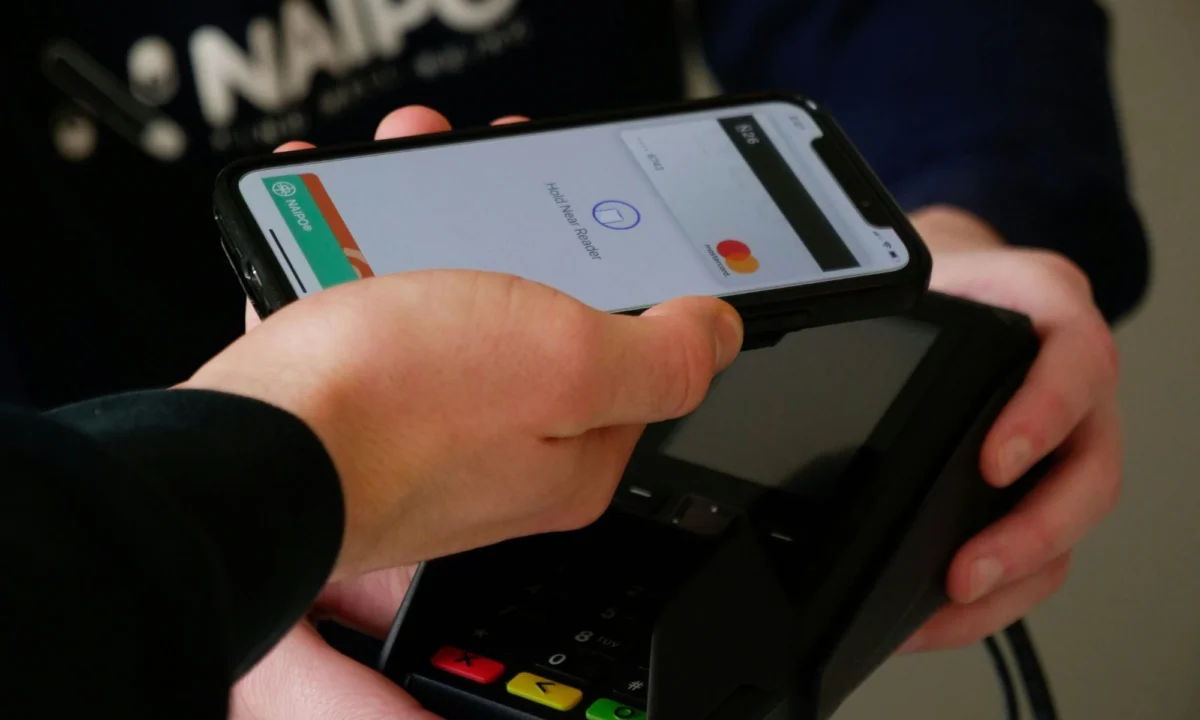
In a move that signals a significant tightening of its grip on the consumer financial landscape, Apple is reportedly preparing to integrate a sophisticated bill-splitting feature directly into the core architecture of the iPhone. According to industry reports ahead of the Worldwide Developers Conference (WWDC), this new functionality—set to debut within the upcoming iOS 27—will transform the standard Wallet app into a comprehensive financial hub capable of automating the often-tedious process of settling shared expenses.
By leveraging the iPhone’s advanced optical character recognition (OCR) and its deeply integrated ecosystem, Apple is poised to challenge established players in the fintech space, including Splitwise, Venmo, and Cash App. This isn’t merely a software update; it is a calculated effort to position the iPhone as the primary intermediary for every micro-transaction in a user’s social and professional life.
Main Facts: How the Feature Will Work
At its core, the new tool aims to eliminate the friction that defines most group-payment scenarios. Rather than manually inputting numbers into a third-party app, users will simply photograph a physical receipt from a restaurant, grocery store, or service provider.
Once captured, the iPhone’s onboard intelligence will parse the data, identifying line items, tax rates, and gratuity calculations. Users will then be able to assign specific items to different participants—a feature often requested by users who prefer to pay for exactly what they consumed rather than splitting a total evenly.
Once the breakdown is complete, the app will generate payment requests that can be sent directly through Messages. The settlement process will be handled by Apple Cash, allowing funds to move instantly between users without ever leaving the Apple interface. Crucially, the system will offer cross-device support; users will be able to review, approve, and manage these payment requests via the Apple Watch, ensuring that financial administration can be handled on the go without reaching for a phone.
A Chronological Evolution of Apple’s Financial Ambitions
To understand the weight of this announcement, one must look at the steady, deliberate progression of Apple’s financial services since the company first signaled its intent to disrupt traditional banking a decade ago.
- 2014: The launch of Apple Pay revolutionized contactless payments, turning the iPhone into a digital wallet and setting the stage for hardware-based financial interaction.
- 2019: The introduction of the Apple Card marked the company’s first direct foray into credit, emphasizing privacy and transparency in an industry often criticized for hidden fees.
- 2020–2022: Apple continued to expand its footprint with the launch of Apple Cash, the introduction of a high-yield savings account in partnership with Goldman Sachs, and the "Tap to Pay" feature, which turned the iPhone into a mobile point-of-sale terminal for small businesses.
- 2026 (Upcoming): The announcement of the bill-splitting feature at WWDC represents the next logical step: capturing the "peer-to-peer" social economy.
This chronology reveals a pattern: Apple enters a space with a premium hardware-backed solution, establishes trust, and then gradually adds layers of utility that increase the "switching costs" for users. By the time a user becomes accustomed to splitting their rent, dinners, and travel expenses within the Apple ecosystem, moving to a competitor’s device becomes significantly less convenient.

Supporting Data: The Scale of the Disruption
The market for peer-to-peer (P2P) payments and expense management is massive and growing. By entering this arena, Apple is targeting a demographic that is increasingly comfortable with digital-first financial management.
The competitive landscape is dominated by heavyweights:
- Splitwise: Since its inception in 2011, this platform has become the gold standard for shared expenses, having managed over $90 billion in transactions. With more than 10 million monthly active users, it represents the primary target for Apple’s new feature.
- Venmo: A household name in the U.S., Venmo processes upwards of $275 billion in annual payment volume. Its social-feed model has made it a cultural staple for Millennials and Gen Z.
- Cash App: With a massive user base of roughly 57 million monthly active users, Cash App has successfully integrated banking, investing, and P2P payments, providing a blueprint that Apple is now emulating on a system-wide level.
Apple’s primary advantage is not necessarily the feature set, but the "walled garden." While standalone apps require downloads, account creation, and separate data permissions, Apple’s solution is native. For the hundreds of millions of iPhone users worldwide, the bill-splitting tool will simply "be there"—an extension of the phone they already use for everything else.
Official Responses and Strategic Hurdles
While the tech industry awaits the official keynote at WWDC, industry analysts have been quick to point out both the potential and the pitfalls. Apple has not been without its setbacks. The company’s partnership with Goldman Sachs for the Apple Card has faced significant regulatory and financial headwinds, and the recent shuttering of its "Buy Now, Pay Later" (BNPL) service serves as a reminder that Apple is not immune to the complexities of the financial sector.
Internally, Apple’s strategy has pivoted toward "ecosystem stickiness." According to leaks, the company is also working on a "digital pass" creation tool within the Wallet app. This would allow users to generate their own event passes, gym membership cards, and credentials on-device, effectively turning the Wallet into a repository for the user’s entire identity and financial life.
When asked about the direction of these services, representatives have often pointed to the "privacy-first" mandate that governs all Apple software. Unlike third-party apps that may monetize user transaction data, Apple’s competitive pitch relies on the promise that this financial data remains on the device, shielded from external advertisers.
The Broader Implications
The introduction of native bill-splitting has implications that ripple far beyond a single app update.

1. The Death of the "Single-Purpose" App
For developers, the news is sobering. When Apple decides to "Sherlock" an app—taking a feature that was once the domain of a third-party startup and making it a built-in iOS feature—it often marks the end of that startup’s growth phase. Developers of niche expense-tracking apps will now need to prove that their features offer significantly more value than the native, zero-friction Apple alternative.
2. A Shift in Financial Behavior
By embedding these tools into the OS, Apple is nudging users toward a more formalized, digital-only social life. When the barrier to entry for splitting a bill becomes "zero," the expectation for instant, digital repayment becomes the social default. This could further accelerate the decline of physical cash and check-based settlements among younger generations.
3. The "Platform" Monopoly
Critics argue that this move further entrenches Apple’s dominance, making it increasingly difficult for users to switch to Android. If a user’s entire financial social life—shared dinners, travel costs, and event passes—is baked into their iPhone, the pain of migrating to a different mobile operating system becomes a major deterrent. This "ecosystem lock-in" is the cornerstone of Apple’s long-term business strategy.
Looking Ahead: The WWDC Reveal
As the countdown to WWDC continues, the focus is squarely on how well these financial features will integrate with the broader "Apple Intelligence" initiative. With rumors of a revamped Siri and advanced AI-powered photo editing, the bill-splitting feature is likely to be framed as part of a "smarter, more helpful" iPhone.
If Apple executes this correctly, it will be a masterclass in product design: taking a common, annoying, and manual task and making it invisible. By the time the next dinner party ends, users won’t be reaching for a specialized app; they will simply be pulling out their iPhone, tapping their watch, and walking away, leaving the math to the machine. Whether this leads to a healthier financial landscape or simply a more consolidated one remains to be seen, but one thing is clear: the era of the "smart" iPhone is rapidly evolving into the era of the "financial" iPhone.

 Rifan Muazin
 Nila Kartika Wati