Pevita Pearce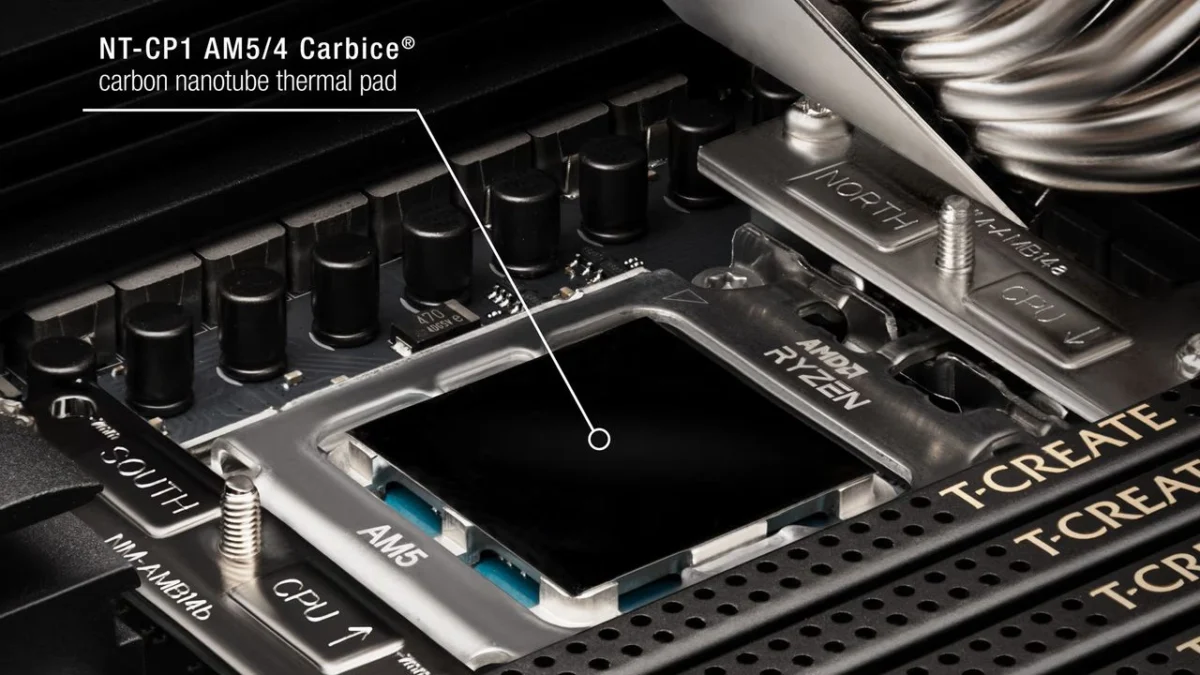
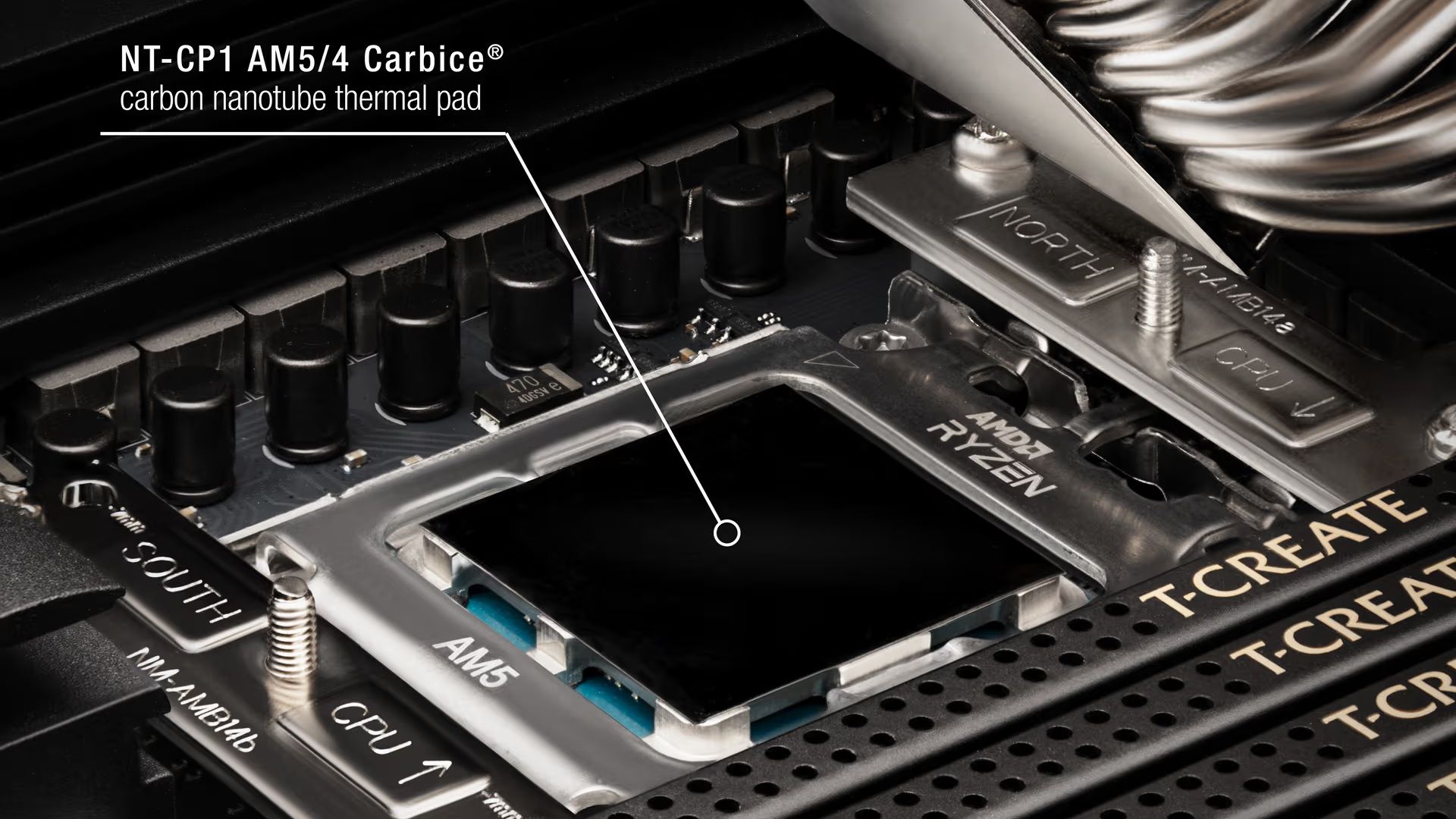
The landscape of enthusiast-grade PC cooling is undergoing a subtle but significant transformation. Noctua, a brand synonymous with premium air cooling and industry-leading fan technology, has officially announced its entry into the specialized thermal interface material (TIM) market. In a strategic partnership with Carbice—a pioneer in carbon-nanotube-based thermal technology—Noctua is set to release the NT-CP1, a high-performance thermal pad designed specifically for AMD’s AM4 and AM5 processor sockets.
This move marks a departure from Noctua’s traditional reliance on high-end thermal pastes, signaling an industry-wide shift toward maintenance-free, long-duration thermal solutions. With an official reveal scheduled for Computex 2026 and a retail launch slated for September, the collaboration represents a fusion of Carbice’s aerospace-grade engineering and Noctua’s unrivaled reach within the global DIY PC community.
The Core Innovation: Carbon Nanotube Technology
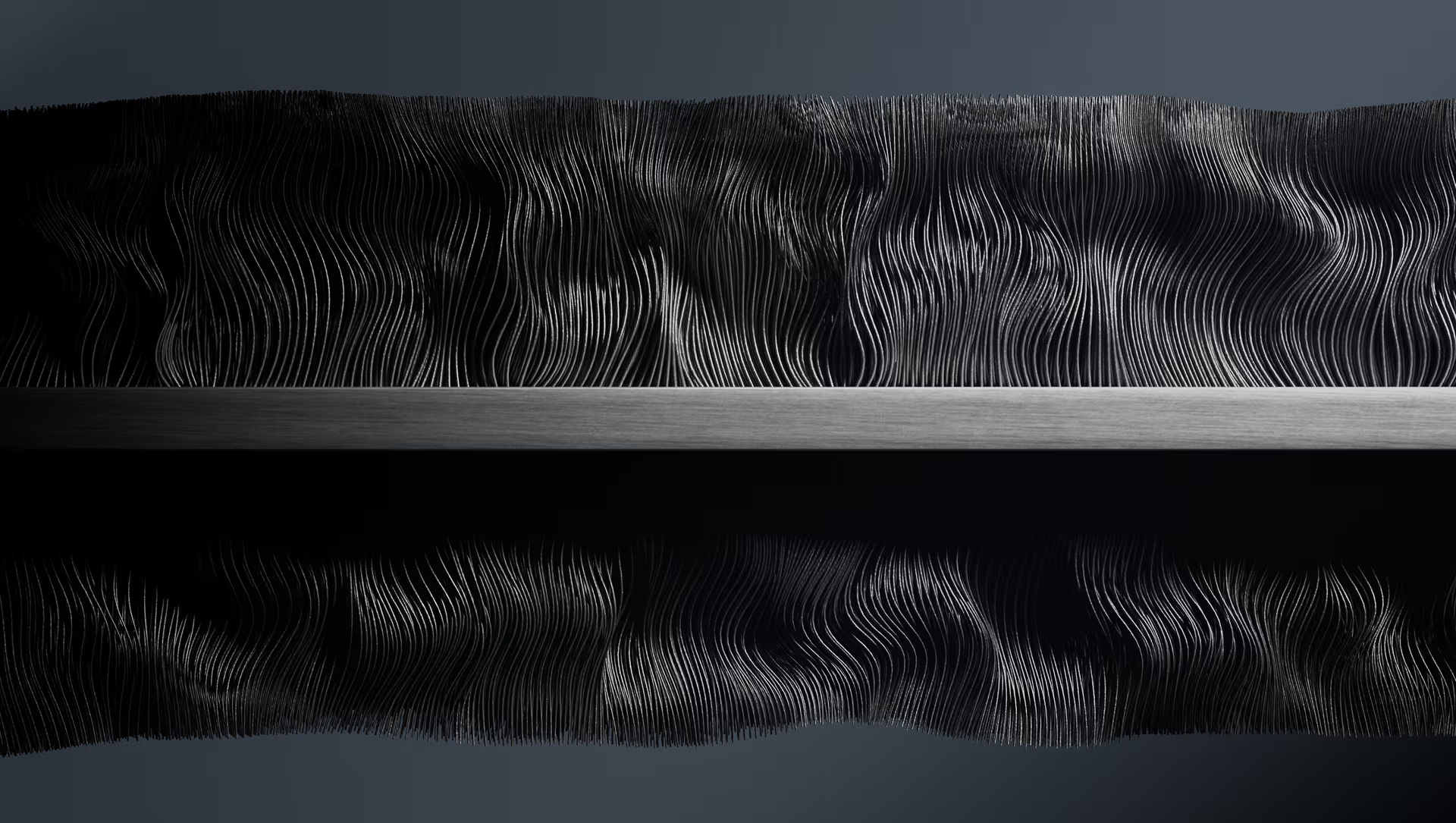
At the heart of the new NT-CP1 lies a sophisticated material composition that differentiates it from traditional phase-change materials or conductive pastes. Unlike standard thermal pads, which are often criticized for poor thermal conductivity, or thermal pastes, which degrade over time, the Carbice-engineered pad utilizes carbon nanotubes (CNTs) as its primary medium.
The technology works by leveraging the structural properties of nanotubes to fill the microscopic gaps between the processor’s Integrated Heat Spreader (IHS) and the cold plate of the cooler. The pad features an aluminum backbone that acts as a structural scaffold, ensuring the integrity of the material under pressure. This sandwich construction is then treated with a nanoscale polymer coating, which provides the necessary contact interface without the risk of "pump-out"—a common failure point in high-performance thermal pastes where the material is squeezed out from the center of the CPU die over time.
As temperatures rise and fall during "thousands of thermal cycles," the material is designed to gently conform to the surface topography of the IHS. This dynamic adaptation ensures that the thermal resistance remains low throughout the operational lifespan of the CPU, effectively eliminating the need for periodic re-application.
Chronology: From Aerospace to the Enthusiast Desktop
The journey of the NT-CP1 is not one of overnight development but the result of years of material science refinement.
- Foundational Research: Carbice established its reputation by developing high-reliability thermal management solutions for the aerospace and satellite sectors, where maintenance is impossible and hardware failure due to overheating is catastrophic.
- Expansion into Enterprise: The company gradually moved into the PC industry, proving its technology’s worth through high-performance OEM pre-built systems, most notably through a partnership with CyberPowerPC.
- The AMD Collaboration: Earlier this year, the relationship between thermal innovation and desktop performance deepened as AMD began utilizing Carbice’s "Ice" thermal pads for its re-released Ryzen 7 5800X3D processors. This signaled that the industry was ready to move beyond traditional pastes for high-TDP, heat-sensitive chips.
- The Noctua Partnership: Following the validation provided by the AMD rollout, Noctua identified a unique opportunity to bring this technology to the DIY market. By becoming the exclusive distributor, Noctua bridges the gap between high-end industrial engineering and the hobbyist builder.
- Upcoming Milestones: Noctua will showcase the prototype at Computex 2026 starting tomorrow, offering the industry its first hands-on look at the implementation. The commercial retail launch is confirmed for September 2026.
Technical Implications: Why Thermal Pads Matter
For the average PC builder, the choice of thermal interface has historically been a binary one: liquid-metal (risky, high performance) or thermal paste (standard, easy to apply). Thermal pads have long been relegated to low-heat components like VRMs or VRAM, where precision contact is less critical than it is for a CPU.
The introduction of the NT-CP1 challenges these paradigms in several key ways:
1. Longevity and Maintenance
Thermal pastes are organic compounds that eventually undergo "dry out" or "separation." In a high-performance system, a user might feel the need to re-paste their CPU every three to five years to maintain peak thermal efficiency. The Carbice-based solution is effectively "install and forget." For the lifetime of the CPU, the pad is designed to maintain its structural integrity, making it an ideal choice for users who want to build a system and keep it running for a decade or more without intervention.
2. Consistency of Application
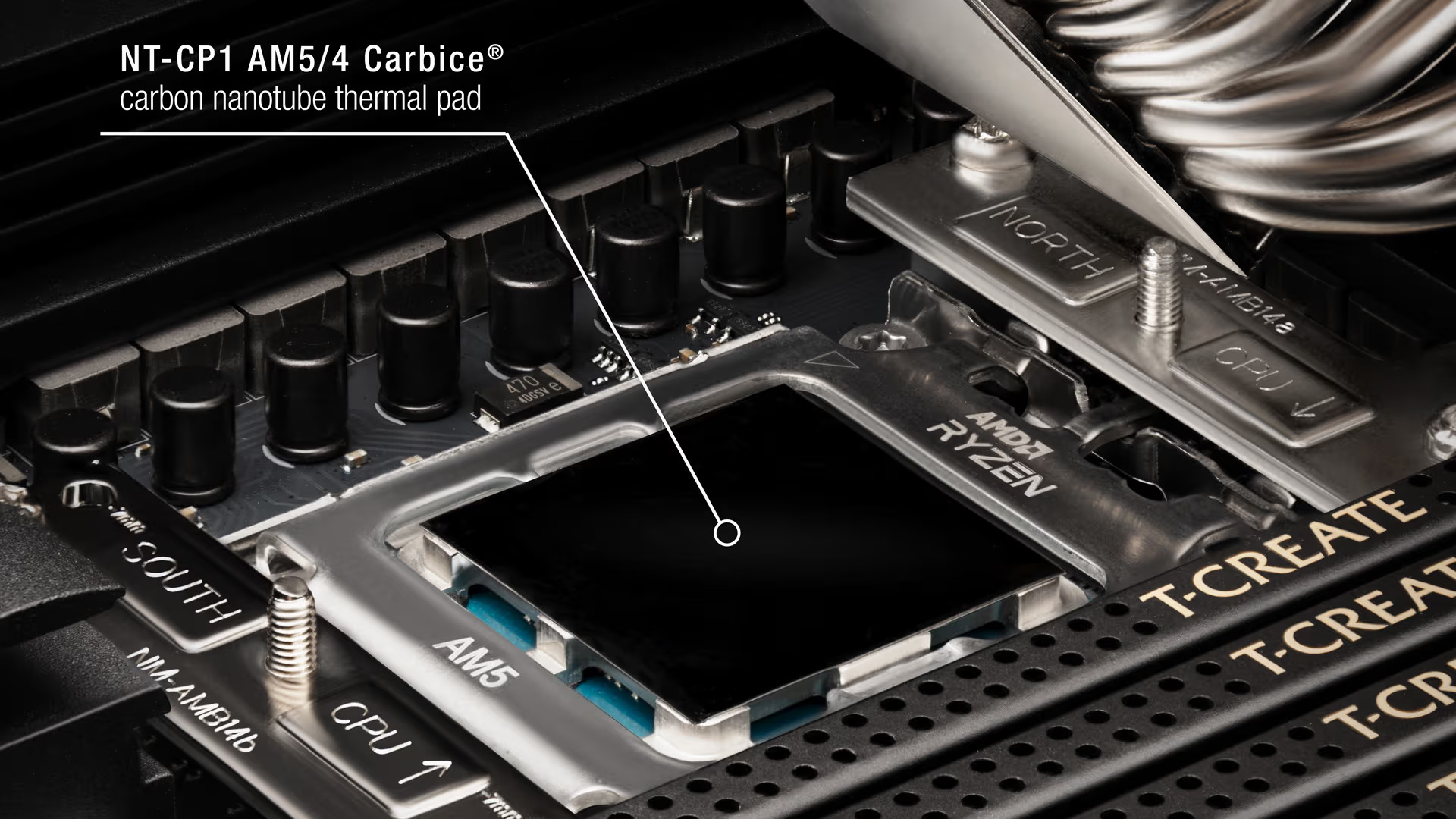
Applying thermal paste is an art form; applying too much or too little can result in air bubbles or thermal throttling. The NT-CP1, by virtue of its pre-cut, precise dimensions, eliminates human error. It is engineered specifically for the IHS geometry of AM4/AM5 sockets, ensuring uniform pressure and coverage every time.
3. Thermal Cycling Resilience
High-performance CPUs, particularly the Ryzen 7000 and 9000 series, undergo rapid fluctuations in temperature as they boost and down-clock. This expansion and contraction can compromise the bond of standard pastes. The aluminum backbone of the NT-CP1 prevents the material from degrading under these stresses, providing a consistent thermal bridge that adapts to the chip’s behavior.
Official Perspectives and Strategic Rationale
Dr. Baratunde Cola, CEO of Carbice, emphasized that the decision to partner with Noctua was strategic rather than purely logistical. "Noctua represents the gold standard of trust in the DIY community," Dr. Cola noted in a press statement. "We needed a partner who understands that for our technology, performance is only half the equation—reliability and user experience are the other half."
For Noctua, this move is a clear defensive and offensive strategy. While Noctua’s fans and heatsinks are industry-leading, the thermal interface market is crowded with competitors. By securing exclusive distribution rights to Carbice’s unique carbon nanotube technology, Noctua is positioning itself at the premium, "high-tech" end of the thermal material market.
Noctua has also indicated that this is only the beginning. The development of the NT-CP1 is a collaborative effort, and the roadmap suggests that further iterations—including versions tailored for Intel’s LGA 1700 and upcoming sockets—are likely in development.
Future Outlook: A New Industry Standard?
The introduction of the NT-CP1 could have ripple effects across the entire PC cooling market. If the adoption by enthusiasts proves successful, we may see a decline in the dominance of traditional thermal pastes in the high-end segment.
However, challenges remain. The primary hurdle for any new thermal interface is cost-to-performance ratio. Thermal pads of this caliber are significantly more expensive to manufacture than standard silicone-based pastes. Enthusiasts will be closely watching the benchmarks during the September launch to see if the performance gains—and the promise of "lifetime" usage—justify the likely price premium.
Furthermore, there is the question of compatibility with different heatsink mounting pressures. Noctua’s mounting systems are known for their consistent pressure, which is essential for the effectiveness of the Carbice material. Whether this pad will perform as well when paired with third-party coolers remains to be seen.
Ultimately, the partnership between Noctua and Carbice is a fascinating case study in technology transfer. By taking a solution developed for the unforgiving environment of space and adapting it for the heat-intensive world of modern computing, they are offering a compelling argument that the future of PC cooling may not lie in better liquids, but in smarter materials. As the industry gathers at Computex 2026, all eyes will be on how this "small" piece of technology changes the way we think about the most critical connection in our computers.

 Asro
Asro
 Nana Wu