

Introduction: The New Frontier of Cabin Complications
In the rapidly evolving landscape of the 21st century, the definition of a "passenger" is being stress-tested. As robotics technology leaps forward, moving from factory floors to the social sphere, the integration of humanoid robots into everyday life has encountered a high-altitude hurdle. In May 2026, Southwest Airlines officially moved to ground these artificial travelers, instituting a formal policy prohibiting human-like or animal-like robots from occupying seats in the cabin.
The decision, which has sparked a firestorm of debate among technology enthusiasts, civil libertarians, and aviation safety experts, marks one of the first major policy shifts by a commercial carrier regarding the rights—and safety requirements—of advanced artificial intelligence hardware in flight. While Southwest cites the volatile nature of high-capacity lithium-ion batteries as the primary catalyst for this ban, proponents of robotics suggest the move is less about aviation safety and more about a cultural discomfort with the rapid normalization of humanoids in public spaces.
The Chronology of Conflict: From Innovation to Injunction
The Bebop Incident (April 2026)
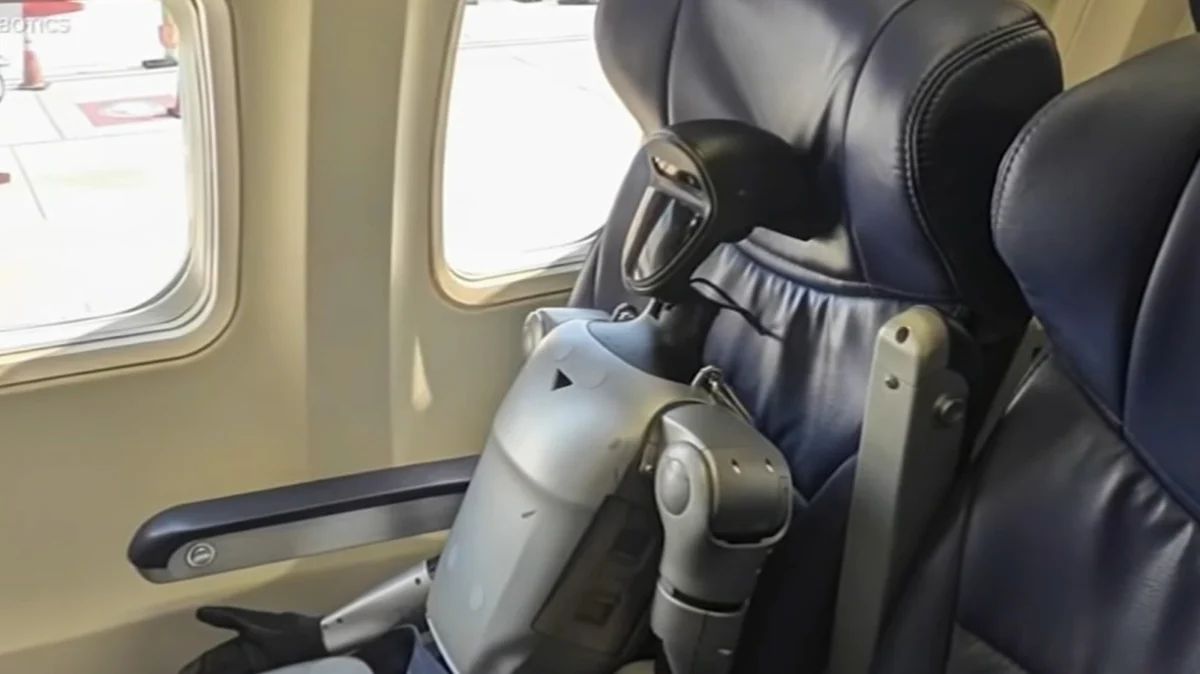
The tension reached a breaking point in April 2026, when Eily Ben-Abraham, founder of Elite Event Robotics, attempted to transport his 70-pound humanoid robot, "Bebop," via a Southwest flight. Having purchased a full fare seat for the machine, Ben-Abraham expected a routine travel experience. Instead, the presence of the robot triggered an immediate operational crisis.
Flight crew members initially voiced concerns regarding the seating configuration, noting that an aisle seat posed a safety hazard regarding emergency egress protocols. When Ben-Abraham complied by moving the unit to a window seat, the situation escalated. The flight was delayed for over an hour as ground and flight personnel scrutinized the robot’s power source. The confrontation culminated in the airline’s decision to confiscate the battery, leaving the robot effectively "dead weight" for the remainder of the journey.
The Stewie Precedent (May 2026)
Barely weeks later, Aaron Mehdizadeh, founder of The Robot Studio, attempted to fly with his own humanoid, "Stewie." Having learned from the previous month’s controversy, Mehdizadeh took proactive steps to ensure compliance, specifically swapping the robot’s primary power cell for a smaller, laptop-sized battery that met standard lithium-ion regulations.
Despite this mitigation, Stewie was met with equal scrutiny. The interaction solidified the airline’s resolve, leading directly to the formal policy shift later that month. For Mehdizadeh, the logic remained flawed; he argued that if a robot’s battery is no more dangerous than a standard high-end laptop, the ban is not a safety measure, but an act of exclusionary policy directed at the form factor of the robots themselves.
Supporting Data: The Lithium-Ion Dilemma
Southwest Airlines has long maintained some of the most rigorous battery policies in the domestic aviation industry. The airline’s stance is rooted in data provided by the Federal Aviation Administration (FAA), which classifies lithium-ion batteries as "Class 9 Dangerous Goods."
The 100 Wh Threshold
The aviation industry standard generally dictates that batteries exceeding 100 Watt-hours (Wh) require special approval and are strictly prohibited in checked baggage. Lithium-ion batteries are prone to "thermal runaway"—a self-sustaining, high-heat chain reaction that is notoriously difficult for standard aircraft fire suppression systems to extinguish.
According to FAA records, there have been dozens of documented fire-related incidents involving lithium batteries in flight over the last decade, ranging from smoking cabin baggage to overheating power banks. Southwest’s rationale is that a 70-pound humanoid requires significantly more power than a consumer laptop, necessitating battery packs that, if damaged or defective, could pose a catastrophic risk to a pressurized cabin environment at 35,000 feet.
Official Responses and The "Uncanny Valley" Factor
Southwest’s Stance
In its formal communication, Southwest has remained steadfast. The airline maintains that the safety of the cabin environment is paramount and that the unpredictability of custom-built robotics hardware makes it impossible for flight crews to assess potential hazards during a pre-flight walk-through. The current policy allows for small, toy-sized robots that can be stored in carry-on luggage, effectively drawing a line between "personal electronics" and "humanoid entities."
The Enthusiast Perspective
The robotics community views this through a different lens. Figures like Aaron Mehdizadeh argue that the airline is reacting to the "Uncanny Valley"—the psychological discomfort humans experience when faced with entities that appear nearly, but not quite, human.
"I understand why people have the fear," Mehdizadeh stated in an interview with FOX 4. "But if you are aligned towards the future, this could be one of the greatest things that’s ever happened in human history." Enthusiasts argue that by labeling these robots as safety hazards, the airline is catering to a conservative public sentiment rather than addressing objective engineering realities. They suggest that as robots become more common, the infrastructure—including airlines—must adapt to them, rather than banning them to avoid uncomfortable public interactions.
Implications: The Future of Autonomous Travel
Legal and Civil Rights Challenges
The ban raises significant questions regarding the definition of "passengers" and "property." If a robot is equipped with sophisticated AI and acts as a companion or service unit, does the owner have a right to transport it? Currently, robots are legally classified as "cargo" or "personal effects." However, as humanoid capabilities expand, lobby groups are beginning to ask if there should be a "robot-friendly" certification process, similar to the protocols currently in place for service animals.
The Impact on the Robotics Industry
The restriction creates a logistical bottleneck for robotics firms. Companies that specialize in mobile humanoids often need to transport their prototypes across the country for trade shows, medical demonstrations, or research collaborations. If major carriers like Southwest continue to prohibit these units, the cost of transport—which would shift from a $300 airline ticket to thousands of dollars in specialized ground freight—could stifle the development of the robotics industry in the United States.
A Path Toward Standardization?
Industry experts suggest that the solution lies in standardization. Much like the "TSA PreCheck" or certified battery safety labels, a standardized "Aviation-Safe" certification for robot batteries could potentially bridge the gap. If manufacturers can prove that a robot’s power supply meets stringent containment and thermal management standards, airlines might be more willing to accommodate them.
However, until such a certification exists, the "Robot Ban" remains a symbol of a broader cultural friction. We are currently in a transition period where the technology is advancing faster than the regulations designed to govern it. The incident with Southwest is likely the first of many, as the aviation industry struggles to balance the safety of the status quo with the inevitable arrival of a robotic future.
Conclusion: Navigating the Sky of Tomorrow
The grounding of Bebop and Stewie serves as a microcosm of our broader societal hesitation regarding artificial intelligence. While Southwest Airlines is currently prioritizing the immediate safety of its passengers—a mandate that is difficult to argue with given the volatility of lithium-ion technology—the robotics community is signaling that this is not merely a technical issue.
As we look toward the remainder of the 2020s, the aviation industry will face increasing pressure to define exactly what constitutes a "passenger." Whether we reach a compromise through advanced battery safety certifications or remain in a state of exclusion, one thing is clear: the robots are here, they are becoming more human, and they are demanding a seat at the table—or in this case, a seat on the plane. The resolution of this conflict will likely set the precedent for how humanity integrates its mechanical creations into the global infrastructure for decades to come.












No comments yet. Be the first to join the conversation!