

As the automotive industry accelerates toward an electrified future, the internal combustion engine is undergoing a significant metamorphosis. The landscape of 2026 is defined by a paradoxical shift: while emissions regulations and the pursuit of extreme fuel efficiency have popularized smaller, forced-induction four-cylinder engines, the classic V6 configuration has refused to fade into obscurity.
For many manufacturers, the V6 represents the "Goldilocks" solution—a versatile architecture that offers a compelling blend of power, refinement, and mechanical longevity that four-cylinder engines often lack, without the inherent weight and fuel-consumption penalties of the traditional V8. From rugged off-roaders to precision-engineered sports cars, the V6 remains a vital component of the modern fleet.
The State of the Industry: Why the V6 Survives
The current market is driven by a push for efficiency, yet consumer demand for "buttery-smooth" power delivery remains constant. The V6’s natural balance—inherently smoother than an inline-four—makes it an ideal candidate for luxury sedans and premium SUVs where vibration and harshness are unacceptable.
Furthermore, as new vehicle prices continue to climb, the V6 has become the bridge between entry-level practicality and high-end performance. It allows automakers to offer "base" models that don’t feel underpowered while providing a scalable platform for performance-oriented trims. In 2026, the V6 is not merely a compromise; it is a strategic choice for engineers balancing the EPA’s tightening grip with the driver’s desire for visceral performance.
A Chronology of the V6 Evolution
The V6 has a storied history, but its current iteration is perhaps its most sophisticated.
- Early 2000s: The V6 was the standard engine for almost every mid-size sedan, prioritizing displacement over forced induction.
- 2015–2022: The rise of turbocharging allowed manufacturers to downsize displacement while maintaining horsepower, leading to the "Twin-Turbo V6" era.
- 2023–2025: The industry saw the widespread adoption of electrification, with many brands beginning to phase out V8s in favor of high-output V6 hybrid powertrains.
- 2026: The current year marks the stabilization of this trend, where the V6 is now frequently paired with mild-hybrid or full-hybrid systems, extending its viability deep into the decade.
Examining the 2026 V6 Portfolio
The Luxury Sedans: Lexus IS and Genesis G70
The 2026 Lexus IS enters the new model year with a refreshed aesthetic that breathes new life into its third-generation architecture. Lexus has made a bold decision to strip away the entry-level four-cylinder and the top-spec V8, leaving the 3.5-liter V6 as the definitive powerplant. Producing 311 horsepower, it positions the IS as a focused, premium driver’s car rather than a volume-filler.
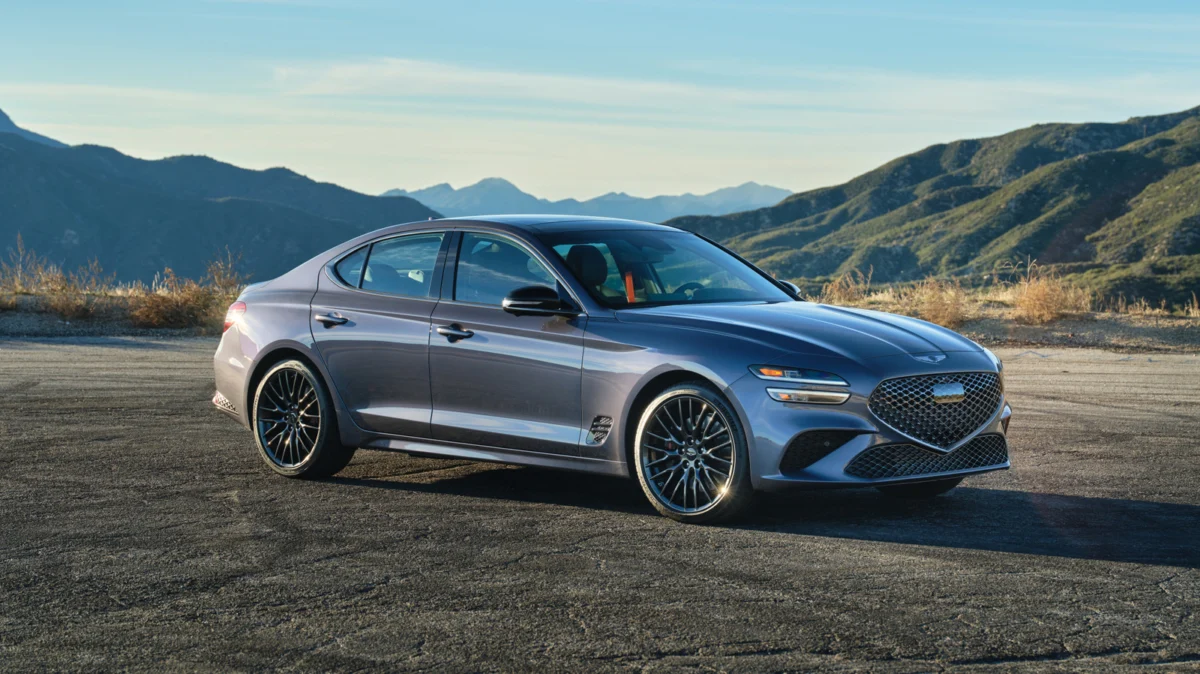
In contrast, the Genesis G70 continues to disrupt the luxury hierarchy. By offering both a 2.5-liter turbocharged V6 and a more potent 3.3-liter twin-turbo alternative, Genesis gives buyers a tiered approach to performance. With up to 360 horsepower on tap, the G70 challenges established German rivals by offering superior value and standard rear-wheel-drive dynamics.
The Off-Road Titans: Jeep Wrangler and Ford Bronco
Off-roading is where the V6 truly shines, providing the low-end torque necessary to conquer challenging terrain. The 2026 Jeep Wrangler remains a steadfast proponent of the 3.6-liter Pentastar V6. While other engines exist in the lineup, the V6 is the heartbeat of the range, offering a reliable 285 horsepower that has been proven over decades of trail abuse.
The 2026 Ford Bronco takes a more aggressive approach with its EcoBoost V6 lineup. With the Raptor variant utilizing a 3.0-liter twin-turbo engine to churn out 418 horsepower, Ford demonstrates that the V6 is more than capable of handling high-speed desert running and rock crawling alike.
Performance and Utility: The Acura MDX and Cadillac CT4-V
Acura’s 2026 MDX serves as a masterclass in chassis engineering. While its 3.5-liter V6 provides a modest 290 horsepower, the brand’s integration of Active Handling Assist and torque vectoring ensures that the driving experience remains engaging. For those seeking more, the Type-S trim’s 3.0-liter turbo V6 elevates the performance to a competitive 355 horsepower.
Meanwhile, the Cadillac CT4-V Blackwing stands as a testament to American performance. By shoehorning a 3.6-liter twin-turbo V6 into a compact sedan platform, Cadillac has created a track-ready monster. With 472 horsepower, it effectively silences the argument that a V6 cannot provide supercar-level thrills.
The Full-Size Haulers: Toyota Tundra
The 2026 Toyota Tundra proves that displacement isn’t the only metric for utility. By moving away from V8s, Toyota has embraced a 3.6-liter V6 architecture that spans from a standard twin-turbo setup to a powerful hybrid iteration producing 437 horsepower. This allows the Tundra to maintain a 12,000-pound towing capacity while complying with modern efficiency standards.
Sports Car Precision: Nissan Z and Porsche Panamera
The 2026 Nissan Z is perhaps the purest expression of the modern V6. In a world of digital complexity, the Z offers a 400-horsepower twin-turbo V6 in a compact, rear-wheel-drive package. It is one of the few remaining cars that offers a six-speed manual transmission, making it a darling for driving purists.
At the other end of the spectrum, the 2026 Porsche Panamera utilizes a 2.8-liter V6 that prioritizes smoothness and power delivery. Despite the vehicle’s massive curb weight, the V6 provides 348 horsepower, proving that Porsche’s engineering prowess can make a heavy sedan feel nimble and responsive.
Supporting Data: Efficiency vs. Power
| Vehicle | Engine | Horsepower | Key Highlight |
|---|---|---|---|
| Lexus IS | 3.5L V6 | 311 hp | Refined luxury standard |
| Cadillac CT4-V BW | 3.6L TT V6 | 472 hp | Track-focused performance |
| Toyota Tundra | 3.6L V6 Hybrid | 437 hp | Max 12k lbs towing |
| Nissan Z | 3.0L TT V6 | 400 hp | Analog sports car experience |
| Jeep Wrangler | 3.6L V6 | 285 hp | Off-road reliability |
Official Perspectives and Market Implications
Automotive analysts suggest that the persistence of the V6 is a calculated move by manufacturers to manage the "transition period." As noted by engineering leads across the industry, the V6 allows for a modular engine bay design—where the same block can be used for base, performance, and hybrid-assisted models.
"The V6 is the engine of the transition," says industry consultant Mark Halloway. "It provides enough thermal efficiency to satisfy regulators while retaining the emotional resonance—the sound and the torque—that customers still demand. We aren’t seeing a ‘death’ of the combustion engine; we are seeing a ‘refining’ of it."
Implications for the Consumer
For the buyer, the 2026 market presents a unique opportunity. While entry-level pricing is rising, the value proposition of a V6-powered vehicle has never been higher. Consumers are receiving more horsepower per liter than ever before, coupled with advanced transmission technologies—such as 9-speed and 10-speed automatics—that keep the engines in their optimal power bands.
However, the cost of entry is a hurdle. As shown by the $113,000 starting price of the Porsche Panamera and the $63,600 entry for the Cadillac Blackwing, the V6 is increasingly being positioned as a premium or performance-grade option. Budget-conscious buyers may find themselves looking toward the mid-size truck segment, such as the Nissan Frontier, where the V6 remains a staple for under $35,000.
Conclusion: The V6 in the Age of Electricity
As we look beyond 2026, the V6 will likely continue its evolution toward hybridization. It is not an engine that is destined for the museum; rather, it is an engine that is adapting. By pairing the mechanical reliability of the V6 with the immediate torque of electric motors, manufacturers are creating the most efficient and powerful vehicles in history. The V6, it seems, has found a second wind, ensuring that for at least the remainder of this decade, the roar of a six-cylinder engine will remain a defining sound on the road.












No comments yet. Be the first to join the conversation!