Muslim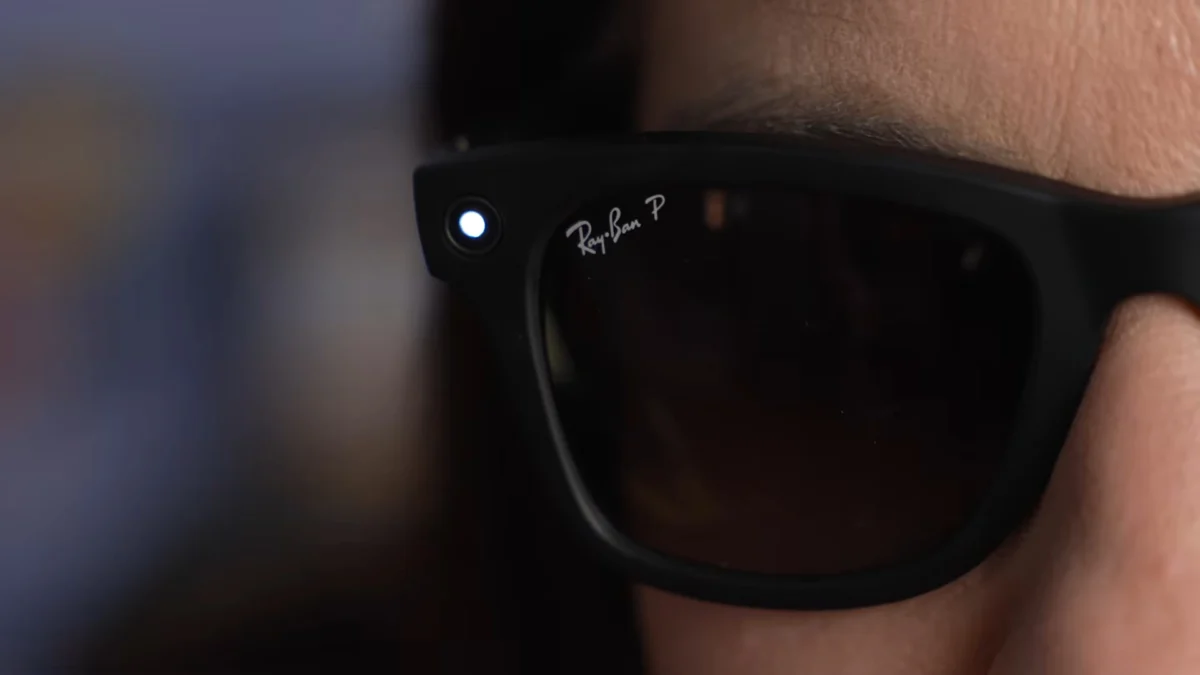
The rise of wearable technology has long promised a future of seamless connectivity, where digital assistance is always at our fingertips—or, in the case of the Ray-Ban Meta smart glasses, always before our eyes. However, the convenience of hands-free photography and AI-powered interaction has recently been overshadowed by a growing sense of unease. As modders find ways to physically circumvent the privacy-protecting recording LEDs on these devices, a more systemic concern has emerged: evidence suggesting that Meta is quietly laying the groundwork for real-time facial recognition technology.
The Core Revelation: What’s Hiding in the Code?
Recent investigations, most notably by WIRED, have uncovered that the Meta AI companion app—the essential software gateway for the Ray-Ban and Oakley smart glasses—contains dormant, unreleased code for a powerful facial recognition system. Internal documentation refers to this project as "NameTag."
While the feature is not currently active for consumers, its presence within the app, which has been installed over 50 million times, raises significant questions regarding the company’s long-term roadmap. The code, which appears to have been integrated as early as January, consists of three sophisticated AI models already residing on users’ smartphones. These models are designed to perform a complete biometric workflow: identifying a human face in the glasses’ field of view, cropping the image for focus, and converting that facial data into a unique biometric signature that can be cross-referenced against a database of faceprints stored on the device.
If activated, this system would theoretically notify the wearer the moment they encounter an individual whose face has been "indexed," potentially transforming a pair of stylish frames into a real-time identification tool. By May, newer versions of the app reportedly rebranded the initiative as "Connections," with user-facing interface text suggesting a benign, memory-enhancing utility: "Remember the people you met."
A Chronology of Surveillance Development
The trajectory of this technology has been anything but transparent. To understand the gravity of the situation, one must look at the timeline of Meta’s experimentation with biometric identification:
- 2021: The Regulatory Retreat: Following massive public outcry and regulatory pressure, Meta (then Facebook) announced the formal shutdown of its legacy facial recognition system, deleting the faceprints of more than a billion users. At the time, the move was touted as a commitment to a "privacy-first" approach.
- January 2026: According to technical audits of the Meta AI app, the first core components of the NameTag system were quietly integrated into the software build.
- February 2026: The New York Times exposed internal Meta documents suggesting that the company had been actively planning a facial recognition feature for its smart glasses, despite internal debates over the severe privacy implications. The documents noted that the "dynamic political environment" might serve as a distraction for potential critics.
- May 2026: The project appears to undergo a rebranding to "Connections," with updated UI strings suggesting a focus on social utility rather than mass surveillance.
- June 2026: Reports emerge regarding the physical modification of Ray-Ban Meta glasses by third parties, who are successfully disabling the recording LED, thereby allowing for completely covert filming. This hardware-level vulnerability, combined with the latent software capability for facial recognition, creates a perfect storm of privacy risk.
Supporting Data and Technical Reality
The existence of these AI models on user devices is not merely a theoretical concern; it is a technical reality. The three-stage pipeline found in the app—detect, crop, and match—mirrors the architecture used by law enforcement and high-end security firms for rapid identification.
The concern, as articulated by privacy advocates, is not necessarily that Meta intends to build a "centralized" database of faces, but rather that the infrastructure for "decentralized" surveillance is being distributed to millions of end-users. By shifting the processing of biometric data to the local device (the smartphone), Meta can bypass the optics of maintaining a massive central server while still enabling the functionality of mass identification.
Furthermore, the "Connections" branding represents a classic "trojan horse" strategy in product development. By framing the technology as a memory aid—helping a user recall the name of a business contact or an acquaintance at a party—the company lowers the psychological barrier to adoption. Once users grow accustomed to the convenience of "remembering" people, the transition to more invasive, ambient surveillance becomes a matter of software updates, not hardware acquisition.
The Official Response: Meta’s Stance
Meta has responded to these reports with a mixture of deflection and cautious clarification. A spokesperson for the company, Ryan Daniels, addressed the findings by framing the code as "merely evidence" of ongoing research and development.
"Nothing has shipped to consumers, and no final decision has been made," Daniels stated. The company further emphasized that its current focus remains on building helpful AI tools while maintaining user trust. Crucially, Meta issued a firm rebuttal regarding the nature of their data collection, asserting, "We are not building a central face database."
However, this response has done little to soothe privacy experts. Critics point out that Meta’s public messaging—that they are "thinking through" the implications of facial recognition—is directly contradicted by the fact that they have been distributing the underlying functional components to the public for months. This discrepancy between public rhetoric and private engineering creates a significant trust deficit.
Implications: The Death of Public Anonymity
The potential deployment of NameTag or "Connections" has profound implications for the nature of public life. If smart glasses become the primary method of interaction, the traditional "right to be anonymous" in public spaces effectively vanishes.
1. The Erosion of Informed Consent
The most immediate issue is consent. In a traditional setting, if you are being filmed or photographed, there is usually a social contract or a visible indicator. With smart glasses, even with a functional LED, that indicator is easily ignored. With the addition of facial recognition, you are not just being recorded—you are being identified, indexed, and categorized without your knowledge or permission.
2. The "Modder" Problem
The recent revelation that hardware LEDs can be physically disabled adds a layer of malice to the debate. If individuals can modify their glasses to record without a light, and if that same hardware is capable of running facial recognition software, the ability of an average person to maintain their privacy in public becomes nearly impossible. The responsibility for "policing" this behavior will likely fall on the individuals being recorded, rather than the manufacturers or the users of the technology.
3. The Slippery Slope of Biometric Data
Once a user has an app on their phone that can convert a face into a biometric signature, the temptation to expand that capability will be high. Whether for law enforcement requests, third-party app integration, or targeted advertising, the biometric "key" to a person’s identity becomes a commodity. The historical precedent—including Meta’s past mishandling of user data—suggests that once this Pandora’s box is opened, it is virtually impossible to close.
Conclusion: A Turning Point for Wearables
We stand at a critical juncture in the evolution of wearable technology. The Ray-Ban Meta glasses are, by most accounts, a success in terms of industrial design and user experience. They represent the first time a "smart" wearable has successfully integrated into mainstream fashion.
However, the path forward is fraught with ethical peril. The inclusion of facial recognition code, regardless of whether it is currently "active," demonstrates a strategic intent that stands in stark contrast to the company’s public commitments to privacy. If Meta chooses to move forward with "Connections," they risk more than just a public relations crisis; they risk alienating the very user base that has kept the wearable market alive.
As we move toward an era of ambient computing, the question is no longer just "What can this technology do?" but rather "What should we allow this technology to do?" Until there is clear, legally binding regulation regarding the use of biometric identification in consumer devices, the "panopticon" of the future remains a looming, and increasingly personal, threat. The decision to prioritize "convenience" over the fundamental right to walk through a crowd without being identified by a stranger’s glasses is one that society must make collectively—before the software updates are pushed, and the choice is made for us.


 Rifan Muazin
 Nila Kartika Wati