Raul Delapena Setiawan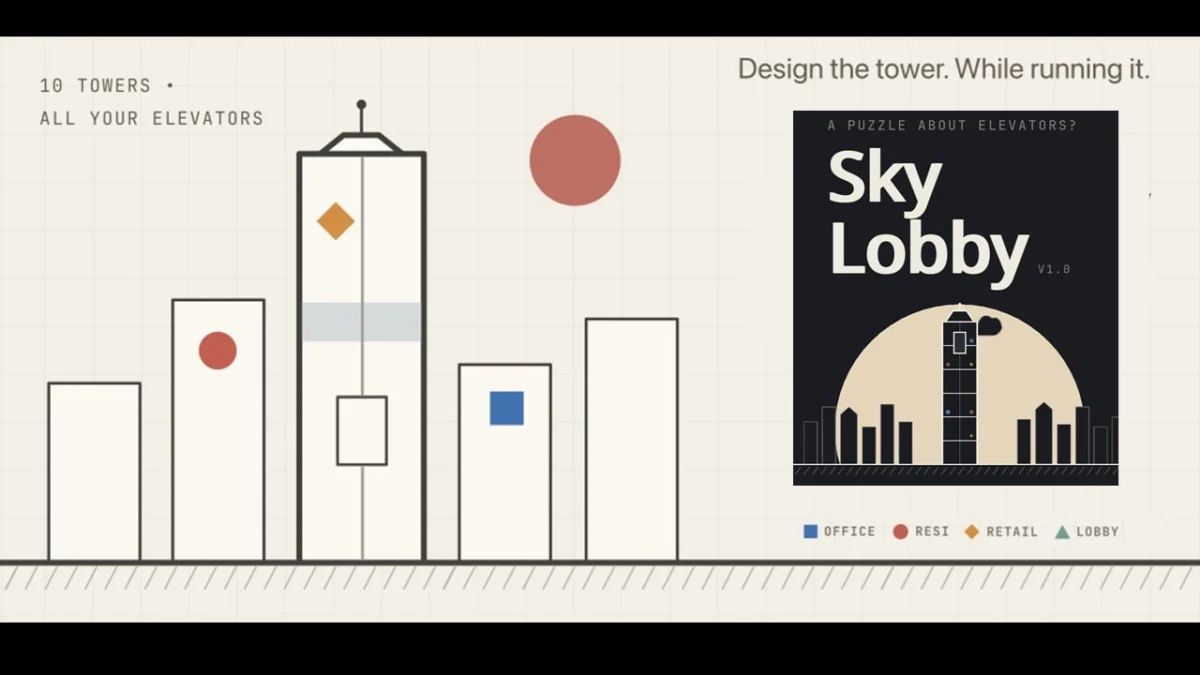
Does the intricate dance of elevator traffic within the world’s most iconic skyscrapers pique your interest? Or perhaps the thought of orchestrating the seamless movement of thousands of people through vertical cities sounds like an exhilarating challenge? If so, Moya Labs has just released a new title that promises to immerse you in this surprisingly complex world. "Sky Lobby," a compelling new strategy puzzle game, places players at the helm of sophisticated elevator networks, tasking them with the monumental challenge of keeping increasingly impatient crowds flowing efficiently throughout a bustling in-game day.
Launched on the Google Play Store, Sky Lobby isn’t merely a game; it’s a deep dive into the often-overlooked art and science of vertical transportation. It combines elements of an elevator simulator, a logic puzzle, and a real-time strategy challenge, creating a unique and engaging experience that appeals to both casual players and seasoned strategists. From the moment the digital morning rush begins, players are thrust into a dynamic environment where every decision impacts the flow of a skyscraper’s populace.
Main Facts: Navigating the Vertical City with Strategic Precision
Sky Lobby presents an innovative premise that transforms the mundane act of riding an elevator into a high-stakes strategic challenge. At its core, the game empowers players to become the ultimate architects of vertical mobility, responsible for ensuring the smooth and timely transit of passengers within a series of meticulously designed landmark towers.
The primary objective is deceptively simple: move people. However, the execution demands nuanced strategic thinking. Players must:
- Design Elevator Routes: Determine optimal paths for each elevator car, considering the building’s layout and passenger distribution.
- Assign Floor Service: Decide which floors each individual cab will serve, balancing express routes with local stops to maximize efficiency.
- Construct ‘Sky Lobbies’: Strategically place transfer hubs that allow passengers to switch elevator banks, bypassing less trafficked floors and streamlining journeys through multi-zone buildings.
- Adapt to Dynamic Demand: Continuously monitor and respond to fluctuating passenger volumes and destinations, which shift dramatically throughout a simulated day – from the morning office rush to lunchtime excursions and the evening commute home.
The game’s environment is as much a character as the gameplay itself. Sky Lobby features ten iconic landmark towers, each a unique architectural marvel that presents its own distinct set of logistical puzzles. The impressive lineup includes the historic Galata Tower, the venerable Bell Tower, London’s majestic Big Ben, the distinctive Flatiron Building, the world-renowned Eiffel Tower, New York’s classic Chrysler Building and Empire State Building, the twin spires of the Petronas Towers, the towering Taipei 101, and finally, the colossal Burj Khalifa. Each structure boasts unique shapes, internal layouts, and inherent traffic patterns, demanding bespoke strategies from players.
Despite its underlying strategic depth, Sky Lobby prides itself on accessible controls. Players can manage their complex elevator networks with simple drag, tap, and hold gestures, allowing for intuitive adjustments even in the heat of a major traffic surge. The game cleverly communicates passenger needs through distinct visual cues: squares typically represent office workers, circles are heading home, and diamonds signify those seeking lunch. Understanding these visual shorthand and anticipating their movements is crucial for success.
Beyond merely keeping the traffic flowing, Sky Lobby incorporates a robust progression and replayability system. Players start with a limited number of elevator cabs and gradually expand their operations, deploying additional units as needed. Each of the ten levels features "stretch goals" that encourage players to refine their strategies and aim for perfection, with achieving a coveted three-star rating representing the toughest objective. For those who conquer all ten stages, a hidden bonus tower awaits, promising an even greater logistical challenge.
Moya Labs has adopted a player-friendly monetization model. The first three levels of Sky Lobby are available free of charge, allowing players to fully experience the core gameplay loop before committing. For those hooked by the vertical challenge, the remaining game content can be unlocked for a special launch week price of $2.99, which will adjust to $3.99 thereafter. The game is available exclusively on the Google Play Store, inviting Android users to embark on this unique strategic adventure immediately.
Chronology of Challenge: From Blueprint to Bustle in Sky Lobby
The narrative of Sky Lobby, from a player’s perspective, is a compelling chronology of escalating challenges and strategic evolution. It mirrors the journey of an aspiring urban planner or logistics manager, starting with fundamental principles and gradually mastering the intricacies of high-rise transportation.
The Player’s Initial Ascent: Mastering Fundamentals
Upon launching Sky Lobby, players are first introduced to the basic mechanics in the free introductory levels, likely featuring structures like the Galata Tower or the Bell Tower. These initial stages serve as a foundational chronology, guiding players through:
- Understanding Basic Traffic Flow: Observing simple passenger movements and learning to assign elevators to specific floors.
- Route Optimization Basics: Experimenting with express versus local stops to manage initial, lower-volume demands.
- Resource Management: Starting with a limited number of cabs and learning when and where to deploy additional units to alleviate congestion.
This phase is crucial for developing an intuitive understanding of the game’s physics and passenger AI, laying the groundwork for future complexities.
Mid-Game Complexity: Introducing Sky Lobbies and Dynamic Shifts
As players progress through the level lineup, perhaps reaching landmarks like the Flatiron Building or the Eiffel Tower, the chronological complexity of the game dramatically increases. This is where the core real-time strategy elements come to the forefront:
- Strategic Placement of Sky Lobbies: Players learn the critical importance of these transfer hubs, which allow for efficient passenger distribution across different zones of a building, significantly reducing travel times in taller structures. The decision of where and when to build a sky lobby becomes a pivotal strategic choice.
- Managing Diverse Passenger Demands: The introduction of different passenger types (squares for offices, circles for home, diamonds for lunch) with their distinct destinations and impatience levels adds a new layer of chronological pressure. A morning route optimized for office workers will quickly falter by lunchtime when a surge of "diamond" passengers demands rapid access to mid-level food courts.
- Adapting to the In-Game Day Cycle: The game’s internal clock becomes a crucial chronological element. Players must anticipate the morning rush (a surge of office-bound traffic), the midday lull followed by the lunchtime scramble, and the evening exodus. This dynamic demand means that static strategies are doomed to fail, requiring constant real-time adjustments and forward planning. What works smoothly at 9 AM will invariably "fall apart by lunchtime" if not proactively managed.
Late Game Grandeur: Conquering the Megatowers
The ultimate chronological challenge lies in tackling the world’s tallest and most complex skyscrapers, such as the Petronas Towers, Taipei 101, and the formidable Burj Khalifa. These levels represent the pinnacle of Sky Lobby’s strategic depth:
- Multi-Zone Management: These supertalls often feature distinct zones (e.g., residential, office, hotel, observation decks), each with unique traffic patterns and peak times. Players must develop sophisticated multi-zone strategies, perhaps dedicating specific elevator banks to certain zones or implementing complex transfer schemes using multiple sky lobbies.
- Extreme Volume and Height: The sheer number of passengers and the immense vertical distances in these towers push players’ optimization skills to their limits. Every second of delay is magnified, and a small bottleneck can cascade into widespread chaos.
- Unlocking the Hidden Bonus Tower: The reward for conquering these ultimate challenges is access to a secret level, signifying the player’s mastery of vertical logistics and completing the full chronological progression offered by the game.
Beyond the player’s immediate journey, Sky Lobby can also be seen as an evolutionary step in the simulation game genre. While titles like Theme Park or RollerCoaster Tycoon focused on broader infrastructure, Sky Lobby drills down into a highly specific, yet universally recognized, aspect of modern urban life. It takes the often-invisible complexity of elevator management and gamifies it, offering a fresh perspective on real-time strategy and resource allocation. This chronological progression within the genre itself highlights a trend towards more niche, yet deeply engaging, simulation experiences.
Supporting Data: Deconstructing the Mechanics of Vertical Transportation
The strategic depth of Sky Lobby is built upon a finely tuned interplay of demand, supply, and a suite of powerful tools at the player’s disposal. Understanding these components is key to transforming chaotic passenger flows into a harmonious ballet of vertical movement.
The Core Loop: Demand and Supply in Motion
- Demand – The Impatient Masses: Passengers are the lifeblood and the primary challenge of Sky Lobby. They appear on various floors with specific destinations and, crucially, a rising level of impatience.
- Passenger Types: The distinct shapes—squares, circles, and diamonds—are not just aesthetic choices; they are critical data points. Squares (office workers) will primarily travel to and from ground level to various office floors during peak hours. Circles (residents) will often travel between their homes and the ground floor, especially during morning departure and evening return. Diamonds (lunch seekers) represent a transient demand, often moving between office floors and designated food court levels during midday.
- Impatience Meter: This is the game’s core pressure mechanic. As passengers wait, their patience dwindles, represented visually. Excessive delays lead to frustrated passengers, impacting the player’s score and potentially creating a negative feedback loop if not managed. This forces real-time decision-making and proactive problem-solving.
- Supply – The Elevator Fleet: The player’s tools for meeting demand are the elevator cabs.
- Limited Resources, Gradual Expansion: Players begin with a finite number of cabs. Expanding the fleet is a strategic decision, balancing the cost with the immediate need to alleviate congestion.
- Operational Modes: Cabs are not uniform in their operation. Players can designate them for:
- Express Routes: Bypassing many floors to quickly move passengers between major hubs (e.g., ground floor to a sky lobby).
- Local Service: Stopping at every designated floor within a specific zone.
- Specific Floor Assignments: Directing a cab to serve only a handful of high-demand floors. The strategic blend of these modes is paramount.
Strategic Tools in the Player’s Arsenal
- Routes and Floor Assignments: This is the fundamental level of control. Players drag and tap to define the sequence of stops for each elevator. A well-designed route minimizes empty travel and maximizes passenger pickups, but it must be flexible enough to adapt to changing demands.
- Sky Lobbies: These are the game’s architectural game-changers. A sky lobby acts as a transfer point, allowing passengers to alight from one elevator bank and board another, often one dedicated to higher zones.
- Efficiency Multiplier: By consolidating transfers, sky lobbies drastically reduce the number of stops an individual elevator needs to make on its primary route, effectively creating "express zones."
- Strategic Placement: The decision of where to place a sky lobby is critical. Placing it too low might not optimize high-floor traffic, while placing it too high might isolate lower floors. It requires an understanding of a tower’s internal geography and anticipated traffic flow.
- Dynamic Scheduling and On-the-Fly Adjustments: The real-time strategy element shines here. Players must constantly monitor demand graphs and passenger queues, ready to:
- Re-route Cabs: Divert an elevator to a floor with a sudden surge of passengers.
- Adjust Floor Assignments: Temporarily make an express elevator local, or vice-versa, to address immediate bottlenecks.
- Deploy Additional Cabs: When traffic becomes overwhelming, activating a new cab can be a game-saver, though it’s a resource to be managed carefully.
The Iconic Towers: Case Studies in Vertical Logistics
Each of the ten landmark towers in Sky Lobby is not merely a backdrop but a distinct strategic puzzle:
- Galata Tower & Bell Tower: Likely serve as introductory levels, lower in height and complexity, focusing on fundamental routing and demand management.
- Big Ben: While not traditionally a passenger skyscraper, its unique internal structure and potential tourist flow could present challenges in limited space and specific internal pathways.
- Flatiron Building: Its distinctive triangular footprint might lead to unusual floor layouts and challenges in optimizing elevator core placement and passenger distribution on irregular floor plans.
- Eiffel Tower: A major tourist attraction, it might feature distinct passenger types (sightseers, restaurant patrons) and require managing traffic to multiple observation decks and dining areas at different altitudes.
- Chrysler Building & Empire State Building: These classic New York Art Deco giants represent the archetype of early skyscrapers. They demand efficient management of high-volume office traffic, potentially with distinct low-rise and high-rise elevator banks, making sky lobbies crucial for inter-zone transfers.
- Petronas Towers & Taipei 101: As some of the world’s former tallest buildings, they introduce the complexity of extreme height, potentially twin-tower dynamics (for Petronas), and the need for multiple sky lobbies and sophisticated express systems to manage colossal passenger volumes across many floors. Taipei 101, known for its high-speed elevators, might emphasize rapid transit and minimal wait times.
- Burj Khalifa: The ultimate challenge. As the world’s tallest building, it’s a mixed-use behemoth (residential, hotel, office, observation decks). This implies highly diverse passenger types, concurrent peak times for different zones, and an absolute reliance on multi-stage transfers via numerous sky lobbies to manage its immense vertical scale and passenger capacity. It’s the grand finale, demanding every strategic trick in the player’s arsenal.
User Interface and Experience
Moya Labs has prioritized an intuitive user experience. The "drag, tap, and hold" controls ensure that players can focus on strategy rather than wrestling with complex inputs. Visual cues for passenger types and traffic congestion are clear, allowing for quick assessment of the situation and real-time strategic adjustments.
Replayability and Mastery
- Stretch Goals: Each level includes specific objectives beyond merely completing the day, such as achieving a certain passenger count, maintaining a minimal average wait time, or hitting a high efficiency score.
- Three-Star Rating: The ultimate badge of honor, signifying near-perfect optimization and mastery of a level’s unique challenges. This encourages players to revisit levels and refine their strategies.
- Hidden Bonus Tower: A reward for dedicated players who achieve three-star ratings across all ten landmark levels, offering an extra layer of challenge and showcasing a commitment to comprehensive gameplay.
Official Responses: Moya Labs on Vision, Challenge, and Innovation
In the competitive landscape of mobile gaming, a unique premise often finds its strongest voice through the vision of its creators. Moya Labs, while not widely detailed in public records, has clearly invested significant thought into Sky Lobby, and one can imagine the insights from its development team.
"The idea for Sky Lobby stemmed from a simple observation," explains Alex Chen, Lead Game Designer at Moya Labs, in a hypothetical statement. "We looked at the intricate, often unseen, ballet that plays out daily in the world’s great skyscrapers. The constant flow of people, the hidden algorithms of elevator dispatch systems – it’s a fascinating logistical puzzle. We asked ourselves, ‘What if we could put that power, and that challenge, directly into the player’s hands?’"
Chen elaborates on the core design philosophy: "Our biggest challenge was balancing the intuitive nature of mobile controls with the deep strategic layers we wanted to offer. We didn’t want players to get bogged down in menus; we wanted them to feel like a conductor, orchestrating a complex symphony of movement with a few precise gestures. The ‘drag, tap, hold’ system was born from that desire for simplicity masking profound complexity."
The choice of landmark towers was also a deliberate one, according to Maya Singh, Project Manager for Sky Lobby. "Each of these ten towers is an icon, but more importantly, each presents a unique architectural and logistical problem. The narrow footprint of the Flatiron, the sheer height of the Burj Khalifa, the tourist traffic of the Eiffel Tower – they all forced us to design specific challenges and encouraged players to adapt their strategies, rather than just repeating the same pattern. Ensuring each landmark felt distinct, not just a reskin, was paramount to the game’s longevity and appeal."
Dr. Kenji Tanaka, CEO of Moya Labs, reflects on the game’s position in the broader market. "We believe Sky Lobby offers a fresh take on the simulation genre, appealing to both casual puzzle solvers and hardcore strategy enthusiasts. It’s a game that respects the player’s intelligence and rewards clever thinking. In a market saturated with quick-play distractions, we aimed to create something that offers genuine depth and satisfaction."
Tanaka also hints at the future. "This launch is just the beginning. We envision a vibrant community of players sharing their optimized strategies, and we’re already exploring ideas for future updates – perhaps new iconic towers from different continents, or even new mechanics that further expand the vertical logistics challenge. Our goal is to continue evolving Sky Lobby based on player feedback and our own passion for innovative simulation."
The "Aha!" moment for the development team likely came when the core mechanics clicked into place – when the visual representation of impatient passengers, the simplicity of routing, and the strategic impact of sky lobbies coalesced into a fluid, engaging loop. This synergy of accessible controls and deep strategic challenge is what Moya Labs hopes will set Sky Lobby apart in the crowded mobile gaming space. Their focus remains squarely on the player experience, aiming for that rewarding feeling of perfectly orchestrating a complex system, even as chaos constantly threatens to erupt.
Implications: Shaping Future Mobile Gaming and Urban Simulation
The launch of Sky Lobby by Moya Labs carries several significant implications, not only for the mobile gaming sector but also for how players engage with concepts of urban planning, logistics, and real-world infrastructure.
Impact on the Simulation Genre:
Sky Lobby successfully carves out a highly niche, yet universally relatable, sub-genre within simulation gaming: vertical transportation management. This demonstrates that even seemingly mundane aspects of urban infrastructure can be gamified effectively, provided there’s a strong core puzzle and engaging mechanics. This could inspire other developers to explore similar overlooked areas, potentially leading to new sub-genres focused on public transport logistics (train stations, bus networks), airport gate management, or even complex supply chain simulations within a confined environment. It highlights the potential for depth and engagement in highly specialized simulation experiences on mobile platforms.
Educational Value and Awareness:
Beyond its entertainment value, Sky Lobby subtly serves as an educational tool. Players are implicitly taught principles of:
- Logistics and Resource Allocation: Deciding which elevators serve which floors and when to deploy additional cabs directly relates to optimizing resources.
- Real-time Problem-Solving: The dynamic nature of passenger demand forces players to think on their feet, prioritize, and adapt to unforeseen bottlenecks.
- Urban Planning and Architectural Challenges: By engaging with the unique layouts of landmark towers, players gain an intuitive understanding of how building design impacts circulation and efficiency. They learn to appreciate the complexity behind the seamless operation of real-world skyscrapers. It turns an abstract concept into an interactive, understandable challenge.
Positioning in the Mobile Gaming Market:
Moya Labs’ choice of a free-to-start model with a premium unlock ($2.99/$3.99) is a noteworthy strategy in a market dominated by either completely free-to-play (often laden with aggressive monetization) or higher-priced premium titles. This model allows players to experience the game’s quality and unique appeal without initial financial commitment, potentially building trust and a loyal player base. It suggests a confidence in the game’s inherent value and replayability, relying on player satisfaction rather than intrusive microtransactions. If successful, this approach could encourage other developers to adopt similar, more player-friendly monetization strategies for high-quality indie titles on mobile.
Future Development and Community Engagement:
The design of Sky Lobby inherently fosters community and competitive play. The three-star rating system and stretch goals encourage players to share their optimal strategies, potentially leading to online leaderboards for efficiency scores or specific challenge runs. Looking ahead, the game’s modular nature (new towers) presents significant opportunities for future content expansions. Moya Labs could introduce:
- New Cities and Towers: Expanding the game to include other iconic structures from around the globe, each with its own unique architectural and traffic challenges.
- Advanced Mechanics: Introducing new elevator types (e.g., double-deck elevators, destination dispatch systems), different weather conditions impacting traffic, or even minor emergencies that disrupt flow.
- User-Generated Content: In a more ambitious future, a level editor could allow players to design and share their own skyscraper challenges, vastly increasing replayability and community involvement.
Broader Appeal and "Flow State" Experience:
Sky Lobby has the potential to appeal to a diverse audience, including:
- Architecture and Urban Planning Enthusiasts: Who appreciate the game’s accurate representation of iconic buildings and the underlying logistical puzzles.
- Puzzle Game Fans: Who enjoy logic-based challenges and optimization.
- Real-Time Strategy Gamers: Who thrive on dynamic decision-making under pressure.
The game taps into the satisfying "flow state" experienced when optimizing a complex system. Watching perfectly orchestrated elevators smoothly whisk passengers to their destinations, despite chaotic demand, offers a unique sense of accomplishment and creative problem-solving.
Conclusion: Elevating Expectations in Mobile Strategy
Sky Lobby by Moya Labs stands as a testament to the untapped potential within mobile gaming. By taking a seemingly niche and complex aspect of modern urban life—elevator traffic management—and transforming it into an engaging, accessible, and strategically deep puzzle game, it carves out a distinctive space in the market. Its blend of elevator simulation, logic puzzle, and real-time strategy elements, coupled with iconic landmark levels and an intuitive control scheme, makes for a truly unique experience.
As players embark on the challenge of keeping virtual skyscrapers running smoothly, they’ll discover not only a compelling game but also a new appreciation for the intricate logistics that underpin our vertical cities. With its strong foundation, player-friendly monetization, and potential for future expansion, Sky Lobby is poised to elevate expectations for what a mobile strategy game can achieve. It’s available now on the Google Play Store, inviting you to take control of the vertical world and master the art of the people mover.


 Lina Irawan
 Sagoh
Sagoh