Reynand Wu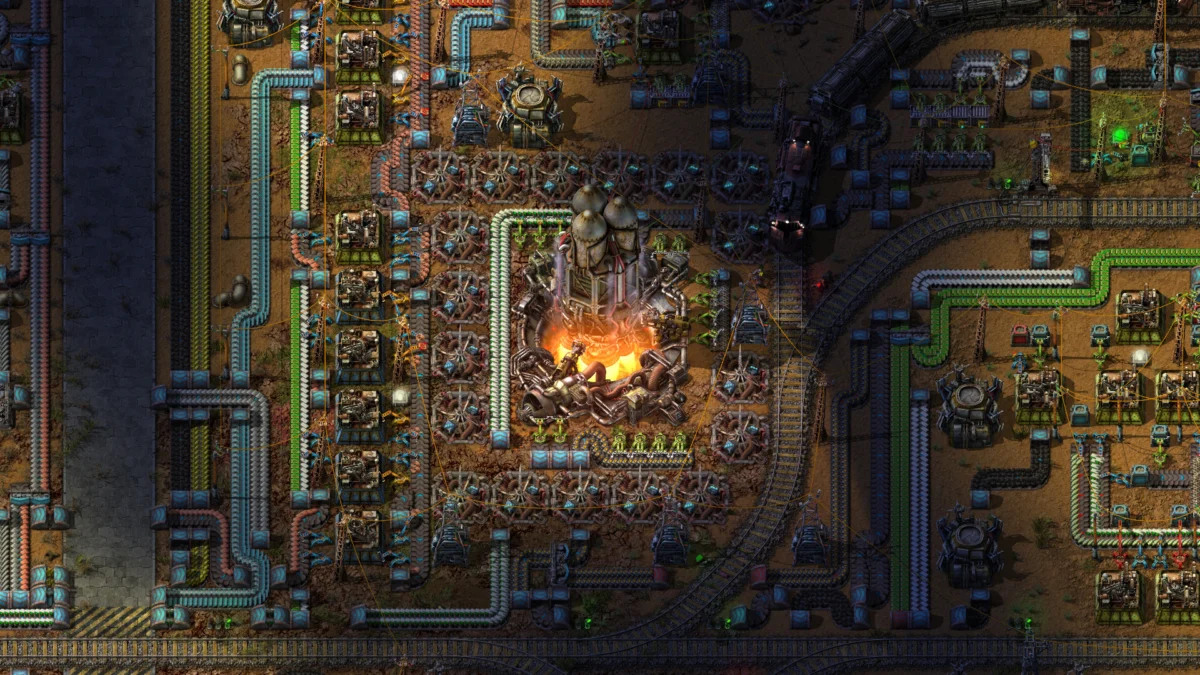
After more than a decade of relentless automation, logistical puzzles, and planetary conquest, the team behind the genre-defining title Factorio is finally signaling a change in direction. Wube Software, the independent development powerhouse, has officially announced that the upcoming 2.1 update will serve as the final major content milestone for the game. As the studio prepares to pivot toward new, unannounced projects, the announcement marks the end of a legendary era in indie gaming, while simultaneously opening a new chapter for one of the industry’s most dedicated developer teams.
The Final Blueprint: What to Expect from Update 2.1
For a game that has thrived on constant iteration and the "just one more hour" addiction loop, the news that Factorio is entering a phase of long-term maintenance carries significant weight. Wube Software clarified in a recent Factorio Friday Facts (FFF #440) blog post that version 2.1 is not intended to be an expansive content dump. Unlike previous updates that introduced vast new systems,, complex planetary biomes, or game-altering technologies, 2.1 will focus on refinement.
The update is set to deliver critical quality-of-life improvements, minor feature additions, necessary bug fixes, and enhanced support for the game’s robust modding community. Wube has explicitly stated that players should not expect new planets, additional enemy types, or further technological tiers.
"We envision 2.1 as our last major update for Factorio, and we will shift the focus onto long-term support," the developers stated. "This includes things like bug fixes, platform compatibility, and modding tools. Beyond that, we feel we’ve reached a natural conclusion for active gameplay development."
This transition is not a "death sentence" for the game, but rather a maturation. By shifting to long-term support, Wube is ensuring that the game remains stable and accessible for years to come, allowing the community to continue building massive, complex factories without the fear of game-breaking updates or technical obsolescence.
A Decade of Automation: The Chronology of Factorio
To understand the magnitude of this announcement, one must look back at the arduous journey of Factorio. The game’s history is a testament to the "early access" model done right, serving as a gold standard for how indie developers can collaborate with their player base to build a masterpiece.
- 2012: The initial alpha build was released to the public. It was a humble, pixelated project that quickly captured the imaginations of strategy and simulation enthusiasts.
- 2014: The team behind the project officially incorporated as Wube Software. This institutionalization allowed for a more structured development process.
- 2016: Factorio launched in Early Access on Steam. It was during this period that the game’s reputation for being "digitally addictive" truly cemented, as thousands of players shared their complex conveyor belt layouts and logistical nightmares online.
- 2020: Following years of intense polish and community feedback, Factorio saw its official 1.0 release. It was hailed as one of the most complete and bug-free titles in the simulation genre.
- Post-2020: The development team continued to expand the game, eventually bringing the title to the Nintendo Switch and the subsequent Switch 2, proving that the game’s intricate mechanics could translate seamlessly to console hardware.
Over these fourteen years, Factorio evolved from a niche experiment into a global phenomenon, boasting over 100,000 overwhelmingly positive reviews on Steam. It has become a staple of PC gaming, frequently cited alongside titles like Minecraft or Terraria as a game that offers an almost infinite amount of replayability.
Data and Impact: Why Factorio Matters
The success of Factorio cannot be overstated. It is a rare example of a game that succeeded without aggressive marketing, relying entirely on the "word of mouth" generated by its deep, rewarding gameplay loop.
The Metrics of Success
- Player Engagement: Factorio is famous for its high "hours played" metric. It is not uncommon to find players with thousands of hours logged, as the game’s modding scene allows for near-infinite customization—from overhaul mods that change the core mechanics to aesthetic mods that allow for incredibly detailed factory design.
- Community-Driven Development: The Factorio Friday Facts blog has been a pillar of the community for years. By maintaining transparent communication, Wube Software fostered a level of trust that is rarely seen between developers and players.
- The "Kovarex" Philosophy: Founder Michal "Kovarex" Kovarik has been a vocal proponent of developers sticking to their vision. In previous interviews, he emphasized that the team’s priority was always the quality of the systems over the speed of production. This philosophy, while resulting in long development cycles, yielded a product that is effectively "future-proof."
The Road Ahead: Wube Software’s Next Steps
With the "Factory" nearing its final state, the burning question remains: what is next for Wube Software? The studio has been characteristically tight-lipped, but they have confirmed that they are actively exploring new projects.

"We have been starting work on projects other than Factorio," the team revealed. "Honestly, there will not be anything to share for a long time, but you might notice some of our team members less active in fixing bugs and working on Factorio as they spend their time on other game prototypes and experiments."
This period of experimentation is vital. For a studio that has spent over a decade focused on a single, massive project, the creative energy pent up within the team is likely immense. To support this growth, Wube has been actively scaling up its workforce, hiring new developers to balance the ongoing support for Factorio with the R&D required for their next intellectual property.
While fans may be anxious to see the next big title, the studio’s track record suggests that they will take their time. Wube has never been a team to rush a release, and given their history of meticulous design, it is safe to assume that their next project will be just as polished and system-heavy as their debut.
Implications for the Industry
The shift in focus at Wube Software serves as a case study for the lifecycle of a successful indie studio. The "end" of Factorio is not a retreat, but a graduation. By deciding to stop adding major features to Factorio, Wube is acknowledging that the game is "done"—a rare admission in an era of "Games as a Service" (GaaS) where titles are often updated indefinitely, sometimes to their own detriment.
This decision protects the integrity of the original design. By avoiding "feature creep" in the final stages, Factorio avoids becoming bloated or convoluted. It remains a cohesive, unified experience that new players can pick up and enjoy for years to come without feeling overwhelmed by a decade of conflicting design iterations.
For the wider industry, Wube’s approach sends a clear message: successful games do not need to be supported forever to be considered a success. Sometimes, the most professional decision a developer can make is to declare a project complete, trust that it is ready for the world, and move on to the next challenge.
Conclusion
As the sun sets on the era of active Factorio development, the legacy of the game is already secured. It has influenced countless other games in the factory-building and simulation genres and has set a benchmark for developer-community interaction that few other studios have been able to replicate.
While players may mourn the end of new content, they can take solace in the fact that the team behind the game is not disappearing. Instead, they are evolving, taking the lessons learned from the vast, automated worlds of Factorio and applying them to whatever comes next. Whether it be another simulation titan or something entirely different, the gaming world will undoubtedly be watching to see what Wube Software builds next. For now, the factories will continue to run, the logistics will remain efficient, and the community will continue to play—now, with the knowledge that the masterpiece they are playing is officially complete.


 Asro
Asro
 Muslim