Layla Zulfa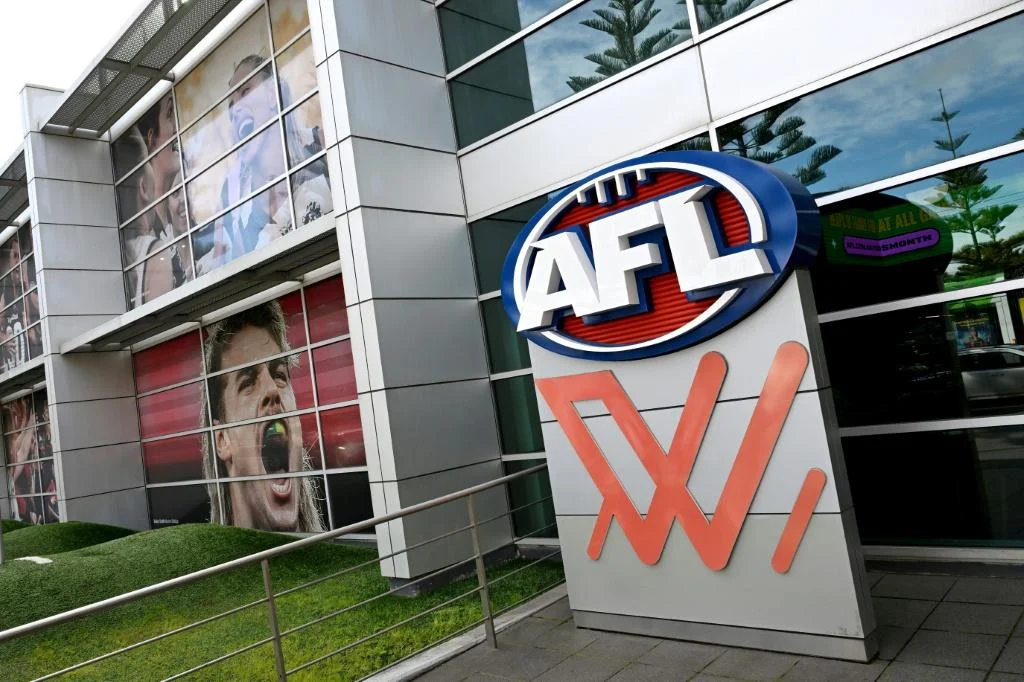
Introduction: A Persistent Shadow Over the Game
Australian Rules Football—the sport that arguably defines the cultural heartbeat of the nation—is once again grappling with its conscience. On Saturday, league officials and club leaders issued a unified, unequivocal condemnation following a barrage of racist and obscene social media messages directed at Hawthorn forward Mabior Chol.
The incident, which occurred in the immediate aftermath of Hawthorn’s defeat to the Western Bulldogs on Friday night, serves as a grim reminder that despite decades of policy reform and public awareness campaigns, the scourge of racial hatred remains deeply embedded in the digital fringes of the sport. As the Australian Football League (AFL) launches a formal investigation into the abuse, the incident has reignited a national conversation about accountability, the dehumanization of athletes in the digital age, and the structural challenges of policing online behavior.
The Incident: A Digital Violation
The controversy erupted when Mabior Chol, a Sudanese-born athlete who has become a prominent figure in the AFL, took to his Instagram account to expose the vitriol he received. Rather than suffering in silence, Chol shared a screenshot of the direct messages, which were saturated with racial slurs and derogatory comments.
"Don’t be like this guy," Chol wrote in the caption accompanying the screenshot. By choosing to shine a light on the abuse, Chol effectively shifted the narrative from victimhood to public exposure, forcing his followers and the wider football community to confront the reality of the harassment he faces.
This is not the first time Chol has been targeted. In 2022, while playing for the Gold Coast Suns, he was subjected to similar racial abuse, highlighting a disturbing pattern where his professional performance on the field is met with bigoted attacks off it. The repetition of these incidents suggests that for some individuals, the anonymity of social media acts as a shield for unchecked prejudice.
Chronology of the Abuse and Institutional Response
The sequence of events underscores the rapid escalation from a high-stakes sporting match to a toxic online environment:
- Friday Night, Melbourne: Hawthorn suffers a competitive loss to the Western Bulldogs at a major stadium.
- Late Friday/Early Saturday: Shortly after the conclusion of the match, Chol receives the targeted messages via Instagram.
- Saturday Morning: Chol publishes the screenshot, documenting the abuse and tagging the perpetrator.
- Saturday Midday: Hawthorn Football Club and the AFL issue official statements acknowledging the incident and confirming an immediate investigation.
- Saturday Afternoon: The AFL Integrity Unit commences the process of identifying the perpetrator and working with legal and platform authorities to ensure accountability.
The swiftness of the institutional response marks a shift in how the AFL handles such matters compared to decades past. However, the recurring nature of these incidents continues to test the league’s resolve and the efficacy of its "zero-tolerance" policy.
Official Responses: A Unified Front
The statements issued by league and club leadership were characterized by a tone of exhaustion and firm resolve. AFL Chief Executive Andrew Dillon led the condemnation, framing the incident not just as an attack on a player, but as an affront to the values of the game.
"Racism has no place anywhere, anytime—not in our game, not in the community and not online," Dillon stated. "Players, or anyone, should never be subjected to this sort of abuse. Mabior’s courage to call this out should be commended, and our immediate focus is supporting him and the Hawthorn Football Club."
The Hawthorn Football Club, led by CEO Ash Klein, echoed these sentiments, emphasizing the club’s role as a protective buffer for its players. "It is simply not acceptable," Klein said. "If you are the sort of person who thinks it’s OK to make a comment or send a message like this, we don’t want you as part of our game."
These responses are designed to signal that the AFL is moving beyond mere lip service. By explicitly stating that such individuals are not welcome in the community of fans, the leadership is attempting to draw a hard boundary between the "authentic" supporter and the abusive troll.
The Historical Context: A Long Shadow of Prejudice
To understand the gravity of the abuse against Mabior Chol, one must look at the historical landscape of the AFL. The sport has long been a mirror for Australia’s broader racial tensions, particularly regarding the treatment of Aboriginal and Torres Strait Islander players.
From the iconic stand taken by Nicky Winmar in 1993—when he pointed to his skin in defiance of racist taunts—to the more recent experiences of players like Adam Goodes, who was driven to early retirement due to systemic racial vilification, the history of the game is marked by painful chapters.
Evolution of Policy
The AFL began to proactively tackle this issue in the 1990s, recognizing that its reputation and the safety of its players were at stake. The landmark policy adopted by the league made it a formal offense for players, officials, or fans to insult someone based on their race, religion, ethnicity, color, nationality, or background.
Despite these regulations, the transition to the digital age has outpaced traditional enforcement methods. While stadium security can physically eject a fan for racist behavior, identifying and punishing an anonymous Instagram user is a significantly more complex task that requires the cooperation of multi-national social media corporations and law enforcement agencies.
Supporting Data: The Persistence of Hate
The data surrounding racial abuse in the AFL paints a sobering picture. While the league has introduced educational programs and strengthened its sanctions, the frequency of incidents remains stubbornly high.
In 2023, the AFL took a historic step by banning nine fans for life for engaging in racial abuse. This statistic is often cited by the league as proof that they are "taking action," yet critics argue it also highlights a failure to prevent the behavior in the first place. The persistence of these incidents suggests that for every fan banned, there is a new wave of vitriol generated by the intersection of tribal sporting passion and anonymous internet access.
Furthermore, the psychological toll on players cannot be quantified by league statistics. The constant need to "be brave" and "call it out" places an undue burden on the victims of the abuse, who are forced to manage their mental health while simultaneously fighting a public relations battle against bigotry.
Implications: Where Does the AFL Go From Here?
The incident involving Mabior Chol raises critical questions about the future of professional sport in an era of ubiquitous social media. If the AFL is to truly eradicate racism, it must move beyond investigative measures and toward structural change.
1. Platform Accountability
The AFL is increasingly putting pressure on social media platforms like Meta (the owner of Instagram) to improve their moderation tools. While the league can ban a user from attending matches, they have little control over the digital platforms where the primary abuse occurs. The implication is that the league may need to pursue more aggressive legal partnerships with tech giants to ensure that perpetrators are de-platformed and held accountable under civil law.
2. Supporting the Human Element
There is a growing consensus that the "support" offered to players must be more than a press release. This includes robust, long-term mental health resources for players like Chol who have been targeted multiple times. It also involves changing the culture within the fan base to ensure that bystanders do not remain silent when they witness abuse.
3. The Limits of "Zero Tolerance"
The term "zero tolerance" is frequently used, but its application remains inconsistent. If a fan can be banned for life, why does the behavior continue to flourish? The implication is that the culture of the sport—while vastly improved from the 1990s—still permits an environment where race is weaponized during periods of high emotional stress, such as a team loss.
Conclusion: A Test of Character for the League
The treatment of Mabior Chol is not just a story about a Hawthorn player; it is a story about the soul of Australian Rules Football. As the league investigates this latest instance of "vile" abuse, the stakes remain incredibly high. The AFL stands at a crossroads: it can continue to play a game of "whack-a-mole," responding to individual incidents with bans and statements, or it can fundamentally reshape its relationship with its digital audience.
For Chol, the support of his club and the league is a necessary immediate step. However, for the sport at large, the true measure of success will not be the swiftness of the investigation, but the day when such headlines are a thing of the past. Until then, the shadow of racism will continue to hang over the stadium, threatening to dim the brilliance of the game that so many Australians hold dear. The challenge for the AFL is to prove that its commitment to equality is stronger than the hate that seeks to divide it.


 Neng Nana
 Asro
Asro