Dwi Wanna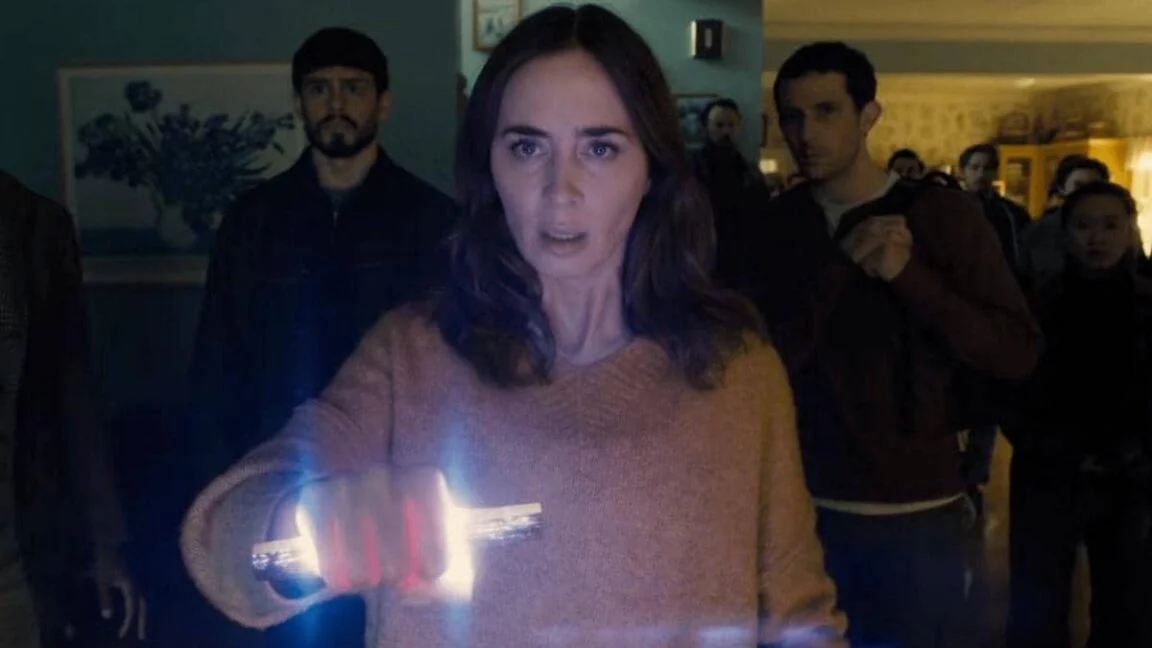
The cinematic landscape has officially shifted into its high-octane summer mode with the long-awaited arrival of Disclosure Day, the latest masterwork from legendary director Steven Spielberg. Marking a return to the thematic DNA that defined his early career—specifically the existential unease of humanity living alongside extraterrestrial presences—the film has already ignited global discourse. While critics argue that the film treads familiar ground within the well-worn subgenre of alien-encounter cinema, Disclosure Day remains a triumph of pacing and performance, anchored by a luminous, career-defining turn from Emily Blunt.
As the film rolls out globally, it stands as a testament to Spielberg’s enduring ability to weave intricate, multi-layered narratives that oscillate between claustrophobic political tension and expansive, cosmic wonder.
The Narrative Architecture: A Two-Act Convergence
(Warning: The following contains minor plot details, though major narrative reveals have been omitted.)
The structure of Disclosure Day is a study in narrative duality. The first act operates as a taut, 1970s-style political thriller, drawing clear stylistic parallels to paranoid classics like Alan J. Pakula’s The Parallax View. The story begins with Daniel, a brilliant cybersecurity specialist portrayed by Josh O’Connor, who executes a daring theft of classified materials from Wardex Corporation. Wardex, a shadow-government entity operating under the iron fist of Colin Firth’s Noah Scanlon, represents the bureaucratic machinery designed to bury the truth of extraterrestrial influence at any cost.
The tension escalates rapidly when Scanlon utilizes Daniel’s partner, Jane (Eve Hewson), as collateral to force a confrontation. The resulting botched exchange and subsequent flight set the stage for a high-stakes manhunt, establishing the film’s breakneck kinetic energy.
However, the film’s most jarring—and effective—pivot occurs through the character of Margaret, a Kansas City meteorologist played by Emily Blunt. The film shifts from the halls of power to the mundane suburbs, where Margaret experiences an inexplicable physiological transformation. Following a surreal encounter with a cardinal, Margaret discovers she has gained the ability to interpret human thought and speak languages she has never studied. The film’s centerpiece, a viral moment teased extensively in marketing, occurs during a live weather broadcast when Margaret begins speaking an alien tongue, effectively broadcasting a cosmic secret to the world.
Chronology of the Conflict
The narrative threads of the film follow a precise, escalating timeline that forces the disparate protagonists into an inevitable collision:
- The Infiltration: Daniel breaches Wardex, securing alien-derived data that suggests an eighty-year history of clandestine extraterrestrial interaction on Earth.
- The Extraction: The botched hostage situation with Jane triggers a nationwide manhunt, positioning Daniel as a rogue traitor in the eyes of the public and the state.
- The Awakening: Margaret’s transformation in Kansas City acts as a catalyst, alerting both Wardex and its rogue internal elements to the existence of a new, potentially dangerous variable.
- The Internal Schism: Hugo Wakefield (Colman Domingo), a high-ranking Wardex official, reveals himself as the true architect of the initial theft. His mission is to force full, global disclosure of the materials Daniel secured.
- The Convergence: The final act, characterized by a sudden transition from gritty thriller to mystical exploration, sees the survivors racing to unite before Scanlon’s forces can neutralize them.
Supporting Data and Production Context
Behind the scenes, Disclosure Day has been a lightning rod for technical discourse. Spielberg’s choice to utilize heavy CGI for animal manifestations has drawn polarized reactions from industry analysts and audience members alike. However, viewed through the lens of the film’s thematic ambition, the aesthetic choice gains clarity.
"The animals are not meant to look like biology," one production insider noted. "They are meant to look like artifacts of another reality." By rendering these creatures as uncanny, fairytale-esque entities, Spielberg underscores the dissonance between our "gritty, real-world" environment and the intrusion of something fundamentally alien.
The film’s budgetary footprint, while undisclosed by the studio, is clearly massive, reflecting in the seamless integration of practical location work—reminiscent of Spielberg’s 1980s aesthetic—and state-of-the-art digital effects. The film’s pacing is bolstered by an editorial rhythm that refuses to let the viewer settle, keeping the audience in a state of perpetual anticipation.
Official Responses and Industry Reception
The box office performance on the opening weekend has exceeded projections, with industry analysts citing a "Spielberg Effect" that continues to draw multi-generational audiences.
"What Spielberg has accomplished here is the revitalization of a dormant genre," says Sarah Jenkins, Lead Analyst at BoxOffice Media. "While the plot follows the classic ‘government cover-up’ trajectory, the emotional resonance of Blunt’s performance elevates the film from a standard sci-fi flick to a human drama about the terror of knowing the unknown."
The studio, in a rare statement, emphasized the film’s role in modern discourse: "We wanted to explore what ‘truth’ looks like in an era of information overload. Disclosure Day is a mirror to our own anxieties about what we are being told, and what is being hidden from us."
Colman Domingo, in a recent press junket, spoke to the complexity of his character, Hugo: "Hugo isn’t a villain in the traditional sense. He represents the desperate, almost radical belief that humanity cannot evolve unless it is confronted with the absolute, terrifying truth of our place in the universe."
Societal Implications: The ‘Disclosure’ Trope
Beyond the screen, Disclosure Day taps into a profound cultural zeitgeist. The concept of "Disclosure"—the theory that global governments are hiding evidence of alien life—has moved from the fringes of conspiracy theory to the halls of mainstream political discussion. By framing the narrative around a cybersecurity breach, Spielberg mirrors contemporary anxieties regarding data privacy, state surveillance, and the democratization of classified information.
The film serves as a cautionary tale about the cost of transparency. If the events of the film are a metaphorical surrogate for current geopolitical realities, the message is clear: the truth is rarely a simple, liberating force. It is a volatile substance that can dismantle the very structures of society.
The "vibe shift" in the film’s final 30 minutes is the most discussed element of the production. Critics are divided on whether the transition to the mystical undermines the political thriller setup or if it serves as the only logical conclusion for a narrative of this scale. By forcing the characters to move beyond human politics into a realm of cosmic abstraction, Spielberg suggests that the alien experience is, by definition, beyond our current linguistic and sociological frameworks.
Conclusion: A Master at the Helm
Disclosure Day is not the revolutionary paradigm shift that Close Encounters of the Third Kind was in 1977, nor does it attempt to be. Instead, it is a refined, highly polished distillation of Spielberg’s lifelong obsession with the "Other."
The film succeeds because it manages to balance two competing desires: the audience’s hunger for the high-octane excitement of a chase film and their deeper, more profound need to feel a sense of awe. In an era of franchise fatigue, Disclosure Day offers a standalone vision—a singular, cohesive, and deeply entertaining piece of storytelling that reminds us why we continue to look to the stars with a mixture of hope and paralyzing dread.
As the summer season progresses, it is clear that Disclosure Day will remain the benchmark against which all other sci-fi entries are measured. Whether it initiates a new era of "mystical sci-fi" or remains a unique outlier in Spielberg’s filmography, one thing is certain: the conversation surrounding our place in the universe has officially been reopened.


 Rifan Muazin
 Nila Kartika Wati