Reynand Wu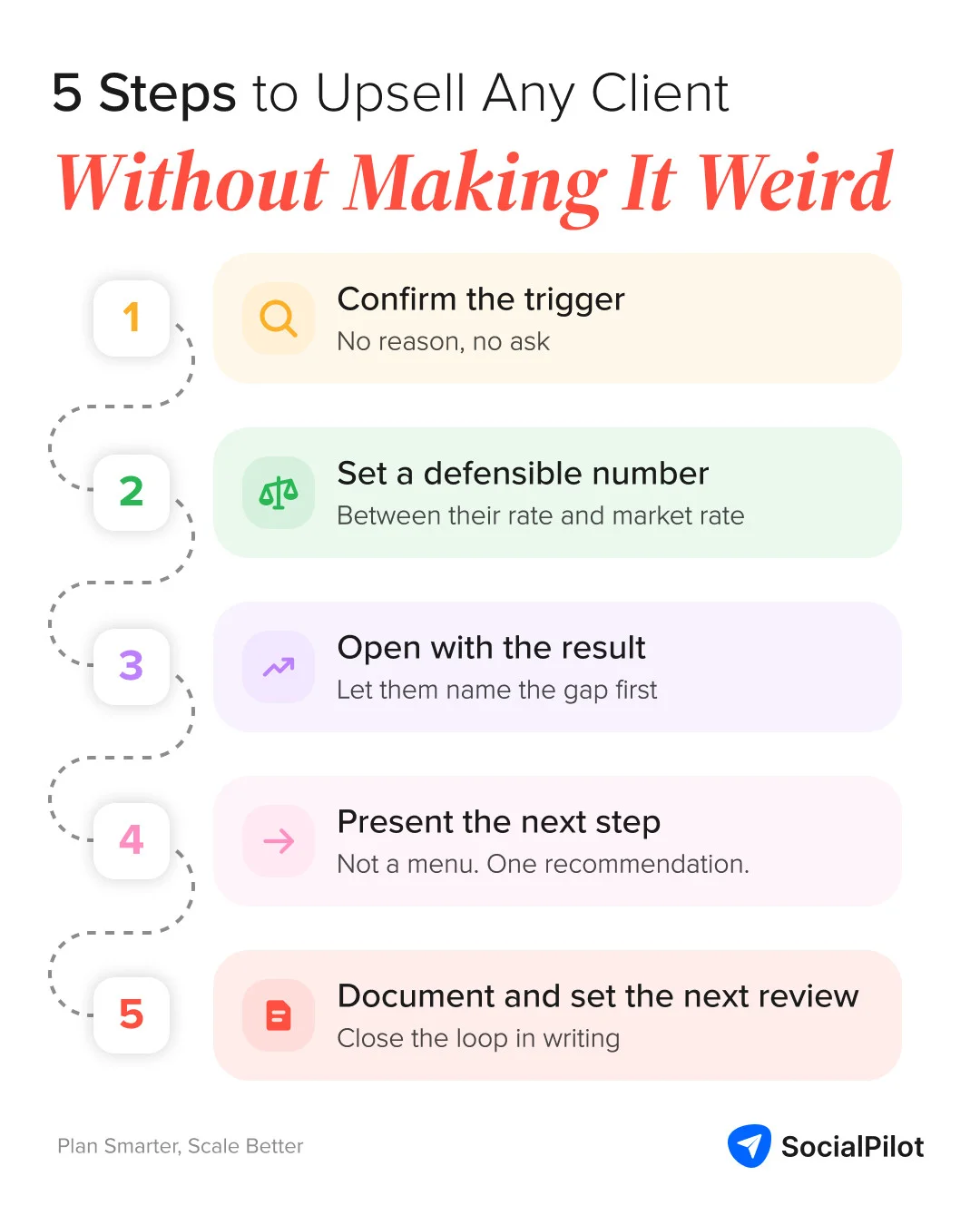
You’ve successfully guided a client’s Instagram account from a modest 4,000 followers to a robust 22,000 in just eight months. Engagement metrics are climbing, the client is satisfied, and you are sitting on a draft email proposing a scope expansion. Yet, the cursor blinks on a blank page. You hesitate, paralyzed by the fear that asking for more money will transform you from a trusted partner into a "cash grab" in the eyes of your client.
This anxiety is common, but it is also a silent profit-killer. The problem isn’t the request itself; it is the lack of a systemic, data-driven approach to growth. For many freelancers and agency owners, undercharging isn’t a strategy—it’s a slow-motion financial leak that compounds over time.
The Psychology of the "Ask": Why It Feels Risky
The fear of being perceived as greedy is often more paralyzing than the fear of rejection. Many freelancers worry that by requesting a budget increase, they are signaling that their previous work was insufficient or that they are prioritizing their bottom line over the client’s success.

This fear is, in part, a reaction to an industry saturated with over-promising competitors who have trained clients to be skeptical of sudden price hikes. However, the solution is not to remain silent. The solution is to anchor your request in external, observable reality. When you move from "I want more money" to "you now need more to reach the next milestone," the power dynamic shifts entirely.
The Trap of Quiet Undercharging
Failing to formalize scope increases—or neglecting to raise rates as your expertise grows—results in "scope creep." Over time, your effective hourly rate collapses. If you are absorbing extra requests without formalizing them, you aren’t being "nice"; you are creating a situation where a future correction will feel like an aggressive, jarring hike. By doing the math on your actual hours, software overhead, and tax obligations, you will likely find that your current retainers are significantly less profitable than you initially thought.
Distinguishing Between Growth Strategies
One of the most common mistakes in agency management is treating all requests for additional revenue as a single, blurry category. To minimize friction, you must distinguish between an upsell, a scope expansion, and a rate renegotiation.
1. Upselling: Adding New Services
An upsell is an additive move. You are proposing something the client does not yet have—such as adding paid social advertising to an organic-only contract or introducing short-form video production. Because this provides a new service, the friction is naturally lower. The justification must be opportunity-based: "Your Instagram is performing well, and we’ve identified a significant gap in your sector on TikTok. Here is how we can capture that audience."
2. Scope Expansion: Formalizing the Invisible
Scope expansion happens when you formalize work that is already being performed. This often occurs when a client keeps adding "one more thing" to your plate. The longer you absorb these requests for free, the harder it becomes to formalize them. The key is to track these requests as data points and present them as a package: "We’ve been handling these additional tasks for three months. To maintain quality, let’s formalize this into a new tier."
3. Rate Renegotiation: Repricing Existing Deliverables
This is the most sensitive conversation because the client is paying more for the same output. This move requires a strong, defensible trigger, such as a contract renewal, a tenure milestone (e.g., one year of service), or documented evidence that your current rates are below market standard. Never disguise a rate hike as an upsell; it erodes trust the moment the client discovers the truth.

The 7 Triggers: Identifying When the Client is Ready
Timing is everything. A request for more budget should never be a calendar guess. It should be a response to a specific, observable trigger.
1. The Performance Spike
When you hit a major goal—such as a specific follower count or a viral campaign—the momentum is undeniable. Use this energy to propose scaling. "We’ve hit our target; here is how we can double down on this success."
2. The Milestone Trigger
Campaign wrap-ups or quarterly reviews offer natural, non-confrontational pauses in the workflow. These moments are structurally designed for the "what’s next" conversation.

3. The Platform Gap Trigger
When your client’s competitors move to a new platform, the urgency comes from the market, not from you. You are simply the messenger identifying a threat to their competitive advantage.
4. The Competitor Move Trigger
If a competitor launches a new content format or increases their ad spend, it provides a blameless, time-sensitive reason to expand the scope. You are reacting to the landscape, not your own financial desires.
5. The Algorithm Shift Trigger
Platform changes often render old strategies obsolete. If reach has dropped due to an algorithm update, the gap between the old strategy and the new requirements is a natural opening for a conversation about increasing budget to account for the necessary shift in content production.

6. The Capacity Trigger
This is the formalization of scope creep. By documenting the extra requests you’ve handled, you present the client with the reality of their own requirements.
7. The Renewal/Tenure Trigger
Annual renewals or major anniversaries are the most appropriate times to adjust pricing. It is a clean break in the timeline where a rate review is expected and professional.
Structuring the Conversation: The Reporting Framework
Many agencies waste their most valuable asset: the monthly analytics report. A report should not be a dead end; it should be an opening.

The Three-Section Report Model
- Results Delivered: The objective data on what happened (growth, engagement, conversions).
- What’s Now Possible: The interpretation of the data. What has been unlocked by these results? What new "ceiling" have you reached?
- Recommended Next Step: A single, actionable recommendation that bridges the gap between where they are and where they want to be.
By framing your request as a logical next step based on the data the client already trusts, you remove the "cash grab" stigma. You aren’t pitching; you are providing professional guidance.
A Step-by-Step System for Implementation
To make this process repeatable and stress-free, follow this five-step sequence:
- Confirm the Value Link: Before reaching out, write one sentence: "Because we achieved [Result], the client is now positioned to [Opportunity], and [New Service/Rate] is what gets them there." If you can’t write it, don’t send it.
- Choose Your Move: Decide if this is an upsell, scope expansion, or rate change. Set a price that anchors between your current rate and the market rate to ensure fairness.
- Qualify Before You Pitch: Restate the win, then ask: "We hit our goal this quarter. Before I suggest next steps, I want to ask: what does this change for you on the business side? Do you want to press on it, or is the priority elsewhere?"
- Present the Logical Next Step: Offer one recommendation, not a menu. Give them permission to say "not now," which keeps the door open for the future.
- Document and Review: Update your internal scope documents and schedule the next check-in. Consistency here prevents upsell windows from closing unnoticed.
Implications for Agency Health
The agency-specific failure mode is the belief that "results sell themselves." They do not. Without an empowered account manager who is trained to make the explicit ask, high-performing accounts often stagnate.

By integrating these conversations into your standard operating procedures, you move from being a vendor—who is easily replaced—to a partner who actively manages the client’s growth. In a crowded digital market, the agencies that survive and thrive are those that view their own growth as an extension of their client’s success. Remember, the ask was never the problem; the lack of a system was. Start building your system today, and watch your agency’s stability transform.


 Nana
Nana
 Jia Lissa