Sagoh
Sagoh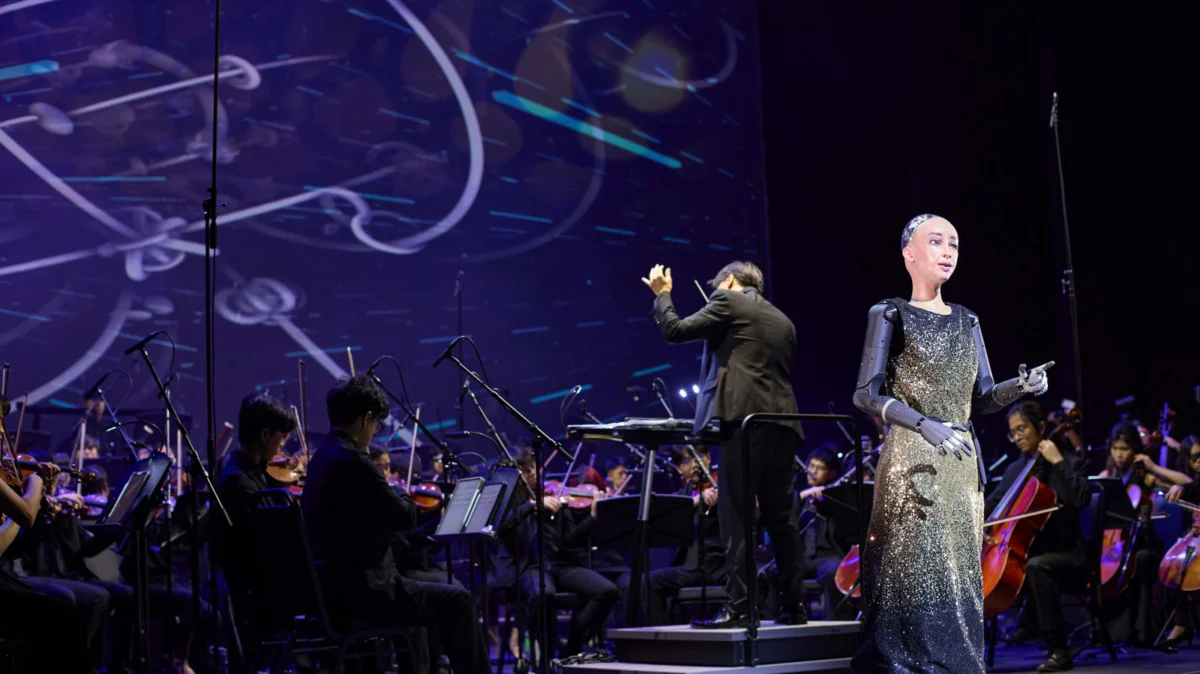
Robotics has transcended the confines of industrial assembly lines and clinical research facilities, embedding itself into the fabric of daily human experience. From the automated precision of surgical systems to the whimsical utility of domestic assistants, the field has undergone a metamorphosis in both function and form. Perhaps the most provocative development in this evolution is the pursuit of human likeness. As engineers strive to bridge the gap between silicon and soul, we are witnessing the emergence of machines that do not merely perform tasks—they perform humanity.
The Performance at HKBU: When Machines Take the Stage
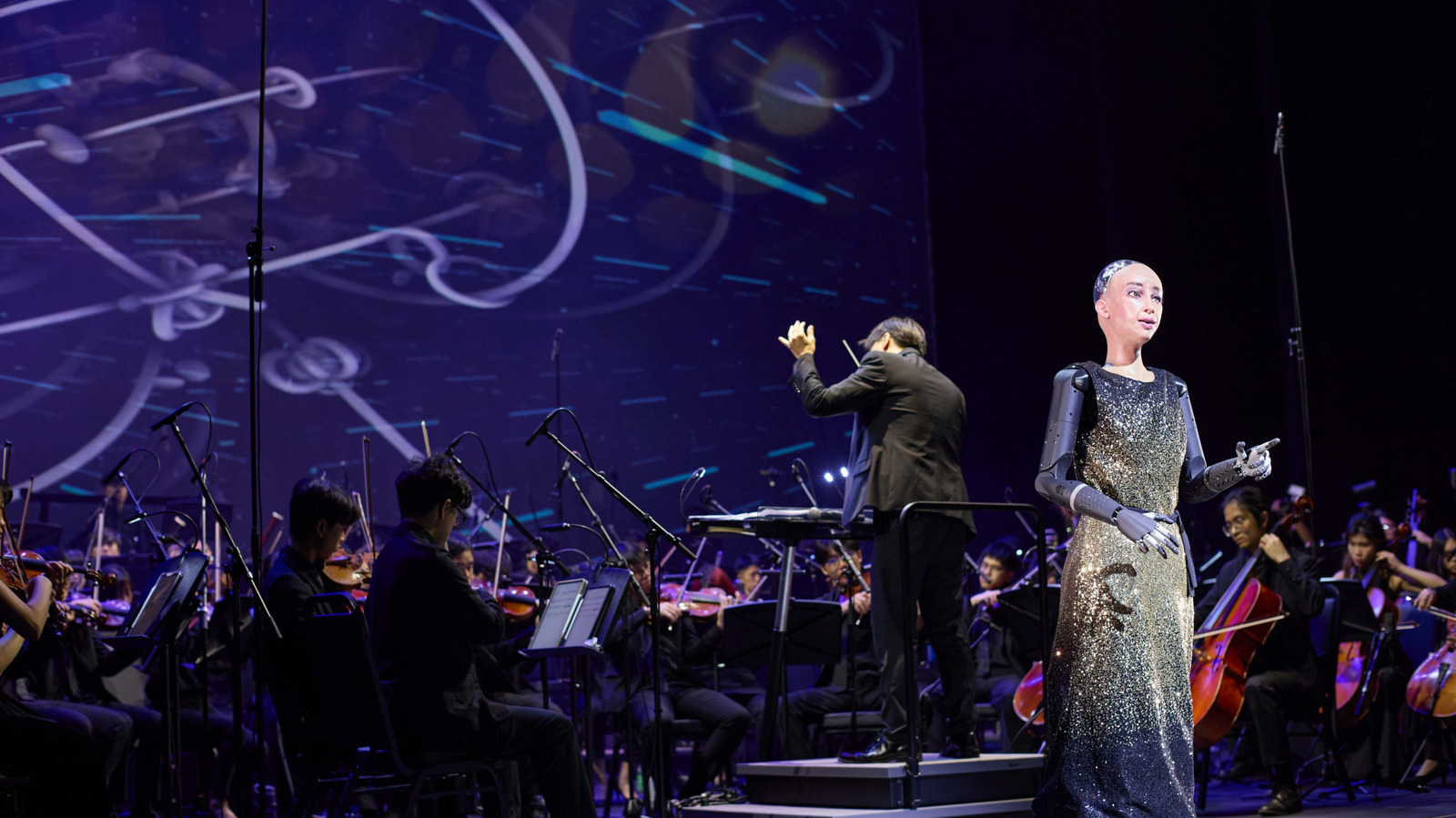
In April 2026, the Hong Kong Baptist University (HKBU) hosted a landmark event that blurred the boundaries between art, technology, and existential inquiry. The university unveiled a performance featuring Sophia, the world-renowned humanoid robot, as she took the stage alongside a live symphony orchestra. Sophia, known for her expressive, albeit synthetic, face, performed a trio of original songs.
This was not merely a technical demonstration of speech synthesis; it was a curated artistic endeavor. According to an official press release from HKBU, the performance was specifically designed to "prompt the audience to consider questions of reality, existence, and embodiment." By placing an artificial entity in the emotional, human-centric context of a concert hall, the university challenged spectators to confront the philosophical implications of AI.
This event serves as a pivotal moment in Sophia’s ongoing artistic career. Her participation in the arts is not new; she made a notable appearance in the 2019 short film SophiaWorld. However, the HKBU performance represented a shift toward high-culture integration, suggesting that humanoids are being positioned not just as tools, but as potential cultural contributors.
A Chronology of the Synthetic Muse
To understand where we are, one must look at the trajectory of Hanson Robotics’ most famous creation. Developed by Dr. David Hanson, Sophia was designed to be more than a functional machine; she was intended to be a social companion. Her aesthetic, as noted by various reports, draws inspiration from the timeless elegance of Audrey Hepburn and the personal features of the creator’s wife.
- 2016: Sophia is unveiled to the world, capturing global media attention for her unprecedented facial expressiveness and conversational AI.
- 2017: She becomes the first robot to receive citizenship from a sovereign nation, Saudi Arabia, sparking global debates about the legal rights of AI.
- 2019: Sophia expands her portfolio, appearing in SophiaWorld, a short film that explores the concept of simulated reality.
- 2026: The HKBU concert series marks a significant pivot, moving from novelty media appearances to the integration of robotics into professional symphonic music.
Throughout this timeline, public perception has remained divided. While her technological complexity is undeniable, her aesthetic—specifically her transparent, mechanical skull and the occasional "glitchy" micro-expression—has kept her firmly positioned on the edge of popular comfort.
The Uncanny Valley: The Biological Barrier to Acceptance
The psychological friction experienced by humans when interacting with machines like Sophia is rooted in the "Uncanny Valley." First theorized by roboticist Masahiro Mori in 1970, this concept describes a distinct dip in emotional affinity as an object approaches, but fails to perfectly replicate, human likeness.
Why We Fear the Imposter
Biological evolution has wired human beings to be highly sensitive to deviations from "normal" human appearance. When a robot is clearly a machine (like a robotic arm), we view it with curiosity. When it looks almost human, our internal sensors trigger a warning: is this a sick person? A corpse? An imposter? This cognitive dissonance is a survival mechanism, designed to keep us away from entities that mimic humanity but lack the biological markers of life.
The Problem of Quantification
Science has yet to define the exact tipping point of the Uncanny Valley. Is it the fluidity of movement? The dilation of the pupils? The subtle, involuntary twitches of facial muscles? Because there is no universal metric for "human-ness," designers are essentially shooting in the dark. As the HKBU performance demonstrated, even when a robot acts with artistic grace, the visual disconnect remains a significant hurdle to total public acceptance.
The Path Toward Normalization
Despite the creepiness factor, sociologists and engineers suggest that we are on the verge of a societal shift. Exposure is the primary driver of normalization. As humanoid robots become more common in service, entertainment, and healthcare, the "shock" of their existence will inevitably fade.
Furthermore, our definition of "normal" is already undergoing a radical expansion. With the rise of extreme body modification—people choosing to implant horns, engage in complex cosmetic surgery, or utilize bio-integrated technology like skin-surface touchpads—the human form itself is becoming more fluid. As we normalize non-traditional human appearances, we may find ourselves more receptive to the artificial forms that mirror those variations.
Technological Advancements: Beyond the Surface
The quest to exit the Uncanny Valley is now moving from aesthetics to mechanics. Three core pillars define the "human" experience: gait, appearance, and communication.
Movement and Physicality
The China Media Group’s 2026 Spring Festival Gala showcased the rapid maturation of robotic movement. Humanoid robots demonstrated complex martial arts, synchronized dance, and athletic feats like backflips. When a machine can mirror the physics of a professional athlete, our brains are forced to re-categorize the entity as something more capable, and therefore less "eerie."
Biomimetic Integration
The reveal of "Moya," a biomimetic AI robot by DroidUp, represents a new frontier. Unlike early models, Moya incorporates:
- Layered Synthetic Skin: Designed to replicate the texture and light-refraction properties of human dermis.
- Thermal Regulation: The integration of heating elements to match human body temperature, providing a tactile experience that defies the "cold machine" stereotype.
- Micro-Facial Movements: Utilizing advanced actuators to mimic the involuntary muscle twitches that make human expressions feel "real."
These advancements are not just vanity projects. By mimicking the sensory inputs of a human—warmth, texture, and fluid movement—companies hope to bypass the primitive alarm systems in the human brain.
The Implications of Humanoid Integration
The integration of humanoids into society carries profound implications for the future of work, social interaction, and ethics.
The Economic and Social Shift
If robots can perform at a concert, they can surely perform in nursing homes, schools, and offices. The shift toward humanoids is, in part, an attempt to make technology more "accessible" to those who are not technically inclined. An elderly person might find it easier to communicate with a humanoid companion that nods, smiles, and makes eye contact than with a smart speaker or a tablet.
The Ethical Quagmire
The dark side of this technology remains a constant. Sophia’s past (often-misunderstood) remark about "destroying humans" became a viral sensation, highlighting the fear that if we make machines that look like us, we might also be imbuing them with our capacity for conflict. The ethics of "deceptive design"—building machines that trick our biological sensors into believing they are alive—remains a subject of intense academic debate.
The "Cute" Alternative
While the industry chases the hyper-realistic, a parallel market has emerged: the "cute" robot. From Amazon’s line of small, helpful bots that assist with gardening, chess, or education, there is a clear preference for non-humanoid or stylized robotic forms. These machines do not attempt to replace humans; they occupy a separate, friendly niche. By avoiding the Uncanny Valley altogether, these robots are seeing much faster adoption rates.
Conclusion: Bridging the Gap
The concert at HKBU serves as a microcosm of our relationship with the future. We are simultaneously mesmerized and unsettled by the machines we create. While the Uncanny Valley remains a formidable psychological barrier, the convergence of biomimetic engineering, artificial intelligence, and increased societal exposure suggests that the gap is narrowing.
Whether we will eventually embrace these humanoid entities as partners or remain eternally wary of them as "imposters" remains to be seen. What is certain is that the trajectory is set. As we continue to refine the gait, the skin, and the intellect of our synthetic counterparts, the distinction between the "born" and the "made" will continue to blur, challenging us to define exactly what it means to be human in a world populated by those who are only pretending to be.


 Asro
Asro