Nana
Nana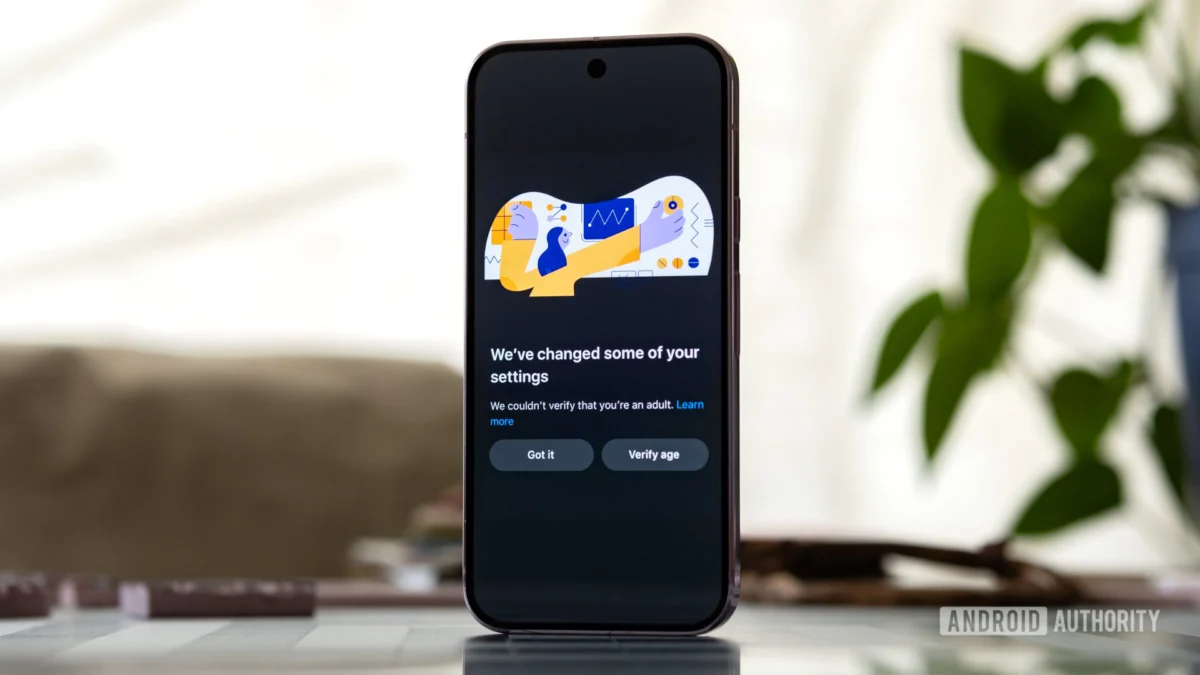
In a sweeping legislative move that signals a paradigm shift in how the United Kingdom regulates the digital landscape, Prime Minister Keir Starmer has announced a national initiative to restrict social media access for children under the age of 16. The proposed policy, set to be introduced to Parliament by the end of this year, aims to curtail the influence of platforms like TikTok, Instagram, Facebook, and YouTube on the developmental years of British youth.
The policy, which draws direct inspiration from Australia’s stringent age-verification framework, mandates that social media companies take "reasonable steps" to prevent minors from accessing their services. Failure to comply with these requirements could result in significant financial penalties, effectively forcing tech giants to pivot from a growth-at-all-costs model to a compliance-heavy framework.
Main Facts: The Scope of the Ban
The proposed legislation is not merely a recommendation; it is a regulatory mandate that shifts the burden of proof from parents to the platforms themselves.
- Target Demographic: Any individual under the age of 16.
- Affected Platforms: The scope is broad, encompassing major social networking sites, video-sharing platforms, and instant messaging services, including but not limited to X (formerly Twitter), Instagram, TikTok, YouTube, and Facebook.
- Enforcement Mechanism: Platforms are required to implement robust age-verification systems. In practice, this is expected to mirror the Australian model, which often necessitates either biometric facial scanning or the submission of government-issued identification documents to verify a user’s age.
- Timeline: The government intends to table the legislation before the close of 2024, with the expectation that enforcement will begin in the spring of 2025.
- Penalties: Tech corporations that fail to implement "reasonable" barriers to entry for under-16s face heavy fines, the scale of which will be determined by the specific regulatory body overseeing the transition.
Chronology of the Policy Shift
The road to this legislative milestone has been marked by mounting public concern and political maneuvering.
The Australian Precedent (2023–2024)
The UK’s strategy is explicitly modeled after the legislation passed in Australia last year. Australia became the global pioneer in implementing a federal ban on social media for children under 16, framing the issue as a public health crisis rather than a mere parental concern. The success and controversies of the Australian model have provided a "beta test" for the UK government, allowing them to anticipate the technical and social hurdles of such a ban.
Growing Public Pressure (Early 2024)
Throughout 2024, the UK government engaged in extensive polling and focus groups. Data collected by the government indicated that nine out of ten parents were in favor of a stricter ban, citing concerns over mental health, cyberbullying, and exposure to harmful content.
The Formal Announcement (November 2025)
In a coordinated effort to control the narrative, Prime Minister Keir Starmer utilized multiple channels—the official government portal, a video address on his YouTube channel, and a deep-dive analysis on his Substack—to announce the policy. This multi-platform approach underscores the irony of using the very platforms being regulated to announce the ban.
Supporting Data and Societal Rationale
The government’s decision is underpinned by a combination of public health data and a philosophical commitment to reclaiming "childhood."
The Mental Health Nexus
Studies have consistently suggested a correlation between prolonged social media exposure and increased rates of anxiety, depression, and body dysmorphia among adolescents. By restricting access, the government hopes to curb the "addictive" design patterns—such as infinite scrolling and algorithmically curated feeds—that keep younger users glued to their screens.
The "Traditional Childhood" Argument
Prime Minister Starmer has framed this not just as a safety measure, but as a cultural restoration. In his recent commentary, he emphasized the importance of children using their formative years in "a completely different, dare I say it, more traditional way." The government’s narrative suggests that by removing the digital constant of social media, children will be more inclined to engage in physical play, face-to-face socialization, and academic pursuits.
Official Responses and Stakeholder Perspectives
The reception to the announcement has been polarized, reflecting a clash between child protection advocates and digital rights organizations.
Government Stance
The UK government maintains that the onus for child safety must lie with the companies that profit from user engagement. By forcing these corporations to implement age checks, the state is effectively treating social media access as a regulated service, similar to the purchase of alcohol or tobacco.
Industry Pushback
Tech platforms have expressed deep concern regarding the feasibility and ethics of the mandate. Industry representatives argue that:
- Privacy Risks: Forcing users to submit identification or biometric data creates a centralized honeypot of sensitive information that is vulnerable to cyberattacks.
- Safety Paradox: Critics argue that by banning kids from moderated, mainstream platforms, the government may inadvertently push them toward "seedier," unmoderated, or encrypted corners of the dark web where they are even less safe.
- Technical Infeasibility: Implementing a 100% accurate age-gate is technically fraught. Companies worry about the potential for bypass methods and the significant cost of implementing verification tools that do not infringe on the rights of adult users.
Implications: A Global Precedent
The UK’s decision is likely to send shockwaves through the tech sector and influence legislation worldwide, particularly in the United States, where the debate over "addictive feeds" and age verification is reaching a fever pitch.
The Privacy Conundrum
The most pressing concern is the management of personal data. Last year, an age-verification contractor for the messaging platform Discord suffered a breach, leaking images of approximately 70,000 user IDs. This incident serves as a cautionary tale: the more platforms are forced to collect ID, the more targets they create for malicious actors. If the UK requires facial scanning, it effectively mandates that millions of minors and adults provide biometric data to private companies, a move that civil liberty groups are likely to challenge in the courts.
The US Comparison
While the United States has seen state-level legislation (such as New York’s efforts to curb addictive algorithms), there has yet to be a federal, nationwide ban on social media for children. The UK’s upcoming parliamentary battle will be watched closely by American lawmakers who are debating whether to pursue similar, broad-spectrum restrictions or focus on narrower regulations concerning data privacy and algorithmic transparency.
The Future of Online Socialization
If successful, this ban will fundamentally alter the digital experience for British teenagers. It marks the end of the "wild west" era of the internet for minors, replacing it with a gated ecosystem. However, the efficacy of the ban remains to be seen. In an age of sophisticated VPNs and proxy services, the technical barrier of an age gate may prove to be a "speed bump" rather than a "roadblock" for digitally native children.
Conclusion
The UK government’s move to ban social media for children under 16 represents the most significant attempt to regulate the internet since the inception of the platforms themselves. By borrowing the Australian model, Starmer is betting that the political capital gained from protecting children will outweigh the technical and privacy-related challenges inherent in age verification.
As the legislation moves toward Parliament, the debate will likely intensify. The core question remains: can the government truly legislate a "traditional childhood" in an age where the internet is the primary medium for human interaction? The coming months will reveal whether this initiative is a transformative step toward child safety or an overreach that creates new, unforeseen risks in the digital age.

 Reynand Wu
 Muslim