Reynand Wu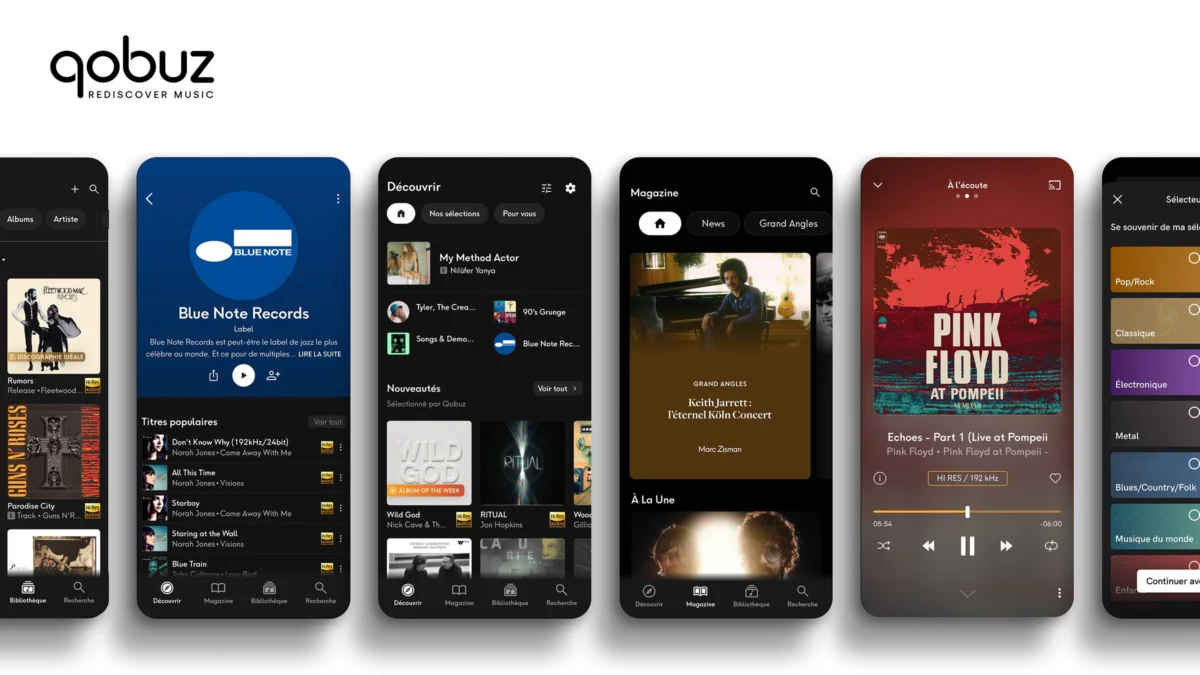
In the hyper-saturated landscape of digital audio, where the “all-you-can-eat” buffet model of music streaming has become the industry standard, one French challenger is betting that listeners are craving something more substantial. Qobuz, the high-resolution streaming service that has quietly operated since 2007, is currently experiencing a watershed moment. Driven by a mix of ethical consumerism, a growing exhaustion with algorithmic homogenization, and a stark contrast in artist compensation, the platform is finally stepping out of the niche audiophile shadows and into the mainstream spotlight.
The Evolution of an Audiophile Upstart
The story of Qobuz in the United States is one of persistence against the giants. When Dan Mackta, the company’s New York-based managing director, began building the US presence in 2019, the market was already dominated by the juggernauts of Spotify, Apple Music, and Amazon. The early days were marked by the absurdity of pandemic-era marketing. Mackta recalls a surreal trip to Oklahoma to film Wayne Coyne of The Flaming Lips, who arrived for the shoot wearing a futuristic isolation helmet and silver moon boots. The visual was striking, but the audio was impossible; eventually, Coyne had to record his own promo video from home, simply explaining how to pronounce the company’s name: “ko-buzz.”
That phonetic hurdle was merely the first in a series of questions potential subscribers ask. For those migrating from the “Big Tech” services, the primary concerns are practical: “Can I transfer my library?” and “Is everything available?” The answer, in 2026, is a resounding “yes” and “almost.” As listeners increasingly look to migrate, third-party tools like Soundiiz have become the bridges, allowing users to port playlists with remarkable efficiency. What was once a Herculean task now takes a single afternoon, signaling a broader migration trend of users seeking higher fidelity and a more deliberate listening experience.
A Year of Record-Breaking Growth
The fiscal year 2025 served as a definitive banner year for the 19-year-old company. Just twelve months prior, Qobuz held a respectable but modest 500,000 subscribers. Today, that number has surged to 1.2 million active monthly users. While these figures remain a drop in the ocean compared to Spotify’s 293 million or Apple Music’s 100 million-plus, the velocity of growth is what has industry analysts paying attention. In 2025, Qobuz saw its streaming revenue spike by 45.7 percent, a figure that dwarfs the 8.8 percent growth observed across the broader paid streaming sector.
The catalyst for this surge was multifaceted. The publication of Liz Pelly’s Mood Machine in early 2025 acted as a cultural turning point, providing a scathing critique of the business practices of larger platforms. The book’s investigation into the “means-to-an-end” nature of Big Tech streaming—where music is treated as a commodity rather than art—resonated with an increasingly disillusioned audience. When reports surfaced regarding Spotify’s recruitment of ICE (Immigration and Customs Enforcement) via advertisements, the backlash was swift. TikTok and Instagram became battlegrounds for a “cancel Spotify” movement, with Qobuz acting as the primary sanctuary for the migrating “conscious consumer.”
The Economics of Authenticity: Higher Payouts
Perhaps the most significant driver of the Qobuz movement is the platform’s transparent and aggressive stance on artist compensation. For years, the industry has been plagued by the “fraction of a cent” model, where creators struggle to earn a living wage despite millions of streams. Qobuz has effectively positioned itself as the ethical alternative.
In March 2025, the company took the radical step of publishing its verified average per-stream payout: $0.01873 per stream. To put this into perspective, Spotify’s average payout range sits between $0.003 and $0.005. By laying these figures on the table, Qobuz forced a conversation that larger competitors have historically avoided. “We knew we had the best number, so we thought, ‘We’ll just lay it down,’” says Mackta. “Anyone else want to tell us what theirs is? They don’t.”
This is not merely a marketing tactic; it is a structural commitment. By focusing on a subscription-only model—eschewing the “free tier” and its associated ad-revenue complexities—Qobuz provides a more direct financial link between the listener and the artist.

The War Against Generative AI
As the industry grapples with the influx of machine-generated audio, Qobuz has adopted a “zero-tolerance” policy. In February 2026, the company released an AI Charter that draws a firm line in the sand: no 100 percent generative AI content will be permitted on the platform.
The scope of the problem is vast. According to internal analysis, as much as 40 percent of the music submitted by some distributors consists of AI-generated “garbage.” Qobuz has deployed proprietary machine-learning algorithms to scan both new submissions and their existing back catalog to identify and remove these fraudulent tracks. “Ban this and screw those guys,” Mackta says bluntly. For a company that markets itself on the “nuance and decay” of real instruments, the presence of AI-generated filler is not just an annoyance; it is an existential threat to the service’s core value proposition.
Infrastructure and the User Experience
With a user base that has doubled in size, the pressure on Qobuz’s infrastructure has never been greater. The company is currently engaged in a massive “catch-up” effort to modernize its interface and connectivity. The rollout of “Qobuz Connect” is ongoing, bringing high-resolution streaming to a wider array of hardware, including vintage and modern hi-fi systems from brands like Cambridge Audio.
The upcoming app update promises to address the long-standing demands of modern listeners: synchronized lyrics, deeper album credits, and a sophisticated recommendation engine that favors human-curated editorial over cold, data-driven loops. These features aim to turn the listening process into an active, educational experience rather than a passive, background activity.
The Future: A Different Kind of Scale
Qobuz has no illusions about its position in the market. When asked if they intend to compete with the sheer volume of Apple or Amazon, Mackta is pragmatic. “For us to say we’re going to compete with Apple or Amazon, we might as well say we’re trying to launch a rocket,” he notes. The goal is not global ubiquity, but rather to capture the 1 percent of the market that prioritizes quality and ethics—a segment large enough to sustain a profitable, healthy business. Under the leadership of CEO Denis Thébaud, the company expects to reach full profitability by March 2027.
The internal culture at Qobuz reflects this focus. With 100 full-time employees—all of whom are shareholders—and a robust community of 100,000 users in the Qobuz Club, the company operates more like a cooperative of music enthusiasts than a traditional tech corporation.
Conclusion: Drinking from the Spring
David Bowie famously predicted that music would eventually become like “running water”—a ubiquitous, invisible utility. In the era of the “fire hose” algorithm, where millions of tracks are pushed to users regardless of quality, Qobuz is attempting to redefine that metaphor.
“There’s so much great music, it’s like drinking from a fire hose,” says Mackta. “We’re like water, but delicious spring water—the very best.” As the industry continues to struggle with the tensions between profit-driven algorithmic distribution and the preservation of musical artistry, Qobuz stands as a testament to the idea that there is still a market for the “delicious.” By centering its business on transparency, high-resolution audio, and a firm stance against the erosion of art by AI, Qobuz is proving that even in a world of digital giants, there is still room for a service that treats music with the reverence it deserves. Whether they reach their goal of 1 percent of the market or beyond, their impact on the economics of the industry is already, undeniably, a ripple that is turning into a wave.


 Jia Lissa
 Neng Nana