Neng Nana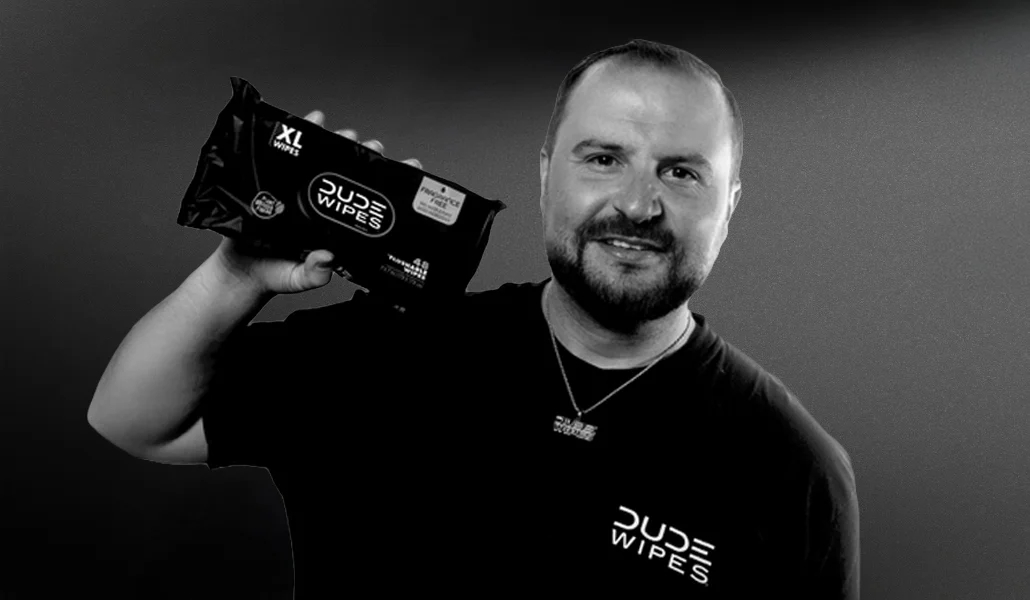
By [Your Name/Journalist]
June 19, 2026
As the initial fervor surrounding generative AI begins to settle, a sober reality is setting in across the corporate landscape. For the past two years, brands, agencies, and technology vendors have been locked in an arms race to adopt the latest LLMs and automation tools. Now, however, the "honeymoon phase" is colliding with the cold, hard metrics of the balance sheet. CFOs and boardrooms are beginning to ask the same critical question: Where is the return on investment?
While many companies are finding themselves caught in a cycle of experimental costs without clear outcomes, some brands are moving beyond the hype, integrating AI into the granular, operational bones of their business. Among them is DUDE Wipes, the personal care brand that has managed to translate AI enthusiasm into tangible operational efficiency.
The Main Facts: Moving Beyond the "Prompt Engineering" Hype
The narrative surrounding AI in marketing has shifted from "what can it generate?" to "what can it save?" Recent industry reports indicate that while creative generation remains a primary use case, it is the logistical and administrative automation that is currently yielding the highest ROI for mid-market and enterprise brands.
DUDE Wipes, under the leadership of co-founder and CMO Ryan Meegan, has avoided the trap of using AI merely as a "content factory." Instead, the company has implemented a dual-track strategy: using AI for high-level creative brainstorming while simultaneously deploying custom-built LLM agents to solve complex supply chain and logistics problems.
By providing employees with standardized access to tools like Anthropic’s Claude and investing in internal training, the company is attempting to shift its structural dependency away from high-cost external agencies and toward an AI-augmented internal workforce.
A Chronology of Adoption: From Lean Startup to AI-Driven Operations
To understand how DUDE Wipes arrived at its current strategy, one must look at the company’s evolution. For years, the brand operated with an intentionally lean marketing department, often pushing its limited staff to the brink of burnout.
- Early 2025: The company began exploring generative AI as a tool for administrative support. The objective was clear: alleviate the cognitive load on staff members to avoid further headcount expansion while business grew.
- Late 2025: The integration moved from general text generation to domain-specific applications. The operations team identified "Diesel Dan," a custom-trained tool designed to handle the complexities of logistics, specifically palletization and truckload configuration.
- Early 2026: The company formalized its "AI-First" training protocols, ensuring that employees across finance, logistics, and creative departments were not just using the tools, but understanding how to prompt them for specific, measurable outcomes.
- June 2026: Current status. The company is actively using these efficiencies to "beef up" its internal team, shifting from a state of reactive survival to proactive hiring.
Supporting Data: Efficiency in Numbers
The most compelling evidence for AI’s value in the modern enterprise isn’t found in a flashy ad campaign, but in the mundane, high-stakes world of logistics.
According to Ryan Meegan, the introduction of the "Diesel Dan" tool has yielded immediate, measurable benefits for the operations department. By teaching the AI to optimize truckload configurations—a process that previously required hours of manual data entry and complex calculations—the team has reclaimed 10 to 15 man-hours per week.
The Math of Efficiency:
- Time Savings: 10–15 hours per week per operations team member.
- Operational Impact: Real-time optimization of pallet sizes and truckload capacities, which directly reduces shipping costs.
- Headcount Strategy: By automating these repetitive, high-stress tasks, the company has been able to delay costly agency retainers, instead opting to reallocate that budget toward hiring full-time, high-value internal talent.
Official Perspectives: The View from the C-Suite
In a recent conversation with Digiday, Ryan Meegan offered a nuanced view of the AI landscape. He emphasizes that the "balance" between human oversight and automation is fundamentally different depending on the department.
"It depends on what department you’re talking about," Meegan noted. "For finance, logistics, and operations, those can save actual man-hours… It used to be that certain SKUs ordered by a certain retailer put them in a position that needed to be manually input. They were taught AI the problem and prompted it to the solution they were looking for."
When asked about the creative side, Meegan highlights a different value proposition. Rather than replacing the creative process, AI is being used as a "brain space" clearer. "It can help you free up some brain space when you have a lot on your plate," Meegan explained. "You can feed Claude, or whatever tool, your general ideas and prompt it to the creative way you’re trying to think about things, and then have it spit back at you things that give you further inspiration."
Crucially, Meegan remains grounded regarding the "AI-everywhere" trend. When asked about optimizing product data for AI-driven search—a massive focus for many CPG brands—Meegan provided a dose of reality: "We’re definitely thinking about it. We’re working to optimize as much as we can, but it’s not a massive priority at this juncture." This reflects a strategic maturity; the company is focusing on where the ROI is immediate and controllable, rather than chasing every speculative trend.
The Broader Implications: A Shift in Agency-Brand Relationships
The success of internal AI initiatives at companies like DUDE Wipes carries significant implications for the broader marketing ecosystem.
1. The Decline of the "Generalist" Agency Model
As brands like DUDE Wipes become more self-sufficient through AI, the value proposition of the traditional agency model is being challenged. If an internal team, equipped with powerful LLMs, can handle a significant portion of project management, logistics, and initial creative ideation, the need for large agency retainers diminishes. Agencies will likely need to pivot toward high-level strategy, complex production, or specialized technical consulting to survive.
2. The Internal Talent Pivot
The narrative of "AI replacing jobs" is being replaced by a more nuanced reality: "AI replacing tasks." DUDE Wipes’ decision to use the time saved by AI to "beef up" its internal team is a bellwether for the market. Companies are realizing that the most effective way to use AI is to empower a lean, high-performing internal team, rather than using it as a cost-cutting measure to justify layoffs.
3. The ROI Reckoning
We are moving out of the "experimental" phase of the AI era. As investors and stakeholders look for proof of performance, the winners will be those who, like DUDE Wipes, treat AI as an operational lever rather than a magic wand. The "ROI reckoning" is not a sign of AI’s failure; it is a sign of its maturation.
Conclusion: The Path Forward
The "honeymoon phase" of AI may be over, but the work of integrating these tools into the fabric of business is only just beginning. Brands that succeed in the coming years will not be those that simply boast about using AI in their marketing materials. They will be the companies that, like DUDE Wipes, identify the specific, friction-filled processes within their own operations and use technology to smooth them out.
By prioritizing efficiency in operations, being intentional with hiring, and maintaining a critical eye toward which AI trends are worth pursuing, businesses can survive the current hype cycle and emerge with a leaner, more effective, and more resilient organization. The future of AI is not necessarily about better marketing—it’s about a better-run business.


 Asro
Asro
 Rifan Muazin