Laily UPN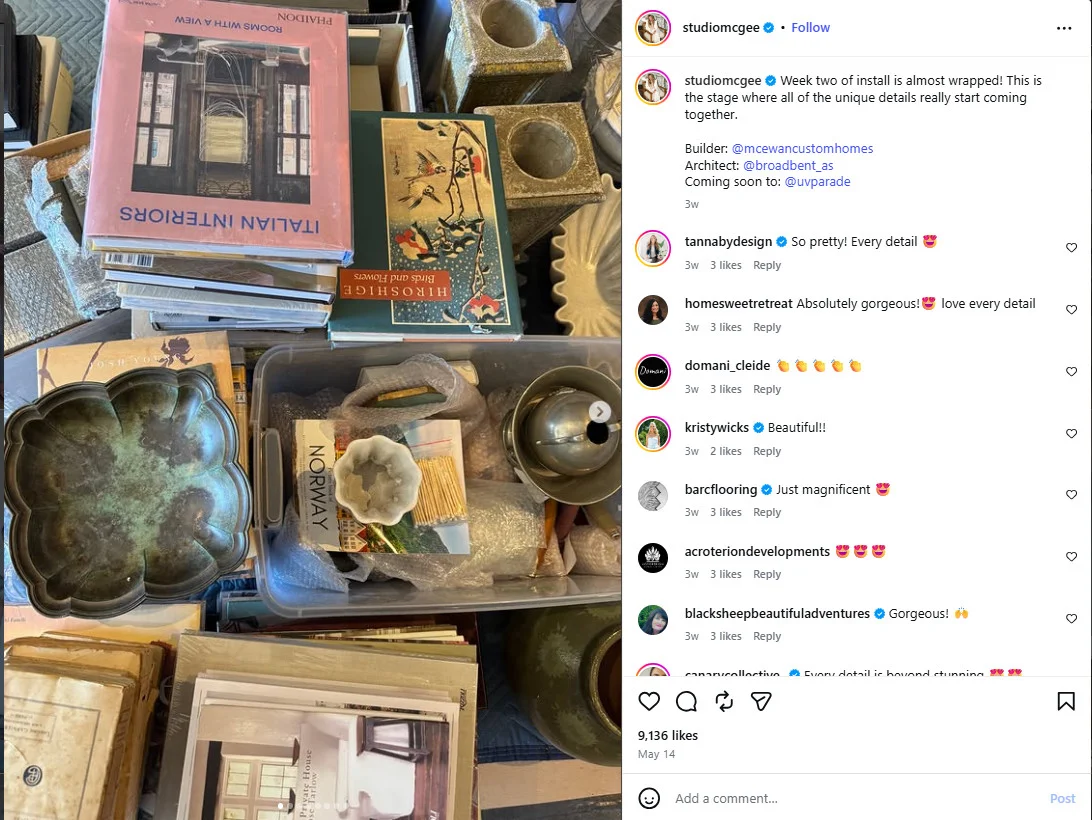
In 2014, Shea McGee was operating Studio McGee out of a spare bedroom. She had no full-time employees, no television contract, and zero budget for paid marketing. Yet, she recognized a shift in the wind: "It was free, and it was visual. No one was using Instagram as a designer to promote their business—but I saw other businesses using it and thought there had to be something there."
Today, that vision has evolved into a 4-million-follower empire. However, for the average independent interior designer, the reality of social media is far more complex. While nearly 80% of interior designers maintain an active social media presence, a 2018 Forbes study revealed that only 17% rate it as "very effective" for their business. This staggering gap highlights a fundamental misunderstanding of the medium: designers are often on the wrong platforms, posting without a system, or attempting to use social media as a lead-generation machine rather than a credibility anchor.
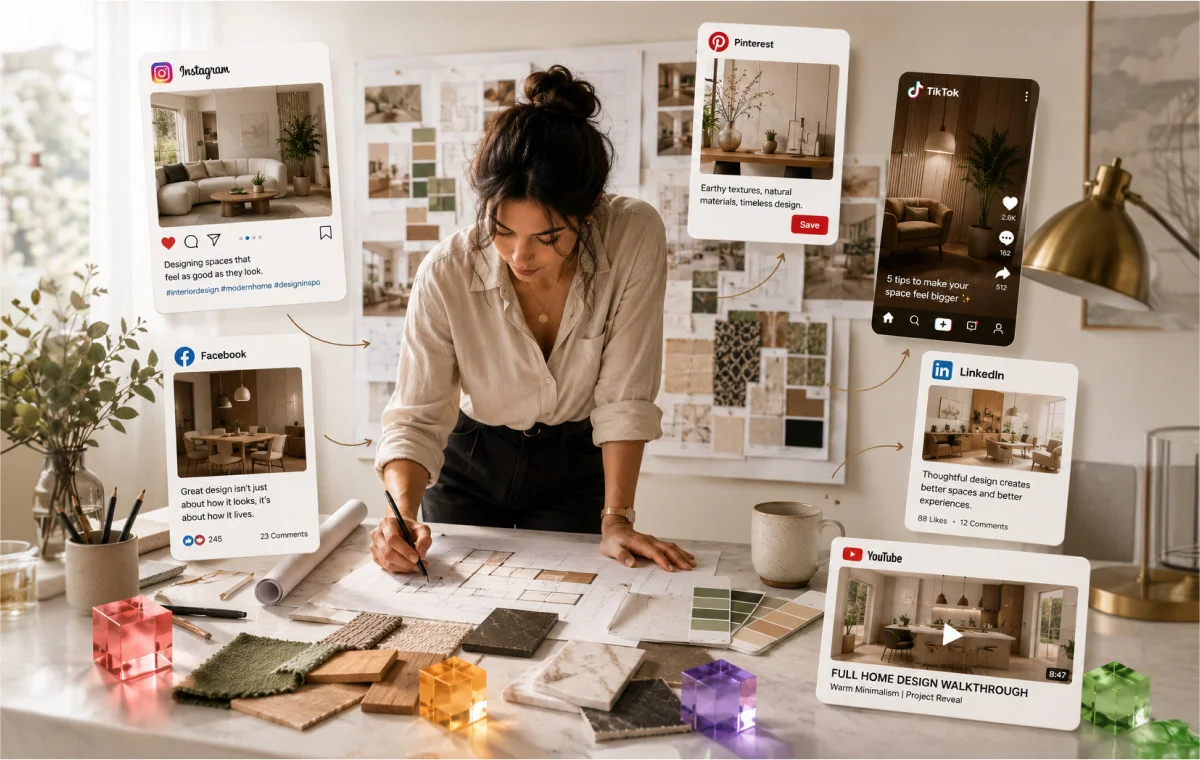
The Shift in Strategy: From Virality to Validation
The most critical realization for any design professional is that social media’s primary job is not to initiate a client’s desire for a renovation; it is to validate a decision they have already begun to make.
Most high-value clients find their designers through trusted referrals, word-of-mouth, or localized Google searches. Once they have a name, their next move is to verify that name against a digital portfolio. Your social feed acts as a "credibility signal." If a potential client hears your name, searches for you, and finds an account that hasn’t been updated in months, that lack of activity serves as a subconscious warning. It signals that you are either too busy to handle their project or that your business is not thriving.
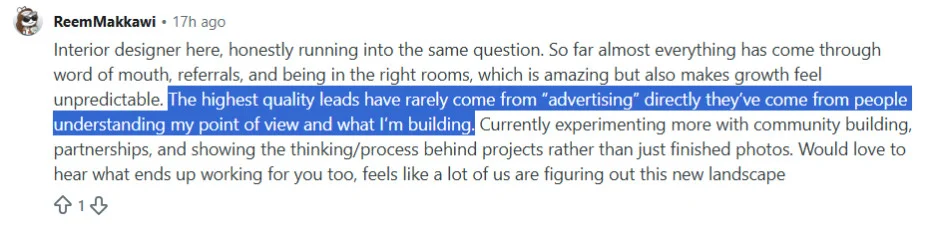
Success, therefore, is not measured by going viral. It is measured by ensuring that when a warm lead arrives at your profile, what they find confirms you are the only logical choice for their project.
The Platform Ecosystem: Where Should You Focus?
Not all platforms are created equal. For a design studio, each channel serves a distinct stage of the client journey.

1. Instagram: The Digital Portfolio
Instagram is where clients come to vet your aesthetic and professional standards. In 2025 and 2026, the platform acts increasingly like a search engine. By using specific keywords in captions and Reels—such as "transitional living room design Chicago"—designers can surface their content to active searchers.
- The Content Mix: Focus on "Process Documentation" (behind-the-scenes site visits), "Client Transformation Reveals," and "Design Decision Explainers" (why a specific material was chosen).
- Cadence: Aim for 4 to 5 feed posts per week and daily Stories to keep the audience engaged.
2. Pinterest: The Evergreen Search Engine
Unlike Instagram, Pinterest is a visual search engine with massive shelf life. A post on Instagram typically loses relevance within 48 hours; a Pin can drive traffic to your website for years. Because Pinterest users are often in the "planning" phase of a project, their intent is high.

- The Strategy: Treat Pinterest like SEO. Use keyword-rich titles and descriptions. Organize boards by room type and aesthetic rather than date.
- Cadence: Consistency is key. 5 to 10 pins per day—easily achieved through scheduling tools—ensures your work remains discoverable.
3. TikTok: The Cold-Reach Engine
TikTok is unique because follower count does not dictate reach. It is the only platform where a designer with 200 followers can reach 200,000 people. While many designers fear the demographic is too young, the data for #interiordesign suggests otherwise, with massive engagement from the 35–55 age bracket.
- The Strategy: Use 30-to-60-second time-lapse reveals or educational content that solves specific homeowner pain points.
- Cadence: 3 to 5 videos per week.
4. Houzz: The High-Intent Hub
If you are looking for immediate buyer intent, look no further than Houzz. With over 40 million monthly users, the majority of whom are homeowners actively planning a renovation, Houzz is where business gets done.

- The Power of Reviews: Professionals with at least three reviews are 15 times more likely to be contacted. Treat your Houzz profile as a professional listing, not a social feed.
5. LinkedIn: The B2B Network
LinkedIn is the primary channel for commercial designers and those seeking referrals from architects, contractors, and real estate developers. Here, aesthetics take a backseat to professional case studies, project rationale, and business-focused commentary.
6. Facebook: The Local Advertising Tool
Organic reach on Facebook is low, but its strength lies in hyper-local paid advertising. You can target users by income bracket or recent life events (like purchasing a home). For small studios with an ad budget, this is the most precise tool for local acquisition.

The Framework for Consistency: The Batching Method
The leading cause of social media failure in design firms is "reactive posting"—the attempt to post content while in the middle of a high-stress project install. This leads to burnout and inconsistent feeds. To solve this, design firms should adopt the "Batching Method":
- Document: Capture raw photos and videos while on-site. This adds zero minutes to your workflow since you are already there.
- Write: Spend one hour a week writing all your captions in a single sitting. Using AI-assisted tools can expedite this process, ensuring you maintain a consistent brand voice.
- Schedule: Use a social media management dashboard to push all content live across your platforms. By planning your week in 90 minutes, you eliminate the daily mental tax of content creation.
Supporting Data and Industry Implications
The transition toward social media as a professional requirement is not a trend; it is a structural change in how professional services are vetted. According to recent industry benchmarks:

- Consistency vs. Volume: Algorithms prioritize regular posting over sporadic, high-effort bursts.
- The 90-Day Rule: A design firm should commit to two platforms for 90 days before evaluating ROI. This timeframe allows the platform’s algorithm to learn your audience and effectively distribute your content.
- The "Credentialing" Effect: In the luxury design sector, the absence of a social footprint is increasingly viewed with suspicion. Even if a firm does not rely on social media for leads, it acts as a "trust verification" for high-net-worth clients who perform due diligence.
Official Guidance: Selecting Your Stack
To ensure you are not spreading your resources too thin, adhere to this strategic hierarchy:
- For the Solo Residential Designer: Combine Instagram (for validation) and Pinterest (for evergreen discovery).
- For the Growth-Oriented Designer: Swap Pinterest for TikTok to tap into cold, viral-style reach.
- For the Commercial/B2B Firm: Prioritize LinkedIn and Houzz, where your professional partners and developers congregate.
Conclusion: A Digital Foundation That Works While You Work
Social media does not replace your referral network—it amplifies it. By viewing your digital presence as a library of your expertise rather than a vanity project, you transition from "chasing trends" to building a sustainable business asset.

The ultimate goal is to create a system that functions independently of your daily project workload. By picking two platforms, documenting your work during natural project milestones, and utilizing automated scheduling, you ensure that when a client hears your name, your digital presence does the heavy lifting for you. You aren’t just selling a design; you are selling the professional confidence that comes with a well-documented, highly credible reputation.


 Asro
Asro
 Rifan Muazin