Iffa Jayyana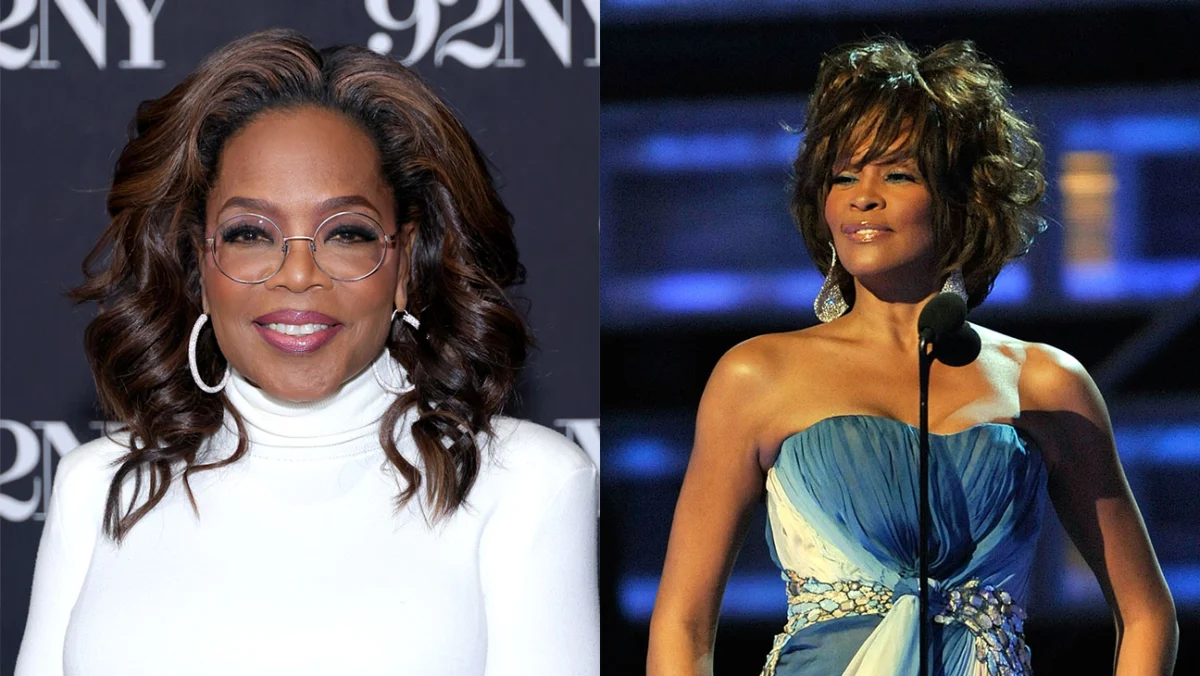
In an era where the legacies of icons are meticulously curated and frequently debated, a recent discrepancy regarding the late Whitney Houston has ignited a firestorm of discourse. The estate of the legendary singer—widely regarded as one of the greatest vocalists in music history—has issued a firm, public rebuttal to recent claims made by media mogul Oprah Winfrey. The point of contention centers on a 2009 incident involving a fall on the set of The Oprah Winfrey Show, an event Winfrey recently characterized as evidence of Houston’s substance abuse struggle, a claim the estate vehemently denies.
The Core Conflict: A Difference of Narrative
The controversy erupted following an appearance by Oprah Winfrey at the Cannes Lions International Festival of Creativity on Tuesday. During her session, Winfrey reflected on her long-standing professional relationship with Houston, specifically addressing the singer’s final appearance on her program. Winfrey suggested that Houston had relapsed into drug use at the time, alleging that this intoxication led to the singer falling off the stage during the taping.
“Whitney did what I think was her last show with us, and she had gone back on drugs,” Winfrey stated during the panel. “The first interview I did with her… she was clean, but the day she came to my show to perform in front of the audience, she was not, and she fell off of the stage.”
Winfrey further claimed that she acted as a guardian of Houston’s image during that moment, stating, “I knew that if that story got out that she’d fallen off the stage, she would be destroyed by that, and so even though the audience was there and the audience had cameras, I begged them not to put those pictures out because it would ruin her life, and they did not.”
The Houston estate, however, has rejected this framing entirely. In a statement posted to the singer’s official Instagram account, the estate characterized Winfrey’s account as "inaccurate and unfair," insisting that the fall was a result of physical logistics rather than personal impairment.
Chronology of the 2009 Incident
To understand the weight of the current dispute, it is necessary to examine the timeline of Houston’s 2009 comeback, a period marked by both professional triumphs and intense public scrutiny.
The Comeback Era
By 2009, Whitney Houston was in the midst of a highly publicized return to the music industry following a prolonged hiatus. Her album I Look to You was slated for release, and she was engaging in a rigorous promotional circuit. Her appearances on The Oprah Winfrey Show were viewed as pivotal moments for the singer to re-establish her place as the "Voice."
The Taping and the Fall
According to the official account provided by the estate, the fall occurred not during the live taping in front of the audience, but during the sound check phase. The estate clarified: “From the 2009 interview on the Oprah Winfrey show, Whitney absolutely fell off stage, but it was during a sound check and it was due to the darkness of the area and her unfamiliarity with the stage.”
This version of events paints a picture of a workplace accident common in live television production, where stage lighting and unfamiliar set configurations often pose risks to performers. By distinguishing the timing—sound check versus the live broadcast—the estate shifts the narrative from one of personal failing to one of occupational hazard.
Supporting Data and Contextual Realities
The debate highlights the complexities of documenting the lives of celebrities who have struggled with public addiction. Whitney Houston’s battles with substance abuse were, by her own admission, a significant chapter of her life. However, the estate’s grievance lies in the tendency of the media and public figures to attribute every event in her life—both the mundane and the tragic—to those struggles.
The "Struggle" Paradigm
In the entertainment industry, once a narrative of addiction is established, it often becomes a lens through which all subsequent actions are viewed. The estate’s statement underscores a critical frustration: “Like many people, she faced personal battles, but it is inaccurate and unfair to attach that struggle to every performance or every chapter of her life.”
This perspective aligns with contemporary discourse surrounding the "dignity of the deceased." As the estates of iconic figures increasingly take control of their narrative, they are challenging the media’s propensity to simplify complex, multi-faceted human lives into sensationalized headlines.
Audience Perception and Professionalism
Regarding Winfrey’s assertion that she protected Houston from the audience’s gaze, the estate provides a counter-narrative of resilience. They maintain that the performance ultimately delivered by Houston was a testament to her work ethic. “What the studio audience witnessed on stage was the result of discipline, talent, and commitment, not the assumptions others project,” the estate wrote. By emphasizing her professionalism, the estate seeks to reclaim the narrative of Houston’s final years as one of a dedicated artist striving for excellence, rather than a victim of her circumstances.
Official Responses and Media Silence
As of the time of this publication, the tension between the two parties remains unresolved. The Hollywood Reporter reached out to a representative for Oprah Winfrey for further comment or clarification regarding the discrepancy, but no response was provided.
The silence from the Winfrey camp leaves a vacuum that allows for speculation. Was Winfrey misremembering the timeline of the fall, or does she possess information about the day that contradicts the estate’s records? Until a dialogue occurs or further evidence is presented, the public is left to weigh the word of a close professional confidante against the official record maintained by the singer’s family and estate.
Implications: The Ethics of Celebrity Legacy
The conflict between the Houston estate and Oprah Winfrey raises significant questions regarding the ethics of legacy management and the responsibilities of those who speak about the deceased.
The Power of the Platform
Oprah Winfrey holds one of the most influential platforms in media history. Her words, particularly regarding a subject as sensitive as Whitney Houston, carry immense weight. When a figure of her stature links a public figure’s downfall to a specific moment of addiction, it becomes part of the historical record, often overshadowing the subject’s own attempts to move forward.
Reclaiming the Narrative
The Houston estate’s swift and firm response is part of a growing trend in the entertainment industry. Families and estates are no longer content to let documentaries, interviews, or casual anecdotes dictate the history of their loved ones. By using social media to provide direct, corrected accounts, they are participating in a form of "legacy policing." This ensures that the public memory of an artist is not reduced to their lowest moments.
The Need for Nuance
The situation serves as a reminder that human life is rarely binary. Whitney Houston was a woman of extraordinary talent who faced profound personal demons; acknowledging one does not necessitate the erasure of the other. The estate’s plea—"We owe her the dignity of telling the truth, not repeating myths"—is a call for a more nuanced approach to celebrity biography. It challenges the media to seek accuracy over sensation, even when the subject is no longer here to defend themselves.
Conclusion: A Legacy Beyond the Stage
The fall on the Oprah Winfrey Show set in 2009, whether it was caused by darkness or, as Winfrey claims, by substance-related impairment, remains a singular event in a career that spanned three decades. However, the intensity of this current dispute proves that the public’s fascination with Whitney Houston remains as potent as ever.
Ultimately, the estate’s intervention is an attempt to ensure that Houston’s final chapters are remembered for her commitment to her craft. As the debate continues, it serves as a stark reminder of the complexities involved in archiving the lives of icons. Whether history ultimately sides with the memory of the talk-show host or the records of the estate, the underlying message is clear: the truth of a life is not found in a single incident, but in the entirety of a person’s contributions. For the estate, protecting that truth is not just a duty—it is the final act of love and respect for a voice that defined a generation.

 Suro Senen
 Nana
Nana