

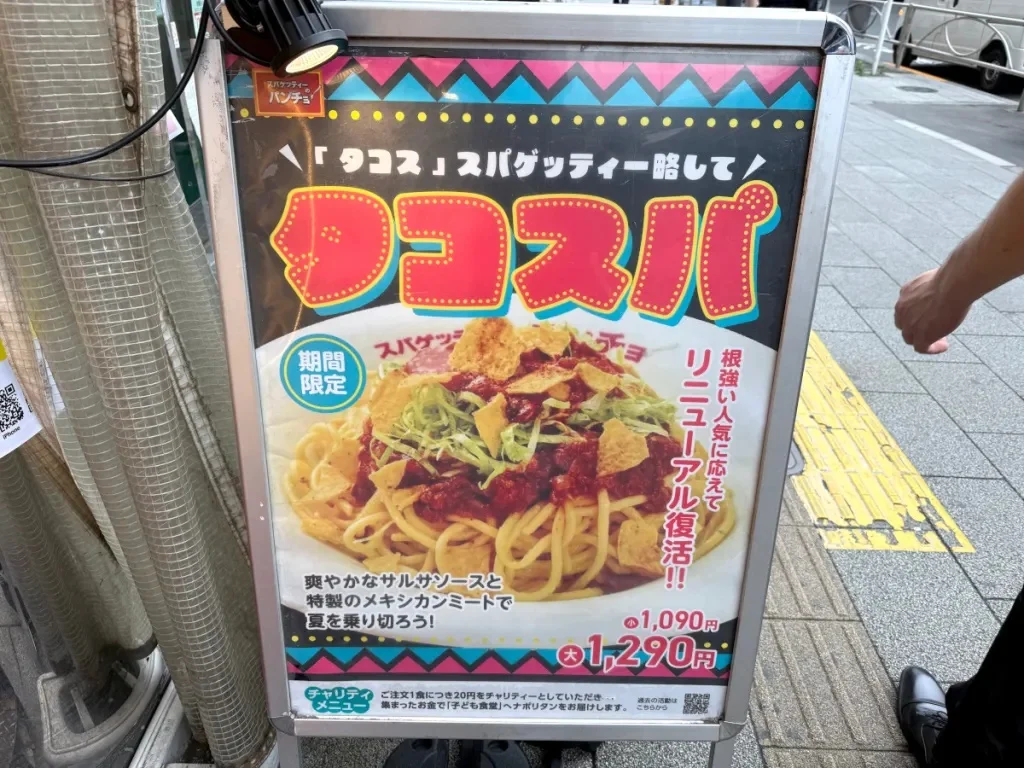
In the culinary landscape of Japan, tradition is often treated as a starting point rather than a rigid boundary. While the nation has mastered the art of authentic Italian pasta, it has simultaneously carved out a unique identity through localized innovations—most notably the ketchup-based Napolitan and the creamy, savory cod roe (tarako) spaghetti. Now, the popular restaurant chain Spaghetti no Pancho is pushing the envelope further with its latest seasonal offering: the "Tacospa," or Taco Spaghetti.
This daring fusion, which blends the hearty comfort of meat-sauce pasta with the vibrant, zesty profile of a classic taco, is currently challenging diners to reconsider what belongs on a plate of noodles.
The Anatomy of the Tacospa: A Fusion Defined
To avoid confusion, it is essential to clarify that the Tacospa is not a "spaghetti taco"—a hypothetical dish where noodles are shoved into a hard shell. Instead, Spaghetti no Pancho has engineered a culinary marriage of components.
![Taco Spaghetti appears in Japan, and our taco fan rushes to try it[Taste test]](https://soranews24.com/wp-content/uploads/sites/3/2026/06/2_fd30d3.jpg?w=1000&h=525&crop=1)
The foundation of the dish remains the chain’s signature pasta, but the traditional Napolitan sauce is replaced by a custom-developed ragu. This base is infused with a strategic blend of cumin and "Cajun spices," designed to mimic the flavor profile of the seasoned ground beef found in traditional Tex-Mex tacos. The dish is further elevated by the inclusion of tangy salsa, crisp shredded lettuce, and a generous topping of crushed tortilla chips, which provide a necessary structural crunch to the otherwise soft noodles.
Visually, the dish is striking. It draws immediate comparisons to "taco rice," a beloved Okinawan staple that serves seasoned ground beef and cheese over steamed rice. However, the Tacospa distinguishes itself through texture; the interplay between the cool, crisp lettuce and the warm, spice-forward pasta creates a sensory experience that feels markedly different from its rice-based cousin.
Chronology of a Culinary Challenge
The rollout of the Tacospa was met with curiosity and a healthy dose of skepticism from Japan’s food scene. When the dish first arrived at the table of our resident reporter and taco enthusiast, P.K. Sanjun, the immediate visual impression was one of intensity. The vibrant colors of the salsa and greens signaled a departure from the monochromatic brown of standard meat sauce.
![Taco Spaghetti appears in Japan, and our taco fan rushes to try it[Taste test]](https://soranews24.com/wp-content/uploads/sites/3/2026/06/1_f8deb1.jpg?w=640)
However, the initial taste test revealed a nuanced reality. Upon the first bite, the experience was surprisingly familiar—it tasted like high-quality meat sauce spaghetti with a subtle, spicy kick. It did not immediately announce itself as a "taco" dish, but rather whispered the flavor profile in the background.
As the meal progressed, the true intent of the recipe design began to reveal itself. It became evident that the salsa required time to emulsify and cling to the noodles. Through the act of mixing and the natural heat of the pasta, the salsa integrated into the meat sauce, creating a complex, momentum-building flavor profile. With every subsequent forkful, the dish became more rewarding, as the acidity of the salsa cut through the richness of the meat, spurring the diner to continue eating.
Supporting Data and Sensory Experience
The success of the Tacospa lies in its "momentum-building" quality. Unlike standard pasta dishes that offer a consistent flavor from start to finish, the Tacospa evolves. The tortilla chips, if managed correctly, maintain a crunch that contrasts with the al dente pasta, preventing the palate from becoming fatigued.
![Taco Spaghetti appears in Japan, and our taco fan rushes to try it[Taste test]](https://soranews24.com/wp-content/uploads/sites/3/2026/06/3_bb6ba8.jpg?w=640)
Furthermore, the integration of condiments played a significant role. Spaghetti no Pancho provides bottles of Tabasco on every table—a staple for its Napolitan customers. Our testing found that the Tacospa is a perfect canvas for additional heat. Adding a few drops of Tabasco amplified the existing cumin and Cajun notes, elevating the dish from a "faint whisper" of taco flavor to a bold, spicy, and harmonious fusion.
Pricing and Availability
The chain has positioned the dish as a premium seasonal limited-time offer:
- Small size: 1,090 yen (approx. US$6.80)
- Large size: 1,290 yen (approx. US$8.05)
- Availability: The dish is scheduled to remain on the menu through the end of July.
Official Perspectives and Market Positioning
Spaghetti no Pancho has long operated on a philosophy of "filling, comfort-focused food." By introducing the Tacospa, the brand is signaling a shift toward more adventurous, internationally inspired seasonal rotations. In the competitive Japanese restaurant market, where novelty often drives traffic, the Tacospa serves as a bridge between the familiarity of the "meat-sauce pasta" category and the growing popularity of Latin-American-inspired spice profiles.
![Taco Spaghetti appears in Japan, and our taco fan rushes to try it[Taste test]](https://soranews24.com/wp-content/uploads/sites/3/2026/06/4_f77f20.jpg?w=640)
While the company has not released official sales figures, the social media discourse surrounding the dish has been largely positive, with many patrons praising the decision to use crushed tortilla chips as a topping—a move that adds both textural depth and an authentic "taco" aesthetic to the presentation.
Implications: The Future of Japanese Fusion
The Tacospa is more than just a marketing gimmick; it represents the next stage in Japan’s culinary evolution. For decades, Japanese fusion has been defined by the "Yoshoku" (Western-style Japanese) movement. However, as global travel increases and palates become more accustomed to authentic international flavors, chains like Spaghetti no Pancho are moving toward "third-wave fusion."
In this new wave, the goal is not to replicate a foreign dish exactly, but to take specific elements—such as the cumin-heavy meat or the textural crunch of tortilla chips—and integrate them into the local, beloved framework of Japanese comfort food.
![Taco Spaghetti appears in Japan, and our taco fan rushes to try it[Taste test]](https://soranews24.com/wp-content/uploads/sites/3/2026/06/5_72c51a.jpg?w=640)
The Verdict
Is the Tacospa a tragedy or a triumph? For the traditionalist, the marriage of Italian pasta and Mexican-inspired seasoning might seem disjointed. However, for the adventurous eater, it is a masterclass in flavor development. By allowing the salsa to permeate the meat sauce over the course of the meal, the chef has created a dish that grows more satisfying the longer it sits on the table.
For those residing in Japan, or those planning a visit before the end of July, the Tacospa is a must-try. It is a reminder that in the world of food, the most interesting stories are often written in the margins of tradition. Whether it becomes a permanent menu item or remains a nostalgic memory of summer 2026, the Tacospa has successfully earned its place as a fascinating case study in modern culinary adaptation.
For those interested in tracking down this limited-time experience, the full list of participating Spaghetti no Pancho locations can be found on their official website. As always, local availability may vary, and patrons are encouraged to arrive early, as seasonal specialties at the chain often sell out during peak lunch hours.











