


Language acquisition is often described as a journey of milestones, and few words in the Japanese lexicon act as such effective indicators of progress as the versatile adverb mou (もう). While it is frequently introduced to beginners as a simple equivalent to the English "already," "yet," or "now," its true utility lies in its ability to express the subtle interplay between expectation, temporal perception, and emotional state.
For students navigating the Japanese language, moving beyond dictionary definitions to understand the cultural and grammatical weight of mou is essential for achieving fluency. This article explores the mechanics of this high-frequency word, providing the context necessary to elevate your communication skills.
The Core Functions of "Mou"
At its simplest level, mou functions as a temporal marker. It serves to emphasize that a change of state has occurred or is imminent. However, to truly grasp its function, one must look at how it interacts with the verb tense and the speaker’s internal narrative.
1. The "Already" Context (Affirmative Sentences)
In affirmative sentences, mou indicates the completion of an action.
- Mou tabemashita ka? (Have you already eaten?)
- Mou owarimashita. (It is already finished.)
In this context, mou serves as a bridge between the past and the present, signaling that the window for a particular action has closed. It carries a sense of finality—the event is no longer pending.

2. The "Anymore" Context (Negative Sentences)
When paired with a negative verb, mou transforms into the equivalent of "no longer" or "not anymore."
- Mou ikimasen. (I am not going anymore.)
Here, the word highlights a shift in intent or circumstance. It provides a clean break from a previous state, helping the speaker delineate past habits from current realities.
Chronology of Learning: Why "Mou" is a Linguistic Pivot Point
For the Japanese language learner, the introduction of mou usually occurs during the early stages of study, often alongside the particle mada (まだ/still/not yet). These two words exist in a symbiotic relationship; they are the "push and pull" of Japanese temporal expression.
The Initial Encounter (N5 Level)
Beginners first encounter mou as a survival tool. It is essential for daily interactions: asking if a bus has arrived, if a store is open, or if a friend has finished their homework. At this stage, the learner focuses on rote memorization of the word as a synonym for "already."
Intermediate Sophistication
As learners progress to the intermediate level, they begin to notice that mou isn’t just about time—it’s about attitude. It can be used to express impatience (Mou! – "Enough!"), or to signify an intensification of a state (Mou sukoshi – "A little bit more"). This shift from literal translation to emotive usage marks a significant step toward natural-sounding Japanese.

Supporting Data: Frequency and Usage Patterns
In linguistic analysis, mou consistently ranks among the top 500 most frequently used words in the Japanese language. Its high frequency is attributed to its role as a "modal" word—a word that modifies the speaker’s perspective on the facts being presented.
Data from the Balanced Corpus of Contemporary Written Japanese (BCCWJ) suggests that mou appears in a wide variety of registers, from casual conversational scripts to formal business correspondence. Its versatility allows it to function in diverse settings, provided the speaker understands the accompanying grammatical constraints.
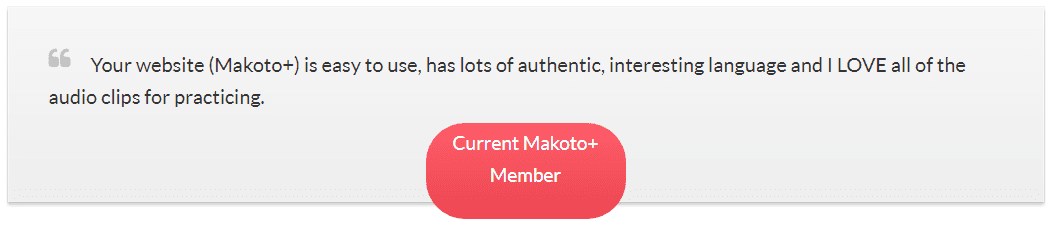
For example, when used with mou, the sentence structure often requires the perfective aspect of the verb (ta-form). Using mou with a non-completed, non-progressive verb can lead to grammatical dissonance, highlighting why practice with native-speed audio—such as the resources provided by Makoto+—is critical for internalizing these patterns.
Implications for Learners: Beyond the Dictionary
The primary implication for those studying Japanese is that grammar is not merely a set of rules, but a toolkit for expressing perspective. When you use mou, you are not just describing time; you are expressing how you feel about that time.
The Psychological Aspect
Using mou correctly allows a speaker to project confidence. A hesitation between mada and mou is a common "tell" for non-native speakers. Mastering the snap-decision usage of these words allows for a more fluid, rhythmic speech pattern that native listeners find significantly easier to process.

Strategic Study Approaches
For those struggling to incorporate these nuances, a multi-modal approach is recommended:
- Contextual Listening: Engage with audio content where the word is used in rapid, natural conversation.
- Comparative Analysis: Study the difference between mou (the current state) and mada (the lingering state) using sentence-pair exercises.
- Active Production: Attempt to narrate your own day using these temporal markers. "I have already finished my coffee" (Mou kohi o nomimashita) is a simple way to practice the affirmative structure in a real-world scenario.
Official Perspective and Educational Resources
The Japanese language is renowned for its complexity, but it is also highly logical. Educational platforms like The Japanese Page and the Makoto+ membership program provide structured pathways for students to move beyond the "beginner’s plateau."
For students who feel stalled, the Beri-Beri Shoshinsha Bundle serves as an industry-standard resource for resetting one’s foundation. By focusing on the essential building blocks—writing systems, fundamental adverbs like mou, and basic sentence construction—learners can regain the momentum necessary to tackle more complex JLPT-level material.
The consensus among educators is that fluency is not achieved through the accumulation of rare vocabulary, but through the mastery of the most common words. Mou is a prime example of a word that is "easy to learn, but a lifetime to master." Its simplicity is a mask for the depth of communication it facilitates.
Conclusion: The Path Forward
Whether you are preparing for the JLPT or simply aiming to converse more effectively with Japanese speakers, the word mou should be viewed as a cornerstone of your vocabulary. It is a word that marks your evolution from a student who translates to a student who communicates.
By integrating consistent practice, utilizing high-quality digital materials, and paying close attention to the emotive context of native speakers, you can transform your relationship with the Japanese language. Remember: the journey to fluency is a marathon, not a sprint. Every time you correctly identify the moment to use mou, you are one step closer to the nuance and precision that defines true mastery.
Take the next step in your journey today. Engage with your study materials, challenge yourself with vocabulary quizzes, and embrace the process of constant refinement. Your Japanese skills are not just a collection of facts—they are a developing skill set that, with the right resources, will continue to grow long after you have mastered the basics.
For those looking to deepen their understanding, consider joining our community at Makoto+ for weekly lessons, exclusive content, and a supportive environment designed to keep you motivated on your path to Japanese proficiency.












No comments yet. Be the first to join the conversation!