Layla Zulfa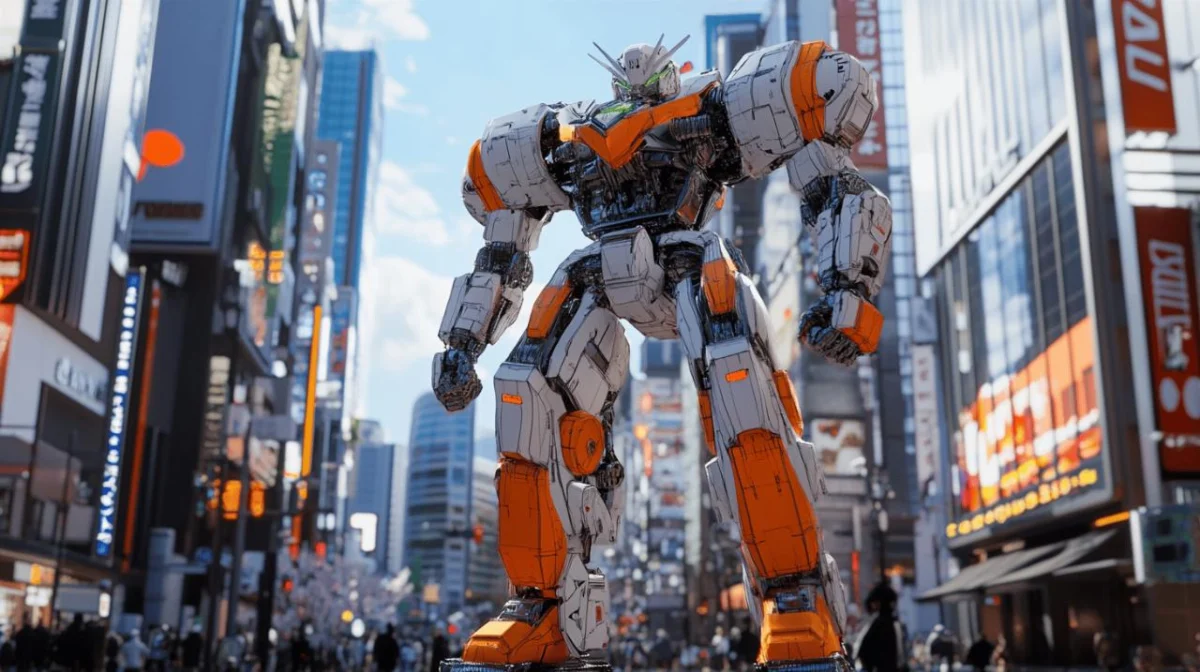
In an era defined by rapid technological convergence and shifting demographic landscapes, the Japanese construction industry finds itself at a critical juncture. Faced with a shrinking workforce and a rapidly aging population, the nation is turning to cutting-edge robotics to maintain its infrastructure and economic vitality. At the forefront of this industrial evolution is the HRP-5P, a humanoid robot developed by the National Institute of Advanced Industrial Science and Technology (AIST). This article explores how this mechanical mason is transitioning from a laboratory prototype to a potential cornerstone of modern, automated construction.
Main Facts: Introducing the HRP-5P
The HRP-5P is not merely a tool; it is an autonomous, humanoid robot specifically engineered to operate in environments built for human workers. Standing roughly the height of a typical adult and possessing a range of motion that mimics human dexterity, the HRP-5P was designed to perform the "three Ds" of labor—dull, dirty, and dangerous tasks—with high precision.
Unlike industrial robotic arms bolted to factory floors, the HRP-5P is mobile. It possesses the capability to navigate complex, unfinished construction sites, identify construction materials, and perform heavy-lifting tasks. Its core function involves the installation of drywall (plasterboard), a physically demanding job that requires both significant strength and meticulous accuracy. Equipped with a sophisticated suite of sensors and artificial intelligence, the robot can scan its surroundings, plan its trajectory, and manipulate materials in real-time, effectively assuming the role of a junior laborer capable of working around the clock.
Chronology of Development
The trajectory of the HRP-5P is a testament to years of rigorous research and development by the AIST, Japan’s largest public research organization.
- 2015–2017: AIST researchers focus on human-robot collaboration, aiming to create machines that can coexist with humans on active work sites rather than being cordoned off in cages.
- September 2018: The formal unveiling of the HRP-5P prototype. AIST releases footage showing the robot independently installing drywall panels, sparking international interest in the potential for "construction automation."
- 2019–2022: The focus shifts to software optimization and sensor integration. Engineers work on refining the robot’s ability to interpret dynamic, messy, and ever-changing construction site environments.
- 2023–Present: The technology moves toward broader application testing. AIST begins exploring how the HRP-5P’s underlying bipedal and manipulative logic can be adapted for industries beyond construction, such as shipbuilding and aeronautical assembly, where space constraints make traditional automation difficult.
Supporting Data and Technological Context
The HRP-5P is part of a broader ecosystem of construction automation that is currently disrupting the sector. To understand its significance, one must look at the data driving this change.
In Japan, the construction sector is experiencing a severe labor deficit. With the average age of construction workers exceeding 55, the industry faces a "retirement cliff." Automation is no longer an optional luxury but an operational necessity.
Comparative Performance Metrics
- Precision Robotics: While the HRP-5P manages complex, non-linear tasks, other specialized robots are achieving incredible efficiency. For instance, high-end automated floor-grinding robots now reach a precision of 0.5mm across 250 square meters in a single workday.
- Structural Speed: The Australian-developed Hadrian X robot has demonstrated the ability to lay 1,000 bricks per hour, a pace that dwarfs human speed.
- 3D Printing: In China, companies like Winsun have successfully printed entire residential structures within 24 hours, utilizing eco-friendly, reinforced concrete mixes.
The HRP-5P complements these technologies. While printers build from the ground up, the HRP-5P specializes in the "finishing" phase—the interior work that usually requires the highest degree of human-like dexterity and judgment.
Official Responses and Strategic Implications
The Japanese government and leading industrial bodies have viewed the HRP-5P not as a replacement for human workers, but as a "force multiplier." The goal is to offload the most physically grueling tasks to robots, allowing the remaining human labor force to take on roles of supervision, programming, and complex problem-solving.
Economic and Industrial Outlook
AIST officials have emphasized that the HRP-5P is designed to be a "platform." By standardizing the way the robot interacts with materials, they aim to create an open-source framework that construction companies can adapt to their specific needs.
The implications for the shipbuilding and aeronautics industries are particularly profound. In these sectors, workers often have to weld or assemble parts in cramped, inverted, or precarious positions. By utilizing the HRP-5P’s balance and sensor suite, companies can reduce workplace injuries and improve the consistency of high-stress structural joints, potentially extending the lifespan of large vessels and aircraft.
The Future of Robotics on the Job Site
As we look to the next decade, the integration of robots like the HRP-5P will redefine the "construction site."
Safety and Human-Robot Collaboration
Safety is the paramount concern. The HRP-5P utilizes advanced lidar and computer vision systems to maintain a constant "safety bubble." If a human enters its workspace, the robot instantly adjusts its speed or halts operation. Furthermore, the integration of drones on these sites provides a bird’s-eye view, allowing AI systems to coordinate the movements of multiple robots and human crews, ensuring that logistical bottlenecks are cleared before they occur.
The Human Element: Training and Reskilling
A major focus for AIST is the "human-in-the-loop" model. The rise of these robots does not signal the end of the construction worker; it signals the rise of the "robotic technician."
Training programs are already being developed to transition traditional masons and carpenters into operators who can troubleshoot, maintain, and supervise fleets of HRP-5P units. This shift requires a new skill set, blending traditional trade knowledge with basic programming and hardware maintenance.
Broader Socio-Economic Impact
The HRP-5P serves as a case study for the rest of the world. As nations like Germany, South Korea, and Italy grapple with their own aging populations, the Japanese model of "robotic augmentation" is becoming the gold standard for survival.
The transition to an automated construction site offers three major benefits:
- Consistency: Robots do not suffer from fatigue, ensuring that the quality of work at the end of a shift is identical to the beginning.
- Health Preservation: By removing the need for manual handling of heavy materials, musculoskeletal injuries—the most common ailment in construction—can be virtually eliminated.
- Project Velocity: By working in shifts that humans cannot sustain, the total time required for building completion is slashed, reducing interest costs on loans and increasing capital turnover for developers.
Conclusion: A New Era of Building
The HRP-5P stands as a symbol of human ingenuity meeting a daunting demographic challenge. While it is not yet ubiquitous on every street corner, its development signals a fundamental shift in how we build our world.
The construction site of the future will be a harmonious blend of human oversight and mechanical precision. As AIST continues to refine the HRP-5P’s capabilities, the boundaries between the physical labor of the past and the digital efficiency of the future will continue to blur. Japan is once again leading the way, demonstrating that in the face of labor shortages, the answer lies not in doing less, but in building smarter with the help of our robotic counterparts. The "mechanical mason" has arrived, and it is ready to lay the foundation for a more automated, efficient, and safer global construction industry.


 Siti Muinah
 Azzam Bilal Chamdy