Nila Kartika Wati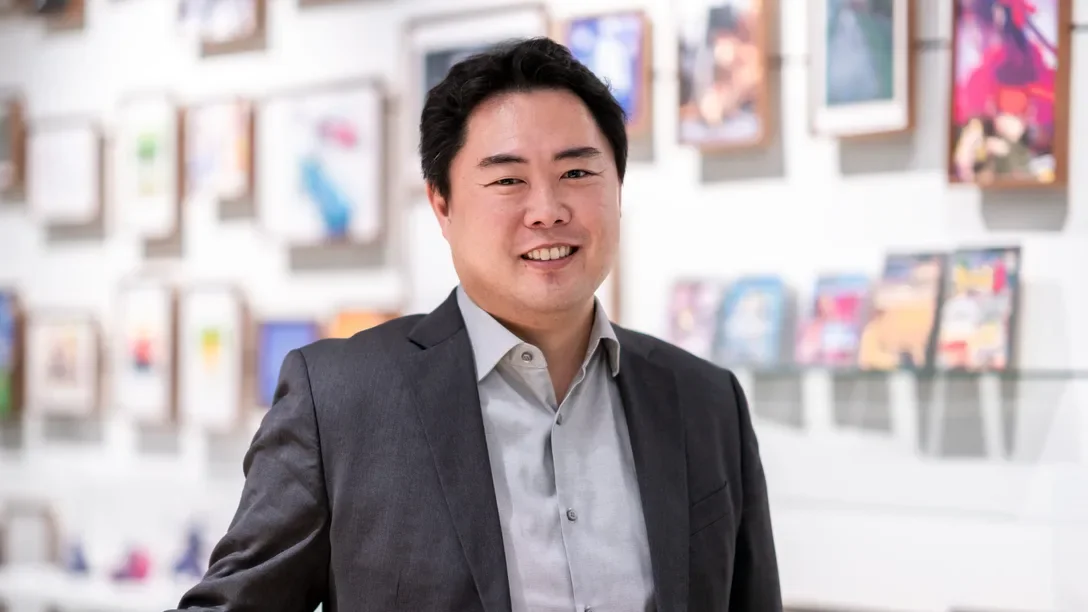
In a candid discussion with Japanese publication Famitsu, Sony Interactive Entertainment (SIE) CEO Hideaki Nishino has reaffirmed the company’s commitment to the live-service gaming model. Despite a turbulent few years defined by high-profile cancellations, studio closures, and the meteoric rise and subsequent plateauing of various multiplayer experiments, Sony’s leadership remains convinced that the live-service sector is essential to the future of the PlayStation ecosystem.
Nishino’s comments arrive at a critical juncture for the gaming giant. As the industry grapples with the immense costs of AAA development and shifting player habits, Sony is attempting to strike a delicate balance between its legacy of narrative-driven, single-player blockbusters and the recurring revenue potential of "games as a service" (GaaS).
The Strategic Vision: Revitalizing the Pipeline
During the interview, Nishino emphasized that Sony views the live-service genre not as a failed experiment, but as a maturing ecosystem that requires persistent iteration. "We believe that live-service games are content that attracts users on a global level," Nishino stated. "We want to continue to revitalize the market through both first-party and third-party content."
The CEO’s philosophy centers on the necessity of consistent engagement. Unlike traditional titles that offer a definitive conclusion, live-service games demand a continuous flow of updates to remain relevant. "The genre itself is relatively new, and I think many people are trying various things," he noted. "We also want to continue to take on challenges within that context."
Crucially, Nishino highlighted that Sony’s strategy is not strictly limited to the development of new, ground-up projects. He hinted at a broader, long-term approach to the company’s extensive back catalog, suggesting that Sony is actively exploring how older titles can be adapted or sustained to fit into a modern, service-based framework. This signals a potential shift in how PlayStation intends to leverage its deep library of intellectual property to maintain player retention in an increasingly crowded market.
A Chronology of Ambition and Adjustment
To understand the weight of Nishino’s recent comments, one must look at the timeline of Sony’s aggressive pivot toward multiplayer gaming, which began in earnest following the 2022 acquisition of Bungie for $3.6 billion.
- 2022: Sony acquires Bungie, the creators of Destiny, with then-CEO Jim Ryan explicitly stating that the deal was designed to "considerably accelerate our journey with multiplatform live-service games."
- 2023: Sony confirms the cancellation of multiple internal live-service projects, including those helmed by Bend Studio and Bluepoint Games, as the internal pressures of scaling GaaS operations become apparent.
- August 2024: The release of Concord, a high-budget hero shooter, marks a catastrophic low point for the company. The title is pulled from digital storefronts just two weeks after launch due to dismal player engagement.
- Late 2024: In the fallout of the Concord failure, Sony makes the difficult decision to shutter Firewalk Studios. Simultaneously, the company moves to close Bluepoint Games, a studio previously celebrated for its technical mastery in remakes.
- June 2025: Sony announces significant workforce reductions at Bungie, signaling that even the crown jewel of their live-service strategy is not immune to the cooling market.
- June 2026: Nishino’s interview with Famitsu is published, outlining a path forward that focuses on lessons learned rather than a full retreat.
Supporting Data: The Helldivers 2 Anomaly
Sony’s track record with live-service titles has been characterized by extreme variance. For every failure like Concord, there is the outlier success of Helldivers 2. Developed by Arrowhead Game Studios and published by Sony, Helldivers 2 became an unexpected cultural phenomenon in early 2024.
According to data from Alinea Analytics, the title has surpassed 20 million units sold, generating over $700 million in revenue. This success story serves as the primary evidence for those within Sony who argue that the GaaS model is viable. Helldivers 2 succeeded where others failed because it prioritized "emergent gameplay" and a community-driven narrative, rather than the bloated, high-friction monetization models that have caused consumer backlash in other sectors of the industry.
For Nishino, the challenge is clear: identifying the "secret sauce" that made Helldivers 2 resonate with players while avoiding the structural pitfalls that led to the premature demise of projects like Concord.
Official Responses and Internal Realignments
The shift in leadership from Jim Ryan to Hideaki Nishino and Hermen Hulst has brought about a more measured tone regarding live services. While the initial push under Ryan was characterized by a "quantity over quality" approach—aiming for a dozen concurrent live-service titles—Nishino’s current messaging suggests a more disciplined selection process.
The closure of Firewalk Studios and the layoffs at Bungie have been interpreted by industry analysts as a "pruning" phase. By shedding projects that lack long-term viability, Sony is attempting to conserve resources for titles that have a higher probability of sustaining a player base. The upcoming launch of Marvel Takon: Fighting Souls represents the next major test of this refined strategy. Nishino’s explicit mention of this title in his Famitsu interview suggests that the company is placing significant institutional weight behind its success.
The Implications: A New Era of PlayStation
What does this mean for the future of the PlayStation 6 generation and beyond? There are three primary implications of Nishino’s current strategy:
1. The Multiplatform Imperative
Nishino’s comments acknowledge a reality that was once taboo for Sony: the necessity of multiplatform distribution. To sustain a live-service game, the player pool must be as large as possible. Sony is increasingly moving toward a model where high-budget multiplayer titles are released on PC and console simultaneously, a strategy that acknowledges that the "walled garden" approach is incompatible with the GaaS model.
2. A Shift Toward "Hybrid" Experiences
Sony’s traditional strength lies in its cinematic, narrative-driven single-player games. The future, as implied by Nishino, may not be a binary choice between single-player and live-service. Instead, we may see more "hybrid" titles—games that offer a core, high-quality narrative experience while integrating seasonal, service-based elements to maintain long-term engagement.
3. Increased Scrutiny on Development Cycles
The cancellation of projects at Bend Studio and Bluepoint Games, coupled with the closure of studios, indicates that Sony is no longer willing to "throw money" at projects that do not meet internal quality thresholds. The era of the "live-service gamble" is being replaced by an era of "live-service discipline."
Conclusion
Hideaki Nishino’s recent statements provide a window into the psyche of a company caught between two worlds. Sony is rightfully proud of its heritage as a provider of unparalleled single-player experiences, yet it is undeniably tethered to the financial realities of a gaming market that increasingly demands "infinite" playability.
The path forward is fraught with risk. The collapse of Concord and the ongoing restructuring of Bungie prove that even the most well-funded entities are not immune to the harsh realities of player sentiment. However, by focusing on "revitalization" and the integration of both internal and external expertise, Nishino is signaling that Sony will not abandon the field. Instead, the company is hunkering down, preparing to take a more calculated, perhaps more humble, approach to the next wave of multiplayer gaming.
As the industry waits for the release of Marvel Takon: Fighting Souls, the eyes of the gaming world remain fixed on whether Sony can replicate the success of Helldivers 2 or if they will continue to struggle in their search for a sustainable live-service identity. For now, the message from the top is clear: the challenge is accepted, and the evolution of the PlayStation platform is only just beginning.

 Reynand Wu
 Layla Zulfa