For over three decades, the computer mouse has remained a remarkably static piece of hardware. While sensors have moved from mechanical trackballs to high-precision optical lasers, and wireless connectivity has become the standard, one component has remained stubbornly unchanged: the vertical scroll wheel. For most users, the repetitive "flick-and-stop" motion is so deeply ingrained that it has become second nature, a background process of our digital lives.
But what if this ubiquitous design is actually holding us back? A new Kickstarter campaign, the "Rotary Mouse," posits that the traditional scroll wheel is an ergonomic relic, one that prioritizes familiarity over efficiency and physical comfort. By replacing the notched, restricted-motion wheel with a fluid, continuous rotary dial, creator Melvin Wong is attempting to solve a problem most of us didn’t even realize we had.
The Core Innovation: Redefining Input
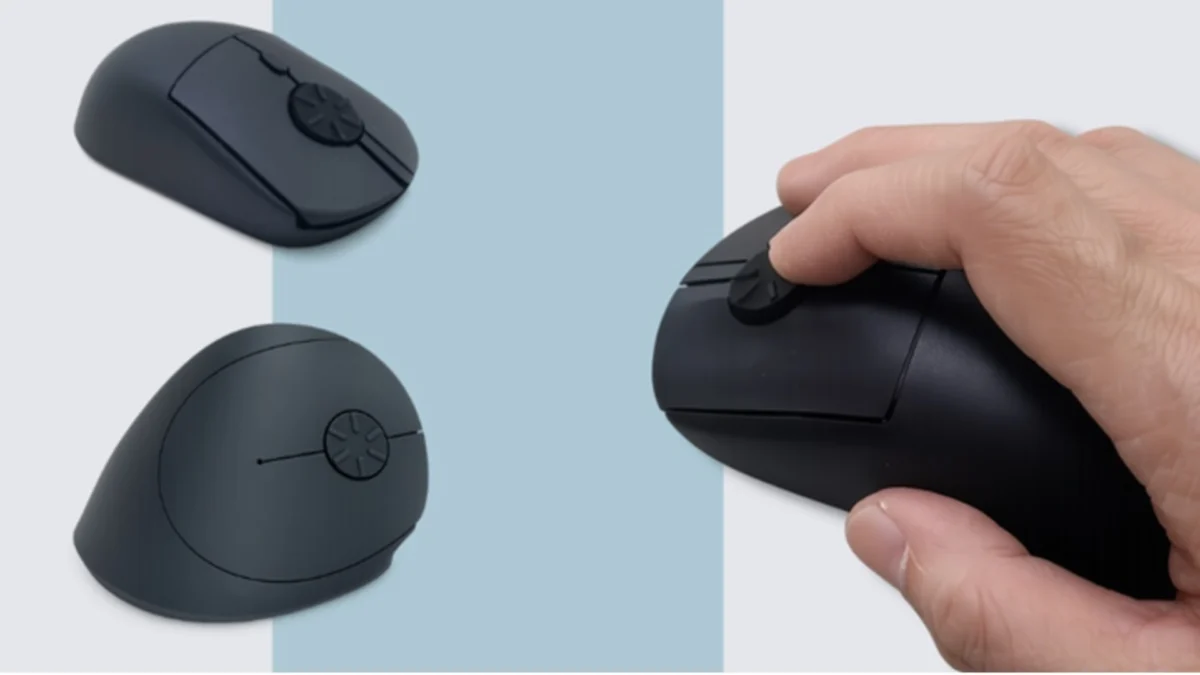
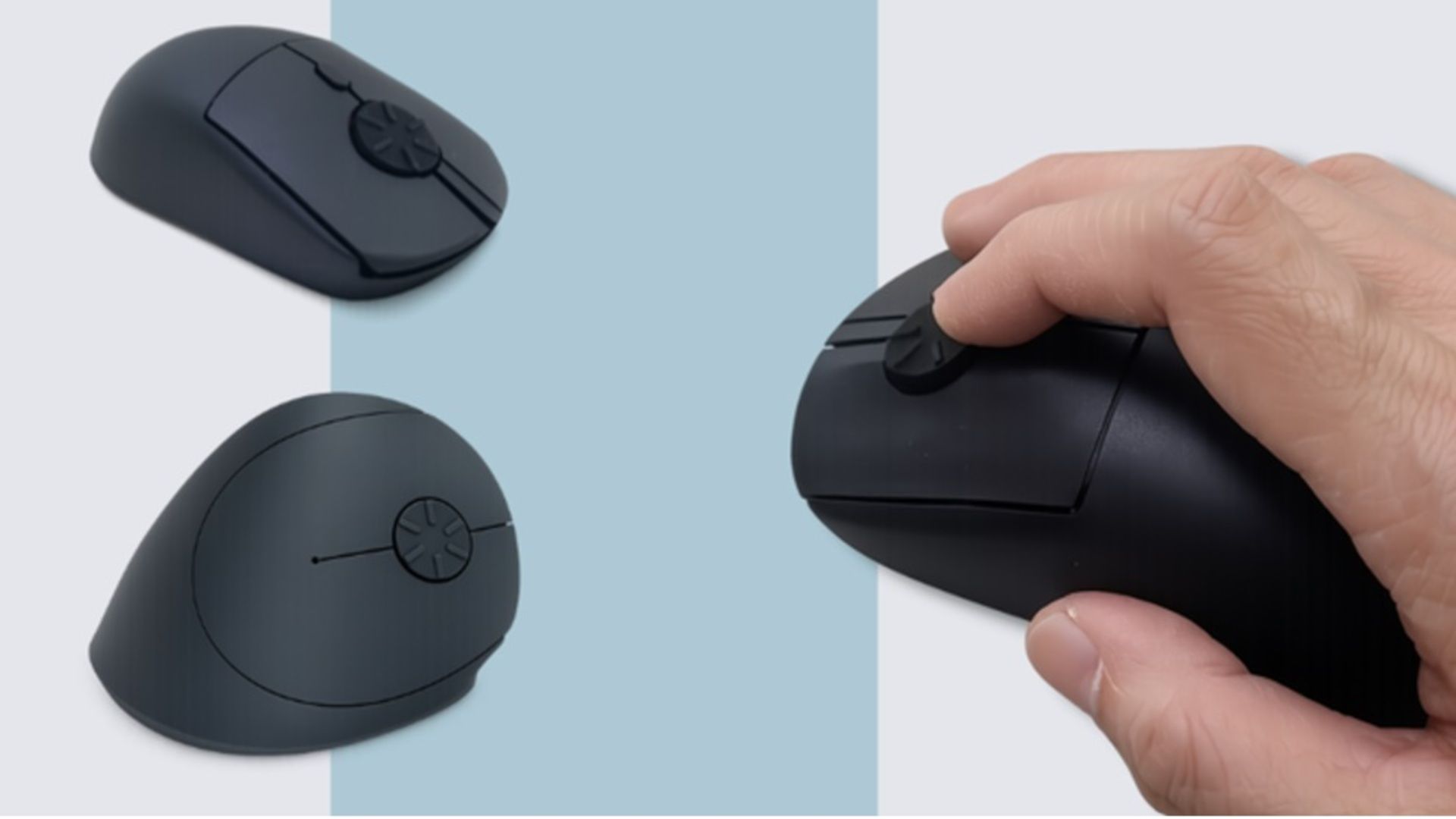
The fundamental pitch of the Rotary Mouse is simple yet transformative. Instead of a wheel that requires frequent, repetitive vertical finger movements—a motion that can exacerbate strain over long periods—the Rotary Mouse utilizes a dial that functions more like a volume knob on an analog stereo.
According to the campaign, this shift in mechanics allows for a significantly higher level of control. The device promises to let users scroll or scrub through expansive documents, intricate spreadsheets, and dense video timelines up to 2.5 times faster than a standard mouse. By utilizing continuous rotation rather than "flicking," users can maintain constant velocity or achieve granular precision with less physical effort.
Importantly, the device does not force users to abandon the muscle memory of the past. It retains the capability for conventional vertical scrolling, allowing for a hybrid input experience. This thoughtful inclusion ensures that the learning curve remains shallow, enabling users to transition between familiar navigation and the new rotary control without needing to switch hardware or fundamentally change their workflows.
A Technical Deep Dive
Beyond its signature feature, the Rotary Mouse is engineered to meet the demands of modern computing environments. The device features a matte black, ergonomic chassis measuring 119 mm by 64 mm by 40 mm. Weighing in at a modest 59 grams (without the battery), it is designed to be lightweight enough for long sessions without inducing wrist fatigue.
Under the hood, it boasts a versatile optical sensor with switchable DPI settings—800, 1200, and 1600—allowing users to calibrate their cursor speed to their monitor resolution and personal preference. The device connects via a 2.4 GHz wireless receiver, ensuring compatibility with Windows, Linux, macOS, and Android platforms.
One of the most notable design choices is the silence of the primary buttons, which are complemented by a middle-click function integrated directly into the rotary dial. This design choice aims to minimize the "click-clack" noise associated with traditional mice, making it an attractive option for open-office environments or late-night work sessions. Furthermore, the device provides tactile feedback during rotation—a series of haptic "clicks" that allow the user to feel the movement of the dial, which is crucial for maintaining precision during high-speed scrubbing.
Chronology of Development: From 3D Prints to Production
The journey of the Rotary Mouse began not in a high-tech lab, but as a response to personal frustration. Melvin Wong, an electronics engineer with a deep background in hardware development, found himself struggling with the physical toll of long hours spent navigating digital workspaces. The repetitive strain caused by constant scrolling led him to experiment with alternative input methods.
The development process followed a classic iterative path:
- Concept Phase: Identifying the mechanical limitations of the traditional scroll wheel.
- Prototyping: Utilizing 3D printing technology to test the ergonomics of a rotary-based dial.
- Refinement: Testing the rotational resistance and tactile feedback loops to ensure the device felt intuitive.
- Testing: Early trials demonstrated that the rotary motion not only reduced finger strain but unexpectedly improved navigation speeds across large digital canvases.
- Public Launch: The project moved to the crowdfunding stage, where it currently sits with 18 days remaining to reach its financial goals.
Practical Applications: Beyond the Desktop
While the Rotary Mouse is marketed as a general-purpose peripheral, its design shines in specific, high-intensity professional use cases.
Video Editing and Creative Work
In the realm of professional video editing, timeline scrubbing is a constant, time-consuming task. Editors using software such as Adobe Premiere Pro or DaVinci Resolve often find that a standard mouse wheel lacks the necessary "feel" for finding the exact frame in a long sequence. The Rotary Mouse acts as a high-fidelity scrubbing tool; because the rotation is continuous, an editor can dial in exactly to the desired frame, offering a level of tactile control that is rarely seen outside of expensive, specialized editing consoles.
The Simulation Racing Niche
Perhaps the most surprising application for the device is in the simulation racing community. In games such as Euro Truck Simulator 2, Assetto Corsa, and BeamNG.drive, players often lack the space or budget for a full steering wheel setup. By mapping the rotary input to steering, the mouse transforms into a compact, precise controller. The ability to apply gradual, controlled steering inputs—something a keyboard is fundamentally incapable of—provides a significant advantage for sim-racers looking for an entry-level but effective solution.
The Crowdfunding Reality: Risks and Expectations
As with any crowdfunding endeavor, the Rotary Mouse is not without its risks. The project has currently raised $3,654 of its $14,794 goal, with 61 backers. While there is clear interest from the PC enthusiast community—evidenced by thousands of upvotes on platforms like Reddit—the distance between a functional prototype and a mass-manufactured, shipped product is significant.
The team has already sold over 30 pre-production "Founder’s Edition" units, but they have set an ambitious shipping date of December 2026. This timeline accounts for final engineering tweaks, manufacturing partnerships, and the logistics of global distribution.
It is important to reiterate a standard warning for potential backers: crowdfunding is not a retail purchase. There is no guarantee that the final product will arrive on time, or at all. The technology, while promising, remains in the early stages of commercialization. Independent verification of the 2.5x speed improvement claim is still limited, and the "ideal" use case for the device may vary heavily depending on the individual’s software ecosystem and existing motor habits.
The Broader Implications for Input Design
The existence of the Rotary Mouse highlights a growing trend in the peripheral market: the rejection of "good enough" design. For years, the tech industry has focused on adding more buttons, more RGB lighting, and higher polling rates to gaming mice. By contrast, the Rotary Mouse focuses on the kinematics of human-computer interaction.
If the project succeeds, it could pave the way for a new generation of peripherals that prioritize ergonomic longevity and specialized navigation. We are already seeing a rise in "productivity" peripherals—devices designed for developers, accountants, and creative professionals that offer macro pads, jog dials, and split-key layouts. The Rotary Mouse fits perfectly into this movement, acknowledging that for many, the computer mouse is not just a tool, but an extension of the hand.
Conclusion: A Worthy Experiment
Whether the Rotary Mouse becomes a staple on office desks or remains a niche curiosity for power users, it serves as a valuable reminder that our interfaces are not set in stone. The scroll wheel, while functional, was born in an era of much simpler digital environments. In an age of 4K monitors, endless web pages, and complex video timelines, perhaps it is time we reconsidered how we interact with the digital world.
For the enthusiast, the early adopter, or the video editor suffering from "flick-fatigue," the Rotary Mouse offers a glimpse into a more fluid, tactile future. Whether that future arrives by December 2026 remains to be seen, but the conversation it has sparked—about efficiency, ergonomics, and the necessity of innovation—is one that the tech industry has been overdue to have.
Disclaimer: Crowdfunding campaigns involve inherent risks, including delays, design changes, and the potential for non-delivery. Consumers are advised to conduct their own due diligence before contributing to any campaign.